Daily Current Affairs & News Analysis
Our daily news analysis consists of two integral parts — Daily News Analysis and Important Editorials curated rigorously from The Hindu, The Indian Express, LiveMint, PIB, and Sansad TV debates. Content is mapped directly to UPSC CSE and State PCS syllabi.
Free Bus Travel for Women 2026: Shakti Scheme & UPSC
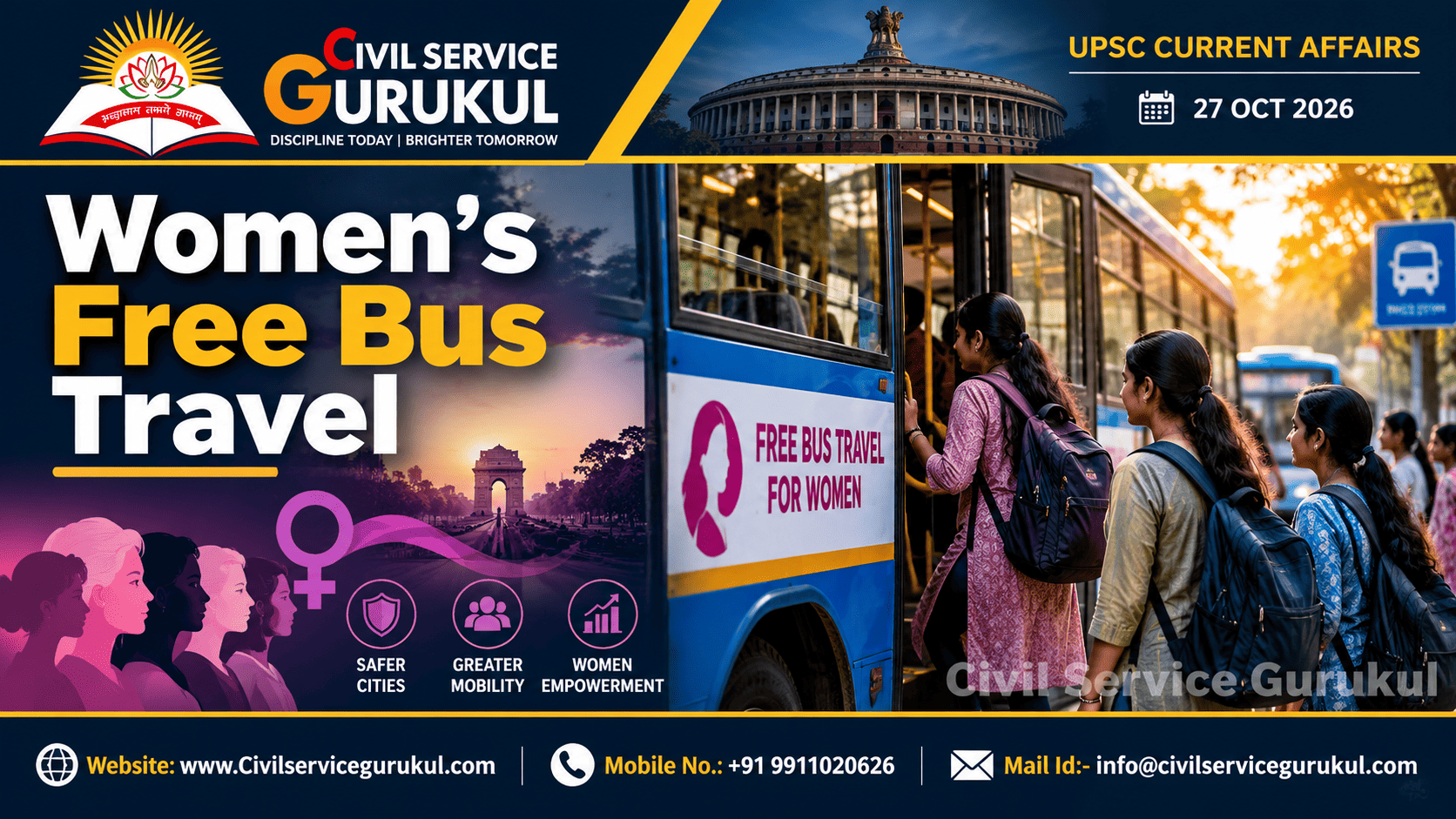
Free bus travel schemes for women have emerged as important instruments of economic empowerment and social inclusion in India. Programmes such as Karnataka's Shakti Scheme and Tamil Nadu's Vidiyal Payanam seek to reduce transportation expenses and improve women's access to employment, education, healthcare and public services. Research discussed in October 2026 suggests that affordable mobility can support women's participation in paid work, although the outcomes depend on route availability, safety, job opportunities and public transport quality. This UPSC analysis examines the economic benefits, fiscal challenges, gender-responsive budgeting, sustainable transport policy and practical reforms, along with Prelims MCQs and Mains answer-writing questions.
US H-1B Visa Restrictions 2026: Impact on India | UPSC
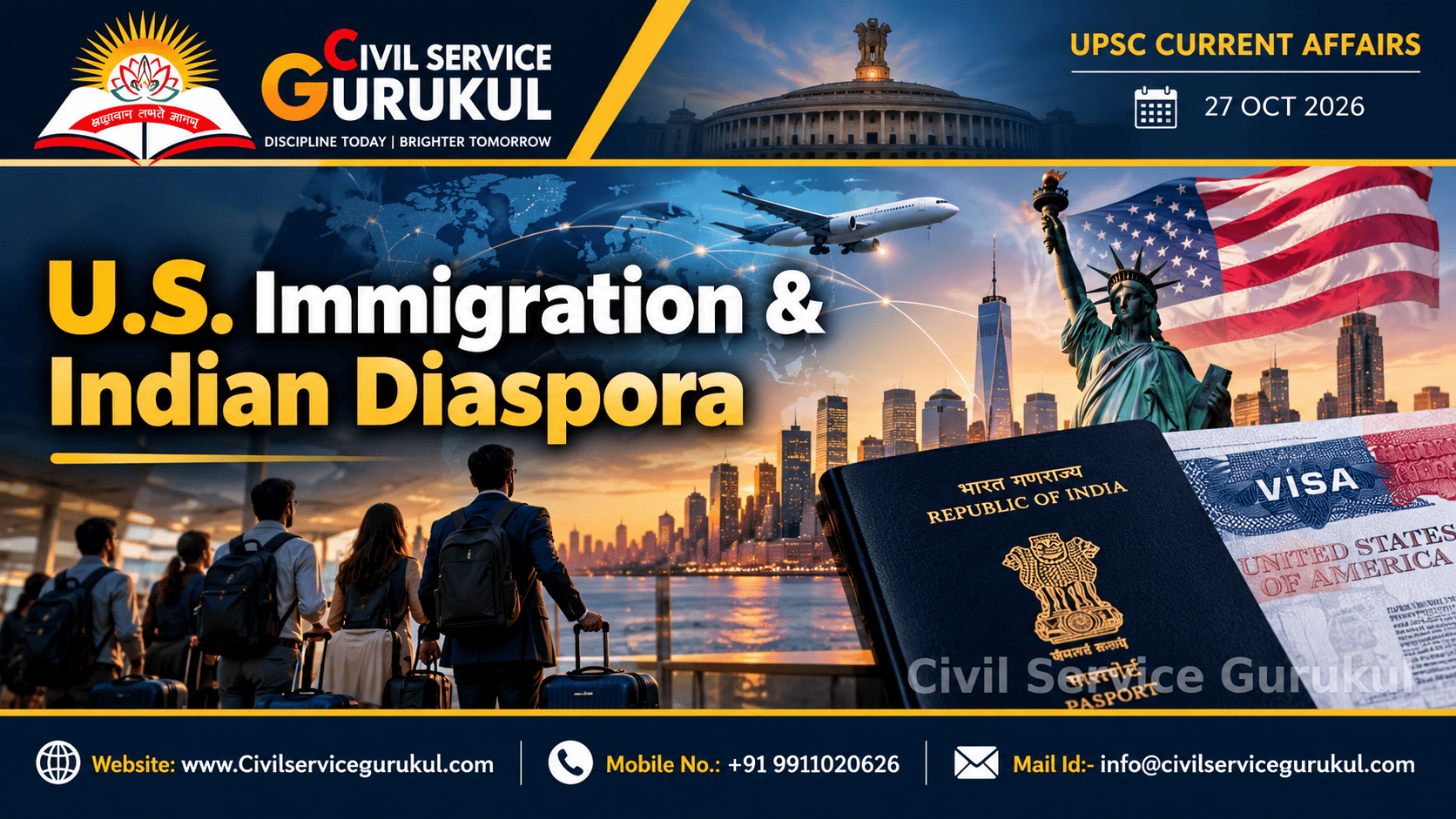
The U.S. H-1B immigration restrictions discussed in October 2026 have renewed concerns about international skilled-worker mobility, Indian technology professionals and the future of India–U.S. economic cooperation. The uploaded article describes a September 2026 U.S. proclamation involving a $100,000 payment condition for certain affected H-1B petitions. Importantly, this should not be interpreted as a universal fee for every visa holder, renewal or worker already present in the United States. The development highlights how immigration policy can affect employment, technology services, higher education, research, diaspora welfare and bilateral diplomacy. This Civil Service Gurukul explainer examines the policy trade-offs, India's possible responses and UPSC Prelims and Mains relevance.

India–Maldives Relations 2026: UPSC Current Affairs
India–Maldives relations returned to the spotlight in October 2026 following reports of Maldivian President Mohamed Muizzu's visit to Pakistan and renewed domestic political debate over relations with India. The developments highlight the strategic importance of the Maldives in the Indian Ocean, where maritime security, sovereignty, tourism, development cooperation and regional competition intersect. For India, the challenge is to maintain a stable partnership while respecting the Maldives' independent foreign policy choices. This Civil Service Gurukul analysis examines Neighbourhood First, maritime cooperation, external partnerships, strategic challenges and the way forward, with UPSC Prelims and Mains practice.
Karnataka Form 7 Voter Deletion Row 2026 | UPSC
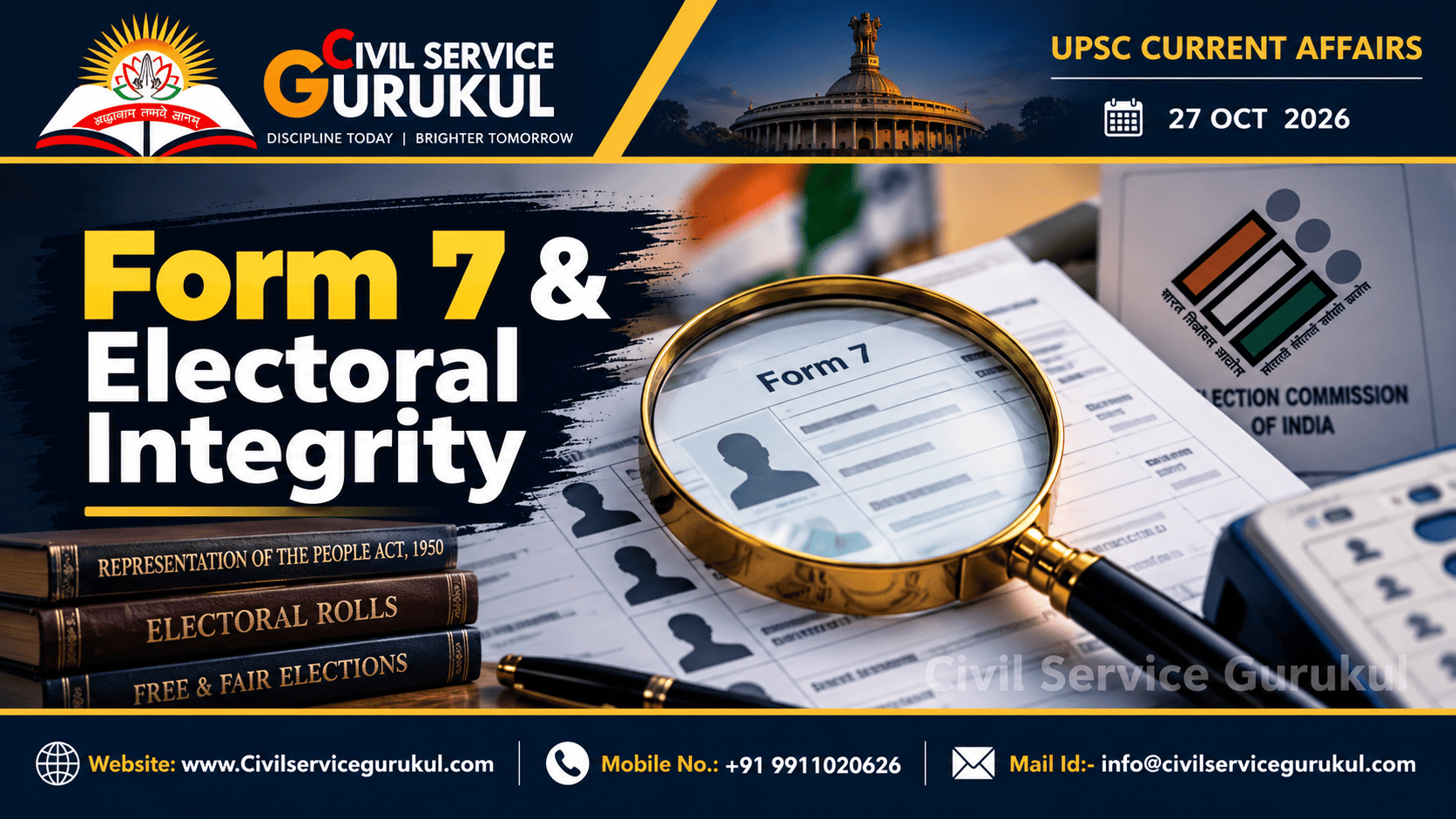
The Karnataka Form 7 controversy reported in October 2026 has raised concerns about bulk objections to electoral-roll entries and the risk of wrongful voter deletion. Form 7 enables objections to proposed inclusion or requests to delete existing entries, but filing the form does not automatically remove a voter. Electoral Registration Officers must examine applications and follow applicable legal procedures, including notice and an opportunity to respond where required. For UPSC aspirants, the controversy highlights electoral integrity, adult franchise, administrative fairness, digital safeguards and the Election Commission's role in maintaining accurate voter lists. This analysis includes important distinctions between Forms 6, 7 and 8, GS Paper II discussion, Prelims MCQs and Mains questions.
Kerala PSC Removal Row 2026: Article 317 for UPSC
The Kerala Public Service Commission removal controversy reported in October 2026 has renewed attention on the constitutional safeguards governing State Public Service Commissions. The uploaded report describes a recommendation attributed to the Kerala Governor concerning the commission's chairperson and members amid allegations of recruitment irregularities. Under Article 316, State PSC members are appointed by the Governor, while Article 317 reserves removal powers to the President, subject to specific constitutional procedures. This Civil Service Gurukul explainer examines Articles 315–320, the Supreme Court's inquiry role, institutional independence, accountability and important UPSC Prelims and GS Paper II questions. The reported allegations are not treated as established findings.
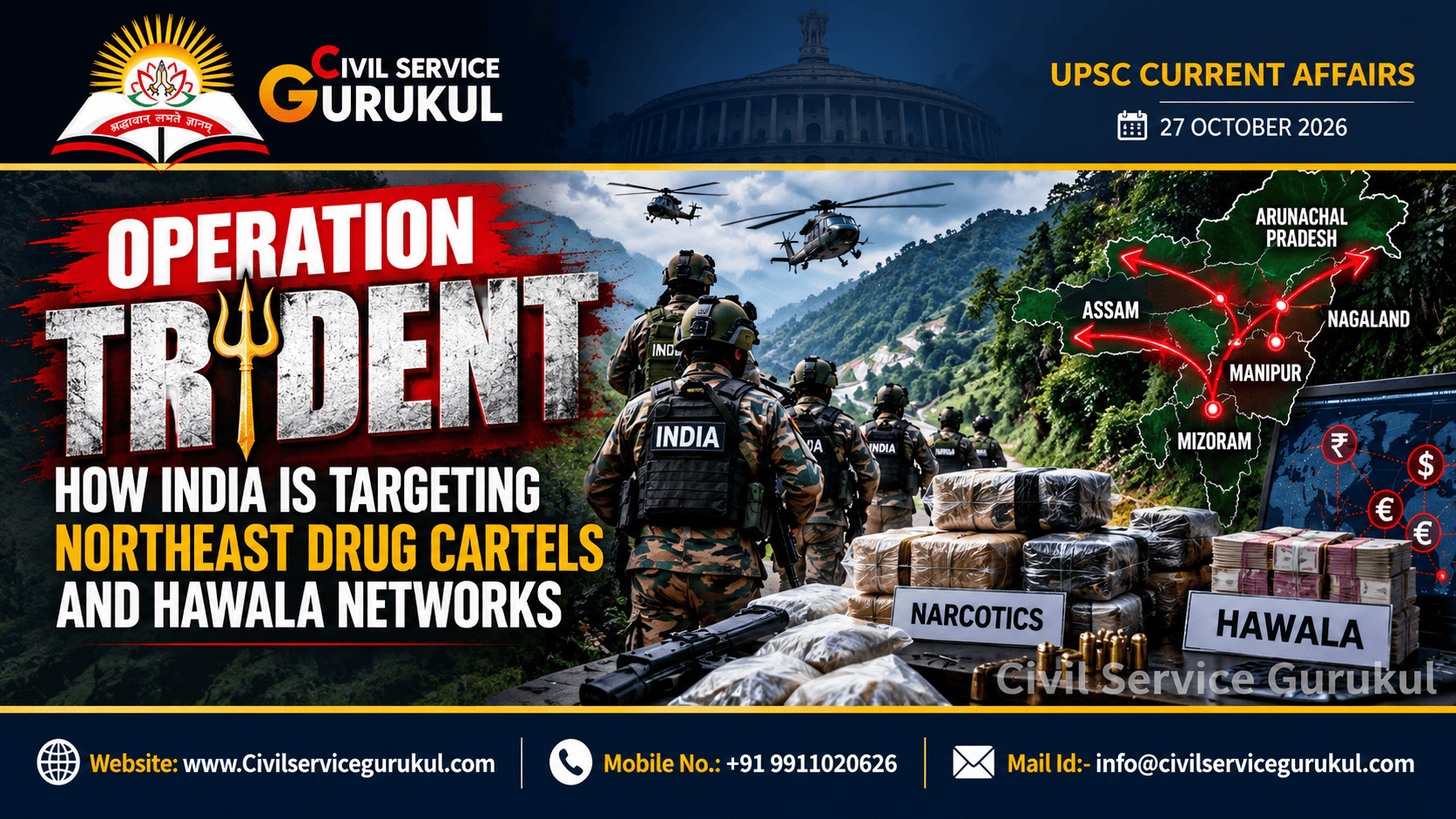
Operation Trident 2026: Northeast Drug Cartels, Hawala Networks and India's Internal Security Challenges
Operation Trident, reported in October 2026, highlights India's efforts to combat organised narcotics trafficking and suspected hawala financing in Northeast India. The supplied report describes coordinated searches across Assam, Mizoram and Manipur, resulting in reported arrests, bank-account freezes and property attachments. For UPSC aspirants, the operation provides an important case study of intelligence-led policing, the NDPS Act, financial investigations, inter-agency coordination, border security and constitutional safeguards. This Civil Service Gurukul analysis includes Prelims facts, GS Paper III discussion, policy challenges, Mains answer-writing guidance and practice questions.

Exercise Keen Sword 27: Why the US–Japan Military Drill Matters for Indo-Pacific Security
Exercise Keen Sword 27 is a large-scale, biennial US–Japan military field-training exercise conducted in Japan, including its southwestern islands and surrounding waters. The October 2026 report describes participation by approximately 56,000 Japanese and American military personnel, along with warships, aircraft and other military assets. The exercise highlights interoperability, island defence, maritime security, missile defence and multi-domain military coordination. This article explains the exercise, the First Island Chain, the Taiwan Strait, its strategic implications and key UPSC Prelims and Mains concepts.
LTCG Tax in India 2026: Why the 12.5% Equity Capital Gains Tax Is Back in Debate
Long-Term Capital Gains tax on equity investments has returned to public debate after the Union Finance Minister indicated openness to stakeholder discussions. Eligible long-term equity gains exceeding ₹1.25 lakh in a financial year are taxed at 12.5%, while qualifying short-term equity gains attract 20%, subject to applicable conditions. This article explains the history of LTCG taxation, Budget 2024 reforms, the role of Securities Transaction Tax, investment incentives, fiscal implications and important UPSC Prelims and Mains concepts.
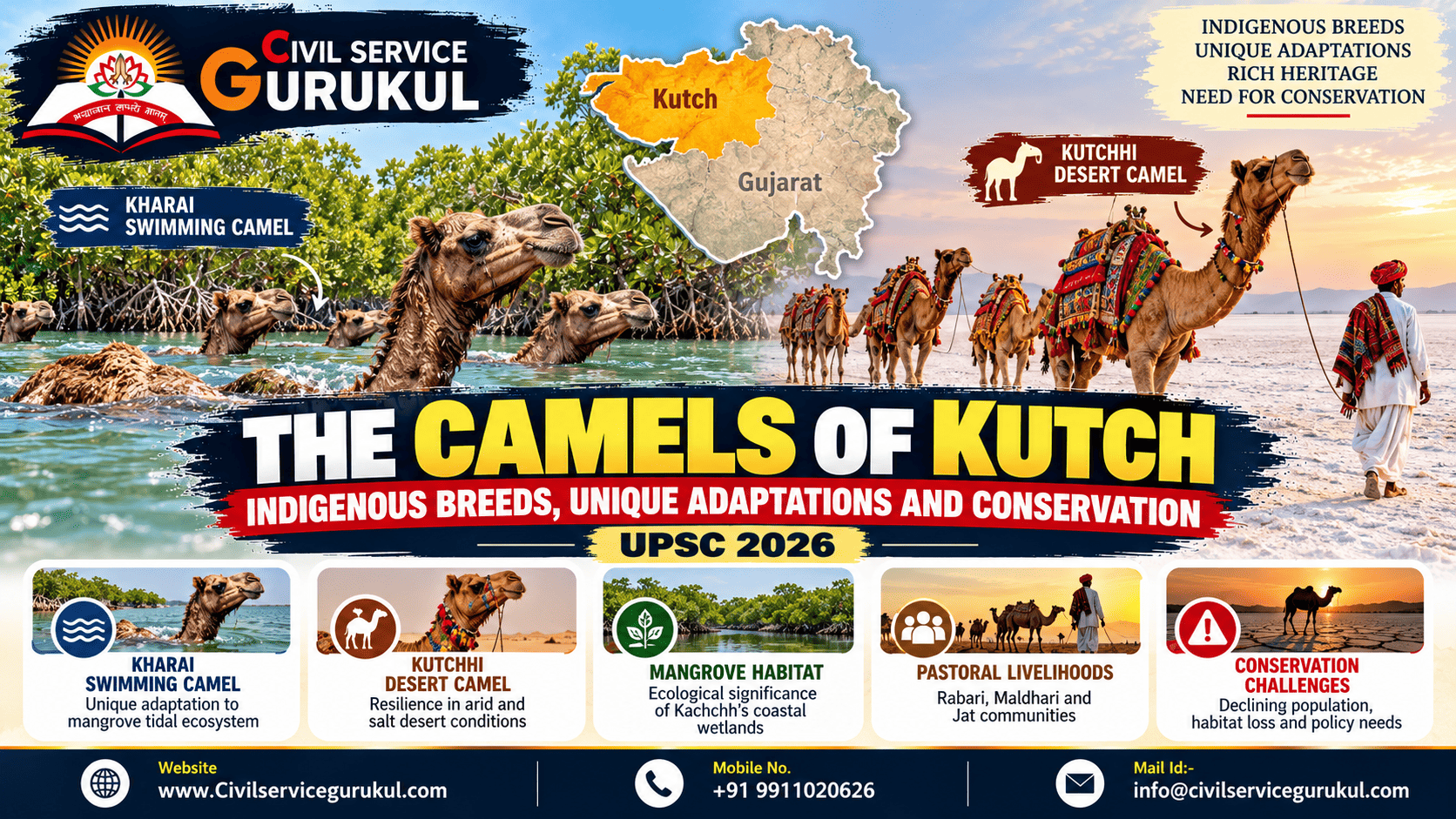
Camels of Kutch in Crisis: Why Gujarat's Swimming Camels Need Protection
The indigenous camels of Gujarat's Kutch region are facing population decline, habitat pressures and challenges to traditional pastoral livelihoods. The Kharai camel, popularly known as the swimming camel, is adapted to coastal mangroves, while the Kutchhi camel is associated with arid inland landscapes. This UPSC-focused article explains their unique characteristics, ecological importance, threats, pastoral communities and conservation strategies, with Prelims MCQs and Mains practice.

SAMHiTA Project 2026: How India and Sri Lanka Are Saving 100 Ancient Manuscripts
The SAMHiTA Project is an India-supported initiative to preserve South Asia's manuscript heritage through digitisation. Launched at Gangaramaya Temple in Colombo, the project targets 100 ancient manuscripts relating to Buddhism, philosophy, languages and cultural practices, with completion targeted for November 2026. This article explains the project's objectives, implementing institutions, cultural diplomacy, digitisation benefits, preservation challenges and relevance to UPSC Prelims and Mains.
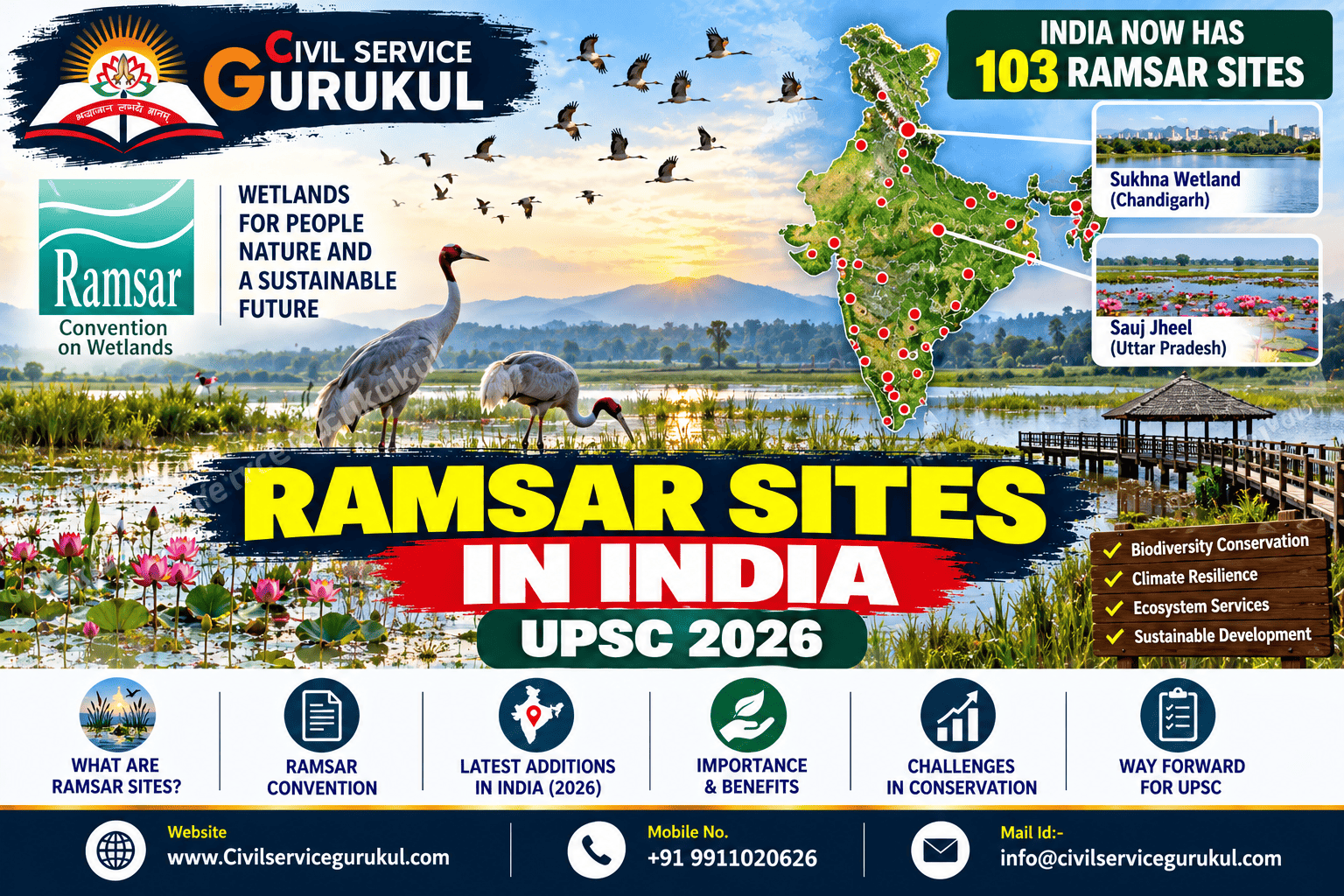
India Reaches 103 Ramsar Sites in 2026: New Wetlands, Biodiversity and UPSC Notes
India has reached 103 Ramsar Sites following the October 2026 designation of Sukhna Wetland in Chandigarh and Sauj Jheel in Uttar Pradesh. These wetlands support migratory birds, biodiversity, flood regulation and local livelihoods. This article explains the Ramsar Convention, its nine selection criteria, recent Indian additions, wetland conservation challenges, government initiatives and important UPSC Prelims and Mains questions.
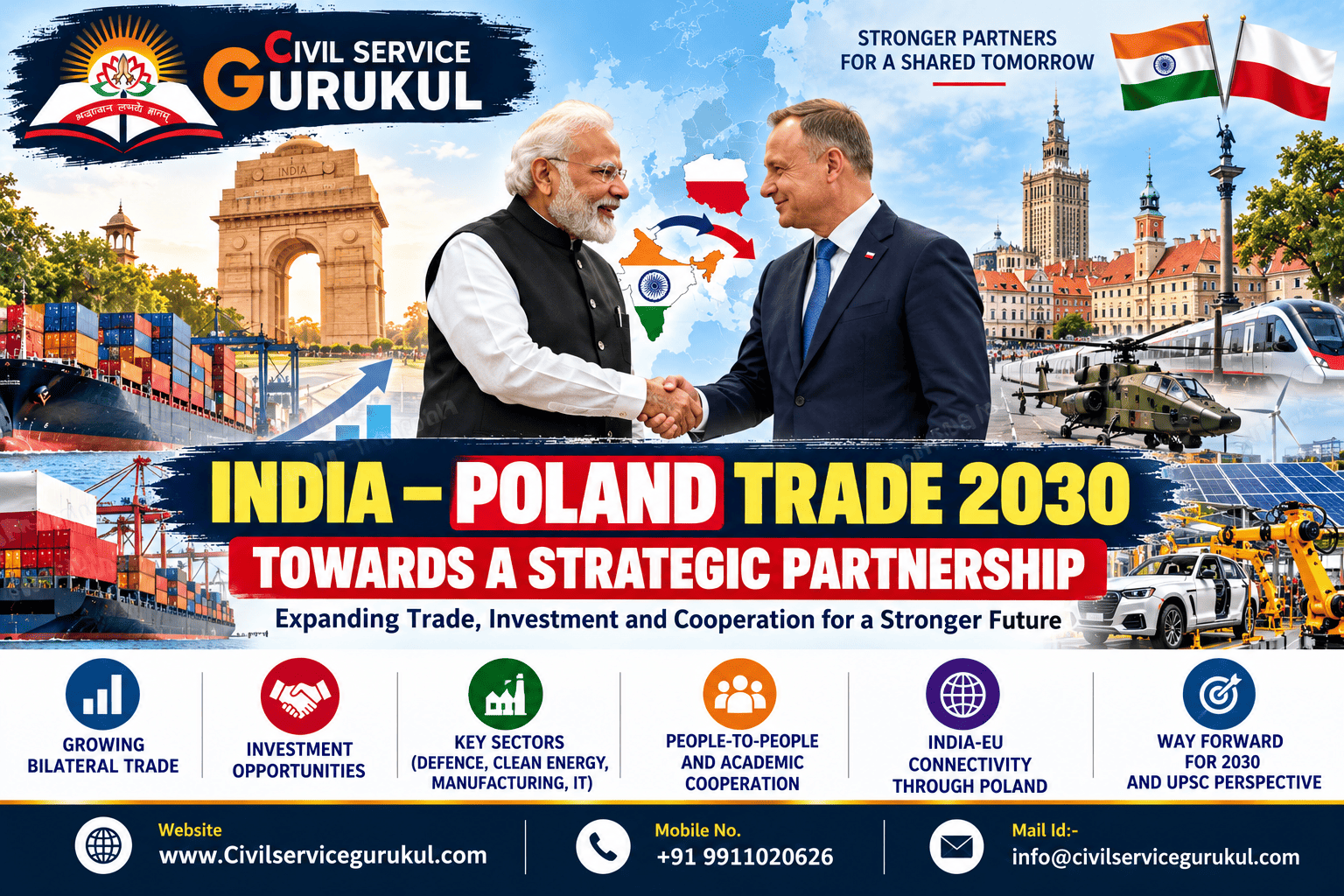
India–Poland Relations 2026: Can Both Nations Double Bilateral Trade by 2030?
India and Poland are strengthening their strategic partnership with a shared objective of doubling bilateral trade by 2030. The October 2026 diplomatic engagement highlights opportunities in investment, defence cooperation, connectivity, technology and engagement with the European Union. This Civil Service Gurukul article explains the background of India–Poland relations, the trade target, strategic significance, challenges and UPSC Prelims and Mains relevance.

BRICS Parliamentary Forum 2026: Why AI Governance and Global South Cooperation Matter for India
India is scheduled to host the 12th BRICS Parliamentary Forum in New Delhi on 26–27 October 2026. The forum brings parliamentary representatives from BRICS countries together to discuss international cooperation, governance challenges and emerging issues such as artificial intelligence. This UPSC-focused article explains the importance of parliamentary diplomacy, responsible AI governance, India's role in BRICS, the Global South perspective and potential policy outcomes, along with Prelims questions and Mains answer-writing practice.
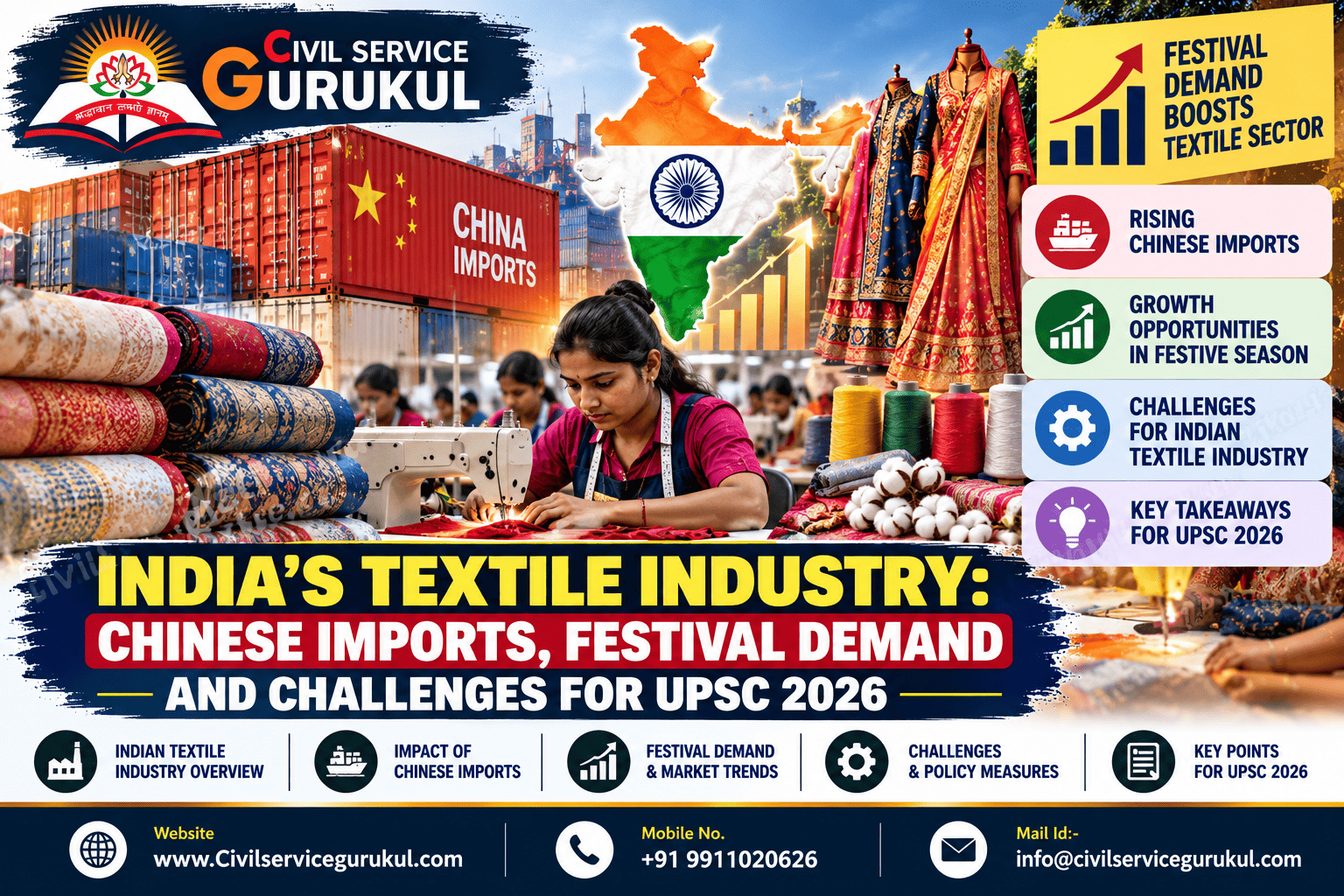
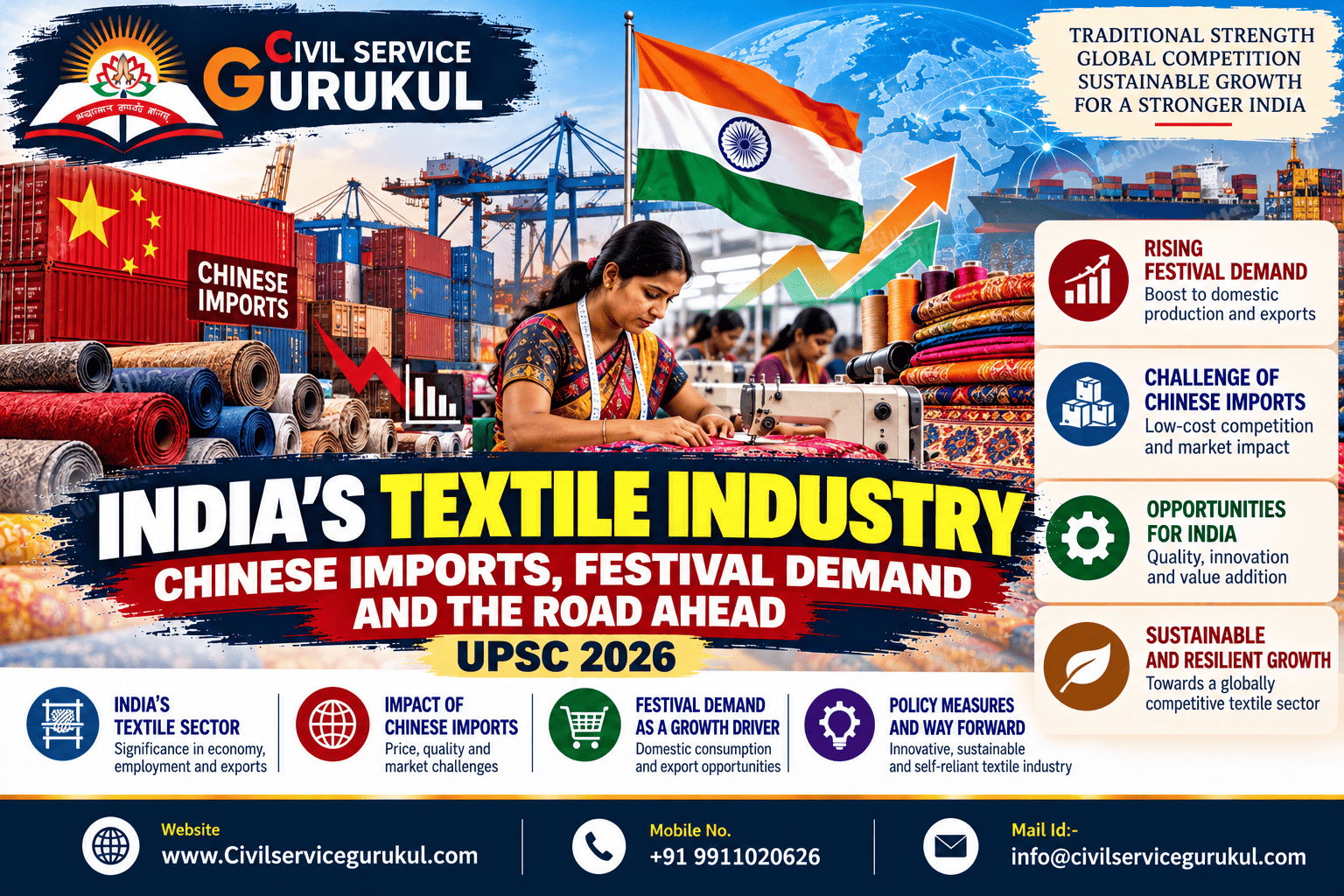
India's Textile Industry in 2026: Can Festive Demand Offset Chinese Import Competition?
India's textile sector plays an important role in manufacturing, employment, exports and rural livelihoods. While festive demand can improve domestic sales, competition from imported textile products, including Chinese goods, raises questions about price competitiveness, production costs and the future of Indian MSMEs. This Civil Service Gurukul article explains the economic challenges, trade policy options, government initiatives and UPSC Prelims and Mains relevance in simple English.
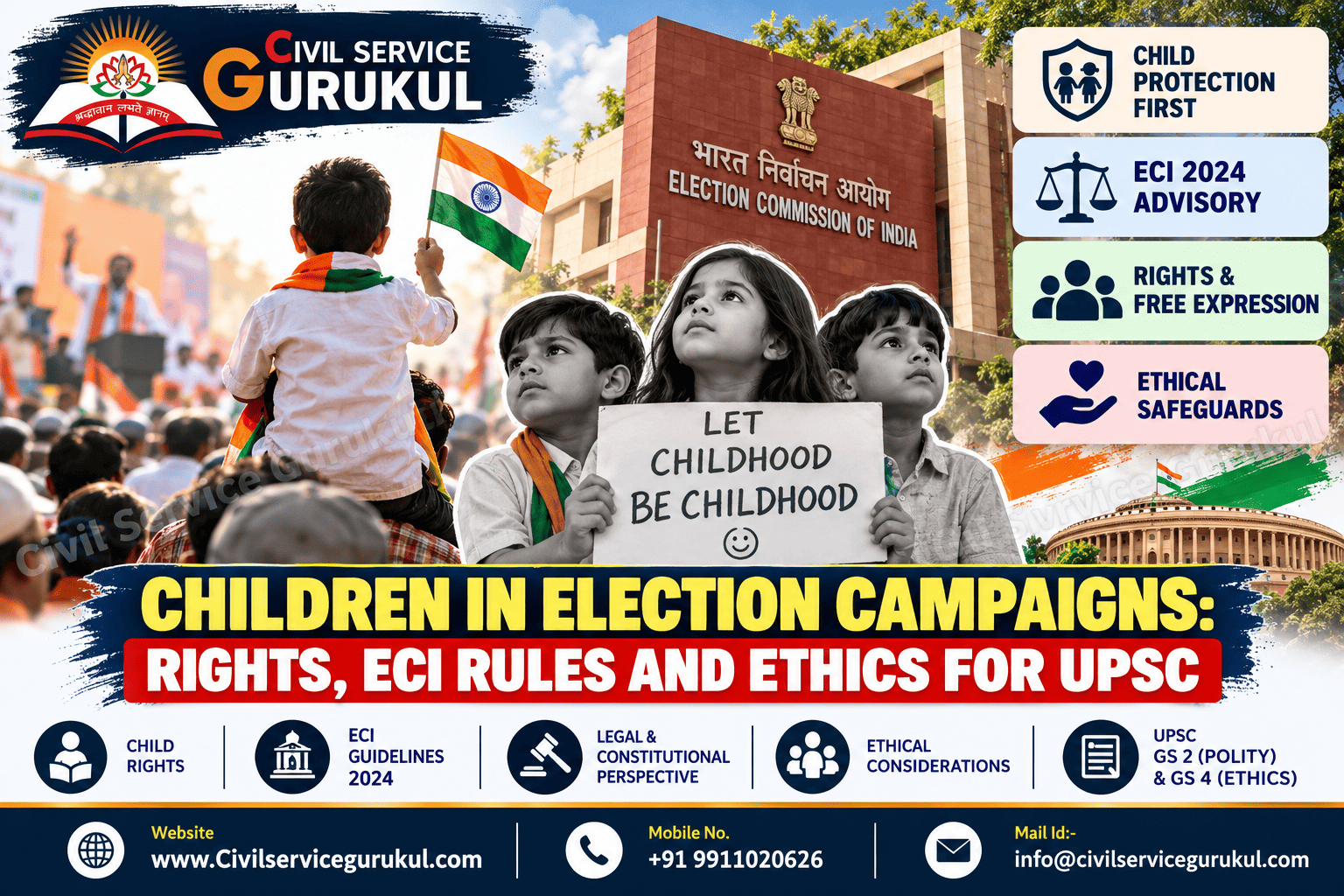
Children in Election Campaigns: ECI Rules, Child Rights and UPSC Notes 2026
The participation of children in political campaigns raises important questions about democracy, constitutional rights and child protection. The Election Commission of India issued directions on 5 February 2024 restricting the use of children in election campaigning while distinguishing incidental family presence from active political participation. This UPSC-focused article explains the legal framework, ethical concerns, civic education, policy recommendations and examination questions in simple English.
Prasar Bharati Autonomy UPSC 2026: Complete Notes
Understand Prasar Bharati's role in India's democracy, its statutory autonomy under the Prasar Bharati Act, 1990, and the challenges of editorial independence. Explore public service broadcasting, constitutional principles, institutional reforms, UPSC Prelims facts, MCQs and GS Paper II Mains analysis.
India's Nuclear Power Transformation: UPSC 2026
India's nuclear power sector is undergoing a major transformation through ambitious capacity expansion, Small Modular Reactor development, indigenous Pressurised Heavy Water Reactors and changes to the legal and investment framework. The Nuclear Energy Mission announced in Union Budget 2025–26, the 100 GW nuclear capacity vision for 2047 and India's three-stage nuclear programme highlight the strategic importance of atomic energy for reliable low-carbon electricity. This comprehensive UPSC article examines nuclear technologies, the roles of DAE, NPCIL and AERB, nuclear safety, uranium and thorium resources, legal reforms, energy security, environmental implications and the challenges of scaling nuclear power.
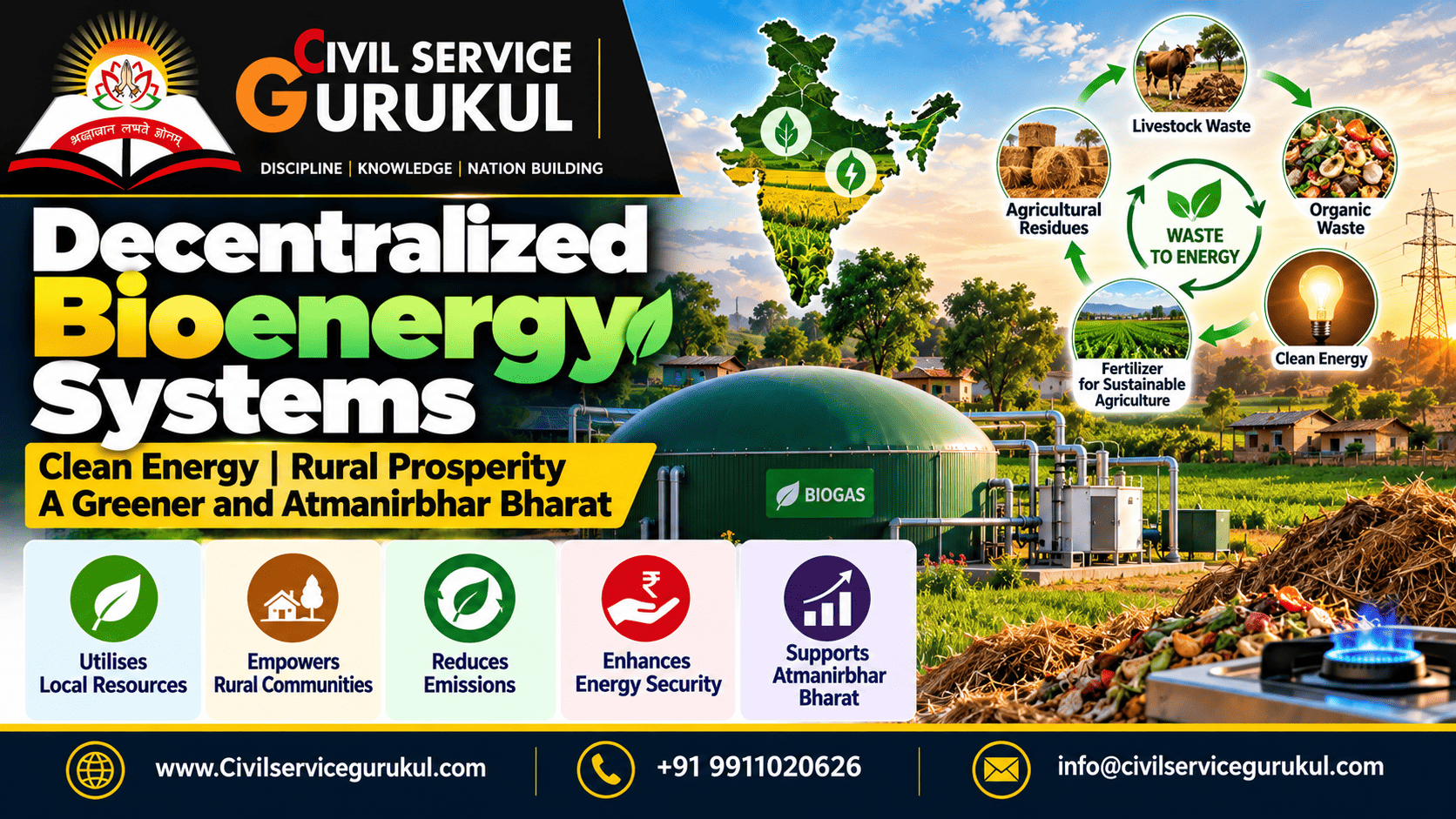
Decentralized Bioenergy Systems: UPSC Notes 2026
Decentralized bioenergy systems convert locally available organic waste into useful energy through biogas plants, compressed biogas facilities, biomass gasifiers and other conversion technologies. For India, these systems can help address agricultural residue burning, rural energy shortages, organic waste disposal and dependence on imported fossil fuels. Government initiatives such as GOBARdhan, SATAT, the National Bioenergy Programme and the Biomass Programme support the development of bioenergy infrastructure. This comprehensive Civil Service Gurukul UPSC guide examines technologies, benefits, challenges, government schemes, environmental safeguards, rural business models, Prelims questions and a GS Paper III Mains model answer.
India's EV Grid Strategy 2026: Complete UPSC Notes
India's electric vehicle revolution requires far more than affordable EVs and charging stations. Large-scale transport electrification could substantially increase electricity demand, particularly from heavy commercial vehicles, freight corridors and simultaneous urban charging. A comprehensive grid strategy must integrate smart charging, time-of-day electricity tariffs, renewable energy, battery storage, DISCOM reforms and high-capacity transmission networks. This Civil Service Gurukul UPSC guide examines the electricity demand implications of EV adoption, government schemes including PM E-DRIVE and RDSS, grid challenges, environmental concerns, policy solutions, Prelims questions and GS Paper III Mains analysis.
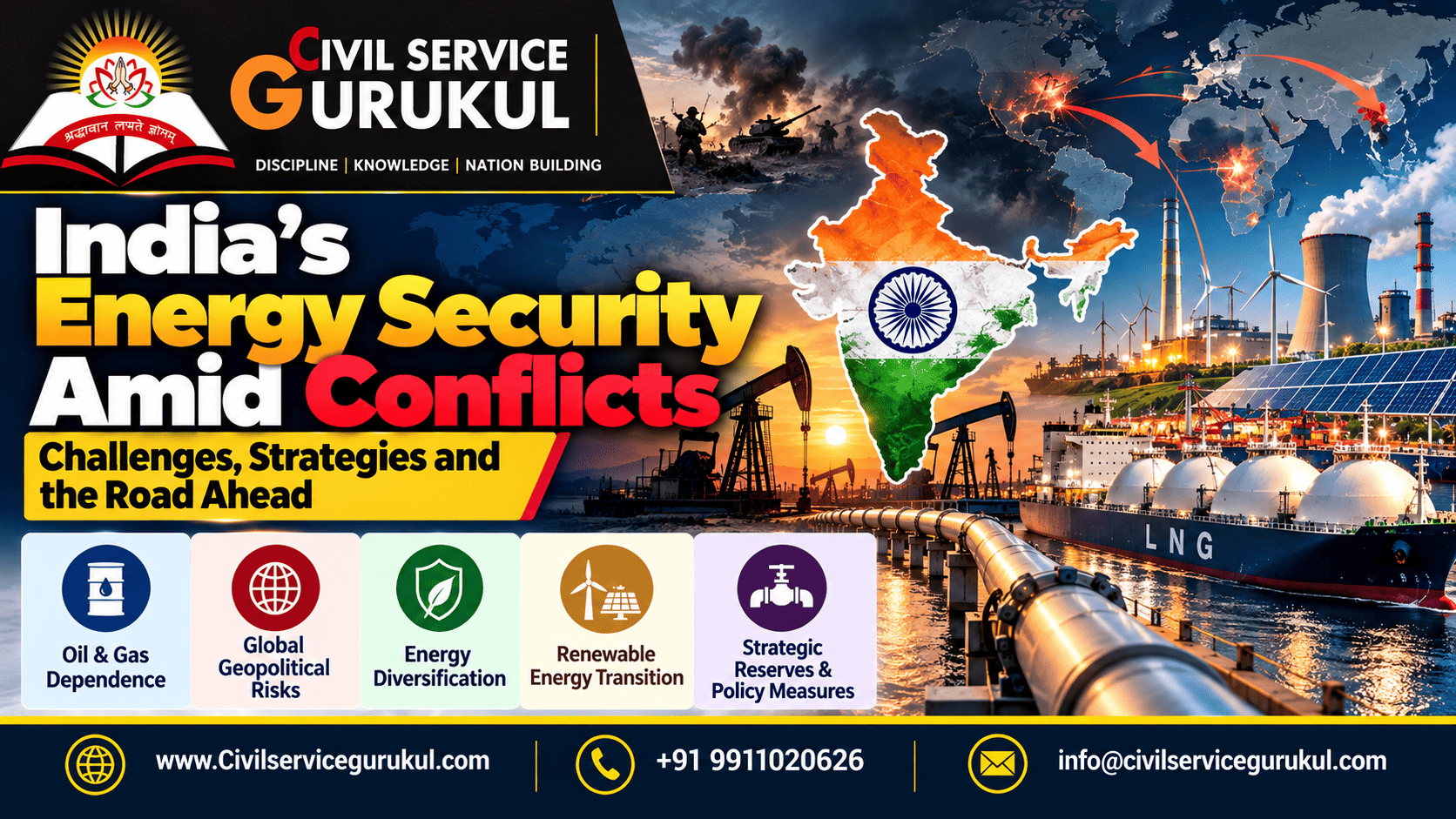
India's Energy Security Amid Conflicts: UPSC 2026
India's growing energy requirements and dependence on imported crude oil make the country vulnerable to geopolitical conflicts, maritime disruptions, price shocks and supply-chain uncertainty. Tensions in West Asia, the Russia–Ukraine conflict and risks around the Strait of Hormuz highlight the strategic importance of diversified energy imports, strategic petroleum reserves, maritime security and domestic energy production. This Civil Service Gurukul UPSC guide examines India's energy import dependence, oil diplomacy, LNG supplies, renewable energy transition, critical minerals, government initiatives, economic implications and the way forward, with Prelims MCQs and a GS Paper III Mains model answer.