Daily Current Affairs & News Analysis
Our daily news analysis consists of two integral parts — Daily News Analysis and Important Editorials curated rigorously from The Hindu, The Indian Express, LiveMint, PIB, and Sansad TV debates. Content is mapped directly to UPSC CSE and State PCS syllabi.
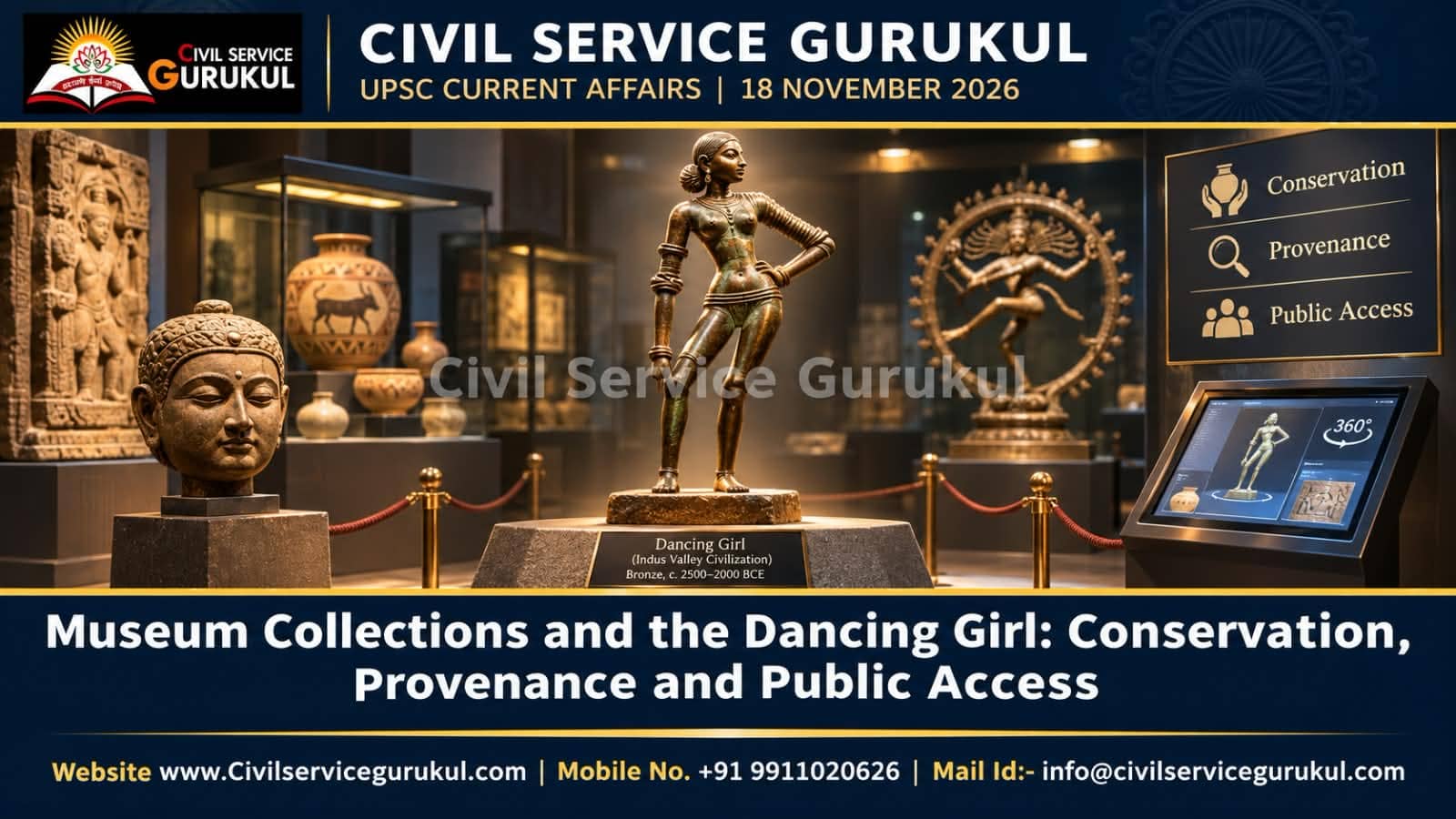
Dancing Girl of Mohenjo-daro: UPSC Heritage Analysis 2026
The reported plan to relocate the iconic Dancing Girl bronze sculpture of Mohenjo-daro and the Nizam's jewels to the Yuge Yugeen Bharat Museum has renewed discussions about India's cultural heritage management. Beyond the display of historically significant artefacts, museum administration involves conservation science, provenance documentation, secure transportation, public accessibility and ethical stewardship. The Dancing Girl is among the most celebrated examples of bronze craftsmanship from the Indus Valley Civilisation. This Civil Service Gurukul analysis explores the historical significance of the sculpture, the challenges of relocating museum collections, the difference between provenance and ownership, the responsibilities of public museums and the relevance of heritage governance for UPSC Prelims and Mains.
Indian Students in US Universities 2026: UPSC Analysis
A November 2026 report indicating a decline in the number of Indian students at American universities has renewed debate about international education, student mobility and India's human-capital development. However, a fall in new admissions, total enrolment or student visa issuances represents different statistical developments and should not be interpreted interchangeably. Overseas education can provide access to advanced research, global networks and professional opportunities, but high costs, immigration uncertainty and unequal access may create challenges. The debate also extends beyond traditional brain drain to brain circulation, where knowledge, skills, investment and research networks move across borders. This Civil Service Gurukul analysis examines India–US education relations, the drivers of international student mobility, implications for Indian universities and research, policy options, UPSC Prelims MCQs and a Mains model answer.
COP31 Climate Negotiations 2026: UPSC Analysis
The COP31 climate negotiations in Türkiye have brought renewed attention to disagreements over climate finance, equity, emissions mitigation and the meaning of consensus in international environmental governance. A draft negotiating text discussed in November 2026 reportedly reflects divergent positions among participating countries, but a draft should not be confused with a formally adopted decision. For developing countries such as India, climate negotiations involve balancing development priorities, energy transition, adaptation needs and predictable international financial support. This Civil Service Gurukul analysis explains the UNFCCC framework, the Paris Agreement, common but differentiated responsibilities and respective capabilities (CBDR-RC), climate finance, loss and damage, negotiating procedures and India's strategic interests, along with UPSC Prelims questions and Mains answer-writing guidance.

Foreign Portfolio Investment in India: UPSC 2026
A reported revival in foreign portfolio investment in November 2026, accompanied by selling by domestic market participants, highlights the complex relationship between capital flows, stock market performance and financial stability. Foreign portfolio investors can provide liquidity and support market development, but their investments are often more readily reversible than greenfield foreign direct investment. Global interest rates, exchange-rate expectations, valuations and risk sentiment can influence these flows. A temporary market rebound therefore does not necessarily indicate durable investor confidence or stronger domestic productive capacity. This Civil Service Gurukul analysis examines FPI versus FDI, the role of domestic institutional investors, capital-flow volatility, regulatory institutions, macroeconomic risks and important UPSC Prelims–Mains questions.
WPI vs CPI Inflation October 2026: UPSC Analysis
India's October 2026 inflation data highlights an important divergence between wholesale and retail prices. According to the figures cited in the source article, Wholesale Price Index inflation reached 12.29%, compared with 11.39% in September, while Consumer Price Index inflation stood at 6.09%. The difference reflects the distinct coverage, weights and price transmission mechanisms of the two indices. Fuel and power, primary articles and manufactured products contributed to wholesale price pressures, raising questions about production costs, business margins, household purchasing power and monetary policy. This Civil Service Gurukul analysis explains WPI and CPI, the reasons for their divergence, implications for India's economy, inflation management strategies and important UPSC Prelims and Mains questions.
Onboard Satellite Computing: AI in Space UPSC 2026
Onboard satellite computing is emerging as an important approach to managing the enormous volume of data collected by Earth-observation satellites. Instead of transmitting every image and measurement to Earth for analysis, satellites equipped with suitable processors can filter, prioritise and analyse selected information directly in orbit. This can reduce unnecessary data transmission and improve the timeliness of applications such as disaster monitoring, environmental observation and maritime surveillance. However, onboard computing faces constraints involving power consumption, radiation, heat dissipation, processing capacity and algorithm reliability. This Civil Service Gurukul article explains satellite edge computing, its advantages over ground-based processing, relevance to India's space programme, technological challenges, ethical considerations and UPSC Prelims–Mains preparation.
Census Religion Coding in India: UPSC 2026 Analysis
A November 2026 report concerning 287 “other” religion entries briefly appearing on a Census portal has renewed discussion about religious identity, statistical classification and the representation of smaller communities in India. The development raises important questions about self-identification, administrative coding, data reliability, minority visibility and the difference between provisional portal information and officially validated Census statistics. For UPSC aspirants, the issue connects directly with Indian Society, constitutional values, governance, ethics and social justice. This Civil Service Gurukul analysis examines the institutional context, opportunities and risks of religious enumeration, policy recommendations, Prelims practice questions and a structured GS Mains answer.
Environmental Clearance & Ecological Baselines — UPSC
Environmental clearances are essential for balancing infrastructure development with ecological protection. However, environmental impact assessments based on short-duration or one-time surveys may fail to capture seasonal biodiversity, monsoon hydrology, groundwater stress and cumulative environmental impacts. The quality of baseline environmental data is therefore central to credible project appraisal. This Civil Service Gurukul analysis examines ecological baselines, environmental impact assessment, institutional accountability, independent scientific review, public participation and post-clearance monitoring, along with reforms needed to make environmental governance transparent, evidence-based and effective.
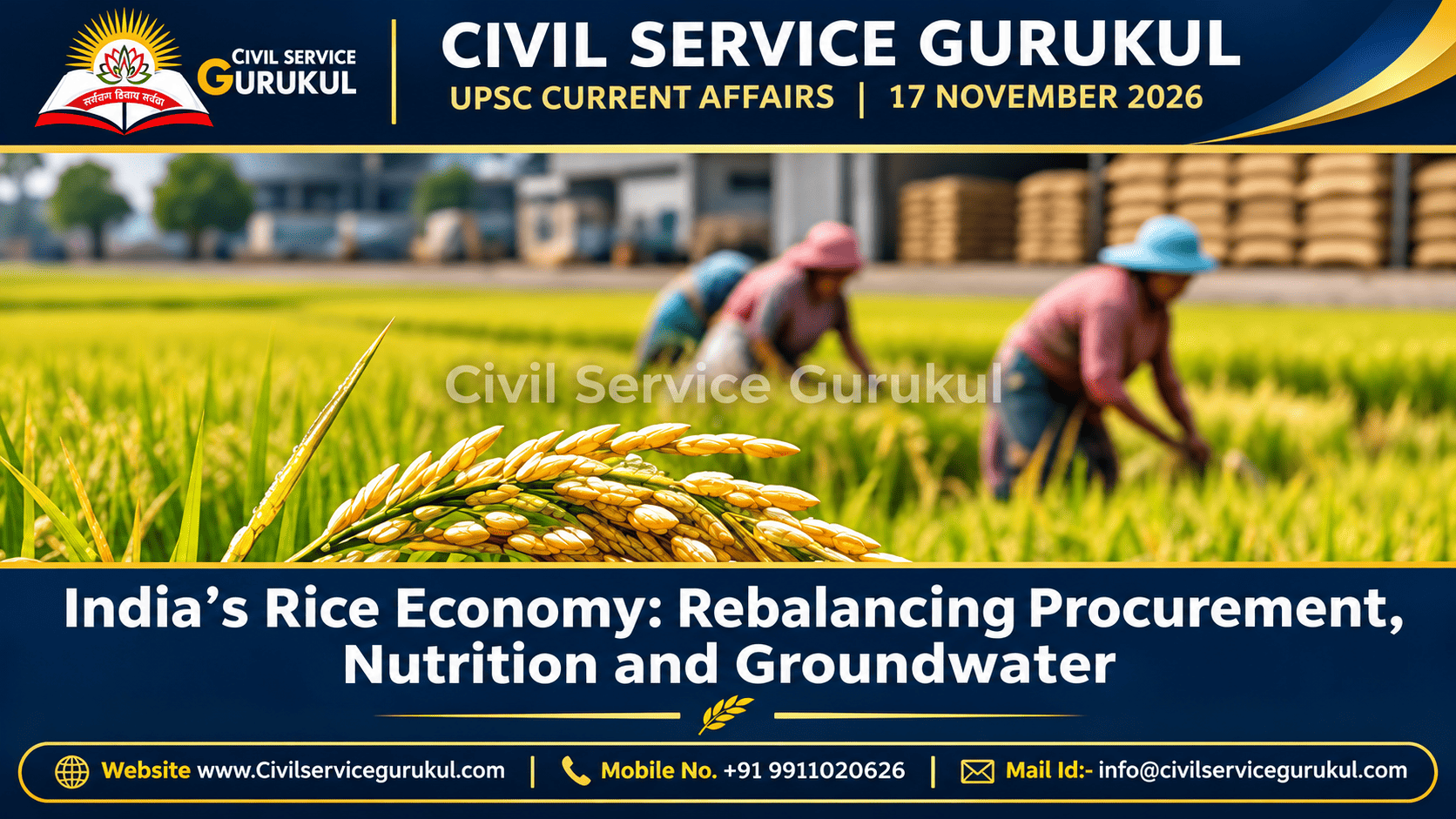
India's Rice Economy: MSP, Food Security & UPSC
India's rice economy supports food security, farm incomes and the Public Distribution System, but it also presents significant challenges for groundwater sustainability and agricultural diversification. Minimum Support Price signals, assured procurement and state-level electricity subsidies influence farmers' cropping decisions. Meanwhile, rice cultivation's water footprint varies across agro-climatic regions, irrigation methods and crop varieties. This Civil Service Gurukul analysis examines the role of the Food Corporation of India, paddy procurement, nutritional security, groundwater stress and policy reforms needed to balance farmer welfare, environmental sustainability and diversified food systems.
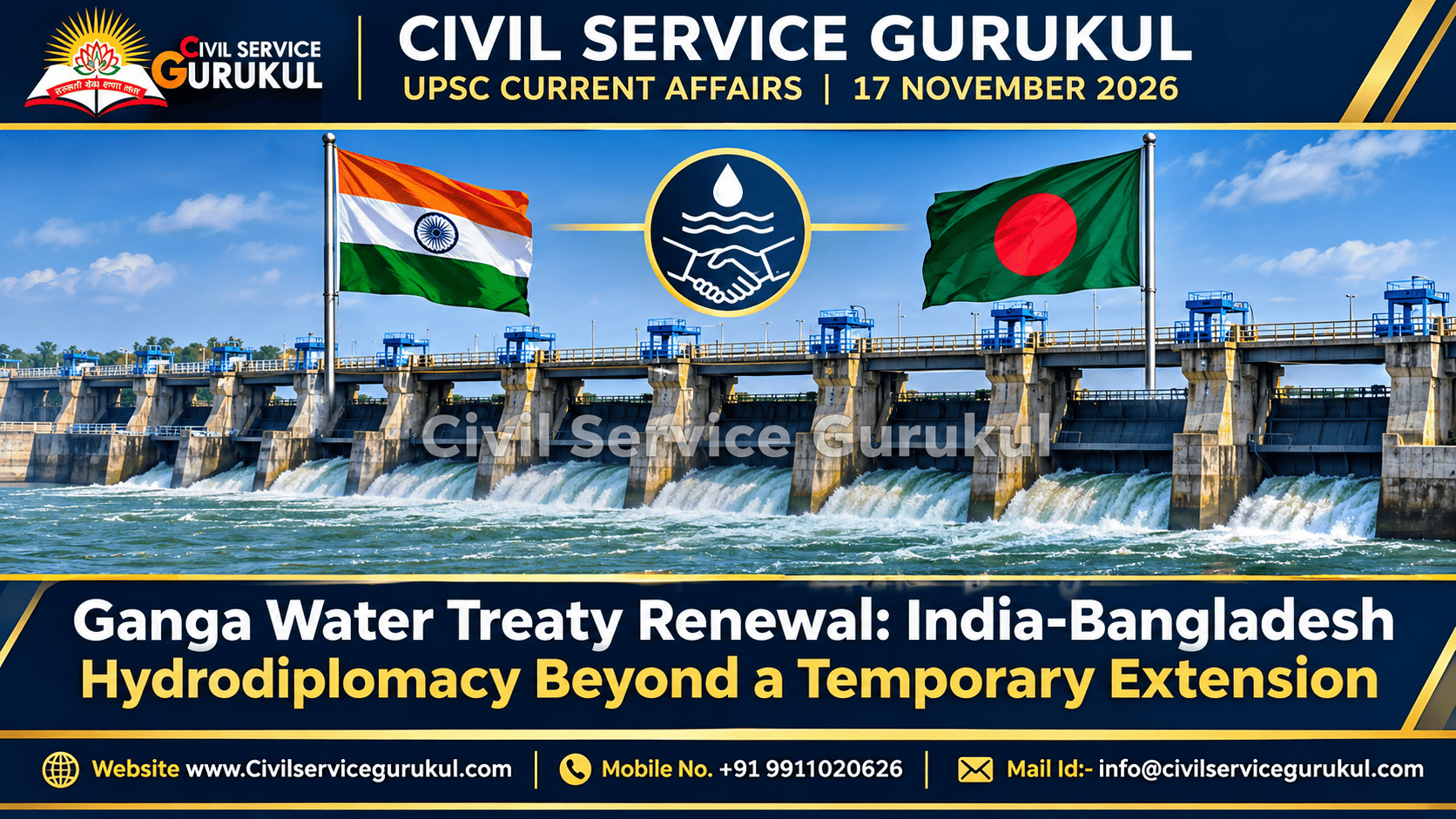
Ganga Water Treaty 2026: India–Bangladesh & UPSC
The 1996 Ganga Water Sharing Treaty between India and Bangladesh has entered a crucial phase in 2026 as its original 30-year term approaches completion. The supplied editorial refers to an expert proposal for a temporary renewal, but this should not be confused with a concluded bilateral agreement. The treaty governs dry-season water sharing at Farakka, while changing rainfall patterns, upstream water demand, sedimentation and ecological requirements create new challenges. This Civil Service Gurukul analysis examines the treaty's historical background, the importance of hydrodiplomacy, the advantages and limitations of a temporary extension, and the need for a transparent, adaptive and climate-resilient water-sharing framework.
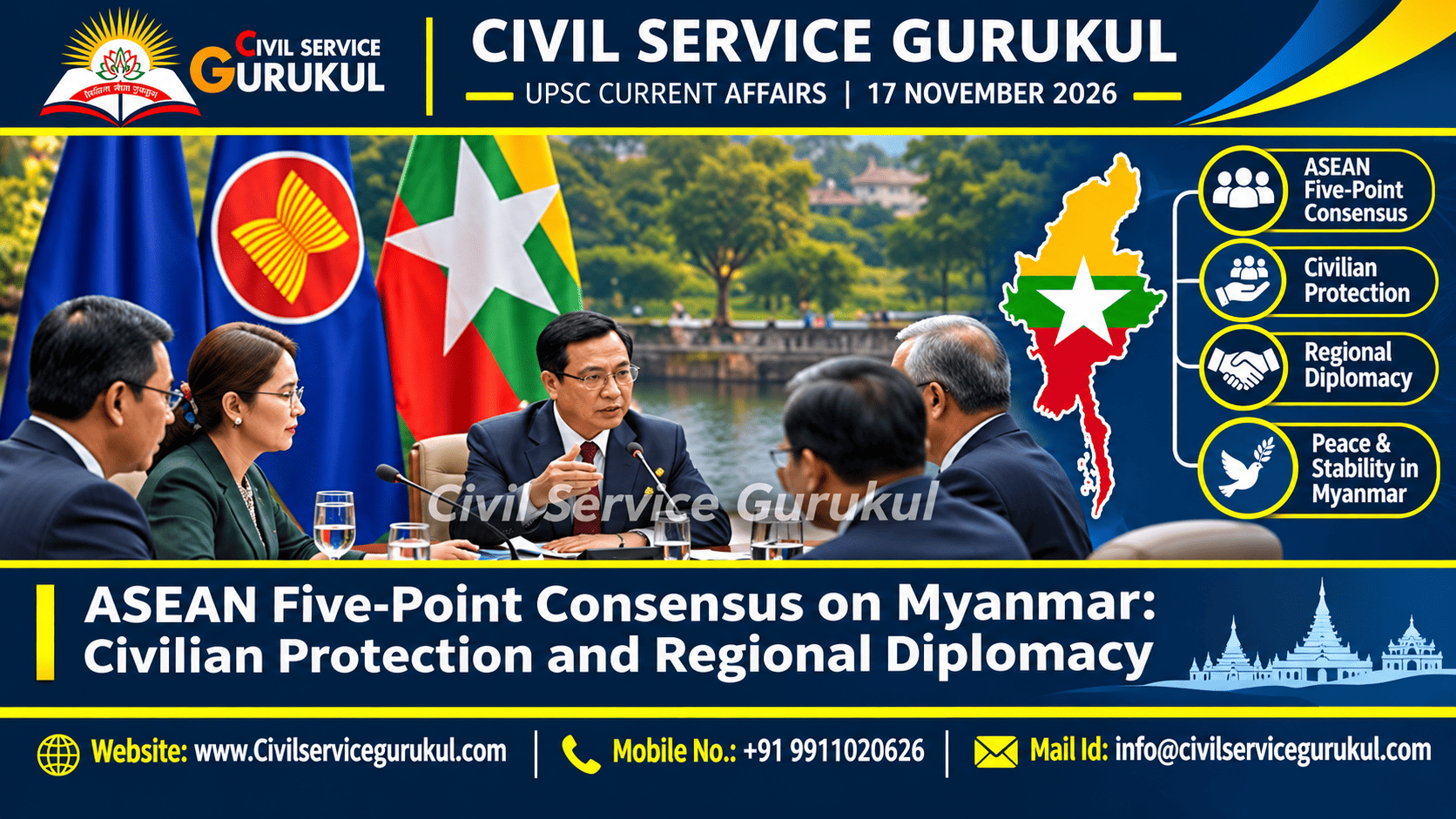
ASEAN Five-Point Consensus & Myanmar Crisis — UPSC 2026
The Myanmar crisis continues to test ASEAN's ability to promote peace, protect civilians and coordinate humanitarian assistance through regional diplomacy. The supplied editorial reports that an ASEAN review dated 15 November 2026 reaffirmed the Five-Point Consensus, condemned violence against civilians and civilian infrastructure, and called for improved humanitarian access. The crisis also has implications for India through its northeastern border, displacement concerns, trafficking risks and regional connectivity. This Civil Service Gurukul analysis examines ASEAN's Five-Point Consensus, the AHA Centre, diplomatic limitations, humanitarian neutrality and the strategic choices facing India.
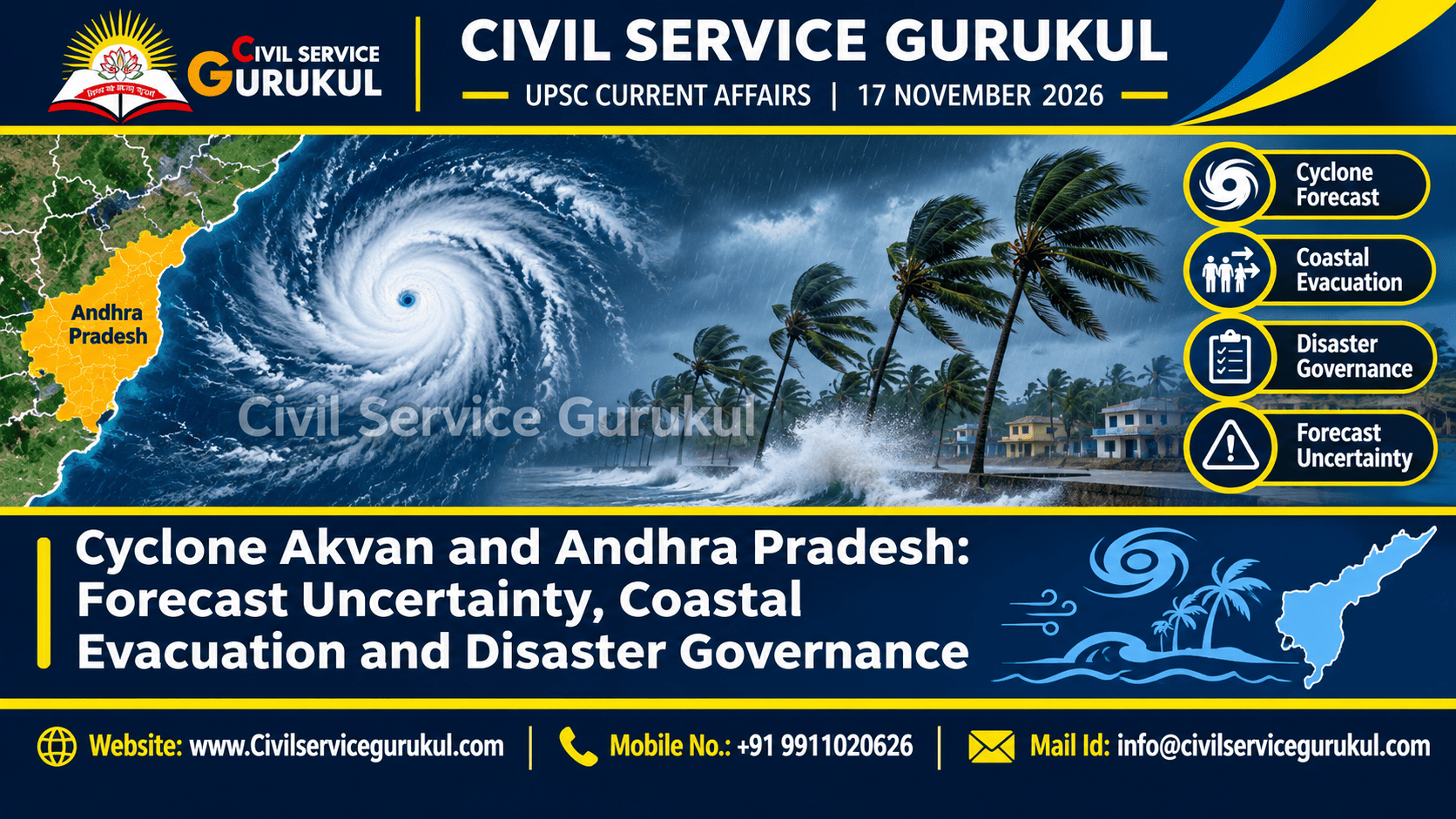
Cyclone Akvan in the Bay of Bengal: Why Andhra Pradesh's Coastal Preparedness Matters More Than Forecast Accuracy
Cyclone Akvan has brought renewed attention to cyclone forecasting, coastal evacuation and disaster preparedness along India's eastern coastline. The supplied editorial reports that IMD bulletins dated 16–17 November 2026 tracked a developing Bay of Bengal system and subsequently identified Cyclonic Storm Akvan. The key governance challenge is not merely predicting a cyclone's track but converting uncertain forecasts into timely, inclusive and actionable public warnings. This Civil Service Gurukul analysis explains cyclone formation, storm surge risks, forecast uncertainty, Andhra Pradesh's coastal vulnerabilities, institutional responsibilities and strategies for equitable disaster preparedness.

Women's Cash Transfers in India: Empowerment & UPSC
Women-focused cash transfers have emerged as an important welfare policy instrument in India. Regular financial assistance may improve household consumption, reduce immediate economic insecurity and expand women's choices. However, receiving money in a bank account does not automatically ensure financial independence or economic empowerment. True financial agency depends on women's control over resources, reliable payments, access to banking services, mobility, childcare, employment opportunities and freedom from coercion. This Civil Service Gurukul analysis examines the opportunities, limitations, governance challenges and fiscal implications of women-focused cash transfers, with UPSC Prelims and Mains preparation.
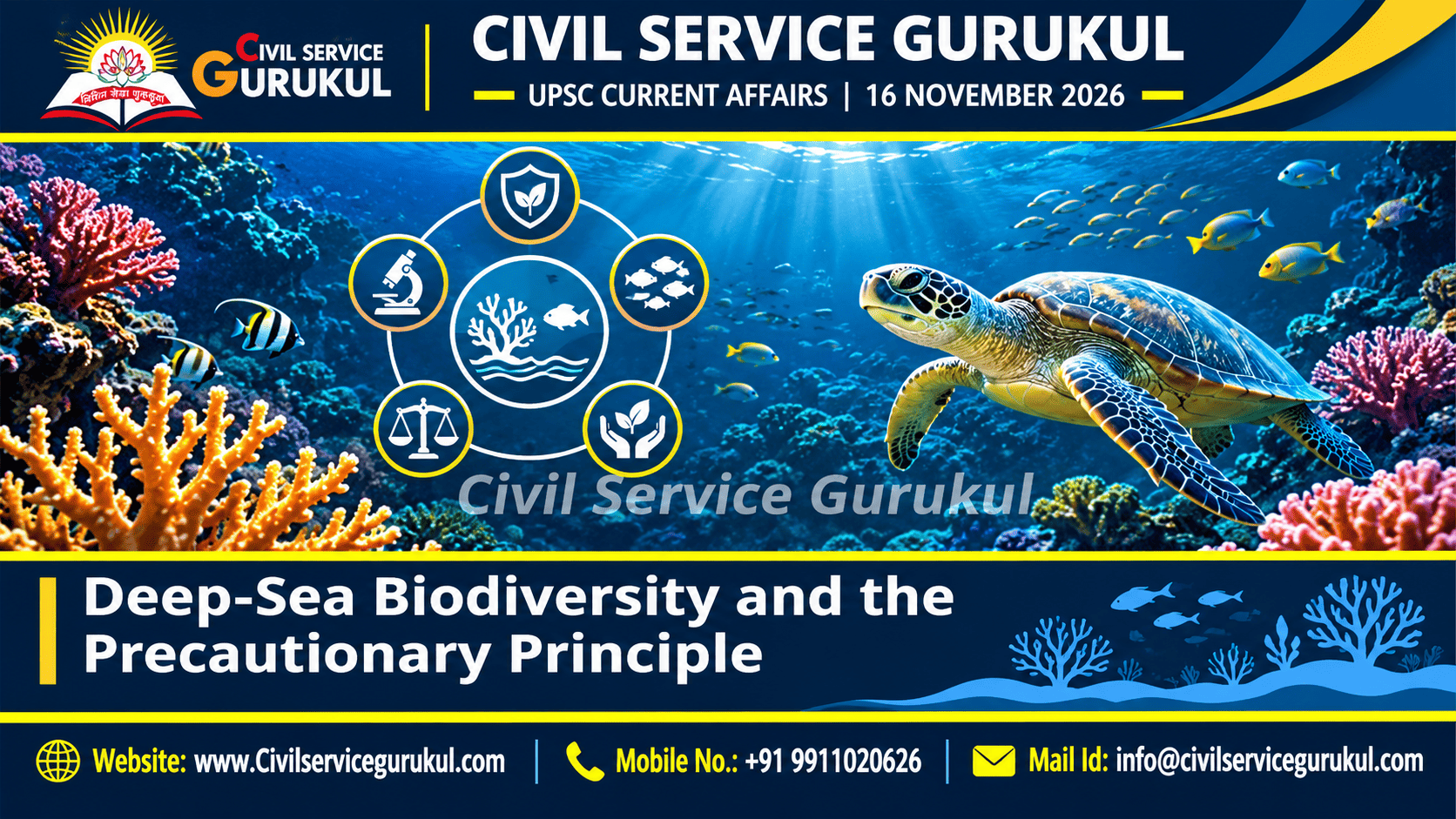
India's Deep Ocean Mission: Can We Explore the Seabed Without Destroying Marine Biodiversity?
India's deep-ocean ambitions present opportunities for marine scientific discovery, seabed mapping, advanced engineering and the exploration of ocean resources. However, deep-sea ecosystems remain poorly understood, and environmental disturbances may have long-lasting consequences. The precautionary principle calls for careful assessment before potentially harmful activities proceed. This Civil Service Gurukul analysis examines India's Deep Ocean Mission, human-occupied submersibles, marine biodiversity, seabed mineral extraction, environmental uncertainty, scientific safeguards and sustainable ocean governance.
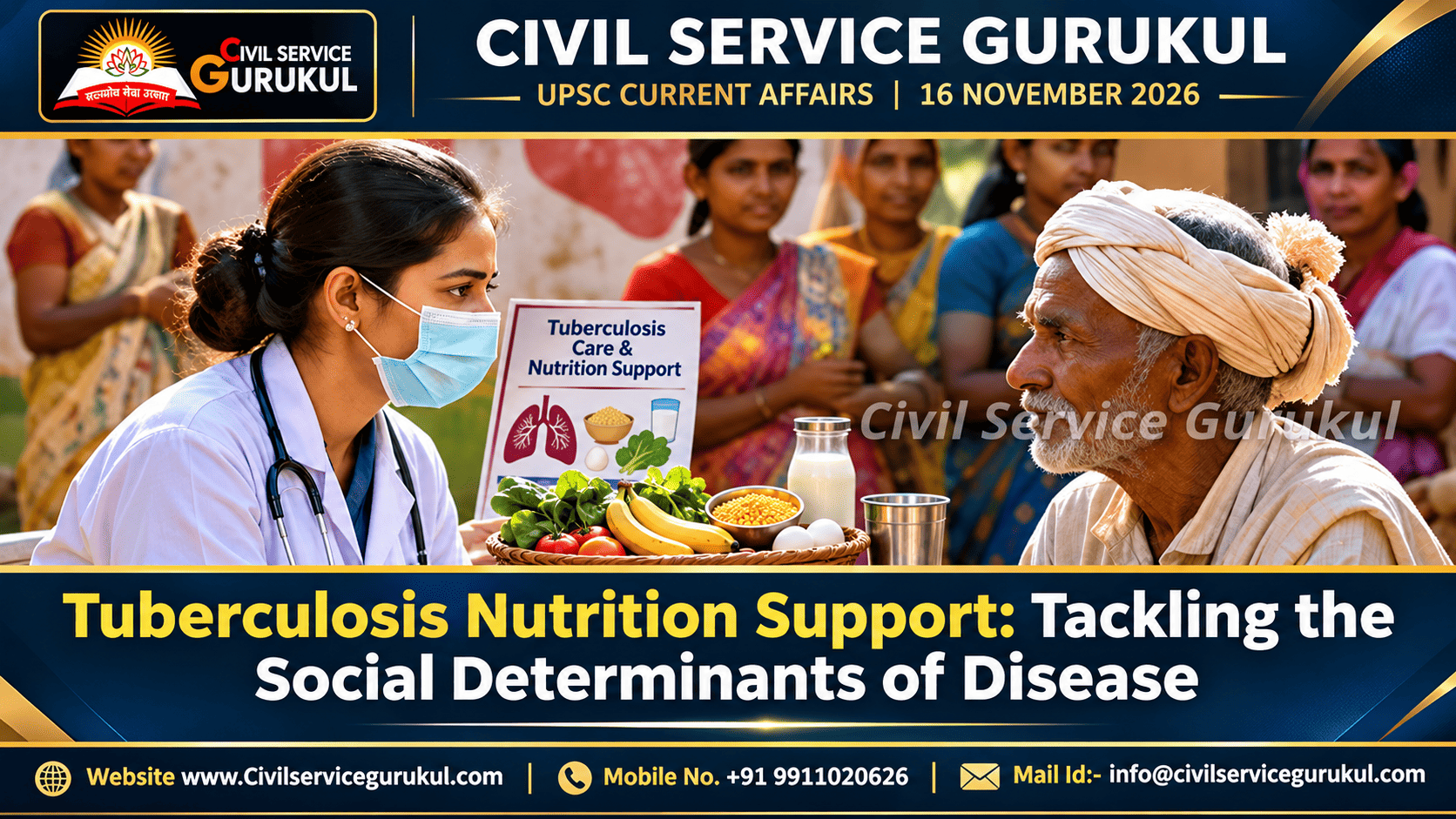
India's Fight Against Tuberculosis: Why Nutrition, Poverty and Social Protection Matter Beyond Medicines
India's fight against tuberculosis requires more than timely diagnosis and effective medicines. Malnutrition, poverty, inadequate housing, income insecurity, social stigma and fragmented healthcare can undermine treatment adherence and recovery. Nutritional assistance and patient-centred follow-up are therefore essential components of a comprehensive TB response. This Civil Service Gurukul analysis examines the social determinants of tuberculosis, drug resistance, healthcare financing, nutrition support, public health governance and policy measures needed to strengthen India's TB elimination efforts.
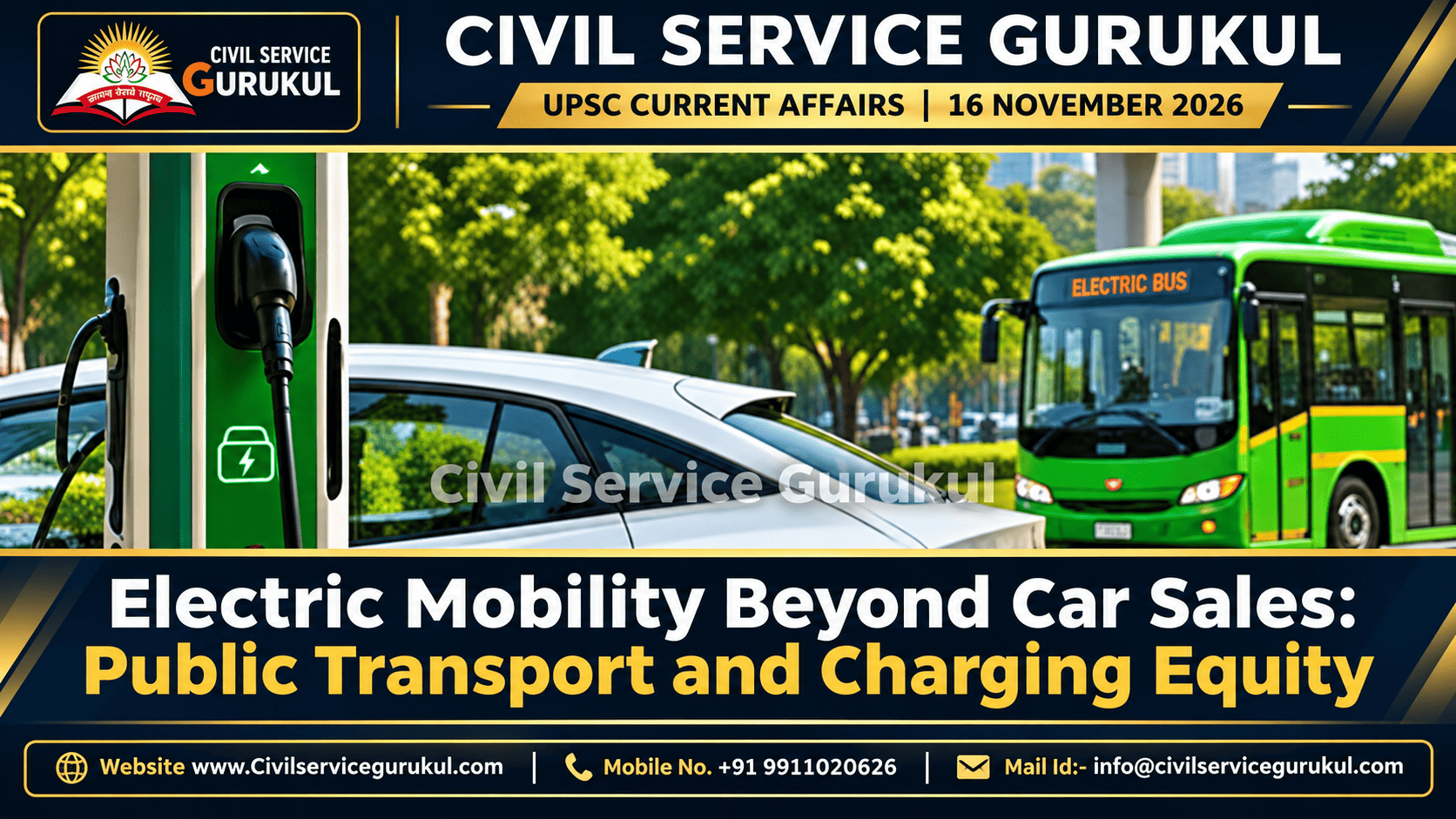
India's Electric Mobility Revolution: Why EV Sales Alone Cannot Solve Urban Transport Challenges
India's transition to electric mobility presents opportunities to reduce transport-related pollution and dependence on petroleum fuels. However, increasing electric car sales alone cannot guarantee sustainable urban transport. Congestion, weak public transport, inadequate pedestrian infrastructure, unequal charging access and electricity generation patterns remain important challenges. This Civil Service Gurukul analysis examines electric vehicles, public transport reform, EV charging equity, lifecycle emissions, vehicle sales statistics and policy priorities for building cleaner, accessible and inclusive Indian cities.
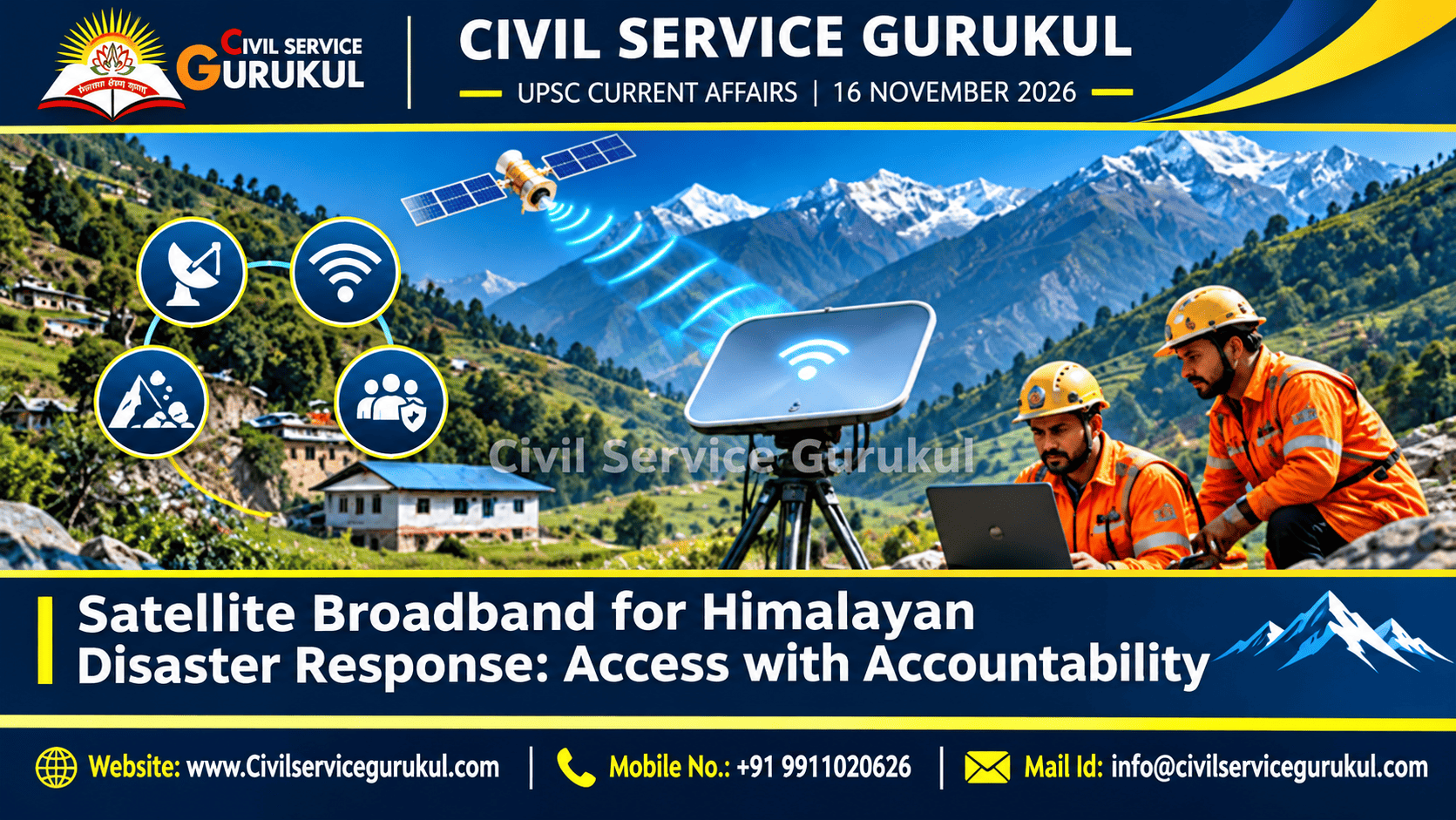
Satellite Internet in the Himalayas: Can Space Technology Transform India's Disaster Response?
Himalayan communities face serious communication challenges during landslides, floods, earthquakes and other natural disasters. When terrestrial networks fail, satellite broadband can provide an alternative means of communication for emergency warnings, rescue coordination and telemedicine. However, satellite connectivity also depends on functioning ground terminals, electricity, trained personnel and reliable network management. This Civil Service Gurukul analysis examines low-Earth-orbit and geostationary satellites, disaster communication resilience, digital inclusion, cybersecurity, sovereign controls and the need for accountable emergency connectivity governance.

Maritime Insurance & Indo-Pacific Trade Risks — UPSC
Geopolitical tensions in the Indo-Pacific can increase global shipping costs even when maritime routes remain open. Higher insurance premiums, vessel diversions, container delays and trade financing expenses can transmit regional security risks to businesses and consumers. The Taiwan Strait is particularly important because of its strategic location and East Asia's concentrated semiconductor supply chains. This Civil Service Gurukul analysis examines maritime trade insurance, the Indo-Pacific risk premium, India's import-export vulnerabilities, economic consequences and policy options for strengthening trade resilience.
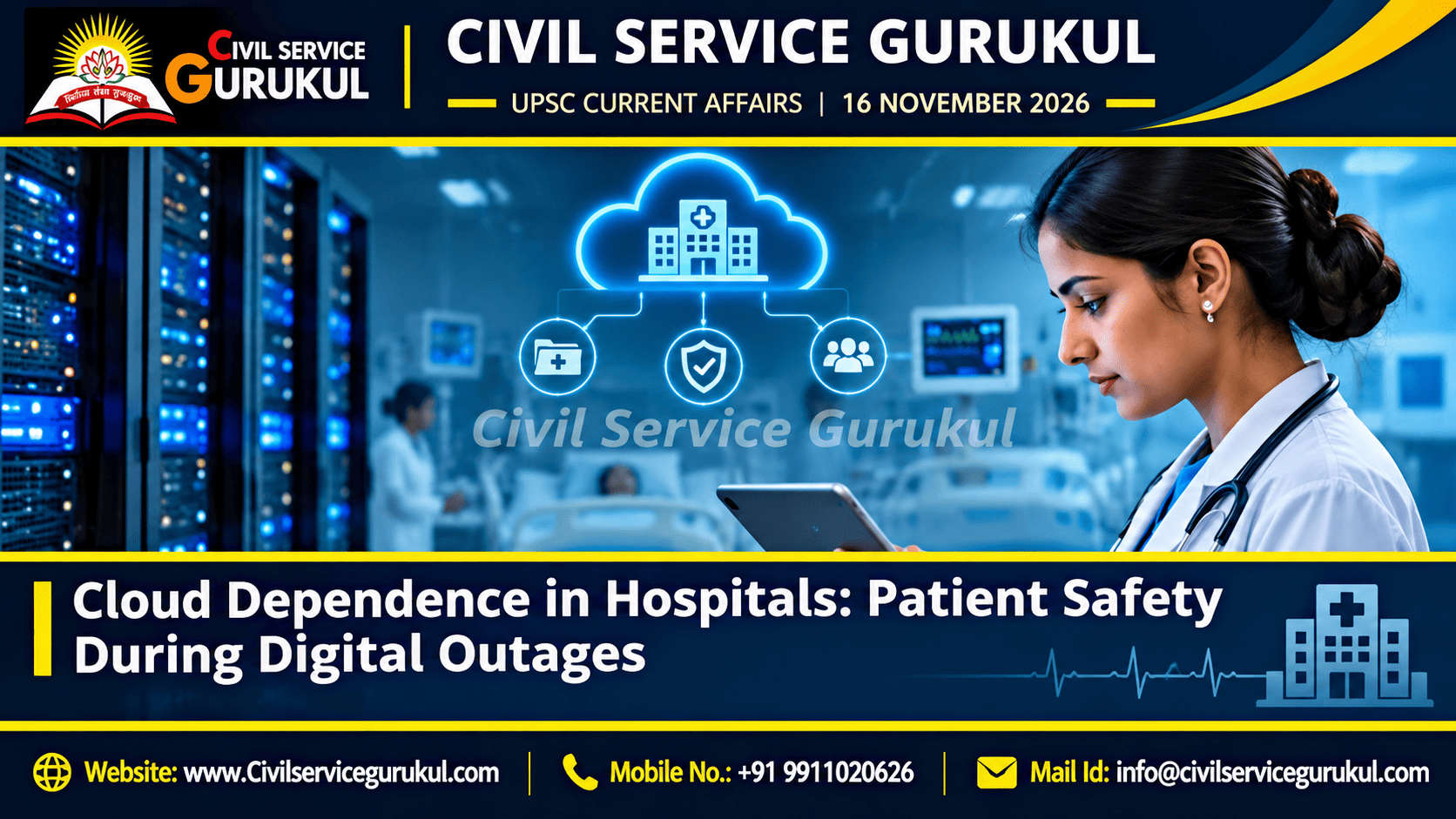
Hospital Cloud Outages: Patient Safety & UPSC 2026
Hospitals increasingly depend on electronic health records, cloud-hosted applications, remote diagnostics and digital appointment systems. While digitalisation can improve healthcare delivery, a cloud outage may disrupt patient records, medication workflows and essential clinical services—even without a cyberattack. This Civil Service Gurukul analysis examines hospital digital resilience, recovery time objectives (RTO), recovery point objectives (RPO), offline clinical workflows, secure backups, patient privacy and governance responsibilities. It also provides UPSC Prelims MCQs and Mains answer-writing guidance.
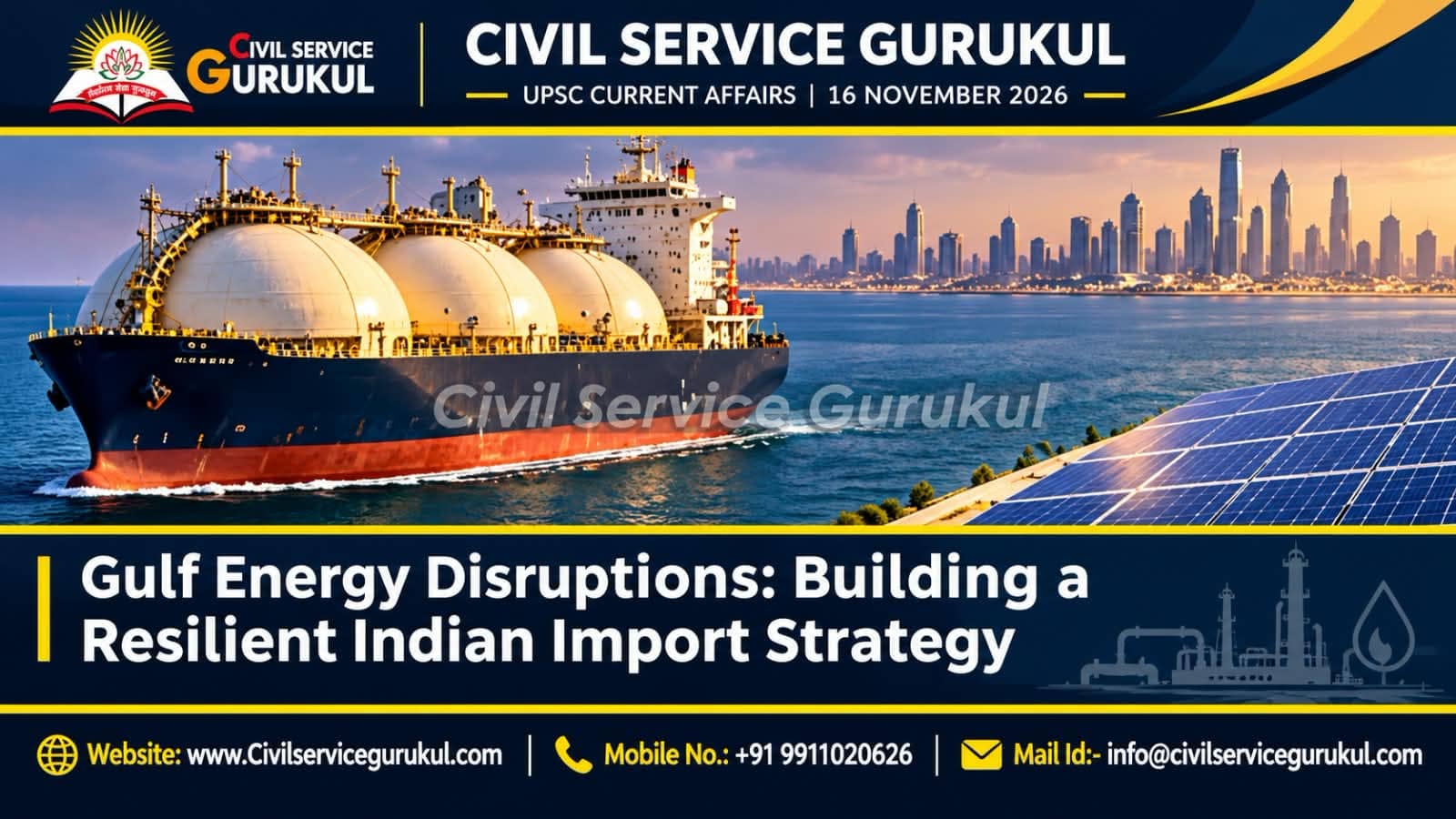
Gulf Energy Crisis & India's Energy Security — UPSC 2026
Rising geopolitical tensions in the Gulf region highlight India's vulnerability to disruptions in crude oil and liquefied natural gas supplies. Shipping delays, tanker insurance costs, volatile energy prices and the safety of Indian expatriates create interconnected economic and diplomatic challenges. The Strait of Hormuz, connecting the Persian Gulf with the Gulf of Oman, is a strategically important maritime passage. This Civil Service Gurukul UPSC analysis examines India's energy security challenges and explores how strategic petroleum reserves, diversified suppliers, maritime coordination, energy efficiency and diplomatic engagement can strengthen national resilience.