
Dancing Girl of Mohenjo-daro: UPSC Heritage Analysis 2026
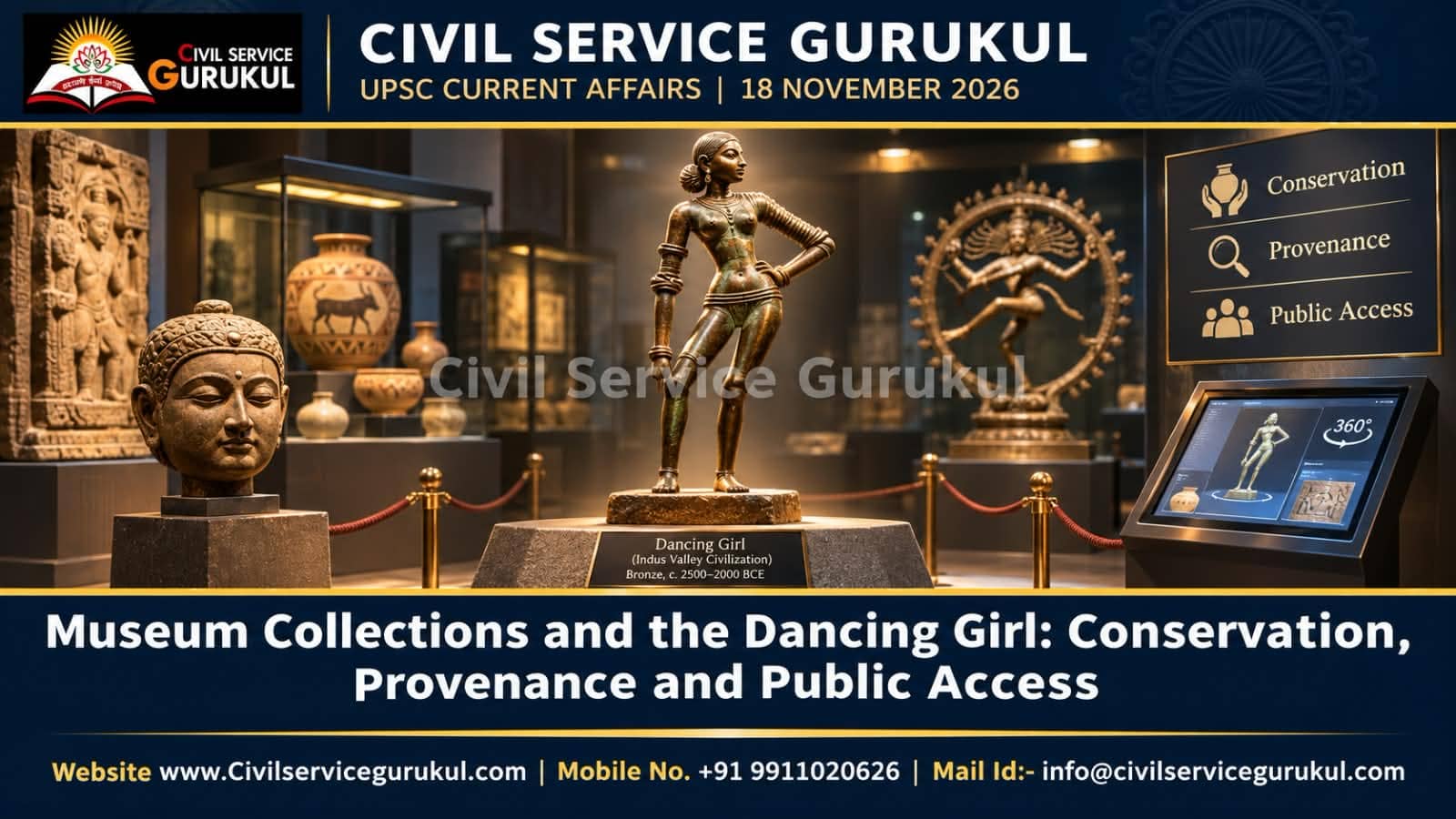
Dancing Girl of Mohenjo-daro: Museum Relocation, Heritage Conservation and India's Cultural Legacy
A comprehensive UPSC analysis of the iconic Harappan bronze sculpture, the reported Yuge Yugeen Bharat Museum relocation plan, provenance, conservation science and public access to cultural heritage.
1. Why Is the Dancing Girl in the News?
A November 2026 news topic reports plans concerning the relocation of the Dancing Girl sculpture and the Nizam's jewels to the Yuge Yugeen Bharat Museum.
The report raises wider questions about the management of historically important museum collections.
Moving a valuable artefact is not simply a logistical exercise. It requires conservation planning, scientific assessment, security and institutional accountability.
2. Dancing Girl of Mohenjo-daro: Historical Background
The Dancing Girl is one of the most celebrated bronze artefacts associated with the Indus Valley Civilisation.
It was discovered at Mohenjo-daro, an important urban centre of the Harappan Civilisation.
The sculpture is particularly significant for the study of ancient metalworking, artistic expression and material culture.
Important Features
- It is a bronze figurine.
- It is associated with Mohenjo-daro.
- It belongs to the cultural context of the Indus Civilisation.
- It demonstrates sophisticated ancient metalworking.
- It is an important example of Harappan artistic expression.
3. Why Is the Dancing Girl Historically Important?
A. Evidence of Metalworking
The sculpture demonstrates the technical capabilities of ancient craftspeople working with bronze.
B. Artistic Expression
Its posture and form provide evidence of artistic experimentation within Harappan material culture.
C. Archaeological Value
The artefact contributes to the understanding of craft traditions and cultural expression in the Indus Civilisation.
D. Educational Value
It offers a tangible connection between archaeological research and public understanding of ancient Indian history.
4. Indus Valley Civilisation and Bronze Craftsmanship
The Indus Valley Civilisation is known for its urban settlements, craft specialisation, trade networks and material culture.
Archaeological discoveries include pottery, seals, ornaments, tools, terracotta objects and metal artefacts.
The Dancing Girl provides an important example of bronze craftsmanship within this wider archaeological context.
What Is the Lost-Wax Technique?
The lost-wax method is a metal-casting technique in which a model is formed using wax and subsequently replaced by molten metal.
It enables the production of detailed metal objects and is associated with the manufacture of ancient bronze figurines.
| Feature | Dancing Girl |
|---|---|
| Archaeological Site | Mohenjo-daro |
| Civilisation | Indus Valley / Harappan Civilisation |
| Material | Bronze |
| Significance | Ancient metalworking and artistic expression |
| UPSC Subject | Ancient Indian History and Art & Culture |
5. Yuge Yugeen Bharat Museum: Current Affairs Context
The Yuge Yugeen Bharat Museum is associated with a major initiative to present India's historical and cultural heritage through museum displays.
The reported proposal to include important collections such as the Dancing Girl and the Nizam's jewels raises questions about the responsibilities of a large public museum.
A museum's success depends not only on the scale of its building or the prominence of its collections.
It also depends on conservation quality, scholarly interpretation, accessibility and public trust.
6. Museum Conservation: Why Artefact Relocation Is Complex
Conservation seeks to protect cultural objects from deterioration, damage and avoidable loss of information.
When an artefact is relocated, risks may arise during handling, packing, transportation, unpacking and display.
Essential Steps in Museum Relocation
Document the object's existing physical condition before any movement.
Identify material-specific risks and required protective measures.
Use appropriate protective materials and handling methods.
Establish controlled custody and secure transportation procedures.
Manage temperature, humidity and other relevant conditions.
Reassess condition and document any changes after movement.
7. Preventive Conservation vs Restoration
| Concept | Meaning |
|---|---|
| Preventive Conservation | Measures designed to minimise deterioration and risk before damage occurs. |
| Conservation Treatment | Professional intervention to stabilise or protect an object. |
| Restoration | Intervention intended to improve understanding or appreciation of an object, subject to professional standards. |
| Documentation | Recording an object's condition, treatment, history and movement. |
8. What Is Provenance in Museum Collections?
Provenance refers to the documented history of an object's ownership, custody and movement over time.
It helps museums understand how an artefact entered a collection and whether relevant documentation is complete and reliable.
Why Is Provenance Research Important?
- It supports historical and archaeological research.
- It helps establish the documented custody history of an object.
- It can identify gaps or disputes in collection records.
- It supports ethical acquisition and collection management.
- It improves transparency and public trust.
9. Provenance vs Ownership vs Public Display
| Concept | Key Question |
|---|---|
| Provenance | What is the documented history of the object? |
| Legal Ownership | Who holds the legally recognised ownership rights? |
| Custody | Which institution physically holds or manages the object? |
| Public Display | Where and how is the object exhibited? |
| Conservation Responsibility | Who is accountable for protecting the object's condition? |
These concepts are related but should not be treated as identical.
An artefact may be displayed in a particular museum without that display alone establishing its legal ownership.
10. Museums as Public Institutions
Public museums perform educational, cultural and research functions.
They preserve material heritage while helping people understand historical experiences, craft traditions and cultural change.
Major Public Responsibilities
- Preservation of historically significant collections.
- Accurate and accessible interpretation.
- Research and scholarly documentation.
- Inclusive educational programmes.
- Responsible collection management.
- Transparency and accountability.
11. Why Public Access Matters
Heritage institutions serve a wider public purpose when collections are accessible to diverse groups.
Access involves more than simply opening a building to visitors.
It also includes language, affordability, physical accessibility, digital information and educational relevance.
Explain exhibits through accessible language options.
Provide online
Prepare with Mentors Who Cleared the Exam
Get personalized study plans, evaluated answer models, and test series access.