Daily Current Affairs & News Analysis
Our daily news analysis consists of two integral parts — Daily News Analysis and Important Editorials curated rigorously from The Hindu, The Indian Express, LiveMint, PIB, and Sansad TV debates. Content is mapped directly to UPSC CSE and State PCS syllabi.

AIFs, FPIs & Beneficial Ownership 2026 – UPSC
A reported Supreme Court dispute over beneficial ownership disclosure requirements for Alternative Investment Funds (AIFs) and Foreign Portfolio Investors (FPIs) raises an important question: how should regulators balance financial transparency with investor confidentiality and lawful regulatory authority? This UPSC-focused article examines SEBI's role, complex investment structures, disclosure obligations, market integrity, legal certainty and proportionate regulation.

India–Cuba UNGA Vote 2026: US Embargo & UPSC
India's reported support for a United Nations General Assembly resolution calling for an end to the US embargo against Cuba highlights important principles of its foreign policy. The issue connects strategic autonomy, multilateral diplomacy, national sovereignty, economic sanctions and humanitarian considerations. This UPSC-focused analysis explains the history of the Cuba embargo, the legal significance of UNGA resolutions, competing international perspectives and the implications for India's global diplomatic role.

Wake-Up Stroke 2026: Brain Imaging & UPSC Analysis
Wake-up stroke presents a major challenge in emergency medicine because patients develop or discover stroke symptoms during sleep, leaving the exact onset time unknown. Advances in brain imaging, particularly MRI diffusion–FLAIR mismatch and perfusion assessment, can help specialists identify selected patients who may benefit from treatment. This UPSC-focused analysis examines the science behind stroke imaging, treatment limitations, public-health infrastructure, rural healthcare challenges and the importance of timely emergency response.
Biofortified Potatoes 2026: Hidden Hunger & UPSC
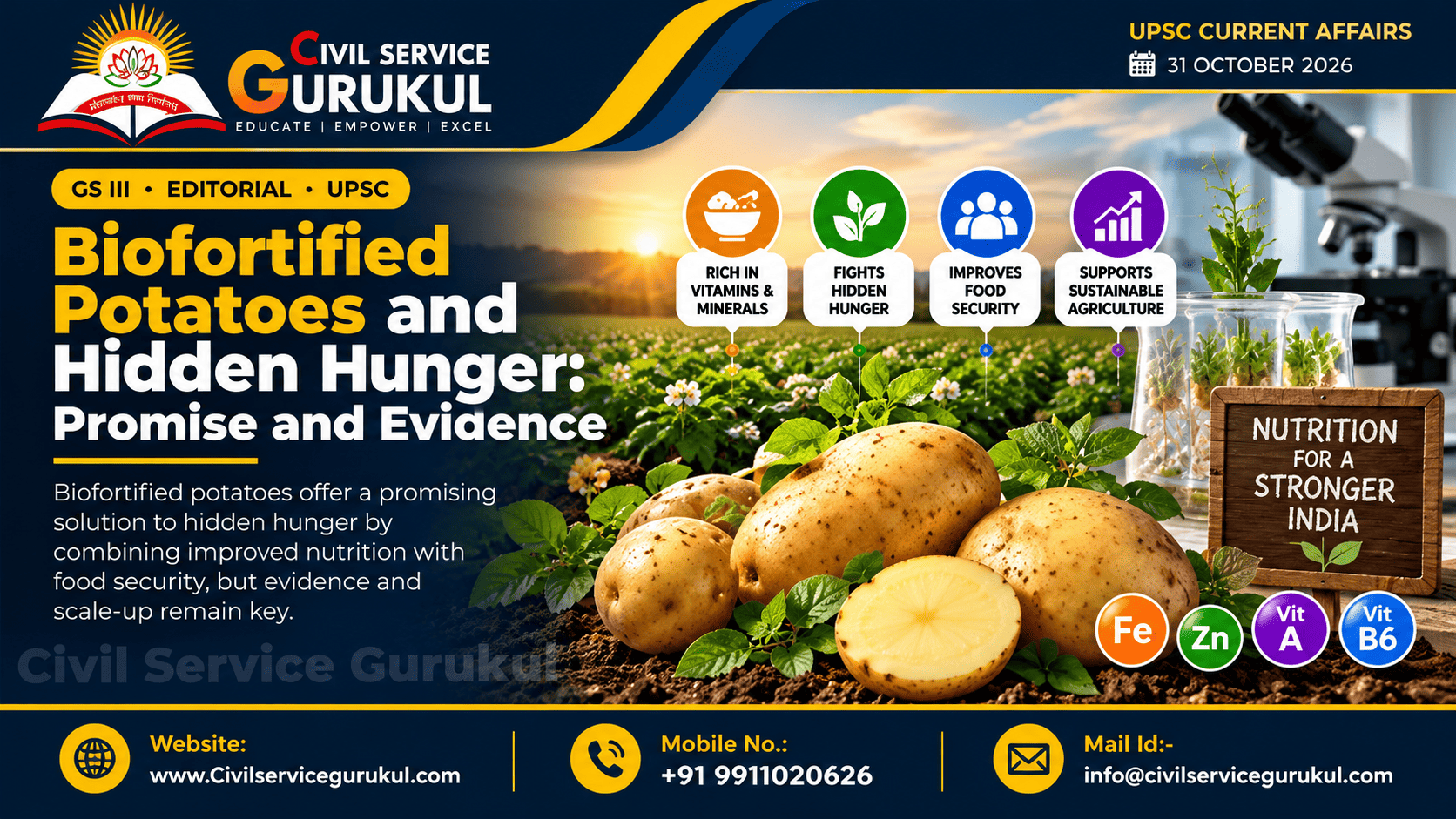
Biofortified potatoes are attracting attention as a potential tool against hidden hunger, a form of malnutrition caused by inadequate essential micronutrients. This UPSC-focused analysis explores crop biofortification, nutrient bioavailability, ICAR potato varieties, agricultural challenges, public-health implications and the scientific evidence needed before claiming improvements in nutritional outcomes.
Firecracker Restrictions 2026: Air Quality & UPSC
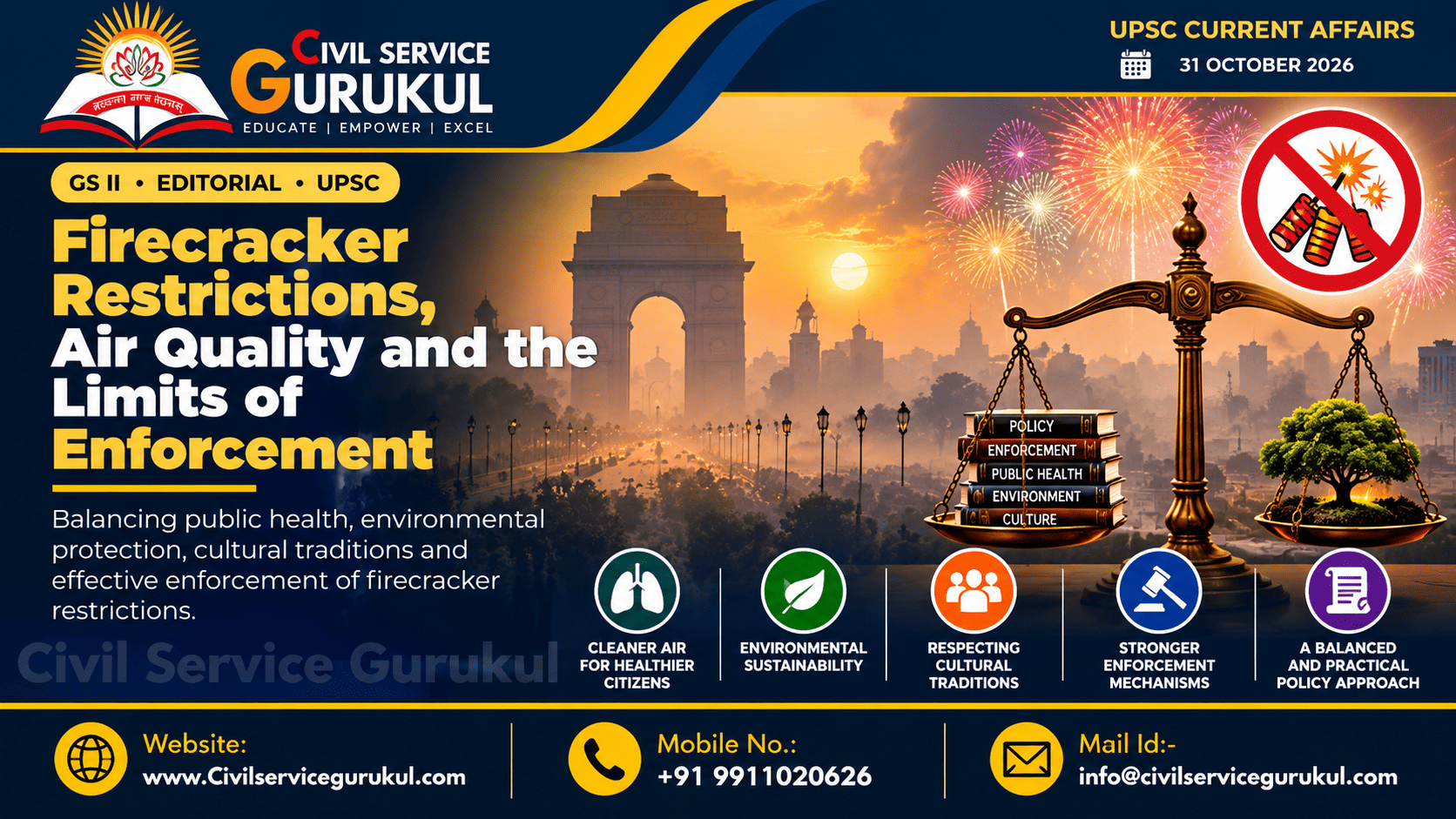
Firecracker restrictions have renewed debate over India's air-quality governance and the difficulties of enforcing environmental regulations. Fireworks can intensify short-term particulate pollution, particularly when weather conditions prevent pollutants from dispersing. This UPSC-focused analysis examines the legal framework, judicial intervention, regulatory institutions, public health concerns, enforcement failures, livelihood implications and practical solutions for sustainable air-quality management.

Digital Arrest Scams 2026: Victim Compensation & UPSC
Digital arrest scams have emerged as a serious form of impersonation-based cybercrime in India. Fraudsters pose as police officers or government investigators to intimidate victims into transferring money. The growing concern over financial losses has raised important questions about victim compensation, banking accountability, rapid fund recovery and legal safeguards. This UPSC analysis examines India's cybercrime reporting framework, challenges in victim protection and reforms needed to ensure fair, timely and transparent remedies.
India–New Zealand FTA 2026: Benefits, Challenges & UPSC
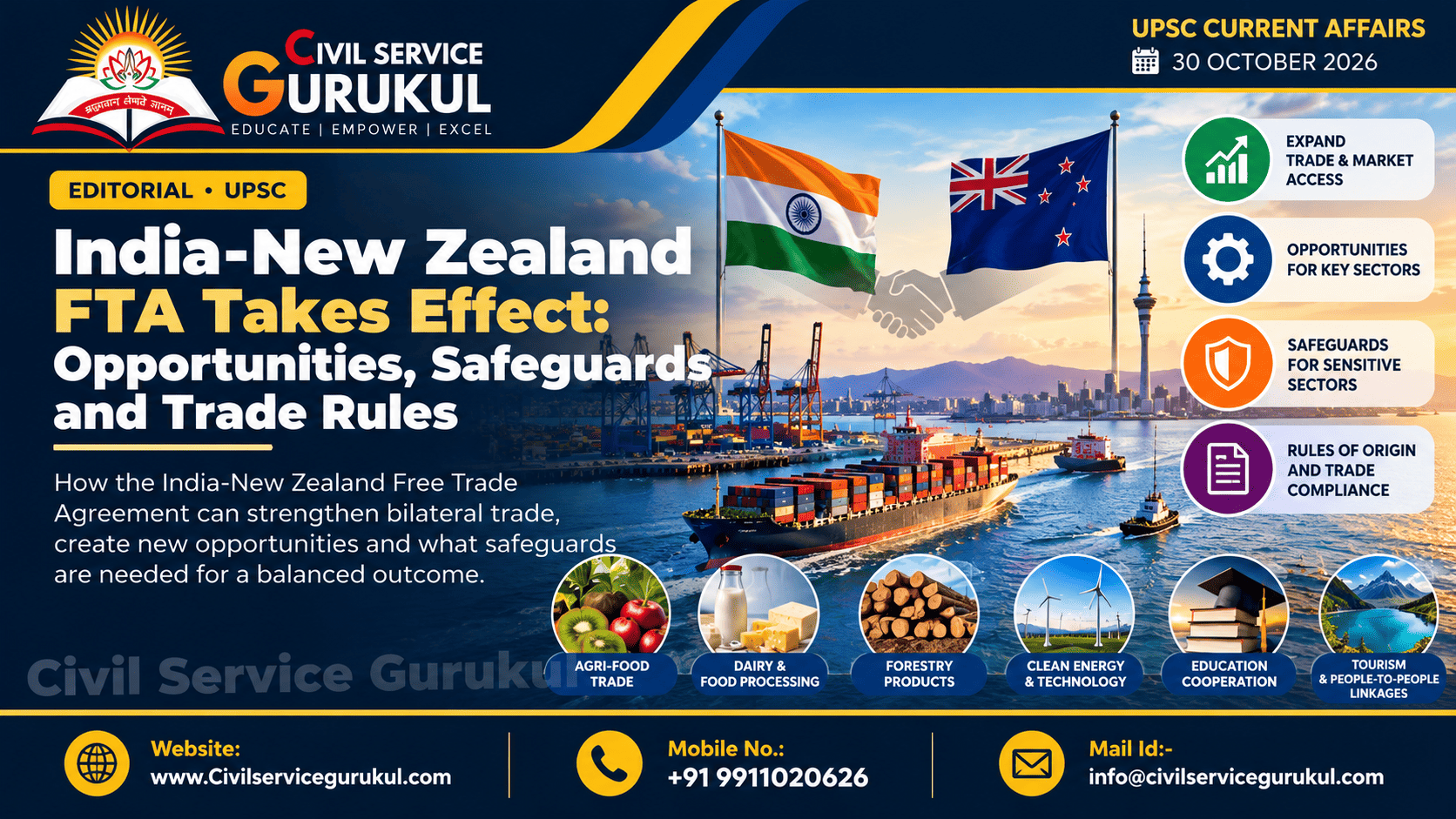
The India–New Zealand Free Trade Agreement, reported to have taken effect on 20 October 2026, opens new possibilities for Indian exporters, services professionals and bilateral investment. This UPSC analysis examines tariff concessions, sensitive agricultural sectors, rules of origin, trade opportunities, MSME challenges and India's Indo-Pacific strategy.
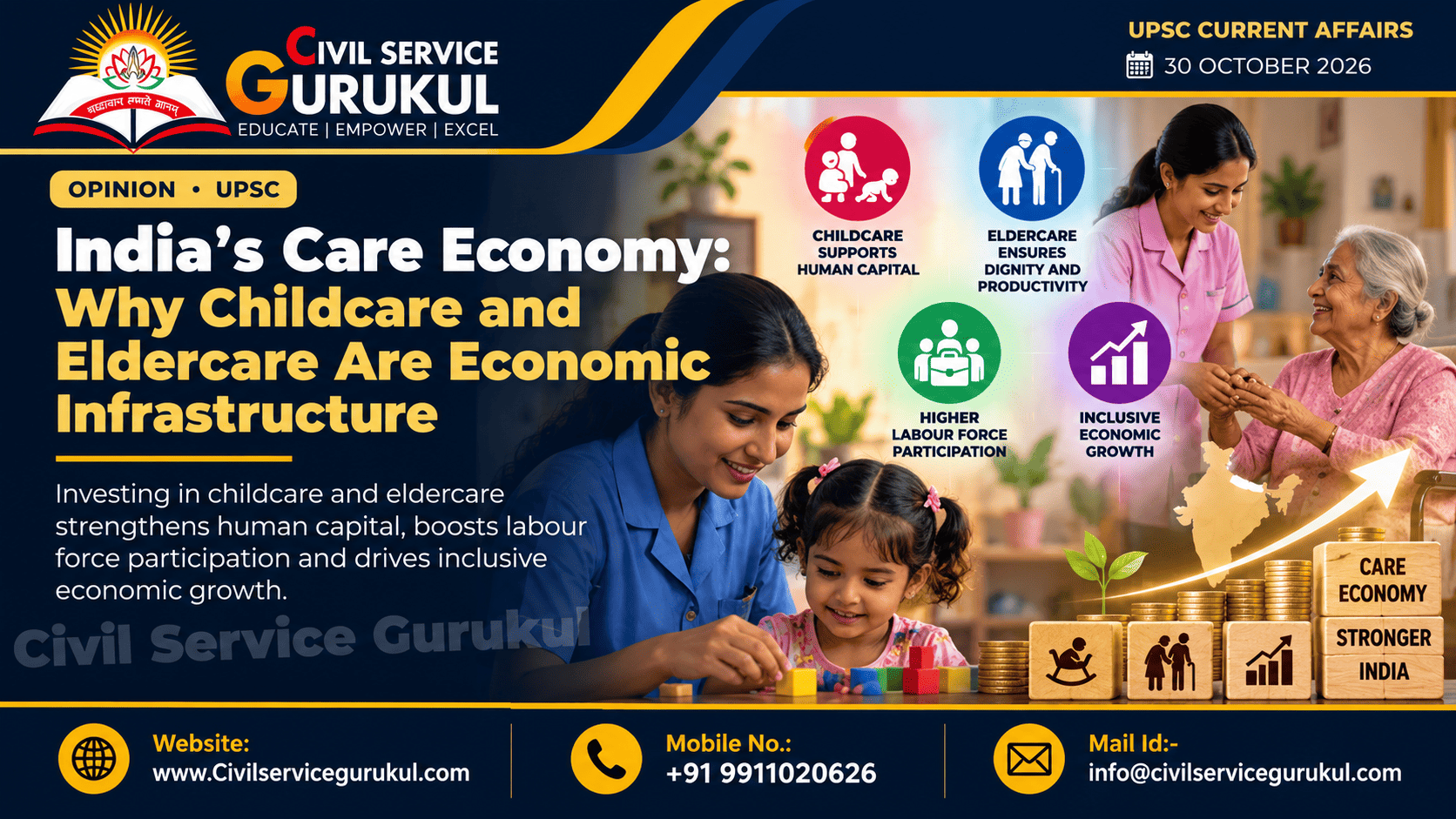
India's Care Economy 2026: UPSC GS1, GS2 & GS3
India's care economy is emerging as a crucial foundation of inclusive economic growth. Affordable childcare, dignified eldercare, disability support and recognition of unpaid caregiving can improve women's workforce participation, social protection and productivity. This UPSC analysis examines India's care infrastructure, the Time Use Survey, government initiatives, gender inequality and policy reforms.
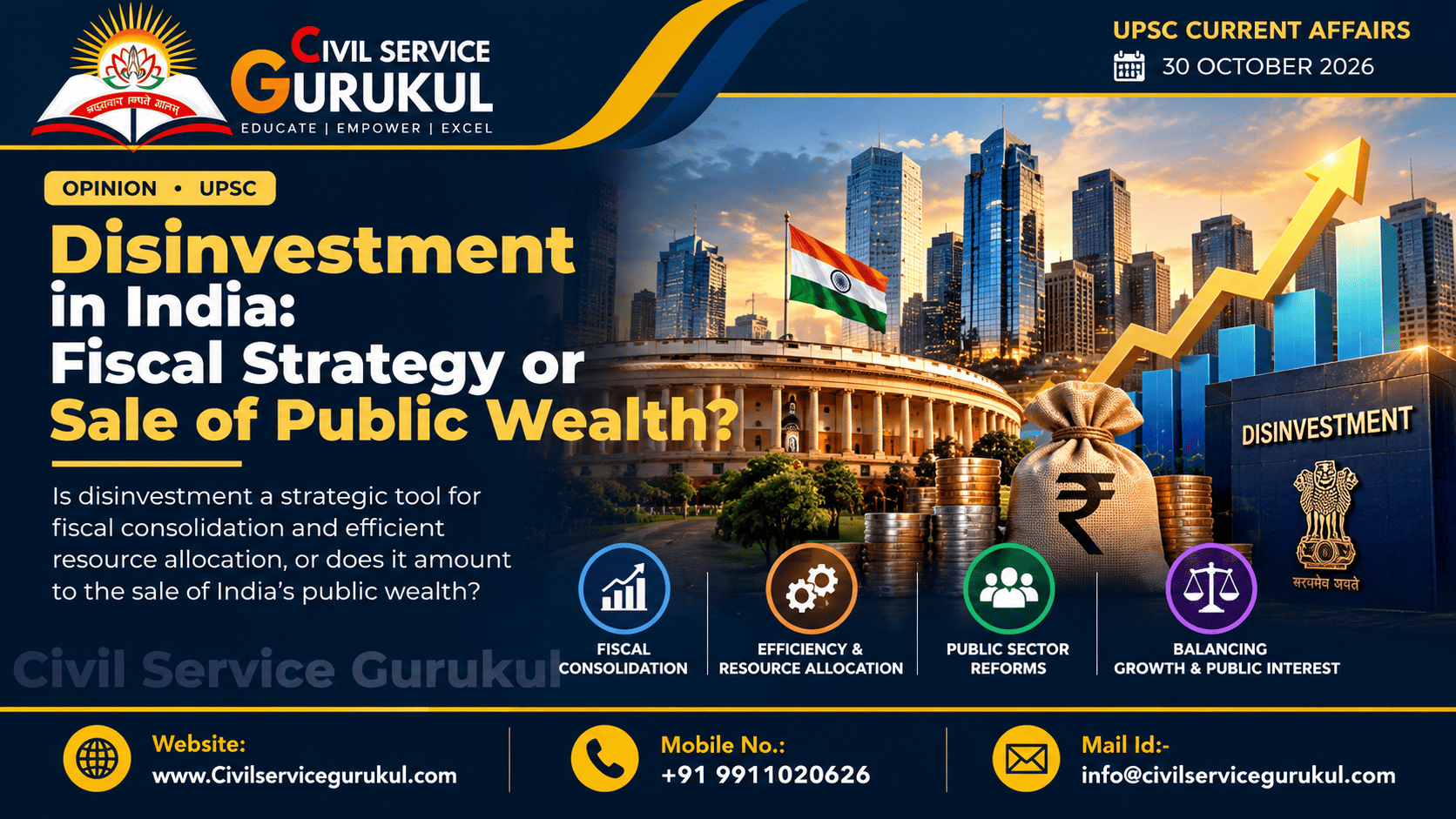
Disinvestment in India 2026–27: UPSC GS3 Analysis
India's FY 2026–27 disinvestment debate raises a fundamental economic question: should the government sell public-sector assets to strengthen its finances, or preserve them for long-term public value? This UPSC-focused analysis examines disinvestment, strategic privatisation, the National Monetisation Pipeline, fiscal implications, governance risks and the need for transparent asset management.

Matarbari Port & India–Japan Act East Policy: UPSC 2026
Japan-supported connectivity initiatives in Northeast India, alongside the development of Bangladesh's Matarbari deep-sea port, offer an opportunity to reshape trade and regional economic integration across the Bay of Bengal. Through the India–Japan Act East Forum, infrastructure cooperation, logistics development and cross-border partnerships could strengthen Northeast India's access to global markets. However, the success of this strategy depends on diplomatic coordination, transport infrastructure, customs arrangements, environmental safeguards and economic benefits for local communities.
Industrial Relations Code 2020: Supreme Court, AITUC & UPSC
The Supreme Court has reportedly agreed to examine a challenge brought by the Tamil Nadu unit of the All India Trade Union Congress (AITUC) against the definition of “industry” under Section 2(p) of the Industrial Relations Code, 2020. The dispute raises important questions about workers' legal protections, the exclusion of certain activities, constitutional equality and the limits of judicial review. This Civil Service Gurukul analysis explains the legal background, the landmark 1978 Bangalore Water Supply judgment and the implications for UPSC Prelims and Mains.
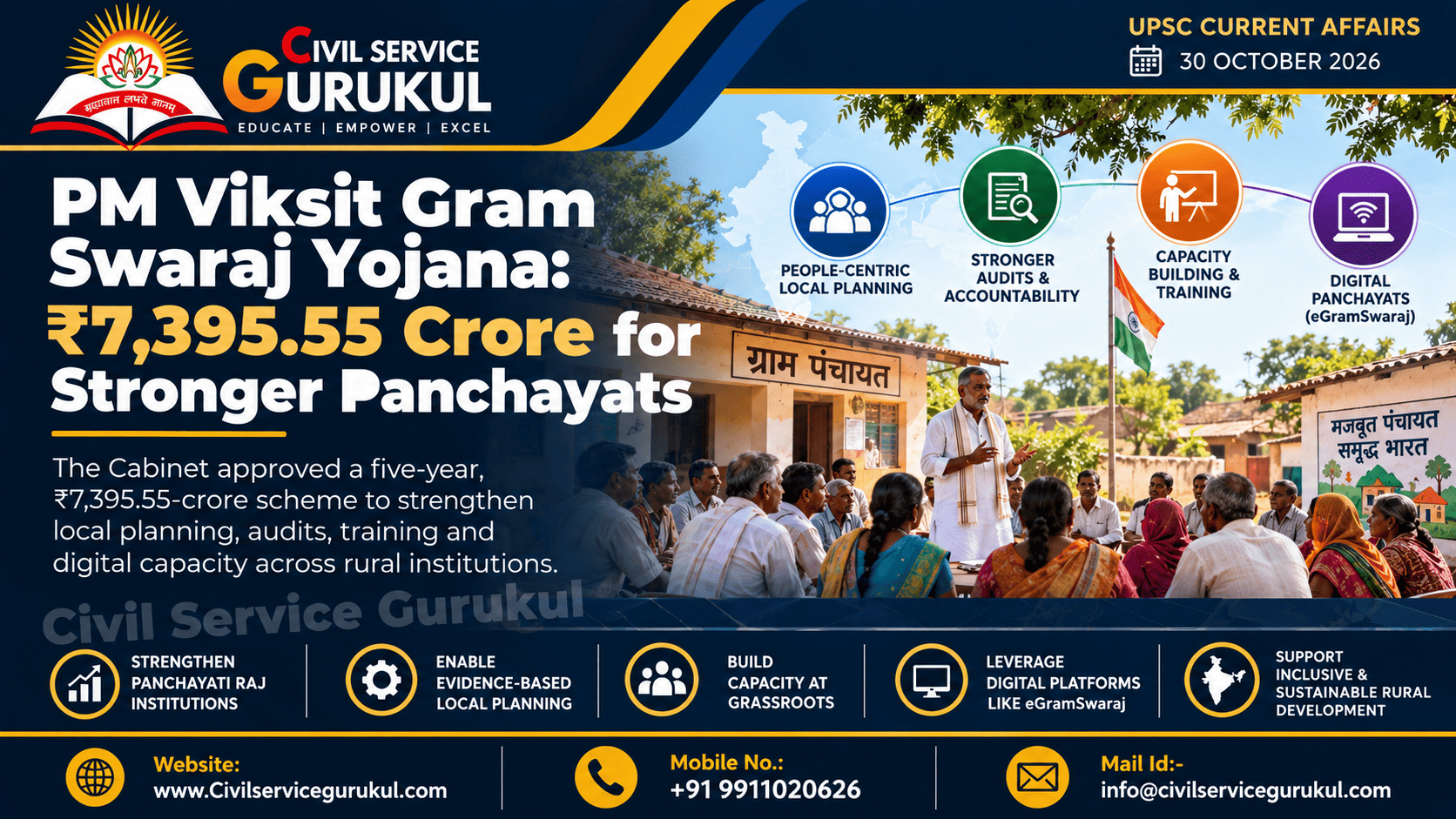
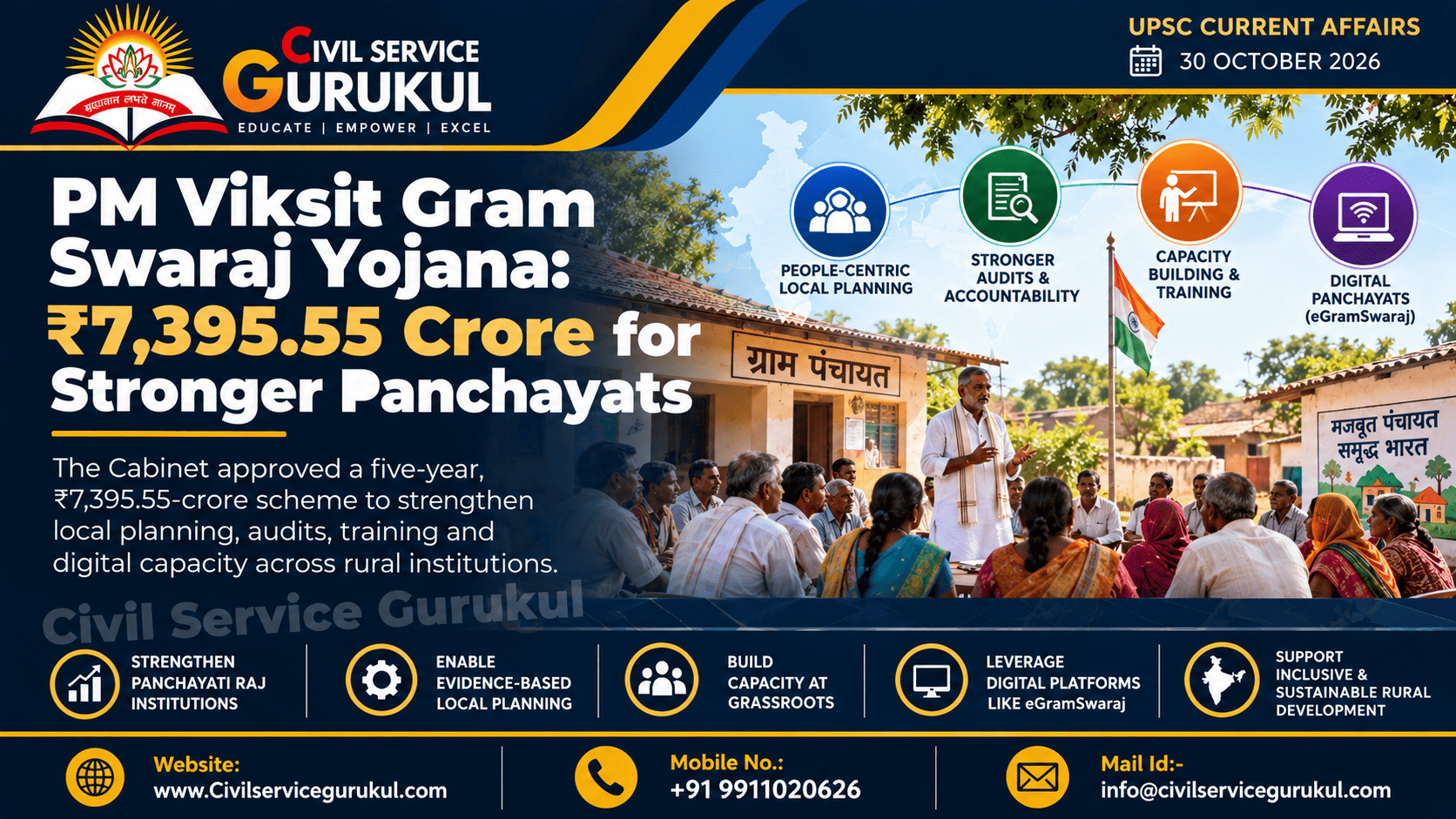
PM Viksit Gram Swaraj Yojana 2026: UPSC Analysis
The Pradhan Mantri Viksit Gram Swaraj Yojana (PM-VGSY), reported as approved by the Union Cabinet in October 2026, is a five-year initiative to strengthen Panchayati Raj institutions. With a reported outlay of ₹7,395.55 crore, it focuses on local planning, digital governance, financial accountability, training and citizen participation. This UPSC-oriented article examines its objectives, constitutional foundations, implementation challenges and implications for democratic decentralisation.

India $220 Billion Clean Energy Investment 2030 | UPSC
India's clean-energy transition may require approximately $220 billion in investment through 2030, according to reporting cited in the source article. Achieving the 500 GW non-fossil electricity capacity target involves much more than constructing solar and wind projects. Transmission networks, energy storage, DISCOM reforms, affordable financing and a just transition are equally important. This UPSC-focused analysis examines the opportunities, challenges and policy priorities.

India–Mexico PTA Talks 2026: UPSC Analysis
India and Mexico signed Terms of Reference on 28 October 2026 to initiate negotiations for a Preferential Trade Agreement. The initiative could strengthen bilateral trade, diversify supply chains and expand opportunities in pharmaceuticals, automobiles, electronics and critical minerals. This article examines the strategic importance, trade barriers, challenges and UPSC examination relevance. No final trade agreement has yet been concluded.
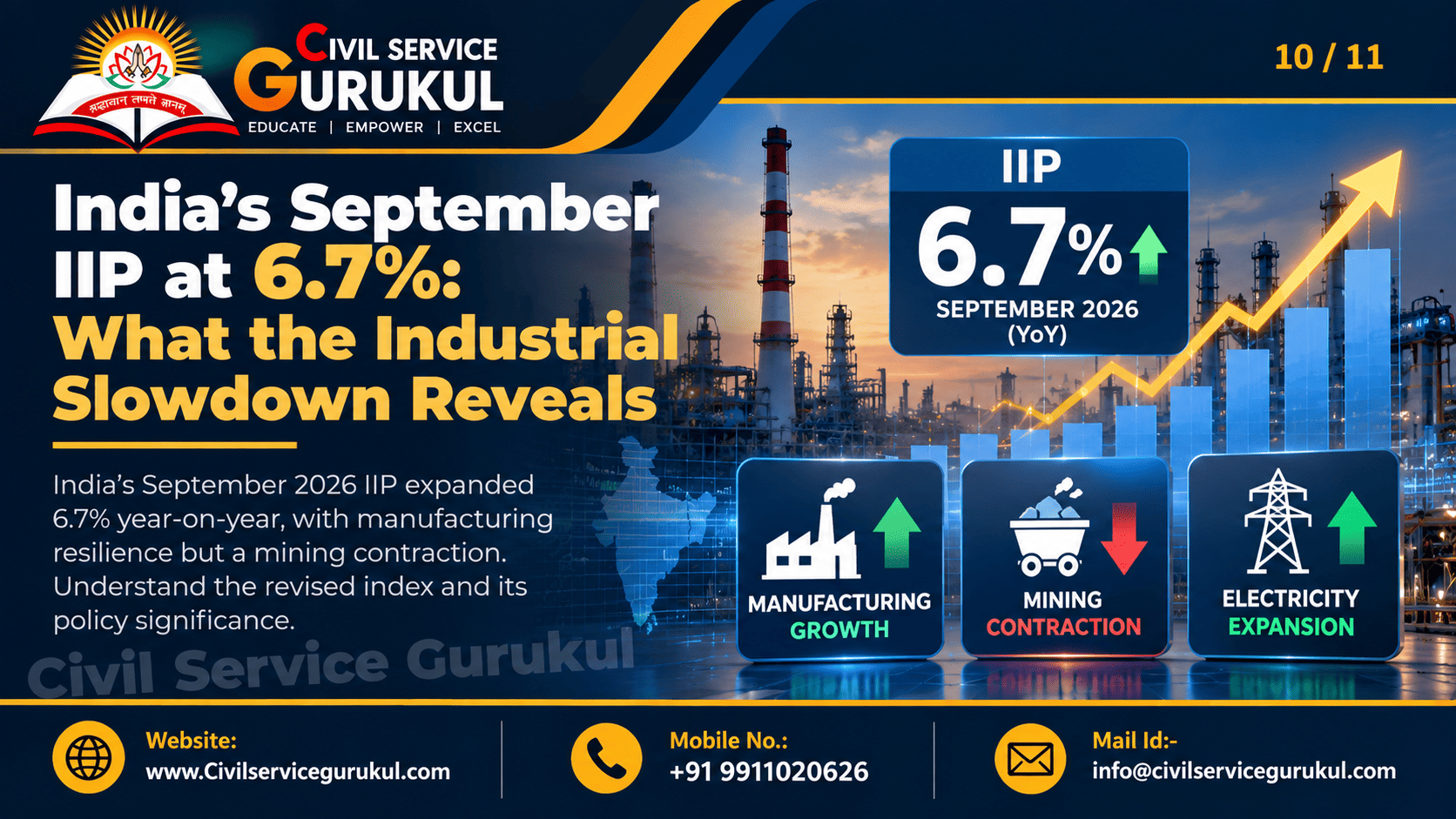
India IIP September 2026: 6.7% Growth Explained for UPSC
India's industrial production reportedly expanded by 6.7% in September 2026, moderating from August's revised 7.8% growth. Manufacturing, electricity and capital goods showed strength, while mining contracted and consumer non-durables grew slowly. This Civil Service Gurukul analysis explains the revised IIP framework, sector-wise trends, policy implications and important UPSC examination concepts.
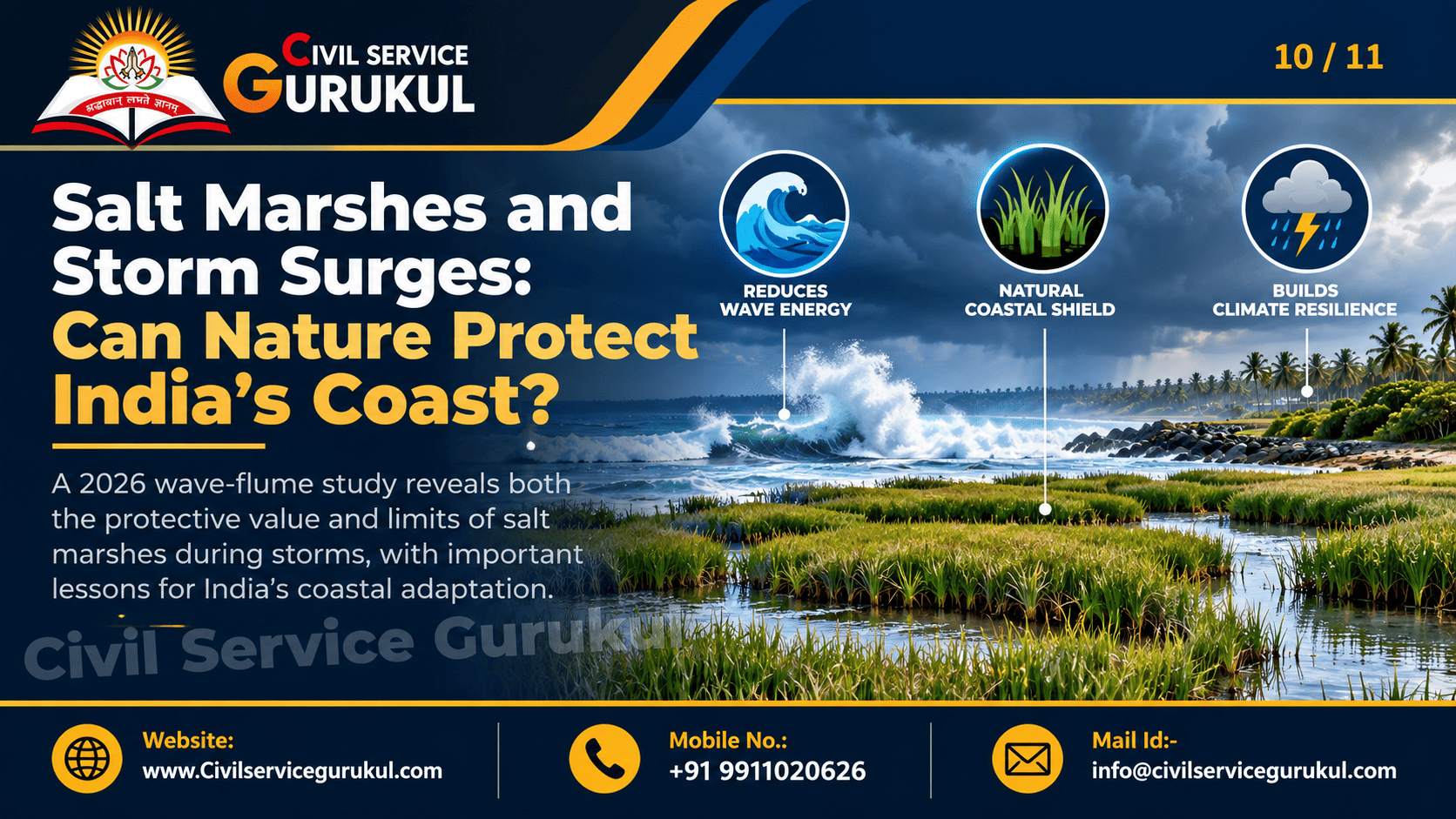
Salt Marshes and Coastal Protection: UPSC 2026
A 2026 experimental study of coastal salt marshes highlights their potential to reduce wave energy while revealing important limitations during powerful storms. Researchers observed that marsh sediment could remain relatively stable even when vegetation suffered substantial damage. For India, the findings offer lessons in cyclone preparedness, wetland conservation, blue carbon and nature-based coastal adaptation. This Civil Service Gurukul analysis explains the scientific mechanisms, policy implications and key concepts relevant to UPSC Civil Services Examination 2026–27.
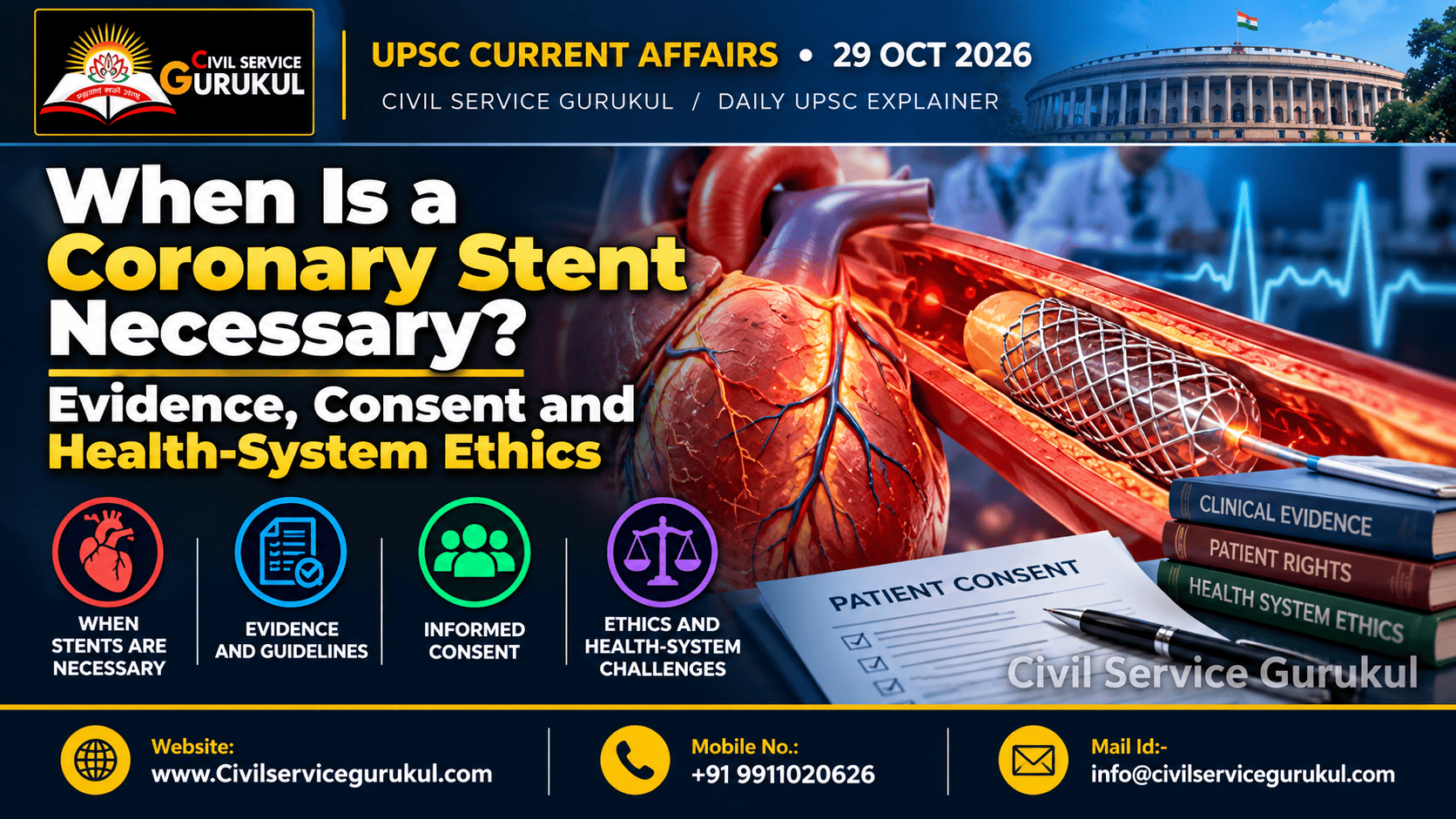
Coronary Stents & Angioplasty: Medical Ethics UPSC 2026
Public discussion in October 2026 about potentially unnecessary coronary stenting has highlighted the importance of distinguishing emergency cardiac interventions from elective treatment decisions in stable coronary disease. While timely angioplasty can be life-saving in certain heart attacks, stable coronary disease often requires careful evaluation of medication, symptoms, clinical evidence and patient preferences. This article explores medical ethics, informed consent, healthcare accountability, financial incentives and patient safety from a UPSC perspective.

Kerala KIIFB Debt Controversy 2026: UPSC Analysis
The Kerala Infrastructure Investment Fund Board (KIIFB) has become central to discussions about infrastructure financing, public borrowing and fiscal accountability. An October 2026 debate over borrowing costs, repayment capacity and oversight has renewed attention on the fiscal implications of state-backed public entities. This UPSC analysis examines off-budget borrowing, contingent liabilities, public investment, fiscal federalism and the need to balance infrastructure development with long-term debt sustainability.

SCO Civilisational Dialogue 2026: India–Pakistan UPSC
India has reportedly invited all ten Shanghai Cooperation Organisation (SCO) member states, including Pakistan, to the inaugural SCO Civilisational Dialogue Forum scheduled in New Delhi from 20–22 November 2026. The initiative highlights India's use of cultural diplomacy to strengthen Eurasian engagement while maintaining its independent positions on regional security. This article examines the SCO, soft power, India–Pakistan relations, cultural cooperation and the significance of multilateral diplomacy for UPSC preparation.
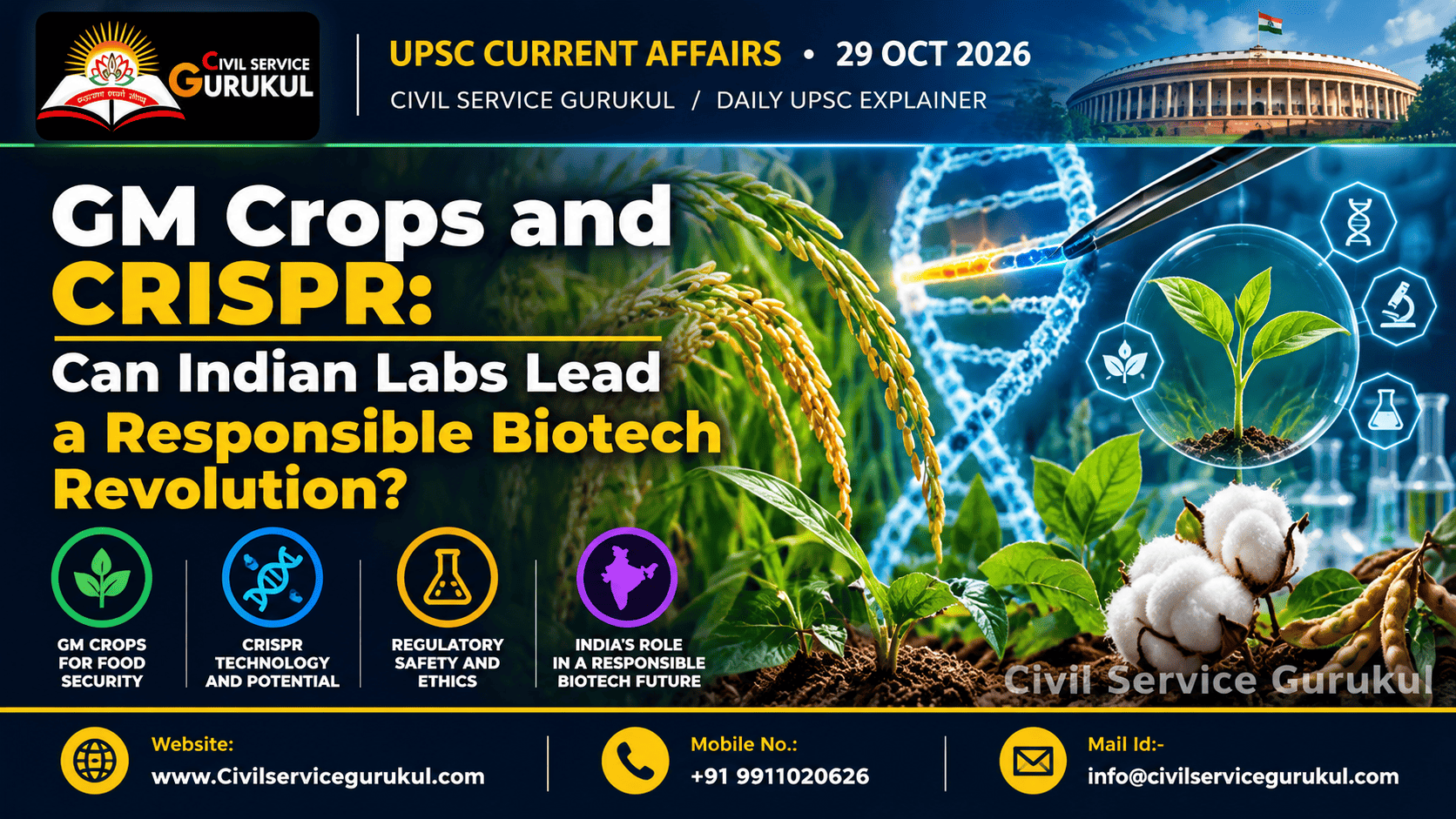
GM Crops & CRISPR in India 2026: GEAC and UPSC Notes
India's agricultural biotechnology debate has gained renewed attention following remarks attributed to Nobel laureate Richard J. Roberts at an October 2026 science conclave. The discussion highlights India's potential to develop indigenous genetically modified and genome-edited crops while addressing food security, climate resilience, biosafety and farmers' interests. This article examines CRISPR technology, GEAC regulation, Bt cotton, genome-edited rice varieties and the policy choices necessary for responsible agricultural innovation.