Daily Current Affairs & News Analysis
Our daily news analysis consists of two integral parts — Daily News Analysis and Important Editorials curated rigorously from The Hindu, The Indian Express, LiveMint, PIB, and Sansad TV debates. Content is mapped directly to UPSC CSE and State PCS syllabi.
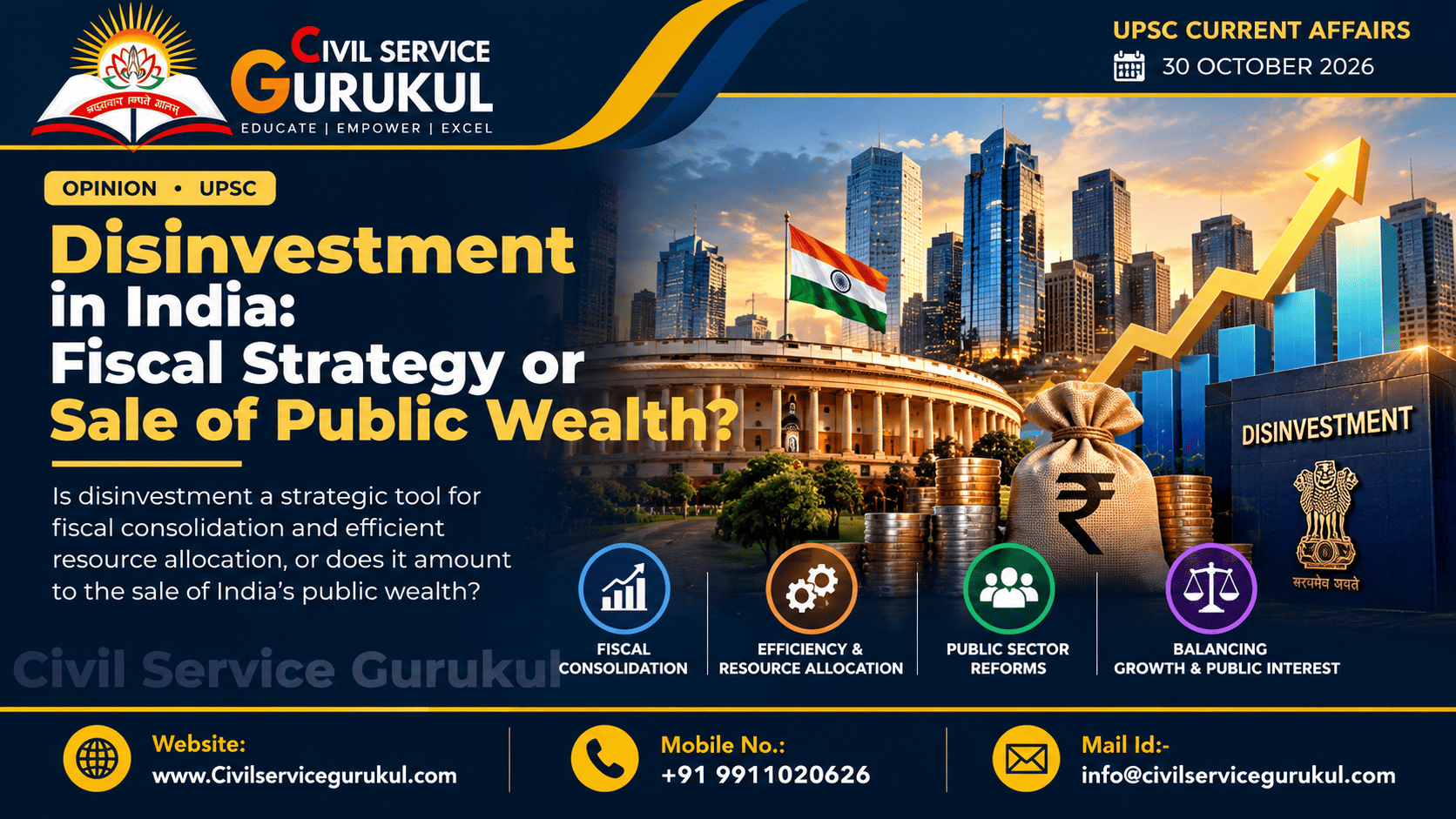
Disinvestment in India 2026–27: UPSC GS3 Analysis
India's FY 2026–27 disinvestment debate raises a fundamental economic question: should the government sell public-sector assets to strengthen its finances, or preserve them for long-term public value? This UPSC-focused analysis examines disinvestment, strategic privatisation, the National Monetisation Pipeline, fiscal implications, governance risks and the need for transparent asset management.
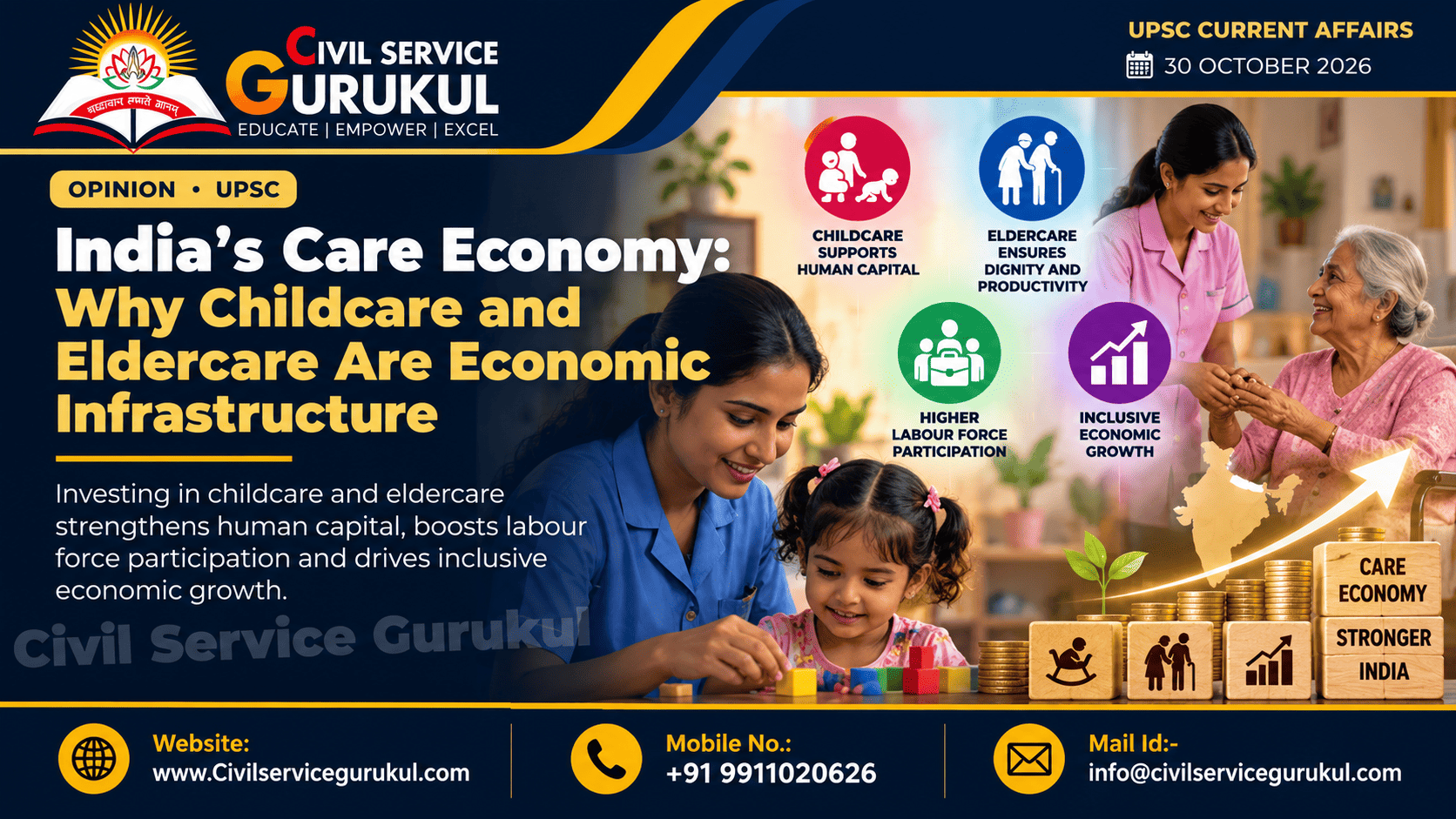
India's Care Economy 2026: UPSC GS1, GS2 & GS3
India's care economy is emerging as a crucial foundation of inclusive economic growth. Affordable childcare, dignified eldercare, disability support and recognition of unpaid caregiving can improve women's workforce participation, social protection and productivity. This UPSC analysis examines India's care infrastructure, the Time Use Survey, government initiatives, gender inequality and policy reforms.

India–New Zealand FTA 2026: Benefits, Challenges & UPSC
The India–New Zealand Free Trade Agreement, reported to have taken effect on 20 October 2026, opens new possibilities for Indian exporters, services professionals and bilateral investment. This UPSC analysis examines tariff concessions, sensitive agricultural sectors, rules of origin, trade opportunities, MSME challenges and India's Indo-Pacific strategy.
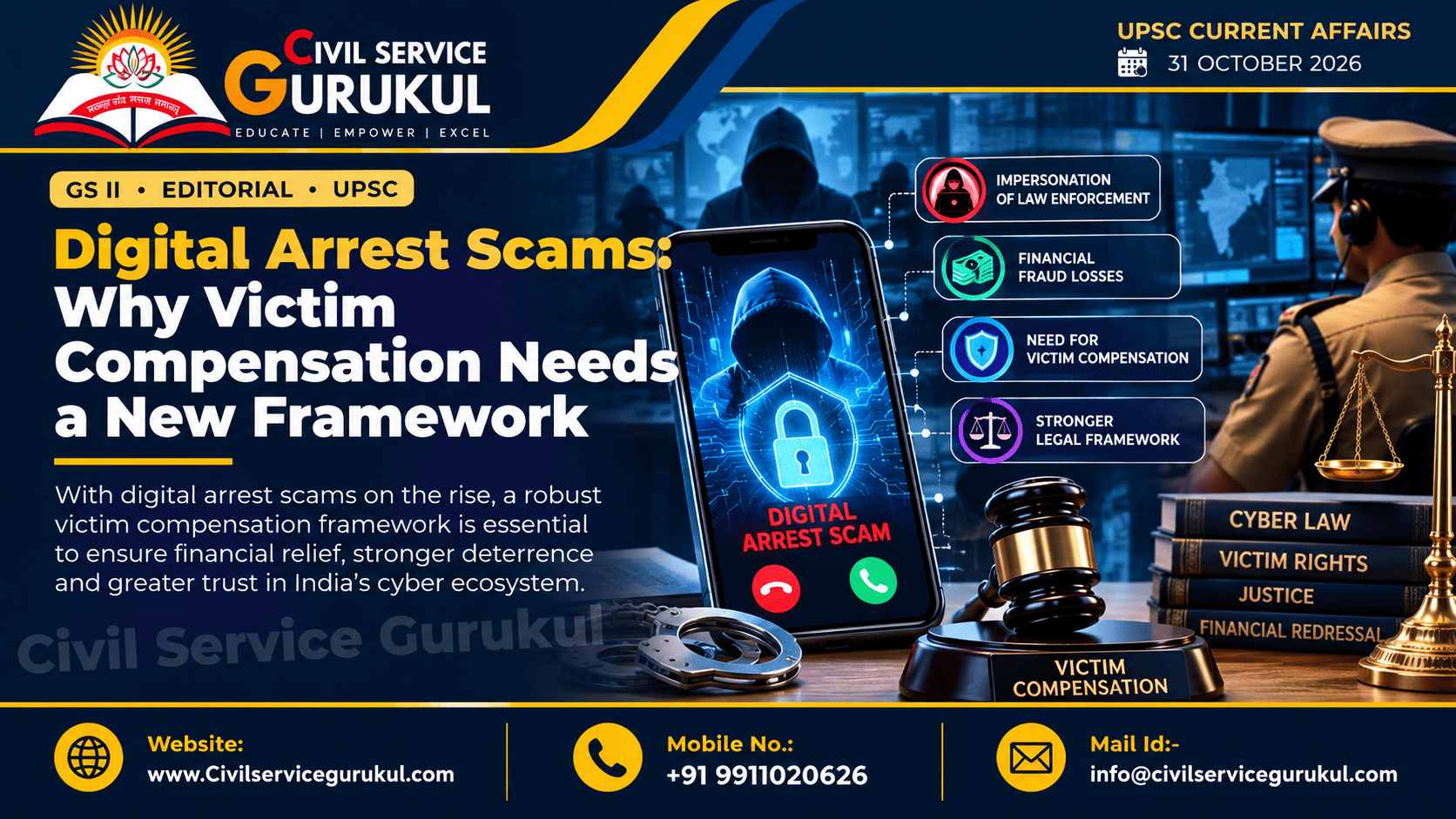
Digital Arrest Scams 2026: Victim Compensation & UPSC
Digital arrest scams have emerged as a serious form of impersonation-based cybercrime in India. Fraudsters pose as police officers or government investigators to intimidate victims into transferring money. The growing concern over financial losses has raised important questions about victim compensation, banking accountability, rapid fund recovery and legal safeguards. This UPSC analysis examines India's cybercrime reporting framework, challenges in victim protection and reforms needed to ensure fair, timely and transparent remedies.

Firecracker Restrictions 2026: Air Quality & UPSC
Firecracker restrictions have renewed debate over India's air-quality governance and the difficulties of enforcing environmental regulations. Fireworks can intensify short-term particulate pollution, particularly when weather conditions prevent pollutants from dispersing. This UPSC-focused analysis examines the legal framework, judicial intervention, regulatory institutions, public health concerns, enforcement failures, livelihood implications and practical solutions for sustainable air-quality management.
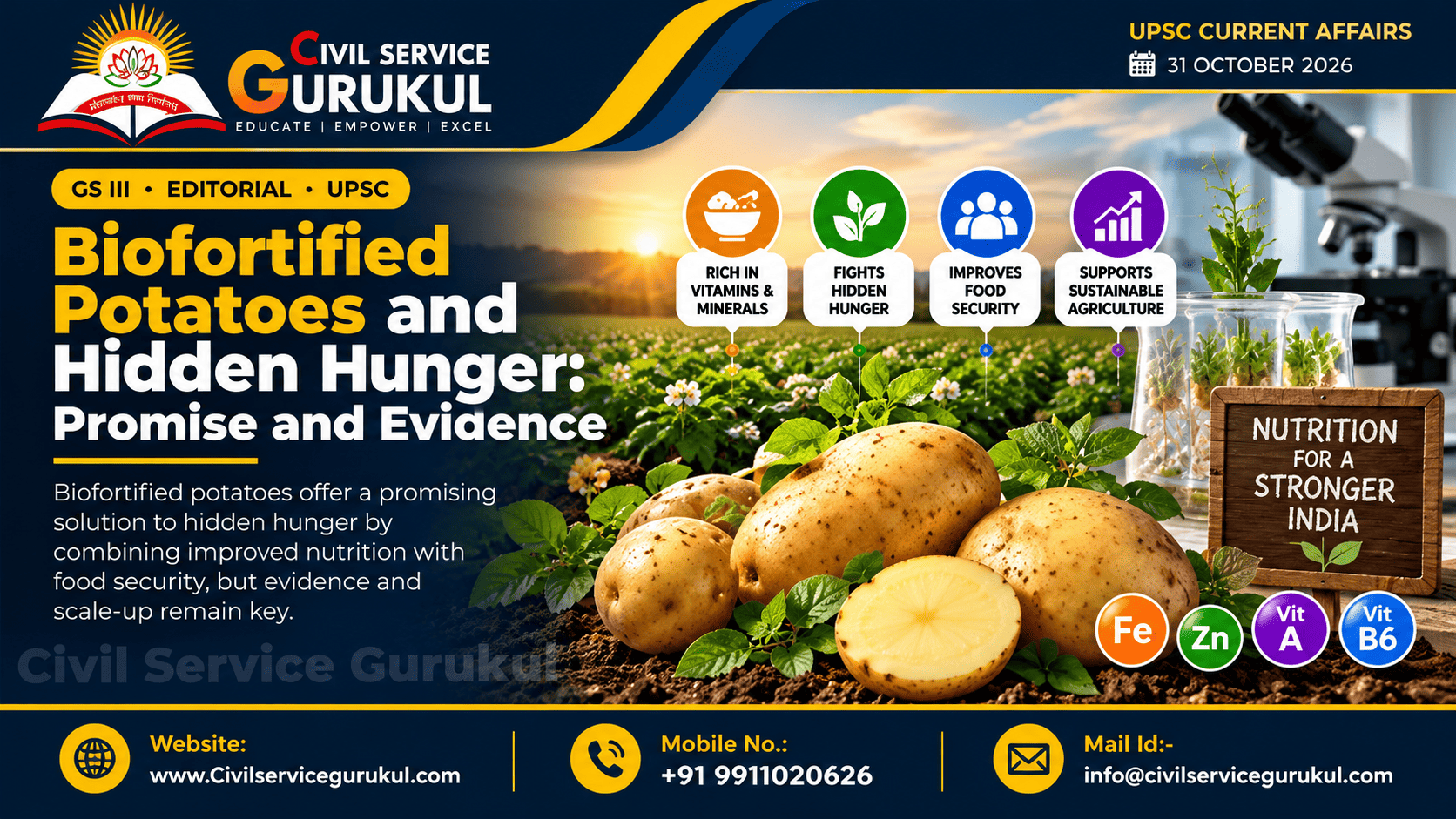
Biofortified Potatoes 2026: Hidden Hunger & UPSC
Biofortified potatoes are attracting attention as a potential tool against hidden hunger, a form of malnutrition caused by inadequate essential micronutrients. This UPSC-focused analysis explores crop biofortification, nutrient bioavailability, ICAR potato varieties, agricultural challenges, public-health implications and the scientific evidence needed before claiming improvements in nutritional outcomes.

Wake-Up Stroke 2026: Brain Imaging & UPSC Analysis
Wake-up stroke presents a major challenge in emergency medicine because patients develop or discover stroke symptoms during sleep, leaving the exact onset time unknown. Advances in brain imaging, particularly MRI diffusion–FLAIR mismatch and perfusion assessment, can help specialists identify selected patients who may benefit from treatment. This UPSC-focused analysis examines the science behind stroke imaging, treatment limitations, public-health infrastructure, rural healthcare challenges and the importance of timely emergency response.

India–Cuba UNGA Vote 2026: US Embargo & UPSC
India's reported support for a United Nations General Assembly resolution calling for an end to the US embargo against Cuba highlights important principles of its foreign policy. The issue connects strategic autonomy, multilateral diplomacy, national sovereignty, economic sanctions and humanitarian considerations. This UPSC-focused analysis explains the history of the Cuba embargo, the legal significance of UNGA resolutions, competing international perspectives and the implications for India's global diplomatic role.

AIFs, FPIs & Beneficial Ownership 2026 – UPSC
A reported Supreme Court dispute over beneficial ownership disclosure requirements for Alternative Investment Funds (AIFs) and Foreign Portfolio Investors (FPIs) raises an important question: how should regulators balance financial transparency with investor confidentiality and lawful regulatory authority? This UPSC-focused article examines SEBI's role, complex investment structures, disclosure obligations, market integrity, legal certainty and proportionate regulation.
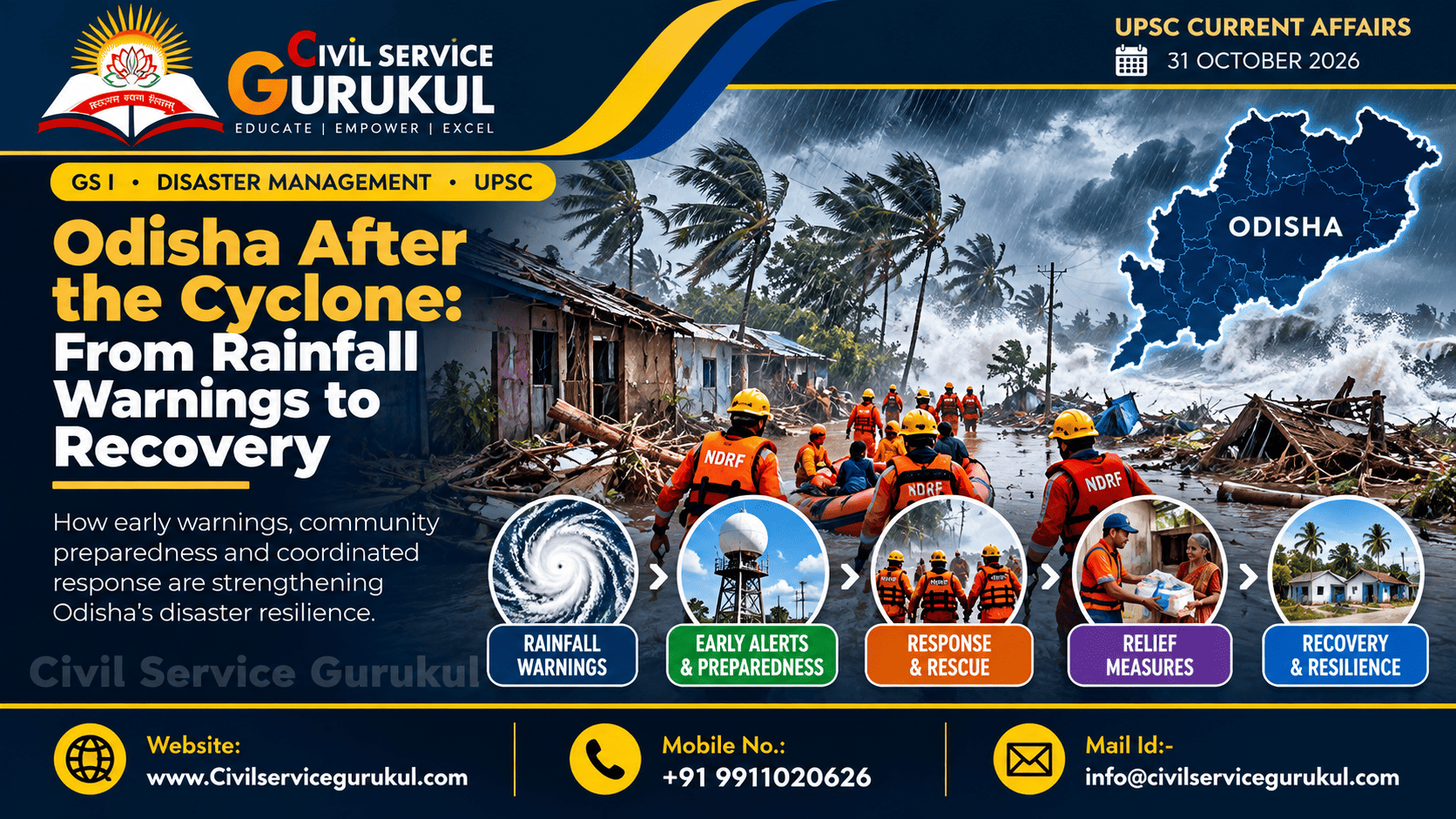
Odisha Cyclone 2026: Recovery & Disaster Management
Heavy rainfall and disruption in Odisha following a cyclone have highlighted the importance of effective disaster management beyond evacuation and immediate relief. This UPSC-focused analysis examines cyclone-related flooding, early warning systems, the roles of IMD and disaster management authorities, emergency shelters, livelihood restoration, resilient infrastructure and climate-adaptive recovery. It also includes Prelims MCQs and a Mains answer-writing framework.

Tiger Dispersal & Wildlife Corridors in India – UPSC 2027
The movement of a relocated female tiger beyond its expected reserve landscape highlights why tiger conservation cannot be restricted to protected-area boundaries. Wildlife corridors connect fragmented habitats, support dispersal and genetic exchange, and help maintain viable tiger populations. This UPSC-focused analysis examines landscape-level conservation, the role of NTCA, threats from infrastructure development, human–wildlife conflict, monitoring technologies and community-based
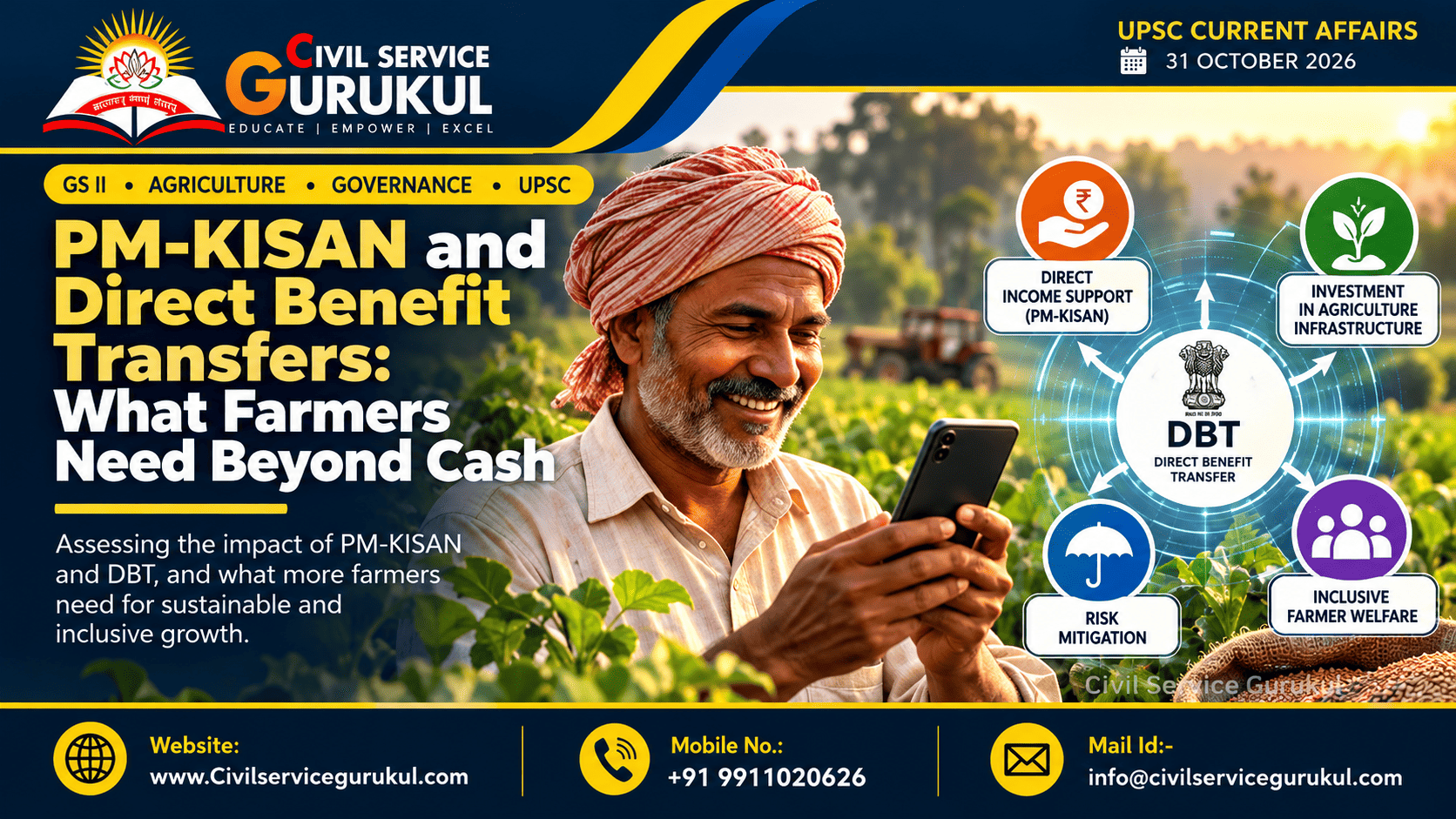
PM-KISAN Scheme 2026: DBT, Benefits & Challenges
PM-KISAN provides eligible landholding farmer families ₹6,000 annually in three instalments through Direct Benefit Transfer. While predictable cash assistance can support seasonal agricultural expenses, it cannot independently resolve irrigation gaps, rising input costs, climate risks, inadequate market access or rural indebtedness. This UPSC-focused analysis examines PM-KISAN's design, benefits, eligibility challenges, digital verification, tenant farmer exclusion and the need for comprehensive agricultural reforms.

India–ASEAN Counterterrorism Cooperation 2026 | UPSC
India and ASEAN share important interests in combating terrorism, transnational crime, extremist financing and emerging digital security threats. Cooperation through dialogue, information exchange, capacity building and regional institutions can strengthen stability across South and Southeast Asia. This UPSC-focused article examines India's Act East Policy, ASEAN centrality, maritime security, legal cooperation, institutional challenges and the future of regional counterterrorism partnerships.
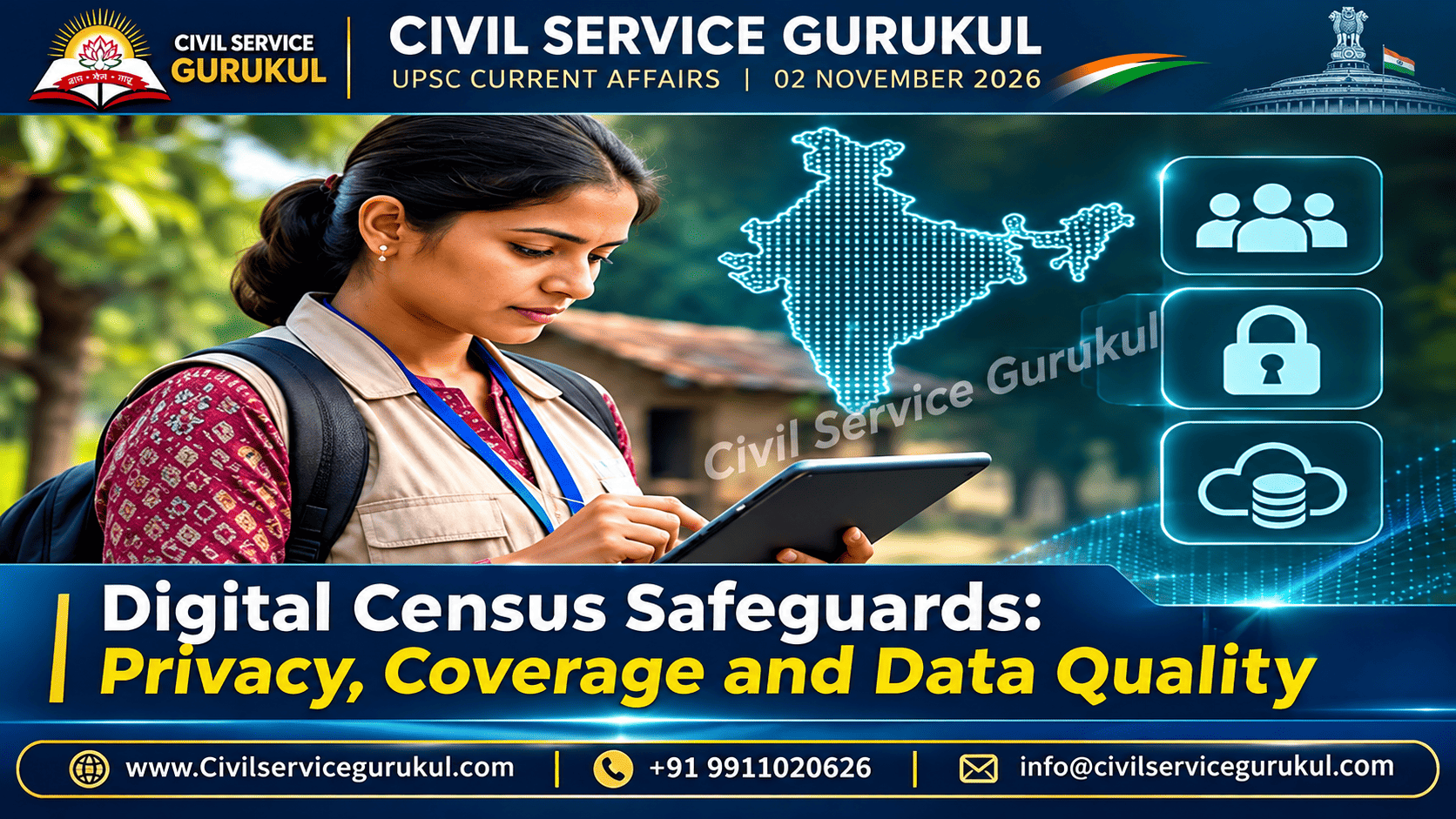
Digital Census in India 2026: Privacy & UPSC Analysis
Digital census systems can improve the speed and consistency of population enumeration, but technology alone cannot ensure complete coverage, reliable statistics or public trust. This UPSC-focused analysis explores the Census Act, 1948, privacy and confidentiality safeguards, risks of undercounting migrants and vulnerable populations, offline-first enumeration, multilingual accessibility, independent data-quality audits and responsible data governance. Includes GS II, III and IV analysis, Prelims MCQs and Mains answer-writing practice.
Electoral Roll Objections & Form 7 – UPSC 2026
Electoral roll accuracy is essential to credible elections, but objections and deletion proceedings must respect procedural fairness and protect eligible voters. This UPSC-focused analysis explains Form 7, the Representation of the People Act, 1950, the Registration of Electors Rules, 1960, Election Commission responsibilities, evidence-based verification, notice and hearing safeguards, and remedies against wrongful deletion. Includes GS II and GS IV analysis, Prelims practice questions and Mains answer-writing guidance.
Poverty Measurement in India: UPSC 2026 Analysis
Poverty measurement cannot be reduced to a single income or consumption threshold. Households may escape monetary poverty yet remain vulnerable to illness, unemployment, crop failure, rising housing costs and inadequate public services. This UPSC-focused analysis examines poverty ratios, purchasing power parity, survey methodology, multidimensional deprivation, economic vulnerability, social mobility and evidence-based policymaking. Includes GS I, II and III analysis, Prelims MCQs and Mains answer-writing guidance.
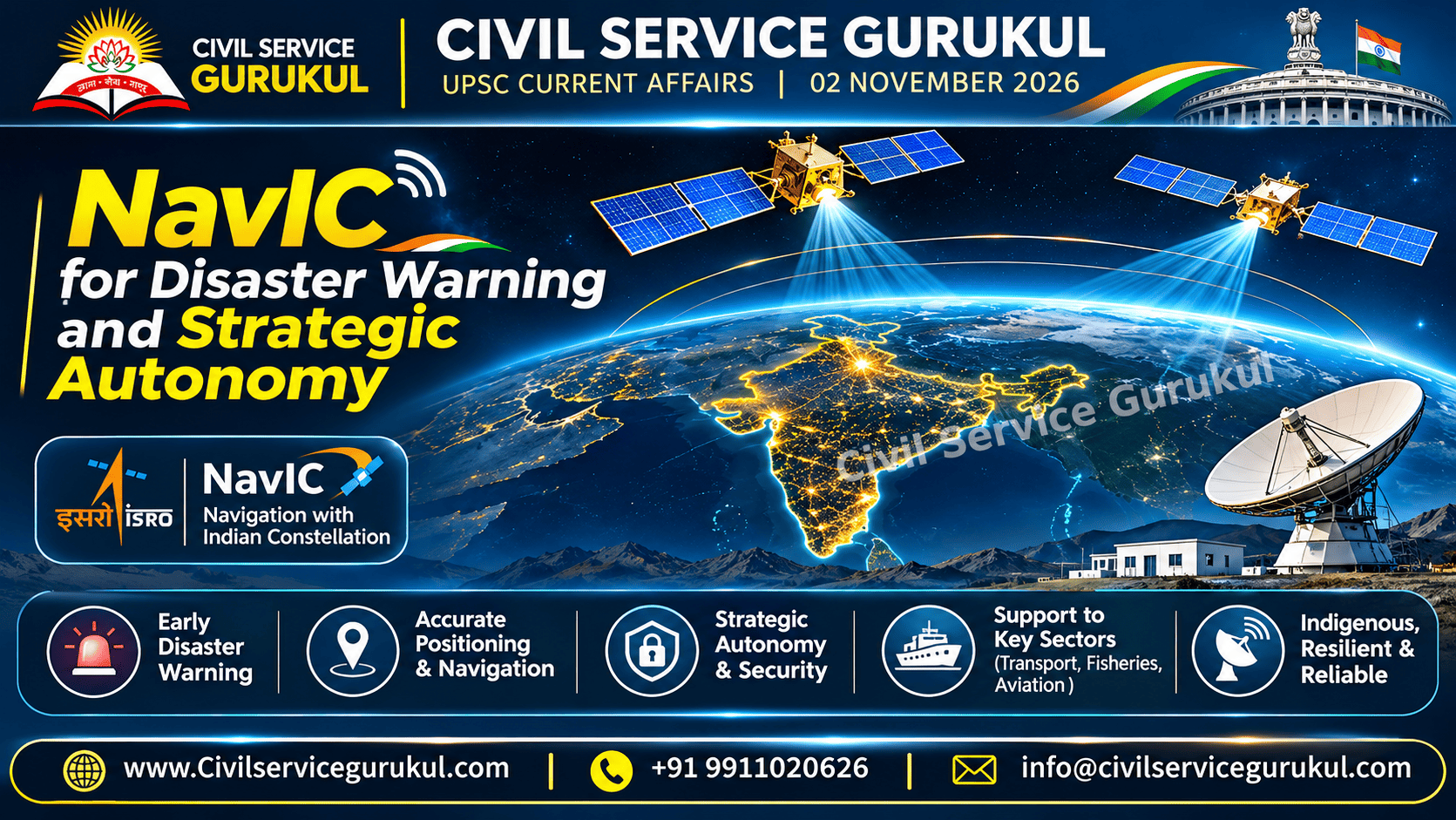
NavIC Explained: Disaster Warning & UPSC GS III
NavIC, India's indigenous regional satellite navigation system developed by ISRO, supports positioning, navigation and timing services that are important for transport, fisheries, telecommunications and emergency response. This UPSC-focused article examines how indigenous navigation capabilities contribute to strategic autonomy and disaster resilience, while explaining why satellite navigation alone cannot provide a complete disaster-warning system. Includes technological challenges, receiver compatibility, signal validation, redundancy, last-mile communication, Prelims MCQs and Mains answer-writing guidance.

Chola Bronzes: Heritage Protection & UPSC Notes
Chola bronze sculptures are an important part of India's artistic and devotional heritage. However, their protection involves more than recovering valuable objects. Archaeological provenance, excavation context, scientific conservation, transparent museum acquisitions, community participation and prevention of illicit antiquities trade are essential to responsible heritage governance. This UPSC-focused article examines the Antiquities and Art Treasures Act, 1972, the roles of archaeological institutions, ethical challenges and practical reforms, with Prelims MCQs and Mains answer-writing practice.
Andhra Pradesh Cyclone 2026 | UPSC Disaster Management Notes
A November 2026 news report highlighted cyclone-related damage and casualties across districts of Andhra Pradesh, drawing attention to India's coastal disaster preparedness. For UPSC aspirants, the event provides an important case study in tropical cyclone formation, Bay of Bengal geography, early warning systems, evacuation, disaster governance and climate-resilient recovery. This comprehensive GS Paper I and GS Paper III article explains the scientific concepts, institutional responsibilities, challenges, policy responses, Prelims practice questions and Mains answer-writing strategies. Reported casualty figures remain subject to official verification.
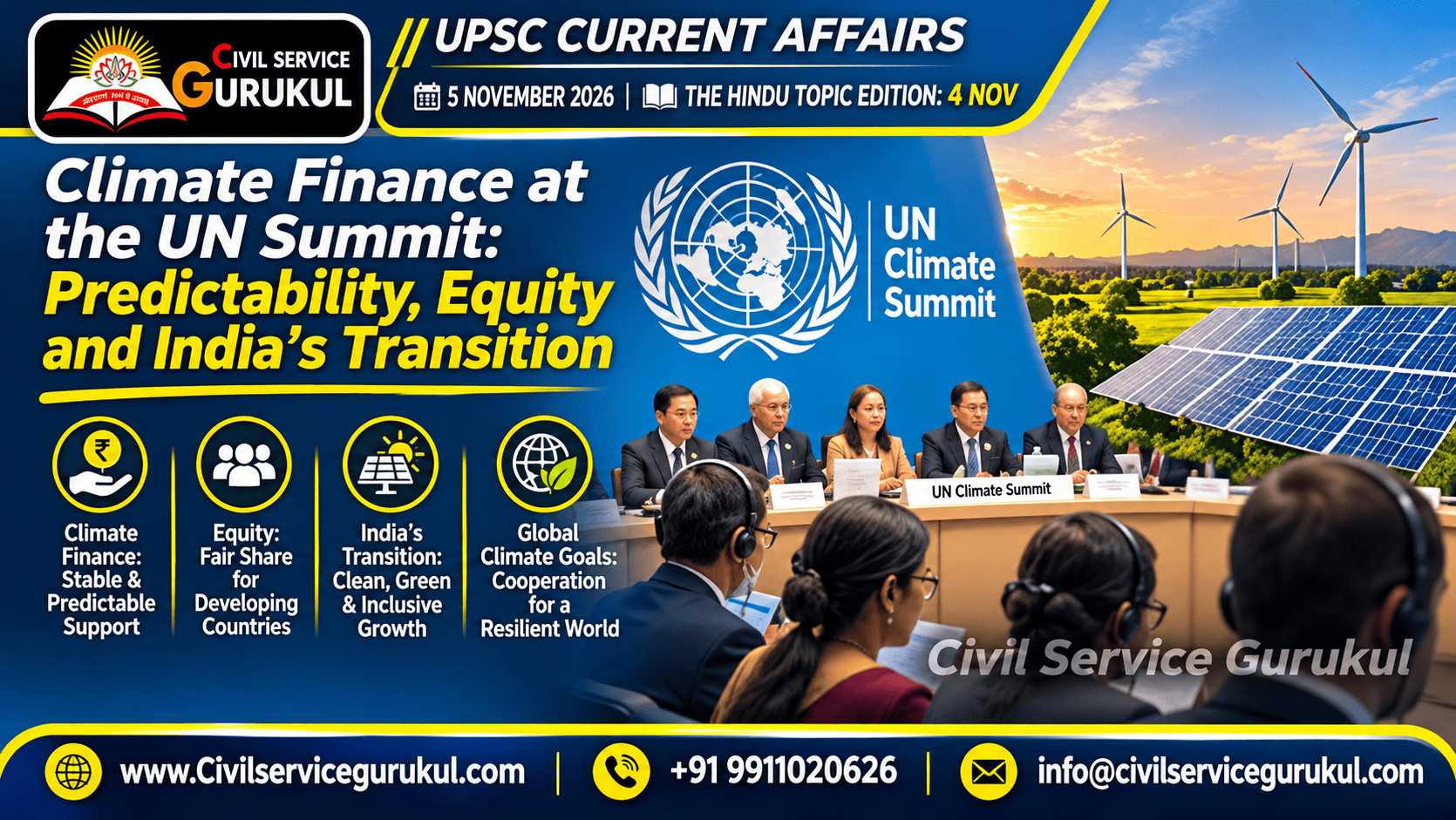
Climate Finance 2026: India's UN Summit Stand | UPSC 2027
India's emphasis on predictable climate finance and an equitable energy transition has renewed the debate over climate justice, developed-country responsibilities and the financing needs of developing economies. For UPSC aspirants, this issue connects UNFCCC negotiations, the Paris Agreement, the COP29 New Collective Quantified Goal of at least $300 billion annually by 2035, adaptation finance, loss and damage, and the principle of Common but Differentiated Responsibilities and Respective Capabilities. This article examines India's negotiating priorities, climate-finance mechanisms, implementation challenges and practical reforms, with Prelims MCQs and Mains answer-writing guidance. The uploaded source identifies India's intended negotiating position in a 4 November 2026 headline; it does not independently establish the outcome of that summit.