Daily Current Affairs & News Analysis
Our daily news analysis consists of two integral parts — Daily News Analysis and Important Editorials curated rigorously from The Hindu, The Indian Express, LiveMint, PIB, and Sansad TV debates. Content is mapped directly to UPSC CSE and State PCS syllabi.
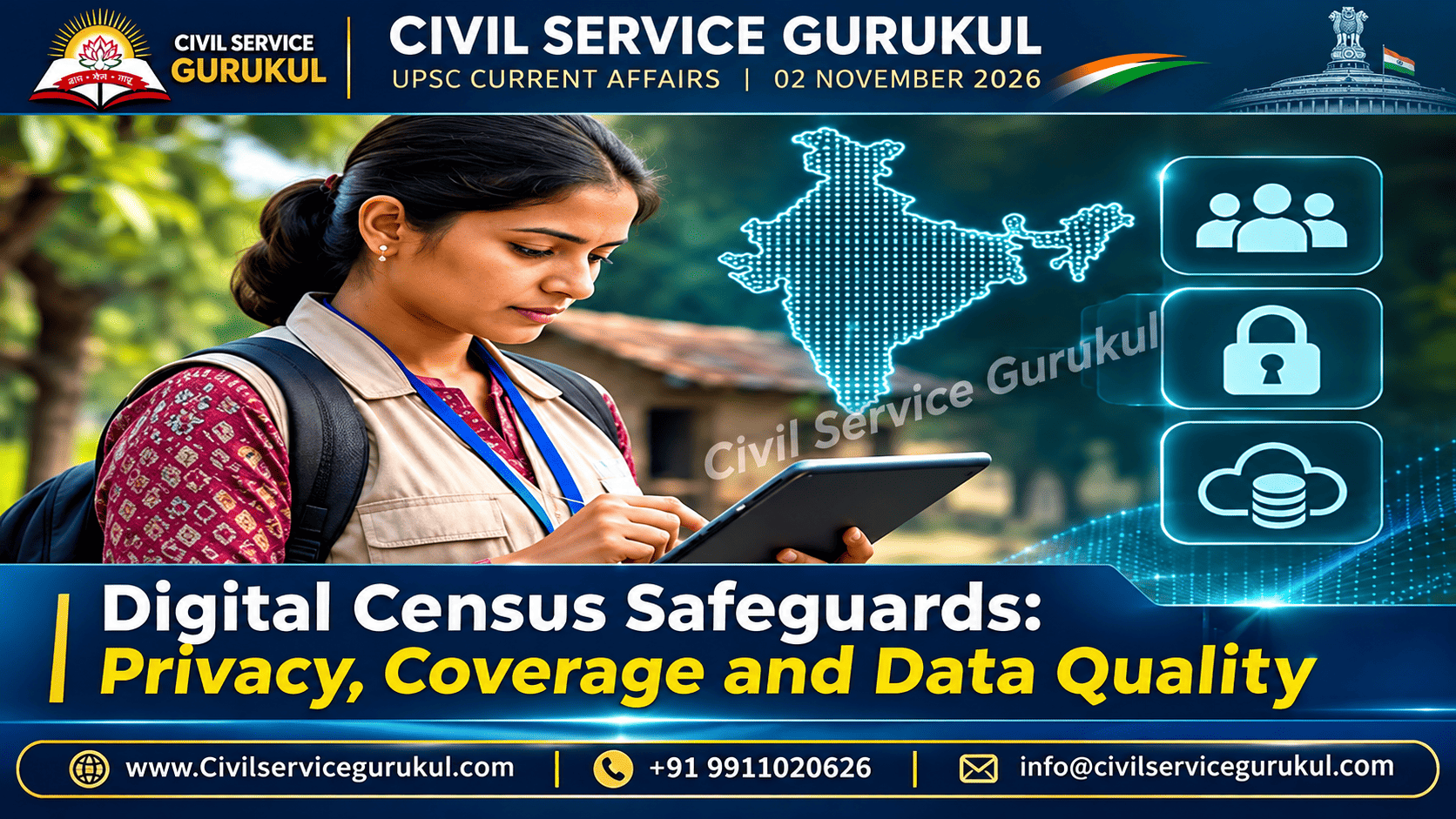
Digital Census in India 2026: Privacy & UPSC Analysis
Digital census systems can improve the speed and consistency of population enumeration, but technology alone cannot ensure complete coverage, reliable statistics or public trust. This UPSC-focused analysis explores the Census Act, 1948, privacy and confidentiality safeguards, risks of undercounting migrants and vulnerable populations, offline-first enumeration, multilingual accessibility, independent data-quality audits and responsible data governance. Includes GS II, III and IV analysis, Prelims MCQs and Mains answer-writing practice.
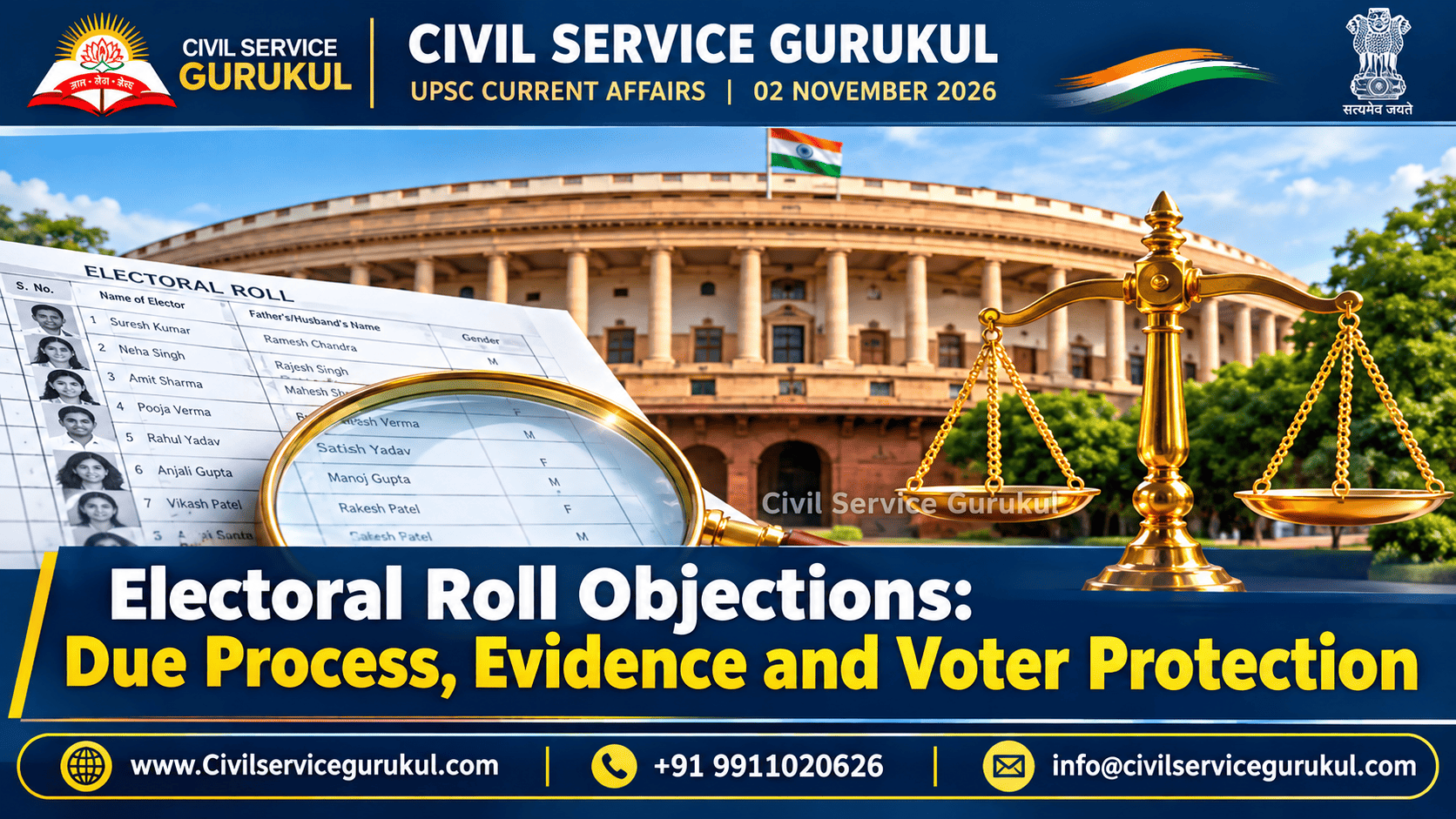
Electoral Roll Objections & Form 7 – UPSC 2026
Electoral roll accuracy is essential to credible elections, but objections and deletion proceedings must respect procedural fairness and protect eligible voters. This UPSC-focused analysis explains Form 7, the Representation of the People Act, 1950, the Registration of Electors Rules, 1960, Election Commission responsibilities, evidence-based verification, notice and hearing safeguards, and remedies against wrongful deletion. Includes GS II and GS IV analysis, Prelims practice questions and Mains answer-writing guidance.
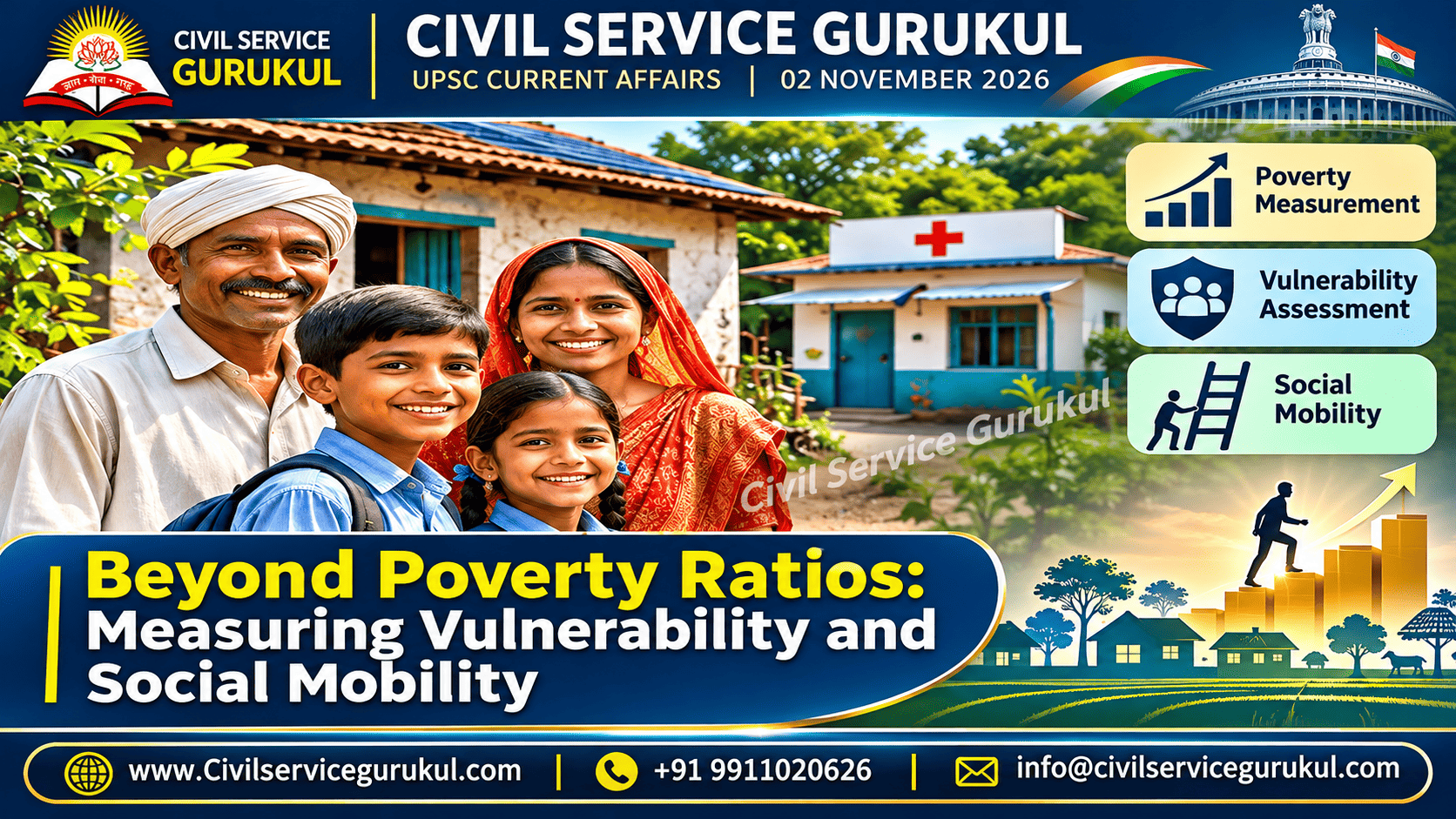
Poverty Measurement in India: UPSC 2026 Analysis
Poverty measurement cannot be reduced to a single income or consumption threshold. Households may escape monetary poverty yet remain vulnerable to illness, unemployment, crop failure, rising housing costs and inadequate public services. This UPSC-focused analysis examines poverty ratios, purchasing power parity, survey methodology, multidimensional deprivation, economic vulnerability, social mobility and evidence-based policymaking. Includes GS I, II and III analysis, Prelims MCQs and Mains answer-writing guidance.
NavIC Explained: Disaster Warning & UPSC GS III
NavIC, India's indigenous regional satellite navigation system developed by ISRO, supports positioning, navigation and timing services that are important for transport, fisheries, telecommunications and emergency response. This UPSC-focused article examines how indigenous navigation capabilities contribute to strategic autonomy and disaster resilience, while explaining why satellite navigation alone cannot provide a complete disaster-warning system. Includes technological challenges, receiver compatibility, signal validation, redundancy, last-mile communication, Prelims MCQs and Mains answer-writing guidance.

Chola Bronzes: Heritage Protection & UPSC Notes
Chola bronze sculptures are an important part of India's artistic and devotional heritage. However, their protection involves more than recovering valuable objects. Archaeological provenance, excavation context, scientific conservation, transparent museum acquisitions, community participation and prevention of illicit antiquities trade are essential to responsible heritage governance. This UPSC-focused article examines the Antiquities and Art Treasures Act, 1972, the roles of archaeological institutions, ethical challenges and practical reforms, with Prelims MCQs and Mains answer-writing practice.
Andhra Pradesh Cyclone 2026 | UPSC Disaster Management Notes
A November 2026 news report highlighted cyclone-related damage and casualties across districts of Andhra Pradesh, drawing attention to India's coastal disaster preparedness. For UPSC aspirants, the event provides an important case study in tropical cyclone formation, Bay of Bengal geography, early warning systems, evacuation, disaster governance and climate-resilient recovery. This comprehensive GS Paper I and GS Paper III article explains the scientific concepts, institutional responsibilities, challenges, policy responses, Prelims practice questions and Mains answer-writing strategies. Reported casualty figures remain subject to official verification.
Climate Finance 2026: India's UN Summit Stand | UPSC 2027
India's emphasis on predictable climate finance and an equitable energy transition has renewed the debate over climate justice, developed-country responsibilities and the financing needs of developing economies. For UPSC aspirants, this issue connects UNFCCC negotiations, the Paris Agreement, the COP29 New Collective Quantified Goal of at least $300 billion annually by 2035, adaptation finance, loss and damage, and the principle of Common but Differentiated Responsibilities and Respective Capabilities. This article examines India's negotiating priorities, climate-finance mechanisms, implementation challenges and practical reforms, with Prelims MCQs and Mains answer-writing guidance. The uploaded source identifies India's intended negotiating position in a 4 November 2026 headline; it does not independently establish the outcome of that summit.
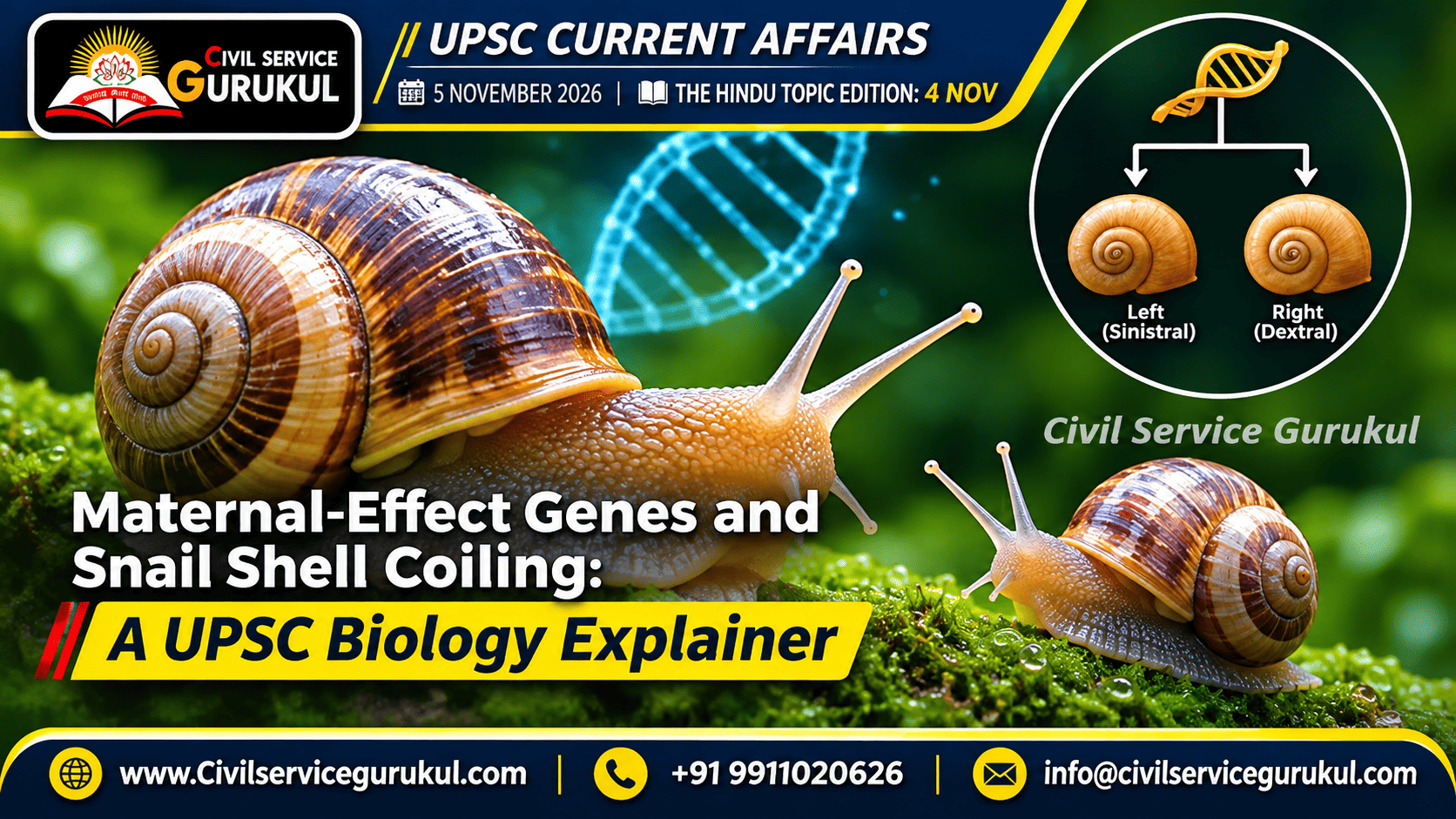
Maternal Effect Inheritance in Snails | UPSC Biology 2027
Why do some snail shells coil clockwise while others coil in the opposite direction? The answer offers a fascinating example of maternal-effect inheritance, in which the mother's genotype influences the early development and visible characteristics of her offspring. This UPSC Biology explainer examines snail shell chirality, maternal-effect genes, cytoplasmic factors, early embryonic development and the differences between maternal-effect, Mendelian and mitochondrial inheritance. It includes conceptual examples, comparison tables, Prelims MCQs and a model Mains answer.

Voter Form 6 & Electoral Roll Revision | UPSC 2027
A November 2026 current-affairs headline highlighted the Election Commission of India's clarification concerning voters using Form 6 for re-enrolment. The development raises important questions about electoral roll accuracy, voter inclusion, procedural fairness and safeguards against duplicate registration. This UPSC-oriented article explains Form 6, the constitutional and statutory framework of electoral registration, the roles of the ECI and Electoral Registration Officers, differences between voter registration forms, and the balance between electoral integrity and universal adult franchise. It includes Prelims practice questions, Mains answer-writing guidance and a governance and ethics perspective. The uploaded source provides the headline but not the complete ECI clarification. Therefore, the article does not treat the reported assurance as an unconditional exemption from applicable electoral laws.
Aadhaar vs Citizenship Proof: Voter Verification | UPSC 2027
A November 2026 current-affairs headline reported that Delhi's Booth Level Officers had been asked to seek citizenship-related documentation during voter verification, raising an important question: does Aadhaar establish Indian citizenship? Aadhaar serves as proof of identity under its statutory framework but does not, by itself, establish citizenship. This UPSC-focused article explains the distinction between Aadhaar, citizenship and electoral eligibility, examining Articles 324 and 326, the Citizenship Act, electoral registration laws, privacy safeguards and the administrative challenges of verifying voter records. It includes Prelims MCQs, Mains practice questions, a model answer and recommendations for balancing electoral integrity with democratic inclusion.

India–Bangladesh Ganga Water Treaty 2026 | UPSC 2027
India–Bangladesh water cooperation has returned to the policy spotlight amid discussions concerning the institutional mechanisms governing the 1996 Ganges Water Sharing Treaty. The agreement addresses dry-season water sharing at Farakka and was established for a thirty-year period, making its 2026 term-end particularly significant. For UPSC aspirants, the issue connects international relations, physical geography, transboundary river management, environmental sustainability and regional diplomacy. This article explains the Ganga–Padma river system, Farakka Barrage, the Joint Rivers Commission, the importance of hydrological data, competing water demands and options for sustainable basin cooperation. It includes Prelims MCQs, Mains questions and a structured model answer.

Oman Drone Strike 2026: Indian Ocean Security | UPSC 2027
A November 2026 current-affairs headline reported that an Indian national was killed in a drone strike on a commercial vessel off Oman, highlighting the vulnerability of merchant shipping and seafarers in strategically important maritime corridors. The incident raises broader questions about maritime security in the Arabian Sea, the Gulf of Oman and approaches to the Strait of Hormuz. This UPSC-focused article examines the importance of secure sea lanes, threats from drones and other asymmetric technologies, India's energy and trade interests, the role of UNCLOS and the International Maritime Organization, maritime-domain awareness, naval coordination and consular protection. It also provides Prelims revision notes, MCQs, Mains practice questions and a model answer.
Technological Sovereignty in India | UPSC 2027
Technological sovereignty has emerged as a strategic priority for India amid growing competition over semiconductors, artificial intelligence, defence systems, critical minerals and global technology standards. A November 2026 current-affairs headline highlighted Defence Minister Rajnath Singh's emphasis on achieving technological sovereignty. For UPSC aspirants, the issue connects national security, industrial policy, innovation, international relations and economic resilience. This article explains why domestic assembly alone cannot guarantee technological independence, the importance of the India Semiconductor Mission, research institutions, standards-setting bodies, intellectual property, skilled manpower and trusted international partnerships. It also evaluates the challenges of subsidies, supply-chain concentration and technological dependence, with Prelims MCQs, Mains questions and a model answer.
Death Penalty in India: Supreme Court & Due Process | UPSC 2027
The Supreme Court's approach to capital punishment has evolved around constitutional due process, fairness and the exceptional nature of the death penalty. A November 2026 current-affairs headline highlighted how judicial decisions have shaped sentencing safeguards in death penalty cases. This UPSC-focused article explains the rarest of rare doctrine established in Bachan Singh v. State of Punjab (1980), the importance of Articles 14 and 21, individualised sentencing, mitigating circumstances, legal representation, judicial scrutiny and the irreversible consequences of wrongful convictions. It also examines the competing arguments surrounding capital punishment, the ethical dimensions of punishment and practical reforms for India's criminal justice system. Includes Prelims MCQs, Mains practice questions and a model answer.

Unified Urban Planning in India: Challenges & Reforms | UPSC 2027
India's rapidly expanding urban regions face a fundamental governance challenge: housing, public transport, drainage, land use and municipal services are often planned by separate institutions with limited coordination. A November 2026 current-affairs headline highlighted the need for a unified urbanisation plan. This article examines how fragmented planning creates distant affordable housing, longer commutes, infrastructure gaps, urban flooding and unequal access to essential services. It explains the constitutional framework of the 74th Amendment, the Twelfth Schedule, District and Metropolitan Planning Committees, urban local body financing, transit-oriented development and climate-resilient infrastructure. Designed for UPSC 2027, it includes conceptual notes, policy analysis, Prelims MCQs, Mains practice questions and a model answer.
Supreme Court: Arrest Begins at the Moment of Detention
Supreme Court Arrest Begins at the Moment of Detention UPSC 2026: Explore Article 22, the 24-hour rule, landmark judgments, GS-II notes, PYQs and MCQs.
Electoral Roll Revision in India 2026: Special Summary Revision (SSR) vs Special Intensive Revision (SIR)
Electoral Roll Revision UPSC 2026: Learn SSR vs SIR, Article 324, Election Commission updates, voter registration, GS-II notes, Prelims facts and MCQs.
Agniveer Service Extension 2026 | UPSC Notes
The reported discussion surrounding Agniveer service extension has renewed attention on India's military recruitment system, defence preparedness and youth employment opportunities. The Agnipath framework seeks to balance a younger military workforce with operational effectiveness and personnel-management requirements. However, changes in service duration or retention rules raise important questions about training costs, institutional experience, fiscal sustainability, fairness and post-service rehabilitation. This Civil Service Gurukul UPSC analysis examines the Agnipath framework, reported service-extension developments, benefits and challenges, constitutional and administrative considerations, youth aspirations, policy recommendations and examination-oriented questions. The exact terms of any newly reported extension require confirmation from an official government notification.
Two-Child Norm in India 2026: UPSC Notes
The debate over two-child eligibility norms in India has gained renewed attention amid falling fertility and reported judicial observations questioning the continuing rationale of restrictive population policies. India's demographic transition is uneven, with substantial differences across states in fertility, ageing, migration and access to reproductive healthcare. This Civil Service Gurukul UPSC analysis examines the constitutional implications of two-child norms, the meaning of total fertility rate, equality under Article 14, reproductive autonomy, gender justice, demographic diversity and alternatives to coercive population-control measures. It also provides examination-focused Prelims questions, a Mains model answer and policy recommendations.
CEC Legal Immunity 2026: UPSC Polity Notes
The legal immunity of India's Chief Election Commissioner (CEC) has become a subject of constitutional debate following reported petitions questioning the scope and duration of statutory protection. The central issue is whether safeguards designed to protect the Election Commission from politically motivated legal proceedings can coexist with judicial scrutiny, equality before the law and accountability for alleged misconduct. Article 324 establishes the Election Commission's constitutional role, while the legal framework provides institutional and service-related safeguards. This Civil Service Gurukul analysis explores the distinction between functional immunity and impunity, constitutional independence, judicial review, transparency, proportionality and possible institutional reforms. It also includes UPSC Prelims questions, Mains answer-writing guidance and an examination-oriented model answer.