Daily Current Affairs & News Analysis
Our daily news analysis consists of two integral parts — Daily News Analysis and Important Editorials curated rigorously from The Hindu, The Indian Express, LiveMint, PIB, and Sansad TV debates. Content is mapped directly to UPSC CSE and State PCS syllabi.

SEBI's 5-Day FPI Onboarding Plan 2026: Foreign Investment, Beneficial Ownership and UPSC Analysis
SEBI is working to reduce Foreign Portfolio Investor onboarding time to five business days while simplifying compliance requirements and protecting financial market integrity. Its November 2026 proposals have renewed debate over beneficial-ownership disclosures, market transparency and foreign capital flows. Explore SEBI's regulatory framework, the SWAGAT-FI initiative, FPI versus FDI, the Financial Action Task Force, KYC rules, economic implications and important UPSC Prelims and Mains questions
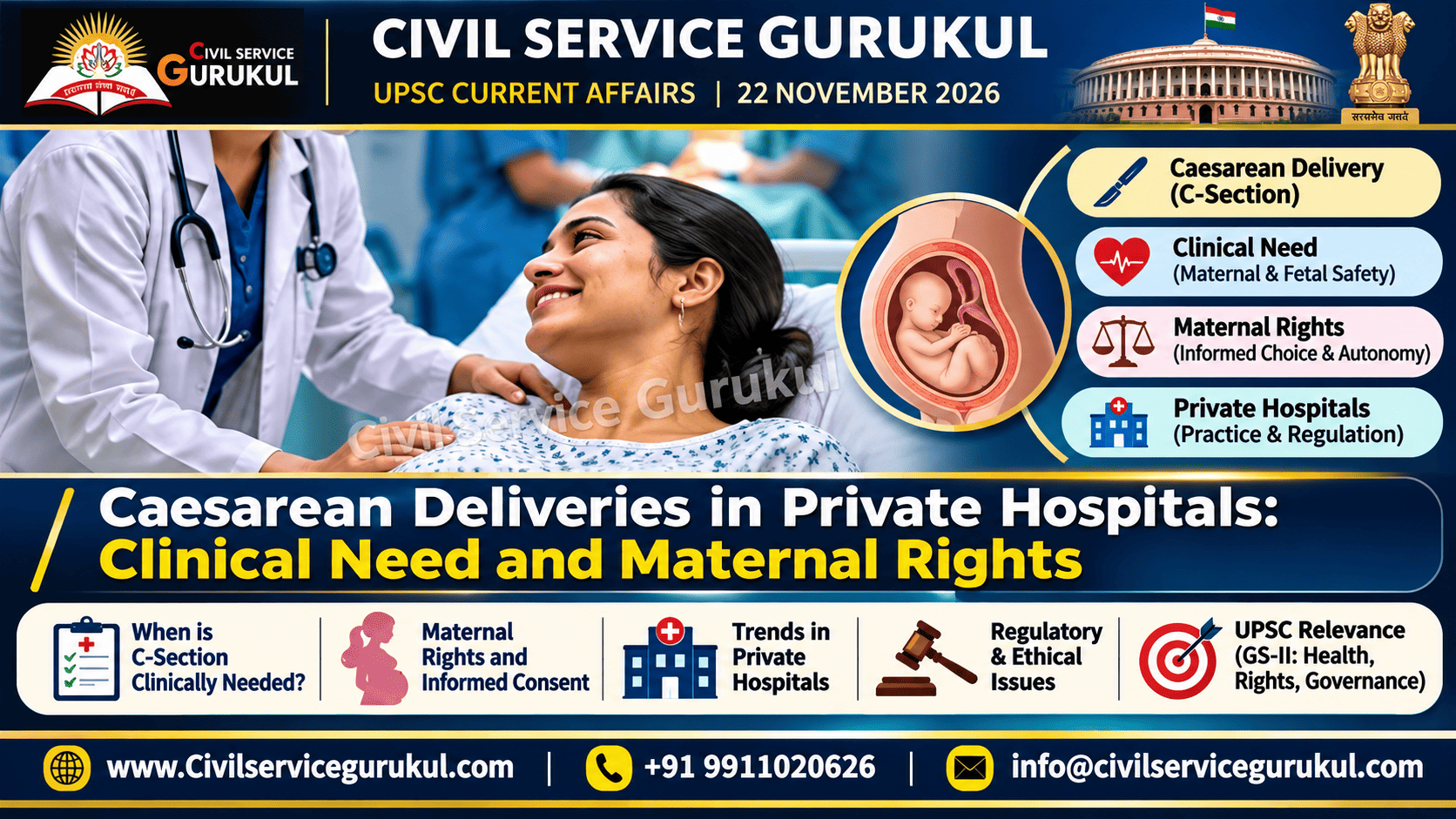
C-Section Deliveries India 2026: Rates & UPSC Analysis
A November 2026 study reveals that nearly seven in ten childbirths among insured working families in its sample occurred through Caesarean section. Alongside the NFHS-6 findings showing rising C-section rates in India's private hospitals, the study raises questions about medical necessity, patient consent, healthcare costs and maternity care quality. This comprehensive UPSC analysis covers maternal health rights, WHO guidelines, the Robson Classification, government initiatives, ethical challenges, Prelims MCQs and Mains preparation.
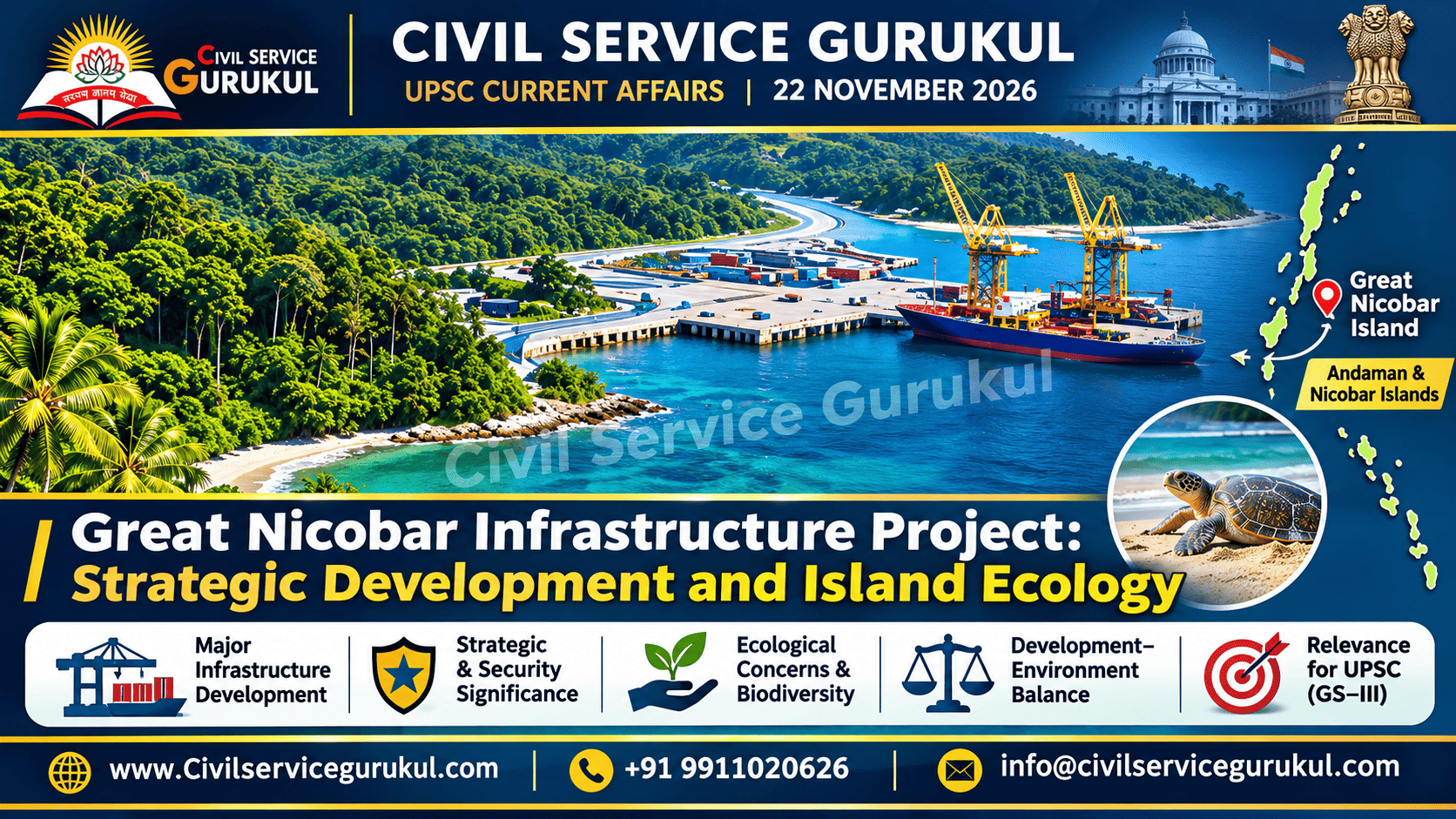
Great Nicobar Project 2026: UPSC Analysis & Controversy
The Great Nicobar Infrastructure Project is a strategically significant development initiative involving a transshipment port, international airport, township and power plant. A November 2026 boundary-demarcation tender has renewed debate over forest clearance, indigenous rights, coastal biodiversity and sustainable development. This comprehensive UPSC analysis examines the project's strategic importance, environmental concerns, legal framework, Shompen and Nicobarese communities, and Prelims and Mains relevance.
Cauvery Water Dispute 2026: SC Verdict & Article 262
The Supreme Court's November 2026 decision on the Cauvery water dispute highlights the importance of institutional compliance and cooperative federalism. Understand the Cauvery Water Disputes Tribunal, 2018 water-sharing allocations, Article 262, the Inter-State River Water Disputes Act, CWMA, CWRC, geographical significance, challenges and important UPSC Prelims and Mains questions.
India's Core Sector Growth Hits 10.9%: 9 Core Industries, IIP & UPSC Analysis 2026
India's core industries registered 10.9% growth in October 2026, driven by iron ore, coal and electricity. Explore the nine core industries, revised 2022–23 base year, sector-wise performance, relationship with IIP, economic implications and important UPSC Prelims and Mains questions.
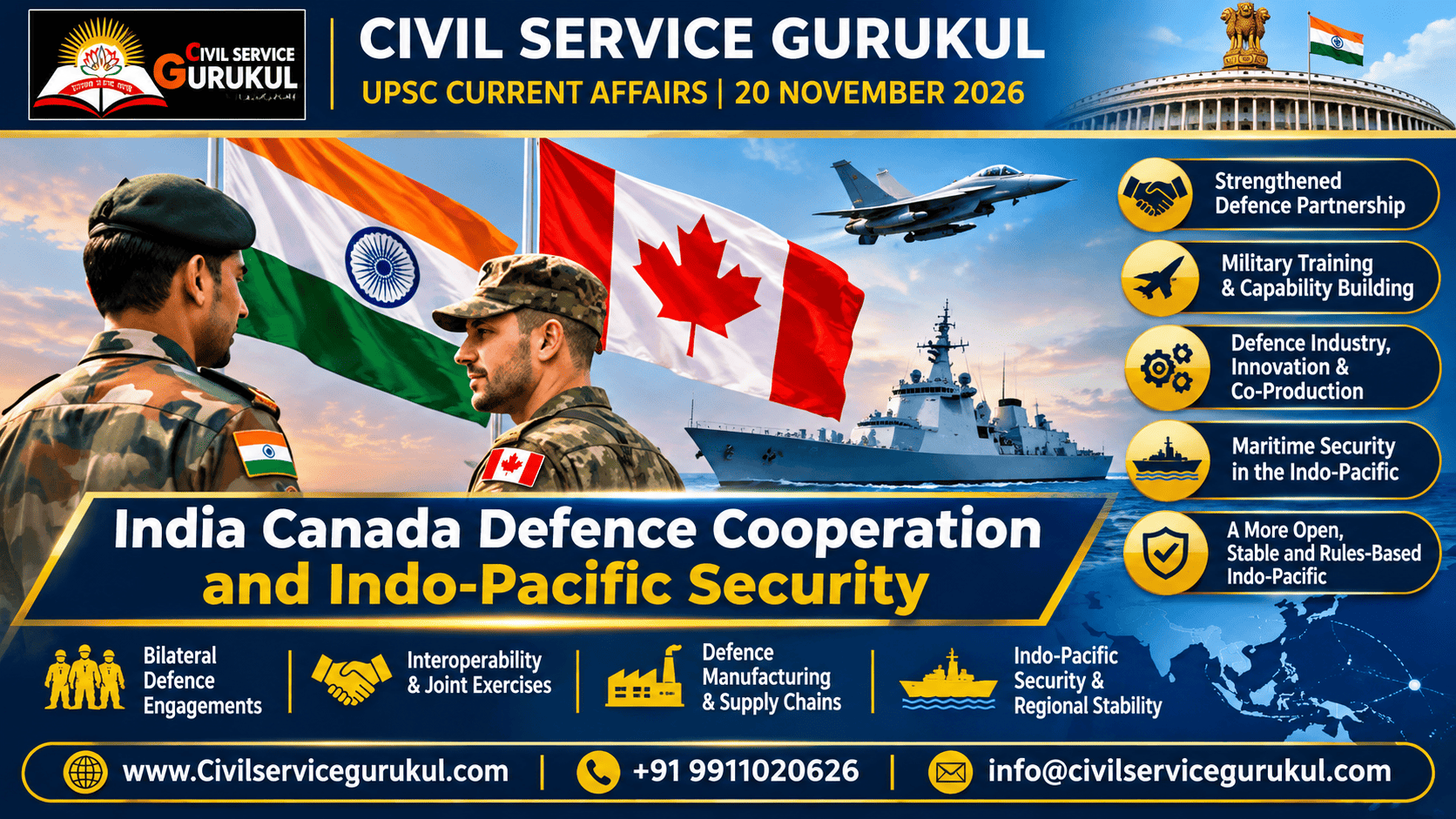
India–Canada Defence Cooperation 2026 | UPSC GS-II
India Canada Defence Cooperation 2026, India Canada Defence Dialogue, India Canada Relations, Indo-Pacific Security, India Canada Maritime Partnership, Narendra Modi Mark Carney, India Canada Joint Statement 2026, NATO Canada, Strategic Autonomy, Maritime Domain Awareness, Defence Industrial Cooperation, Defence Research and Development, Military Technical Cooperation, India's Indo-Pacific Strategy, Canada's Indo-Pacific Strategy, Indian Ocean Region, IORA, UNCLOS, QUAD, Global Security, UPSC International Relations, UPSC Prelims 2027, UPSC Mains 2027, GS Paper II, GS Paper III, Civil Service Gurukul.

Export Promotion Mission 2026: MSME Reforms & UPSC
The Government of India has relaxed important guidelines under the ₹25,060 crore Export Promotion Mission to improve the global competitiveness of MSME exporters. Announced on 18 November 2026, the changes raise the export turnover eligibility ceiling for specified airfare reimbursement from ₹75 lakh to ₹50 crore, increase reimbursement support for eligible exporters, reduce the mandatory Export Promotion Council membership period and expand reimbursable export certifications from 462 to 600. Freight and logistics provisions have also been widened to support exporters from more regions. The reforms operate under Niryat Disha, while the complementary Niryat Protsahan sub-scheme focuses on trade finance and credit access. This Civil Service Gurukul analysis explains the revised rules, roles of DGFT and Exim Bank, non-tariff barriers, MSME competitiveness, financial risks, and their relevance to UPSC Prelims and Mains 2027.
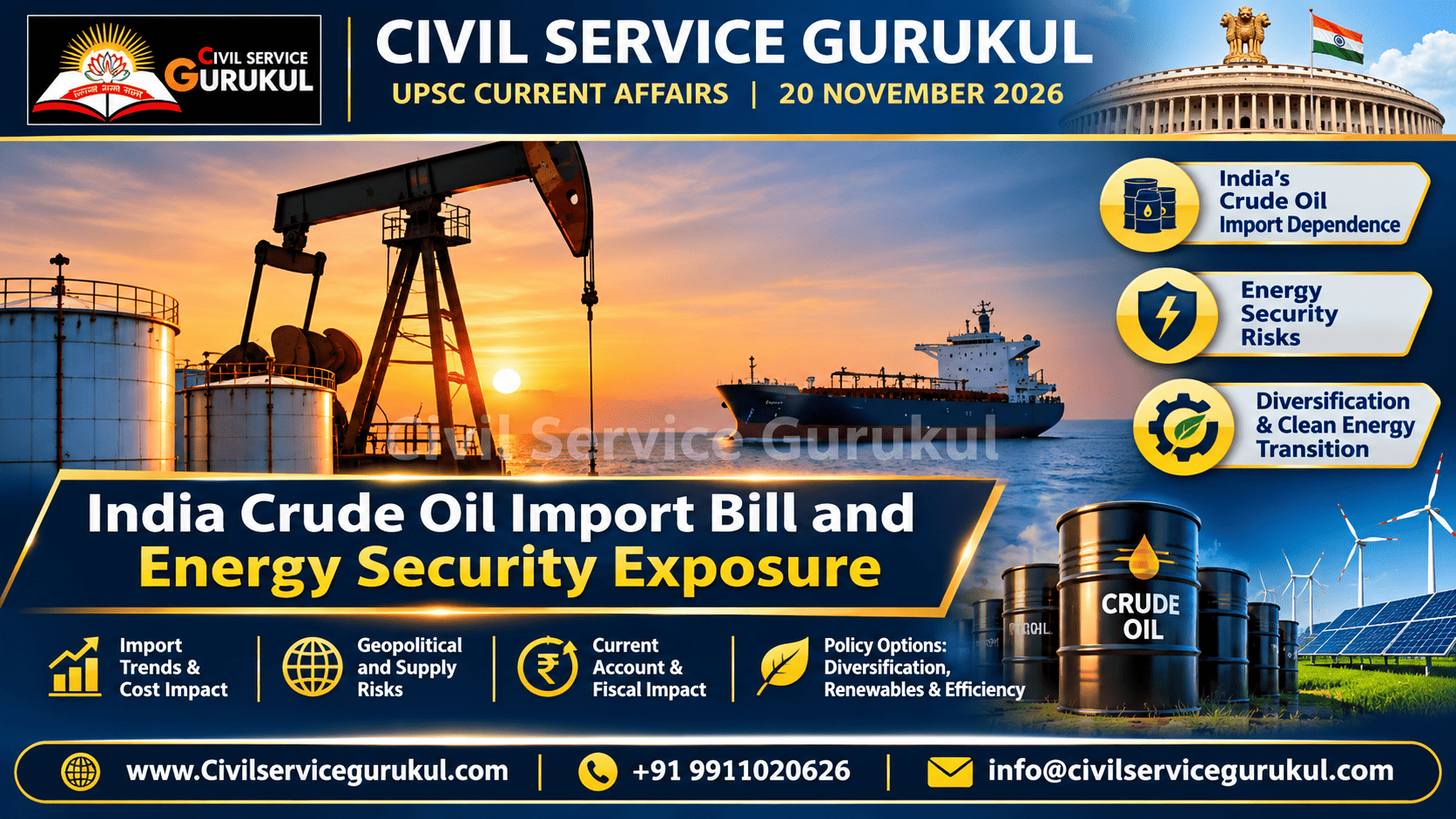
India Crude Oil Import Bill 2026: UPSC Economy
India's crude oil import bill surged by approximately 87.5% year-on-year to US$19.5 billion in October 2026, highlighting the economy's exposure to international oil prices and geopolitical disruptions. Despite the sharp increase in expenditure, the quantity of crude oil imported rose by only around 11%, demonstrating that higher energy prices can significantly increase import costs without a comparable rise in physical consumption. This development is highly relevant to India's current account deficit, imported inflation, exchange rate pressures, industrial costs and strategic autonomy. The issue also highlights the importance of diversifying crude oil suppliers, maintaining strategic petroleum reserves, expanding transport electrification and improving energy efficiency. This Civil Service Gurukul analysis explains the October 2026 data, the economic transmission of oil price shocks, government policy responses, UPSC Prelims concepts and GS Paper III Mains answer-writing strategies.
Rosalind Franklin & Photo 51: 2026 Discovery | UPSC
Rosalind Franklin, Photo 51, Photo 49, Rosalind Franklin 2026 Study, DNA Double Helix, DNA Structure Discovery, X-ray Diffraction, X-ray Crystallography, Alistair Sponsel, Brian Sutton, Raymond Gosling, Watson and Crick, Maurice Wilkins, Science and Technology UPSC, Research Ethics, Scientific Attribution, Ethics in Scientific Research, Women in Science, Nobel Prize 1962, UPSC Current Affairs 2026, UPSC Prelims 2027, UPSC Mains 2027, GS Paper III, GS Paper IV Ethics, Civil Service Gurukul.
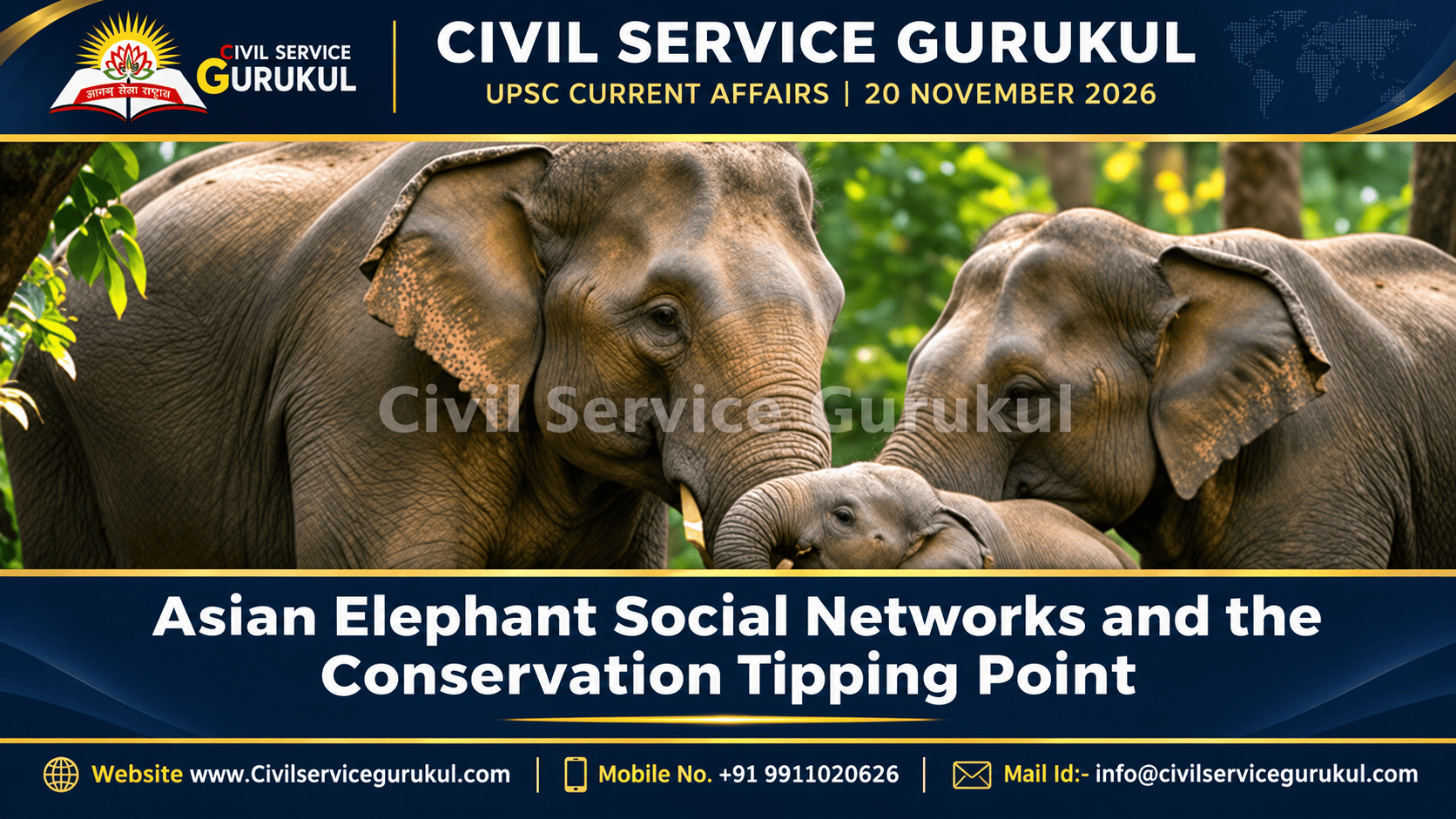
India–China–Russia Relations 2026: UPSC GS-II
The November 2026 United States–Russia–China summit has renewed attention to great-power diplomacy, multipolarity and India's strategic autonomy. While the Shenzhen summit involved the leaders of the United States, Russia and China, the separate Russia–India–China (RIC) format remains important for understanding India's engagement with Eurasian powers. India must manage its longstanding strategic partnership with Russia, complex border and economic relations with China, and expanding cooperation with the United States without becoming dependent on any single geopolitical bloc. This Civil Service Gurukul analysis examines the history of RIC diplomacy, the distinctions between RIC, BRICS and the Shanghai Cooperation Organisation, competing interests in the Indo-Pacific, energy security, emerging technology and India's role in shaping a multipolar world order. Includes UPSC Prelims revision, statement-based MCQs and GS Paper II Mains answer-writing practice.
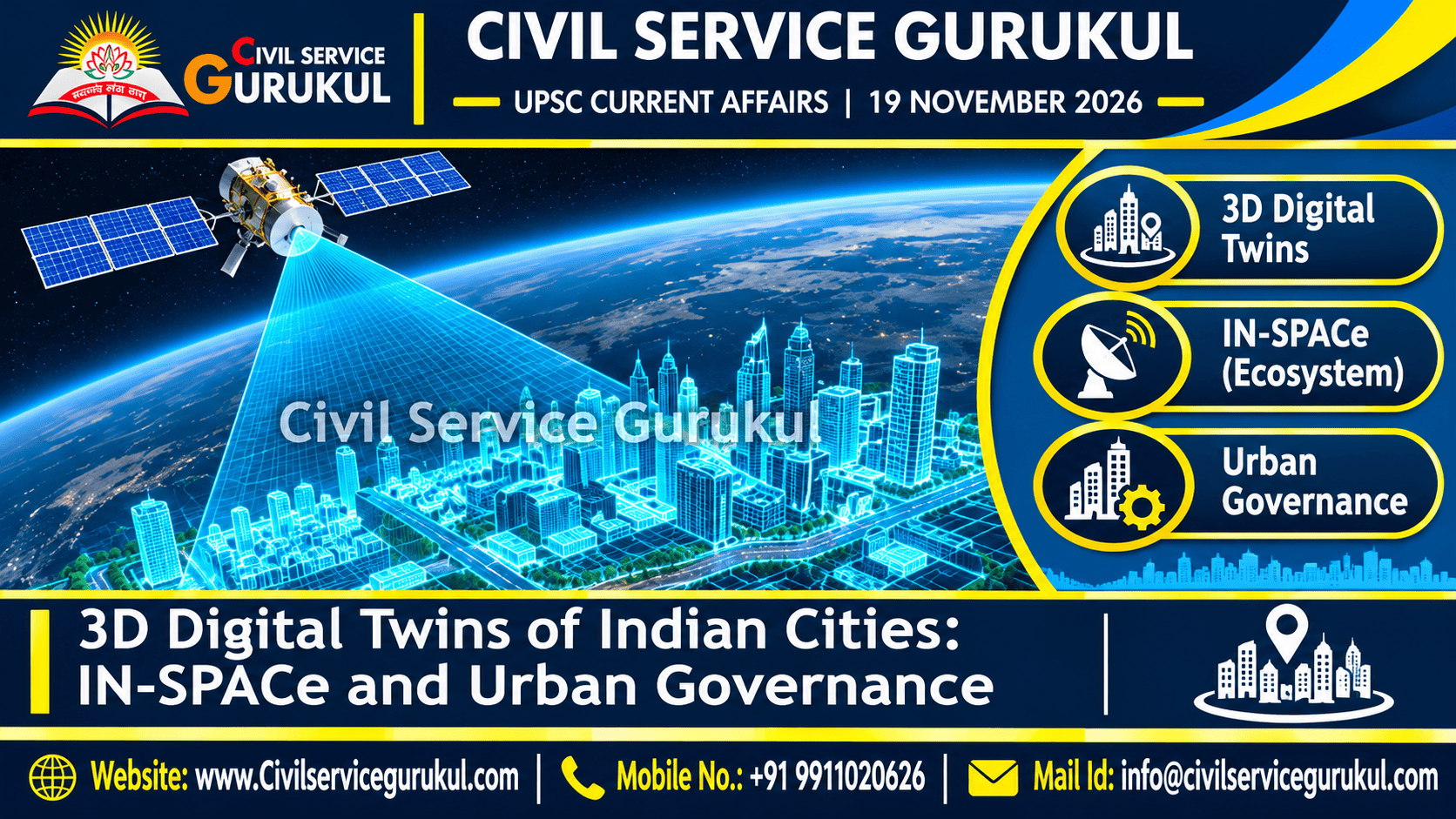
3D Digital Twins of Indian Cities: IN-SPACe & UPSC 2027
Three-dimensional digital twins are emerging as important tools for modern urban governance by combining geospatial models with relevant real-world observations and administrative information. A November 2026 current-affairs report has highlighted the reported selection of three firms by IN-SPACe for urban 3D reconstruction, bringing attention to the role of India's expanding private space ecosystem in city planning. Technologies such as satellite imagery, photogrammetry, Geographic Information Systems and sensor-based monitoring can help municipalities visualise infrastructure, assess flood risks, improve drainage planning and strengthen disaster preparedness. However, a static 3D city model does not automatically become a continuously updated digital twin. Successful implementation requires reliable data, interoperability, municipal capacity, cybersecurity, privacy safeguards and transparent procurement. This Civil Service Gurukul analysis explains the technology, the institutional role of IN-SPACe, practical applications, governance challenges and its relevance to UPSC Prelims and Mains 2027.

Rooppur Nuclear Power Plant: Bangladesh & UPSC 2027
Bangladesh's Rooppur Nuclear Power Plant represents a major step in the country's efforts to diversify its electricity generation system and strengthen long-term energy security. A November 2026 current-affairs report has highlighted a trial phase at the project, drawing attention to the difference between reactor testing, first criticality, grid synchronisation and commercial operation. Nuclear power offers the potential for reliable, low-carbon electricity generation, but also requires strong regulatory oversight, emergency preparedness, cooling-water management, radioactive waste handling and financial sustainability. For India and South Asia, the project raises important questions about regional energy cooperation, nuclear safety, technology partnerships and cross-border emergency communication. This Civil Service Gurukul analysis explains the Rooppur project, nuclear fission, energy-transition opportunities, safety challenges, regulatory responsibilities and their relevance to UPSC Prelims and Mains 2027.
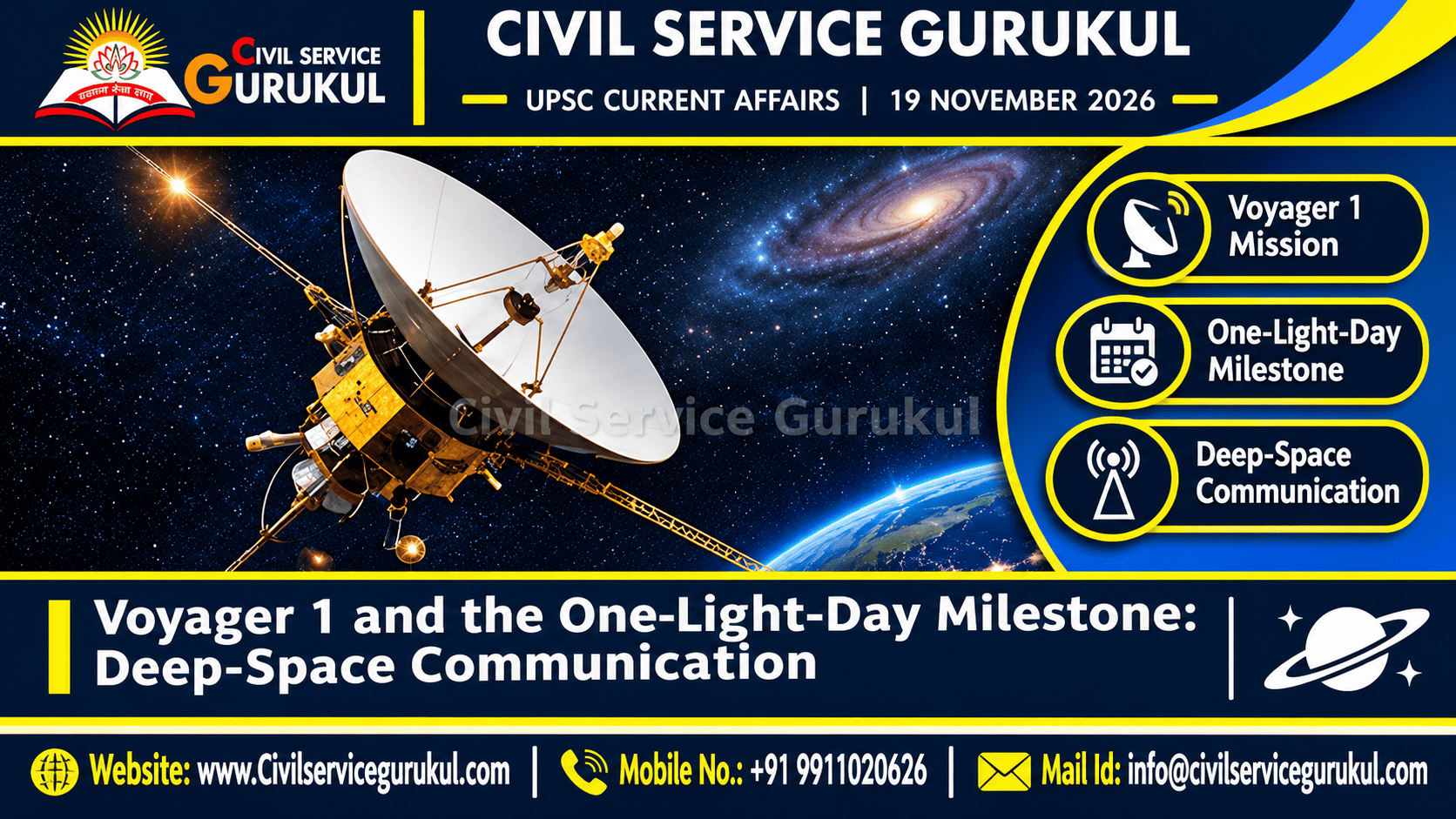
Voyager 1 One-Light-Day Milestone: UPSC 2027
Voyager 1, launched by NASA in 1977, continues its historic journey through interstellar space, far beyond the region dominated by the Sun's solar wind. A November 2026 science report has highlighted the spacecraft's approach toward a distance of one light-day from Earth, raising important questions about communication delays, spacecraft autonomy and the engineering challenges of extremely long-duration space missions. One light-day represents approximately 25.9 billion kilometres—the distance travelled by light in a vacuum over 24 hours. At such a distance, a radio command would require about one day to reach the spacecraft, while a response would take another day to return. This Civil Service Gurukul analysis explains Voyager 1, the heliopause, the heliosphere, the Oort Cloud, NASA's Deep Space Network, signal propagation, declining spacecraft power, autonomous fault management and the scientific importance of interstellar exploration.

Electoral Roll Revision in India: SSR, Voter Rights & UPSC 2027
Electoral rolls are the foundation of democratic participation because they determine which eligible citizens are registered to vote in an election. A November 2026 current affairs report has highlighted substantial additions to draft electoral rolls during a revision exercise, renewing attention to voter inclusion, accuracy, transparency and the right to correct electoral records. Draft publication is not the final determination of the electorate; it provides an important opportunity for eligible citizens to inspect entries, seek inclusion, request corrections and raise objections through prescribed procedures. This Civil Service Gurukul analysis explains the constitutional and statutory framework governing electoral rolls, the role of the Election Commission of India, Special Summary Revision, claims and objections, the distinction between draft and final rolls, digital and offline accessibility, risks of wrongful exclusion and the importance of procedural fairness in electoral governance.
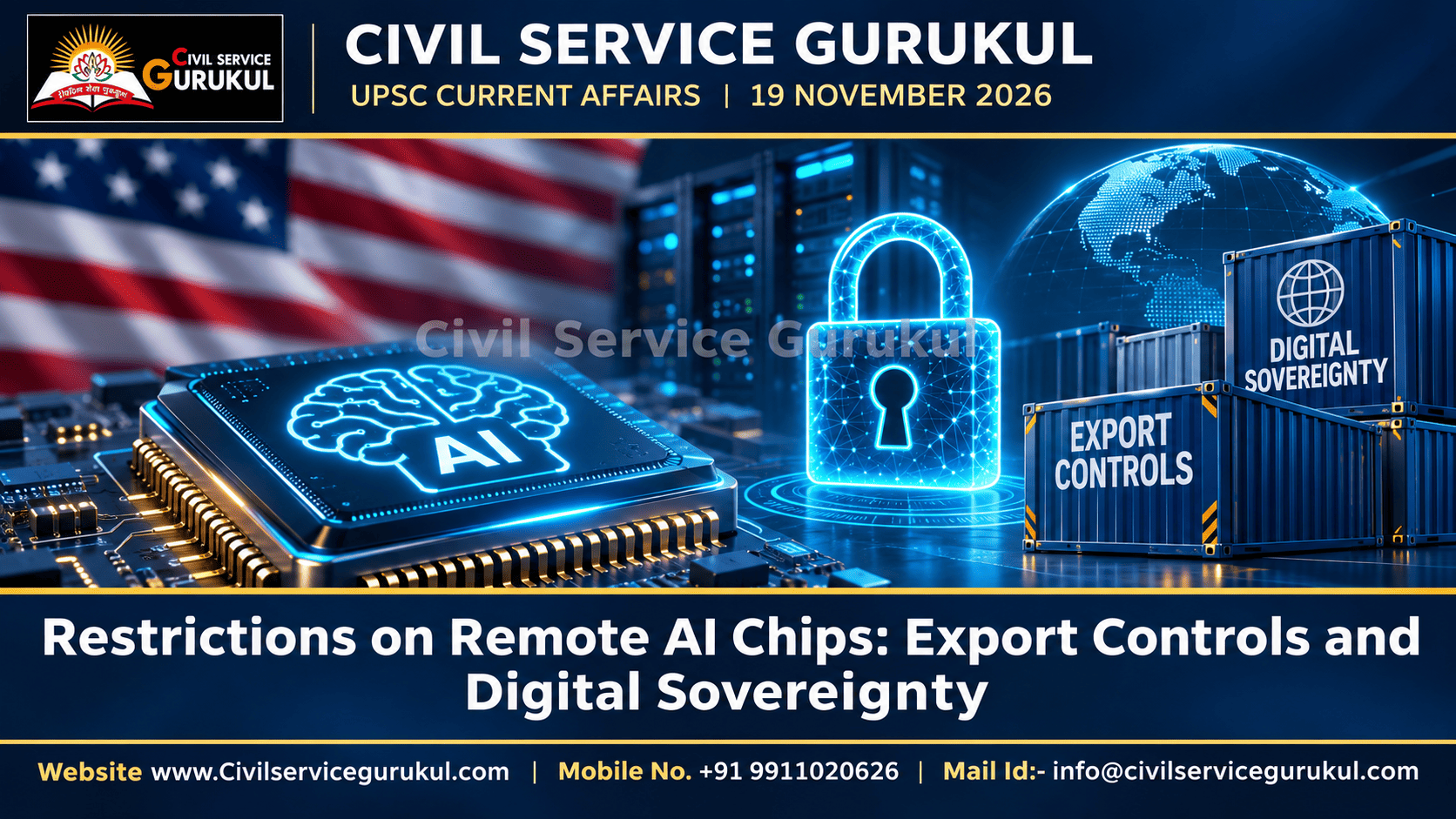
AI Chip Export Controls & Digital Sovereignty: UPSC 2027
Advanced artificial intelligence depends increasingly on high-performance computing infrastructure, including specialised AI chips, cloud data centres and secure network access. A November 2026 current affairs report has raised questions about possible US restrictions on remote access to advanced AI computing resources. Such restrictions could affect international users even when no physical semiconductor crosses a national border. The issue highlights the growing intersection of technology policy, national security, international trade and digital sovereignty. This Civil Service Gurukul analysis explains remote AI computing, semiconductor export controls, cloud access, extraterritorial regulatory challenges, India's dependence on global computing infrastructure, the importance of domestic AI capacity and the need to balance technological security with innovation and equitable access.

JAIMEX 2026: India–Japan Maritime Cooperation for UPSC
India–Japan maritime cooperation has emerged as an important pillar of the evolving Indo-Pacific security architecture. A November 2026 current affairs report highlights the reported participation of INS Sahyadri in the Japan–India Maritime Exercise (JAIMEX 2026), alongside renewed attention to high-level defence engagement between the two countries. Naval exercises strengthen interoperability, maritime communication, operational coordination and shared awareness of regional security challenges. However, participation in joint military exercises does not automatically create a binding mutual-defence alliance. This Civil Service Gurukul analysis examines JAIMEX, India–Japan strategic relations, the Quad, maritime trade routes, sea lines of communication, ASEAN centrality, strategic autonomy and the opportunities and challenges associated with Indo-Pacific cooperation, along with original UPSC Prelims MCQs and a Mains model answer.
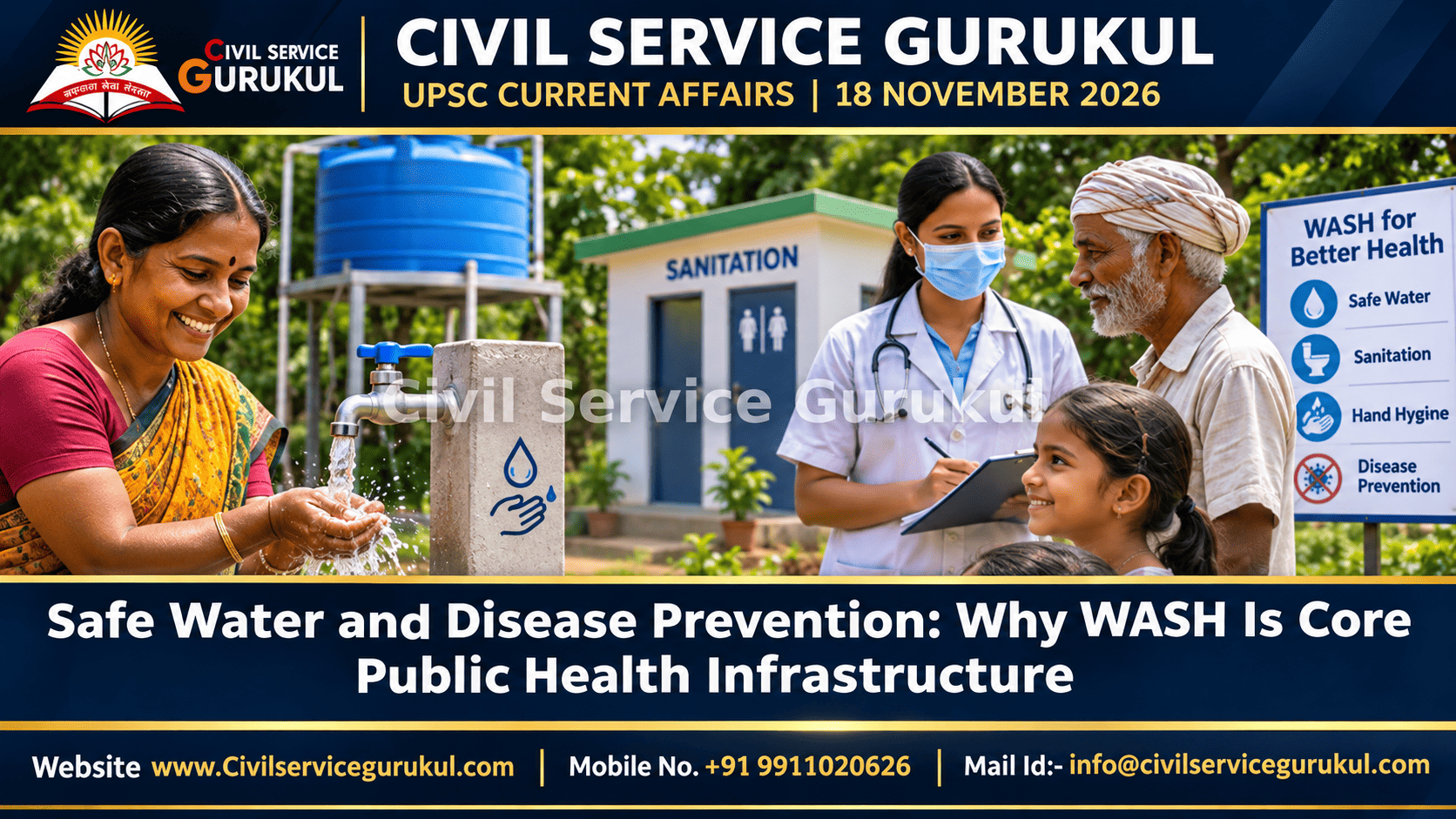
Safe Drinking Water & WASH in India: UPSC 2027
Access to safe drinking water, adequate sanitation and proper hygiene is essential for preventing infectious diseases, protecting human dignity and strengthening public health systems. A November 2026 editorial discussion has renewed attention to Water, Sanitation and Hygiene (WASH) as a fundamental component of disease prevention rather than merely a matter of infrastructure construction. Although household tap connections improve physical access, they do not automatically guarantee microbiologically safe water, reliable supply or effective wastewater disposal. This Civil Service Gurukul analysis examines the relationship between contaminated water and disease transmission, the role of sanitation and handwashing, drinking-water quality monitoring, Jal Jeevan Mission, Swachh Bharat Mission, SDG 6, climate resilience and inclusive water governance. It also includes original UPSC Prelims questions and a Mains model answer.
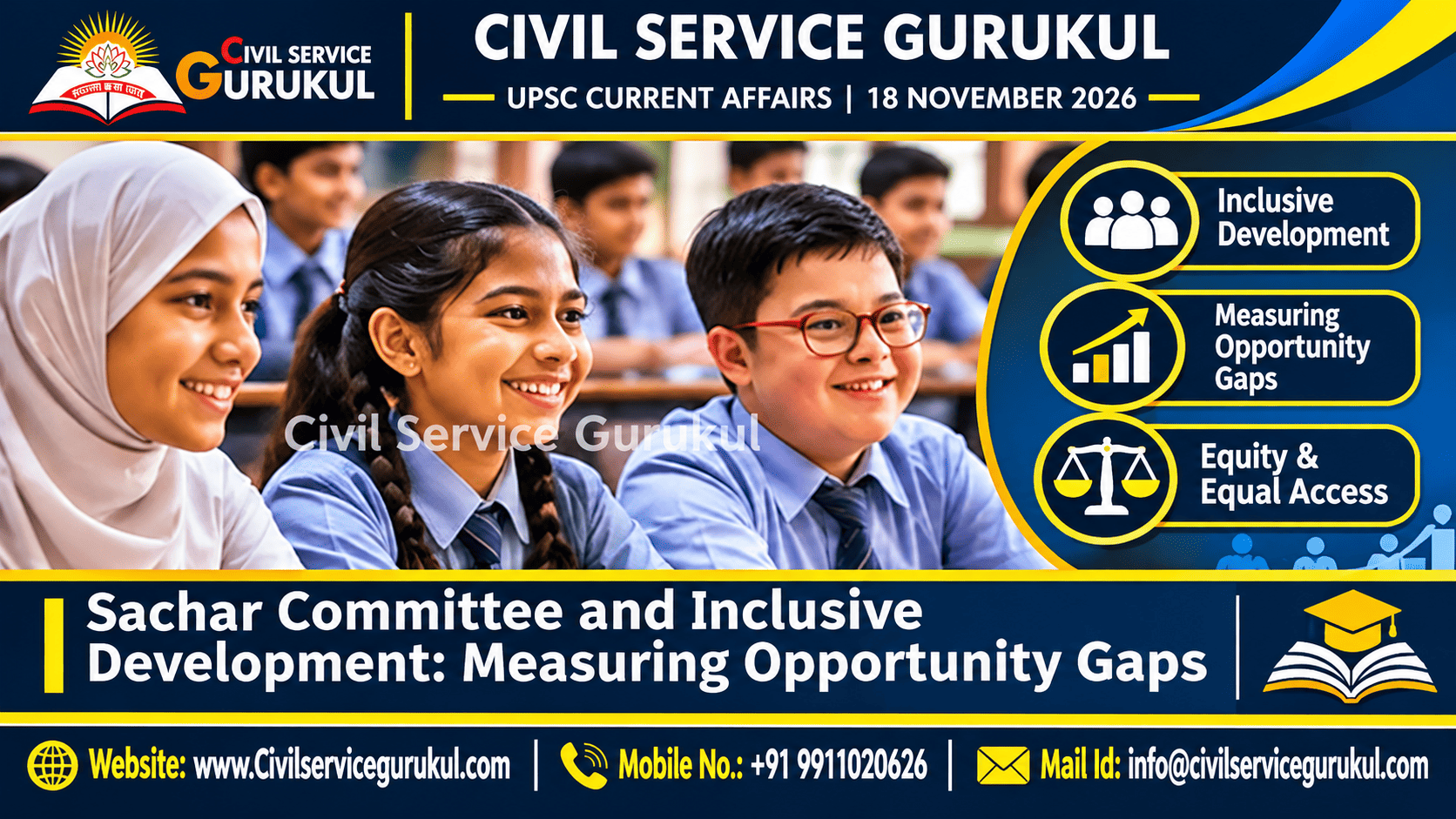
Sachar Committee Report: Social Justice & UPSC 2027
Nearly two decades after the Sachar Committee submitted its report in 2006, questions about equal opportunity, social inclusion and evidence-based public policy remain relevant to India's development journey. The committee examined the social, economic and educational status of India's Muslim community, highlighting the importance of measuring access to education, employment, credit and institutional representation. A November 2026 opinion discussion has renewed attention to the need for updated, comparable and disaggregated indicators rather than relying exclusively on historical findings or broad national averages. This Civil Service Gurukul analysis explores the Sachar Committee's significance, the constitutional framework for equality, the distinction between formal and substantive equality, the role of data in identifying opportunity gaps, policy design challenges and practical approaches to inclusive development, with original UPSC Prelims questions and a Mains model answer.
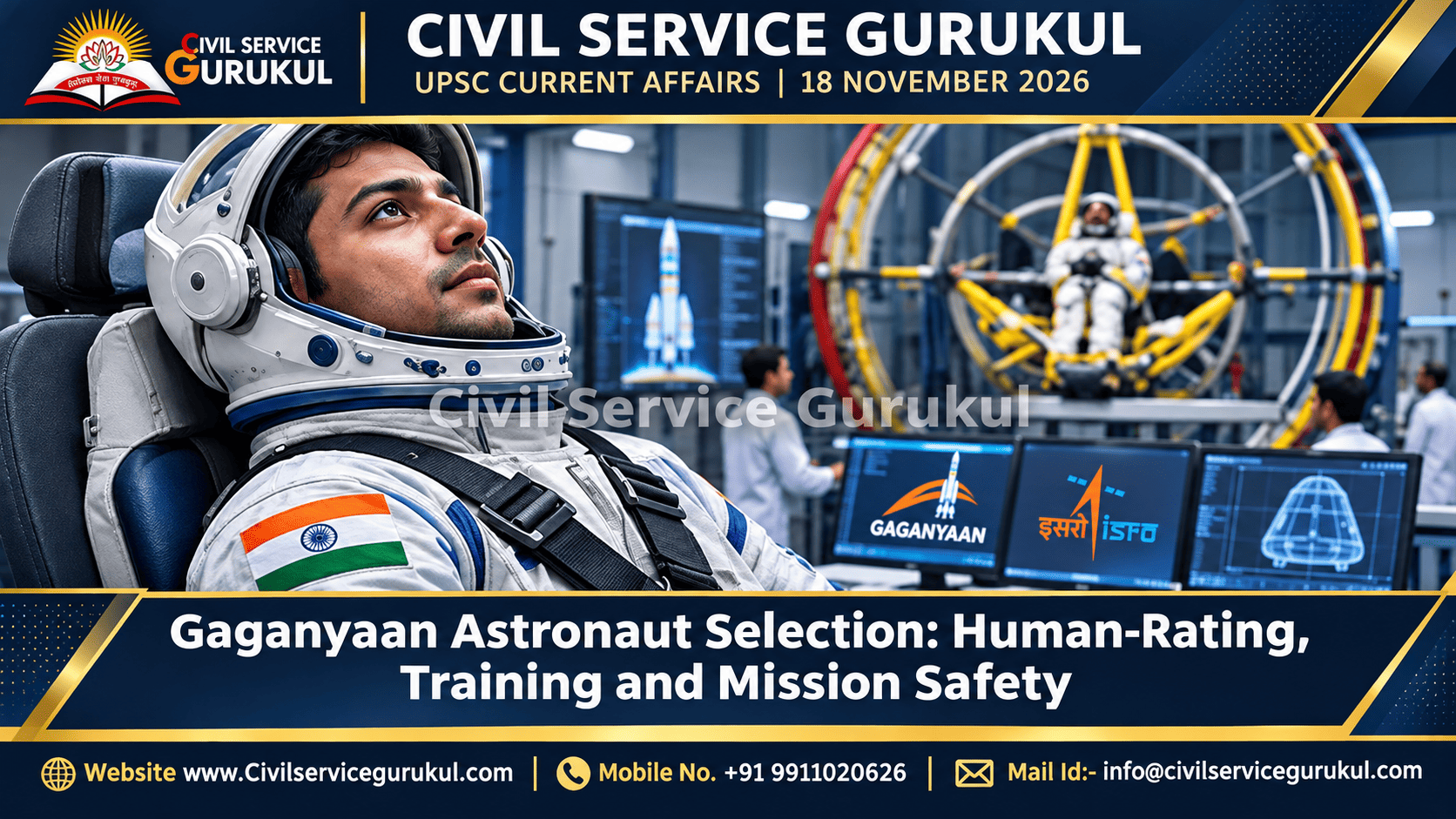
Gaganyaan Mission: Astronaut Training & Safety UPSC 2027
India's Gaganyaan human spaceflight programme represents a major technological challenge that extends far beyond launching astronauts into space. A November 2026 current affairs discussion of astronaut selection and training highlights the importance of human-rated launch systems, emergency preparedness, medical fitness, spacecraft environmental controls, reliable communications and safe crew recovery. Unlike uncrewed missions, human spaceflight requires rigorous safety engineering, repeated testing and close coordination between astronauts, mission controllers and engineering teams. This Civil Service Gurukul analysis examines the scientific and organisational foundations of Gaganyaan, the astronaut selection and training process, human-rating, life-support systems, crew escape technology and the importance of safety culture, along with original UPSC Prelims questions and a Mains model answer.

Aadhaar Biometric Exclusion: Rights & UPSC 2027
A November 2026 news report highlighting Supreme Court concerns about Aadhaar accessibility has renewed debate over the relationship between digital identity, welfare delivery and constitutional rights. Although Aadhaar-based verification can improve administrative efficiency, biometric mismatches, connectivity problems and inaccessible interfaces may prevent eligible individuals from accessing essential services. Older persons, persons with disabilities, manual workers and residents of areas with weak digital infrastructure can face particular difficulties. Importantly, authentication failure does not establish that an individual is ineligible for welfare benefits. This Civil Service Gurukul analysis examines Aadhaar's role in digital governance, biometric exclusion, accessibility, alternative authentication, grievance redressal, privacy, dignity and public-service accountability, along with original UPSC Prelims MCQs and a Mains model answer.