
Rooppur Nuclear Power Plant: Bangladesh & UPSC 2027
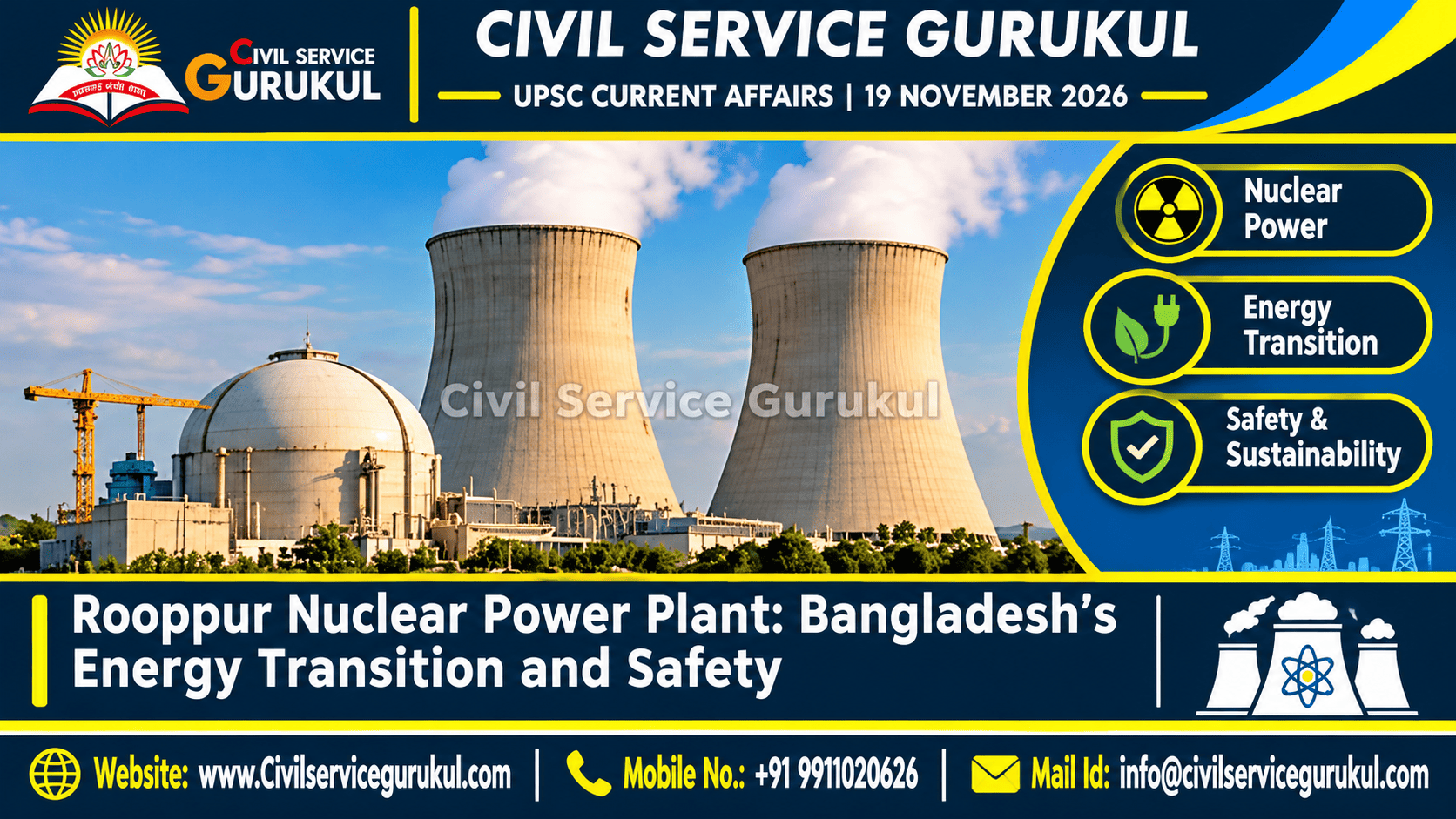
Rooppur Nuclear Power Plant: Bangladesh's Nuclear Energy Ambitions, Safety Challenges and Lessons for South Asia
A comprehensive UPSC analysis of Bangladesh's nuclear energy programme, reactor commissioning, nuclear fission, energy security, environmental safety and regional cooperation.
1. Why Is Rooppur Nuclear Power Plant in the News?
A November 2026 current-affairs topic has highlighted a reported trial phase at Bangladesh's Rooppur Nuclear Power Plant.
The development raises important questions about nuclear reactor testing, electricity generation, regulatory oversight and long-term energy security.
It is important to distinguish between technical testing, first criticality, grid synchronisation and commercial operation.
2. What Is the Rooppur Nuclear Power Plant?
The Rooppur Nuclear Power Plant is a major nuclear energy project in Bangladesh.
It forms part of the country's efforts to diversify electricity generation and develop long-term energy infrastructure.
The project also illustrates the role of international technology partnerships in developing complex nuclear facilities.
Why Is the Project Significant?
Nuclear power can broaden the electricity generation mix.
Nuclear plants can provide electricity independent of daily sunlight or wind conditions.
Nuclear generation has low operational greenhouse-gas emissions.
Nuclear projects require extensive planning, financing and technical capacity.
3. Nuclear Energy and International Cooperation
Nuclear power projects often involve international cooperation in reactor technology, engineering, fuel services and specialised training.
Such cooperation can support technology transfer and capacity building but may also create long-term financial and technical dependencies.
4. How Does Nuclear Power Generation Work?
Nuclear power plants use energy released from nuclear fission to generate heat.
Nuclear fission involves the splitting of heavy atomic nuclei into smaller nuclei, releasing energy and additional neutrons.
The generated heat is used through the plant's thermal cycle to produce steam and drive turbines connected to electricity generators.
Basic Nuclear Power Process
- Nuclear fission releases heat.
- The reactor cooling system transfers heat.
- Steam is produced through the plant's thermal cycle.
- Steam drives a turbine.
- The turbine drives an electricity generator.
- Electricity is supplied to the grid after required operational conditions are met.
5. Nuclear Fission vs Nuclear Fusion
| Parameter | Nuclear Fission | Nuclear Fusion |
|---|---|---|
| Basic Process | Splitting of heavy nuclei. | Combining light nuclei. |
| Energy Release | Energy released from nuclear splitting. | Energy released from nuclear combination. |
| Commercial Electricity | Used in existing commercial nuclear power plants. | Not yet established as routine commercial electricity generation. |
6. What Is Nuclear Plant Commissioning?
Commissioning is a structured process of testing, verifying and demonstrating that plant systems meet required operational and safety conditions.
It may include multiple technical stages before full commercial operation.
7. Important Nuclear Power Milestones
| Milestone | Meaning |
|---|---|
| Commissioning | Testing and verification of plant systems and readiness. |
| First Criticality | Achievement of a sustained, controlled nuclear chain reaction. |
| Grid Synchronisation | Connection of the generator to the electricity grid under required conditions. |
| Commercial Operation | Formal commencement of commercial electricity operation after applicable requirements. |
8. Why Is Commissioning Safety-Critical?
Commissioning provides an opportunity to identify technical issues before routine operation.
It involves testing safety systems, operating procedures and the readiness of plant personnel.
Independent regulatory oversight is important throughout the relevant stages.
9. Bangladesh's Energy Transition
Energy transition involves changes in the sources, technologies and systems used to supply energy.
For Bangladesh, reliable electricity is important for industrial development, households and public services.
Nuclear power can form one component of a diversified energy strategy alongside other generation technologies.
10. Potential Advantages of Nuclear Power
Nuclear plants can provide substantial firm electricity when operating.
Nuclear generation produces low direct carbon emissions.
A broader generation mix may reduce dependence on particular fuels.
Nuclear programmes can support specialised engineering and scientific skills.
11. Economic and Infrastructure Challenges
- High initial capital requirements.
- Long project development periods.
- Financing and debt-management risks.
- Need for reliable transmission infrastructure.
- Long-term maintenance and technical support.
- Spent-fuel and waste-management obligations.
- Eventual decommissioning responsibilities.
12. Nuclear Safety Challenges
Nuclear power requires strong technical, institutional and regulatory safeguards.
Safety must be considered throughout design, construction, commissioning, operation and decommissioning.
Major Safety Considerations
Reliable heat removal is essential for safe reactor operation.
Preparedness requires clear responsibilities and coordinated response systems.
Used nuclear fuel requires controlled handling, storage and management.
Independent technical review supports compliance and accountability.
13. What Is Nuclear Safety Culture?
Nuclear safety culture refers to organisational values, attitudes and practices that give safety appropriate priority.
It requires trained personnel, transparent reporting, effective supervision and a willingness to identify and correct problems.
14. Radioactive Waste and Spent Fuel
Nuclear generation produces radioactive materials that require appropriate management.
Spent nuclear fuel must be handled and stored under strict safety arrangements.
Long-term management requires technical capacity, regulatory oversight and financial planning.
15. Cooling Water and Environmental Considerations
Nuclear power plants require reliable cooling arrangements.
Cooling-water management may involve environmental monitoring, thermal discharge controls and assessment of local water conditions.
Site-specific environmental risks should be evaluated using official technical assessments.
16. Why Does Rooppur Matter for India?
Bangladesh is an important neighbour of India.
Major energy infrastructure in the region can raise questions about regional cooperation, environmental management and emergency preparedness.
The Rooppur project is therefore relevant to discussions of South Asian energy security and cross-border coordination.
17. Cross-Border Nuclear Emergency Communication
Nuclear emergency preparedness requires clear communication among relevant authorities.
For countries sharing a region, timely information exchange and appropriate cooperation can support public safety.
Specific notification duties depend on applicable treaties, national laws and established arrangements.
18. Role of the IAEA
The International Atomic Energy Agency, or IAEA, promotes the safe, secure and peaceful use of nuclear technology.
It develops international nuclear safety standards and supports technical cooperation and peer-review activities.
National regulators retain responsibilities under their respective legal systems.
19. Way Forward for Safe Nuclear Energy Development
- Strengthen regulation: Maintain effective and technically competent oversight.
- Verify commissioning milestones: Clearly distinguish testing from commercial operation.
- Improve safety culture: Encourage transparent reporting and continuous training.
- Plan waste management: Establish reliable long-term arrangements.
- Strengthen emergency preparedness: Conduct appropriate drills and coordination exercises.
- Ensure financial sustainability: Evaluate lifecycle costs and long-term obligations.
- Improve public communication: Provide clear, evidence-based information.
- Support regional cooperation: Promote appropriate information exchange and emergency coordination.
20. UPSC Prelims 2027: Quick Revision
- Rooppur Nuclear Power Plant is located in Bangladesh.
- Nuclear fission involves splitting heavy atomic nuclei.
- Controlled nuclear chain reactions release heat in reactors.
- Nuclear power plants use thermal energy to generate electricity.
- Commissioning involves testing and verification.
- First criticality means achieving a sustained controlled chain reaction.
- Grid synchronisation is different from first criticality.
- Commercial operation is a distinct operational milestone.
- Nuclear power has low direct operational greenhouse-gas emissions.
- Spent fuel requires appropriate long-term management.
- The IAEA promotes international nuclear safety standards and cooperation.
- National regulators oversee nuclear activities under domestic law.
21. Original UPSC Prelims MCQs
Question 1
Consider the following statements:
- Nuclear fission involves the splitting of heavy atomic nuclei.
- Nuclear fusion involves combining light nuclei.
- Commercial nuclear power plants generally rely on nuclear fusion.
Which statements are correct?
(A) 1 and 2 only
(B) 2 and 3 only
(C) 1 and 3 only
(D) 1, 2 and 3
Statements 1 and 2 are correct. Existing commercial nuclear power generation relies on fission, not routine commercial fusion.
Question 2
Which statement correctly describes first criticality in a nuclear reactor?
(A) The reactor has automatically entered commercial operation.
(B) A sustained controlled nuclear chain reaction has been achieved.
(C) The plant has completed all decommissioning obligations.
(D) The plant no longer requires safety oversight.
First criticality is a technical milestone involving a sustained controlled chain reaction.
Question 3
Consider the following statements:
- Nuclear power can provide firm electricity generation.
- Nuclear generation has low direct operational greenhouse-gas emissions.
- Nuclear power requires no radioactive waste management.
Which statements are correct?
(A) 1 only
(B) 1 and 2 only
(C) 2 and 3 only
(D) 1, 2 and 3
Nuclear power can provide firm electricity with low direct emissions, but radioactive waste management remains necessary.
Question 4
Which of the following are relevant to nuclear power plant safety?
- Reactor cooling
- Emergency preparedness
- Spent-fuel management
- Regulatory oversight
(A) 1 and 2 only
(B) 1, 2 and 3 only
(C) 2, 3 and 4 only
(D) 1, 2, 3 and 4
All four are important elements of nuclear power plant safety.
Question 5
Consider the following statements about the IAEA:
- It promotes the peaceful use of nuclear technology.
- It develops international nuclear safety standards.
- It replaces every national nuclear regulatory authority.
Which statements are correct?
(A) 1 and 2 only
(B) 2 and 3 only
(C) 1 and 3 only
(D) 1, 2 and 3
The IAEA supports international nuclear cooperation and safety, while national regulatory responsibilities remain important.
22. UPSC Mains Practice Question
"Nuclear energy offers opportunities for low-carbon electricity generation in South Asia, but its success depends on strong governance and safety systems." Critically examine with reference to Bangladesh's Rooppur Nuclear Power Plant.
Word Limit: 250 words
23. Model UPSC Mains Answer
Introduction
Nuclear energy can provide reliable low-carbon electricity, making it relevant to energy security and climate objectives.
Bangladesh's Rooppur Nuclear Power Plant illustrates both the opportunities and governance responsibilities associated with nuclear infrastructure.
Major Opportunities
- Energy Security: Diversification of electricity generation sources.
- Low-Carbon Power: Reduced direct operational greenhouse-gas emissions.
- Reliable Supply: Potential contribution to firm electricity generation.
- Technical Capacity: Development of specialised engineering and operational skills.
Major Challenges
- High capital and financing requirements.
- Need for independent regulatory oversight.
- Spent-fuel and radioactive waste management.
- Cooling-water and environmental considerations.
- Emergency preparedness and long-term maintenance.
Regional Implications
South Asian countries benefit from appropriate communication and cooperation concerning major energy infrastructure and emergency preparedness.
Way Forward
Strong regulation, transparent commissioning, trained personnel, effective waste management and regional cooperation are essential.
Conclusion
Nuclear energy can contribute to sustainable electricity systems when supported by sound economics, robust safety culture and accountable institutions.
24. Frequently Asked Questions
Where is Rooppur Nuclear Power Plant located?
Rooppur Nuclear Power Plant is located in Bangladesh.
What is nuclear fission?
Nuclear fission is the splitting of heavy atomic nuclei, releasing energy.
Does first criticality mean commercial operation?
No. First criticality is a technical milestone distinct from commercial operation.
Why is nuclear safety important?
Nuclear facilities require reliable cooling, emergency planning, waste management and regulatory oversight.
Why is Rooppur important for UPSC?
It connects international relations, energy security, nuclear science, environmental governance and regional cooperation.
25. Conclusion: Energy Security Requires Safety and Governance
The Rooppur Nuclear Power Plant highlights the opportunities and responsibilities associated with nuclear energy development.
Nuclear power can strengthen electricity diversification and support low-carbon generation.
However, its long-term success depends on technical reliability, financial planning, environmental safeguards, independent regulation and public accountability.
For UPSC aspirants, the central lesson is that nuclear energy policy must integrate science, economics, international cooperation and safety governance.
Master International Relations, Nuclear Energy and Science & Technology for UPSC 2027
Prepare with Civil Service Gurukul through current-affairs analysis, Prelims MCQs, Mains answer writing and structured mentoring.
CIVIL SERVICE GURUKUL
UPSC | IAS | State PCS | Prelims & Mains
Visit Our Website Call +91 9911020626 Email for Enquirywww.civilservicegurukul.com
Editorial Disclaimer: This original educational article expands upon a November 2026 current-affairs topic concerning the Rooppur Nuclear Power Plant. The reported trial phase and exact commissioning status have not been independently verified against official project and regulatory documents.
Prepare with Mentors Who Cleared the Exam
Get personalized study plans, evaluated answer models, and test series access.