Daily Current Affairs & News Analysis
Our daily news analysis consists of two integral parts — Daily News Analysis and Important Editorials curated rigorously from The Hindu, The Indian Express, LiveMint, PIB, and Sansad TV debates. Content is mapped directly to UPSC CSE and State PCS syllabi.
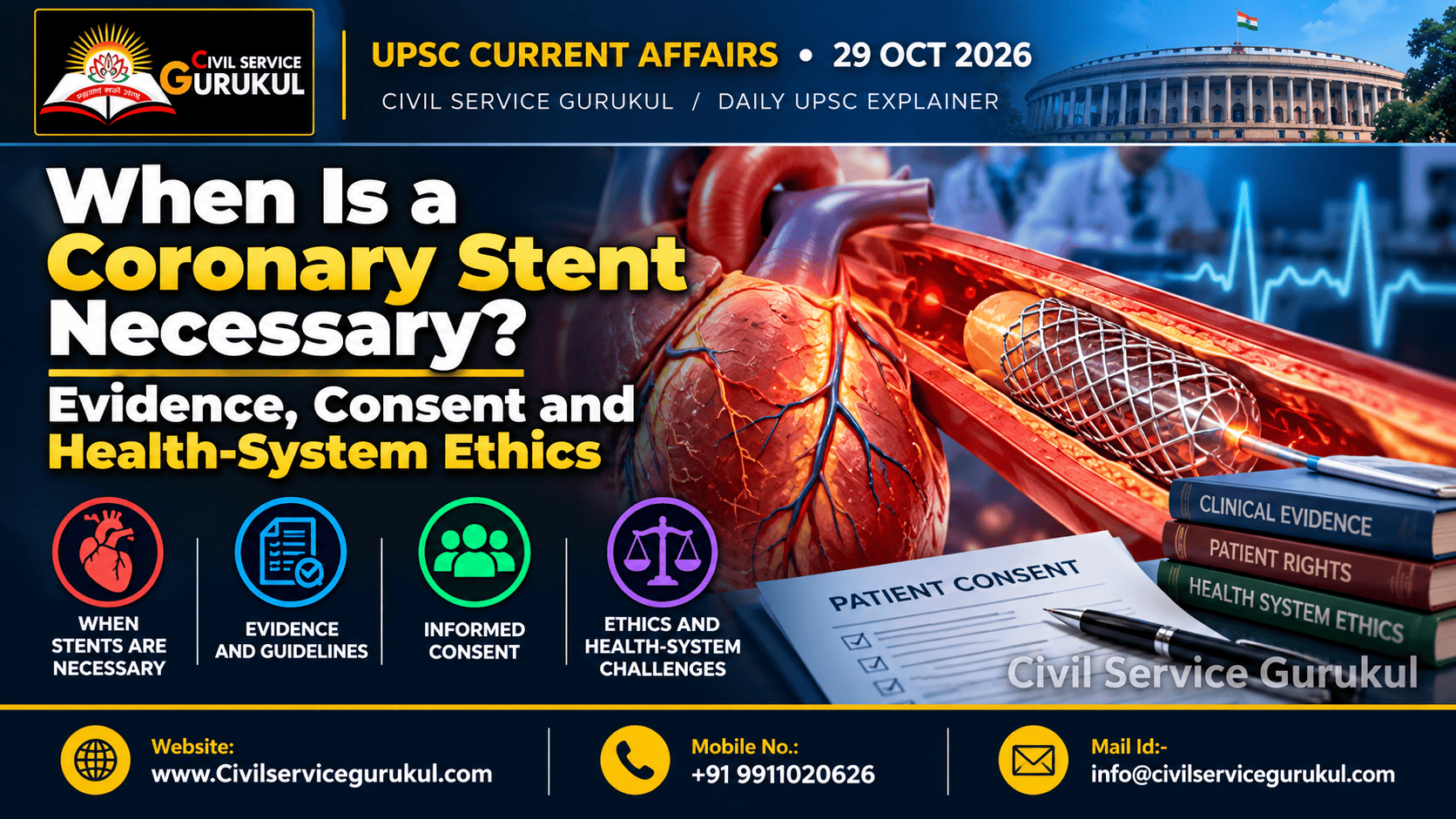
Coronary Stents & Angioplasty: Medical Ethics UPSC 2026
Public discussion in October 2026 about potentially unnecessary coronary stenting has highlighted the importance of distinguishing emergency cardiac interventions from elective treatment decisions in stable coronary disease. While timely angioplasty can be life-saving in certain heart attacks, stable coronary disease often requires careful evaluation of medication, symptoms, clinical evidence and patient preferences. This article explores medical ethics, informed consent, healthcare accountability, financial incentives and patient safety from a UPSC perspective.

Kerala KIIFB Debt Controversy 2026: UPSC Analysis
The Kerala Infrastructure Investment Fund Board (KIIFB) has become central to discussions about infrastructure financing, public borrowing and fiscal accountability. An October 2026 debate over borrowing costs, repayment capacity and oversight has renewed attention on the fiscal implications of state-backed public entities. This UPSC analysis examines off-budget borrowing, contingent liabilities, public investment, fiscal federalism and the need to balance infrastructure development with long-term debt sustainability.

SCO Civilisational Dialogue 2026: India–Pakistan UPSC
India has reportedly invited all ten Shanghai Cooperation Organisation (SCO) member states, including Pakistan, to the inaugural SCO Civilisational Dialogue Forum scheduled in New Delhi from 20–22 November 2026. The initiative highlights India's use of cultural diplomacy to strengthen Eurasian engagement while maintaining its independent positions on regional security. This article examines the SCO, soft power, India–Pakistan relations, cultural cooperation and the significance of multilateral diplomacy for UPSC preparation.
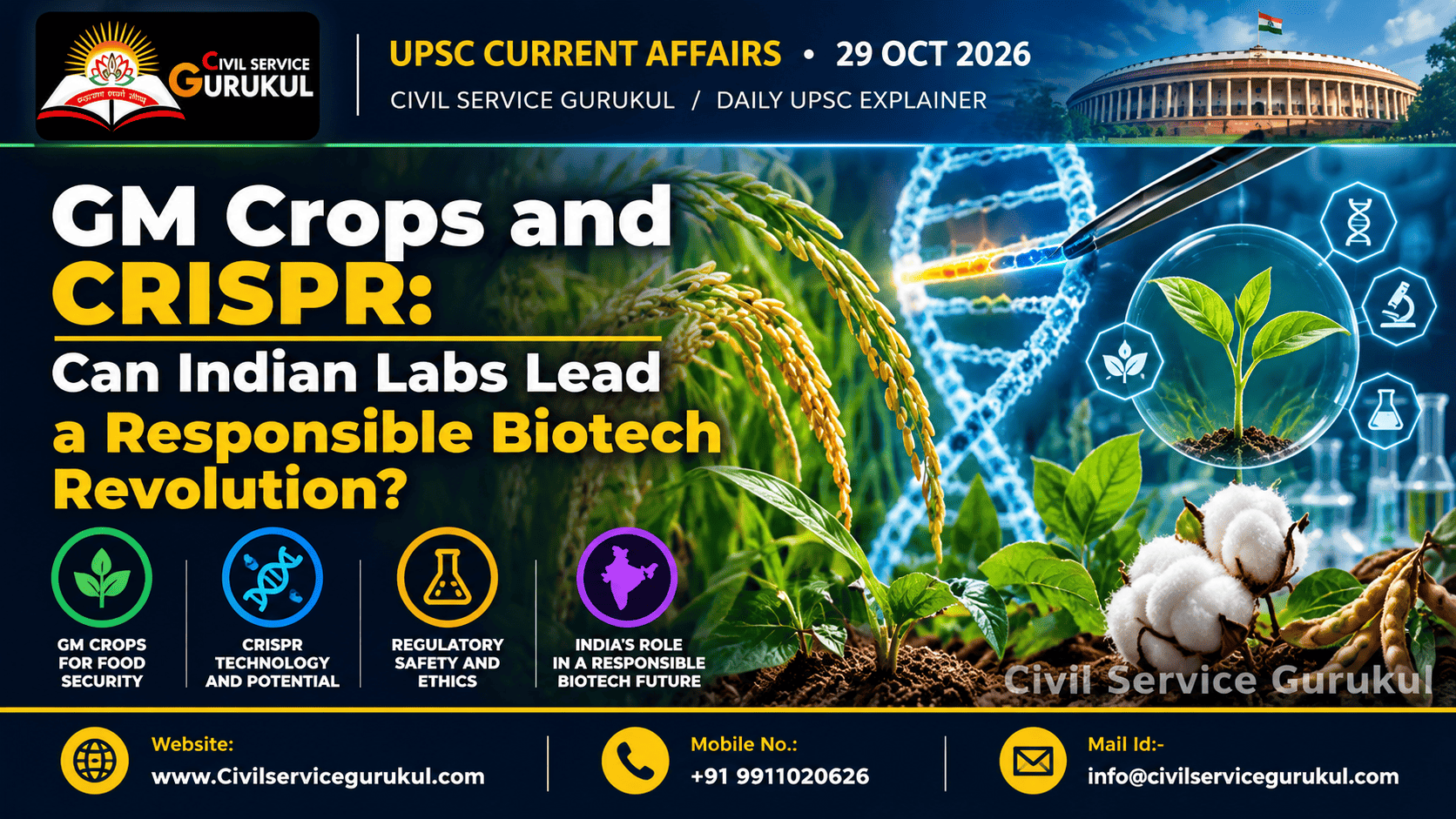
GM Crops & CRISPR in India 2026: GEAC and UPSC Notes
India's agricultural biotechnology debate has gained renewed attention following remarks attributed to Nobel laureate Richard J. Roberts at an October 2026 science conclave. The discussion highlights India's potential to develop indigenous genetically modified and genome-edited crops while addressing food security, climate resilience, biosafety and farmers' interests. This article examines CRISPR technology, GEAC regulation, Bt cotton, genome-edited rice varieties and the policy choices necessary for responsible agricultural innovation.
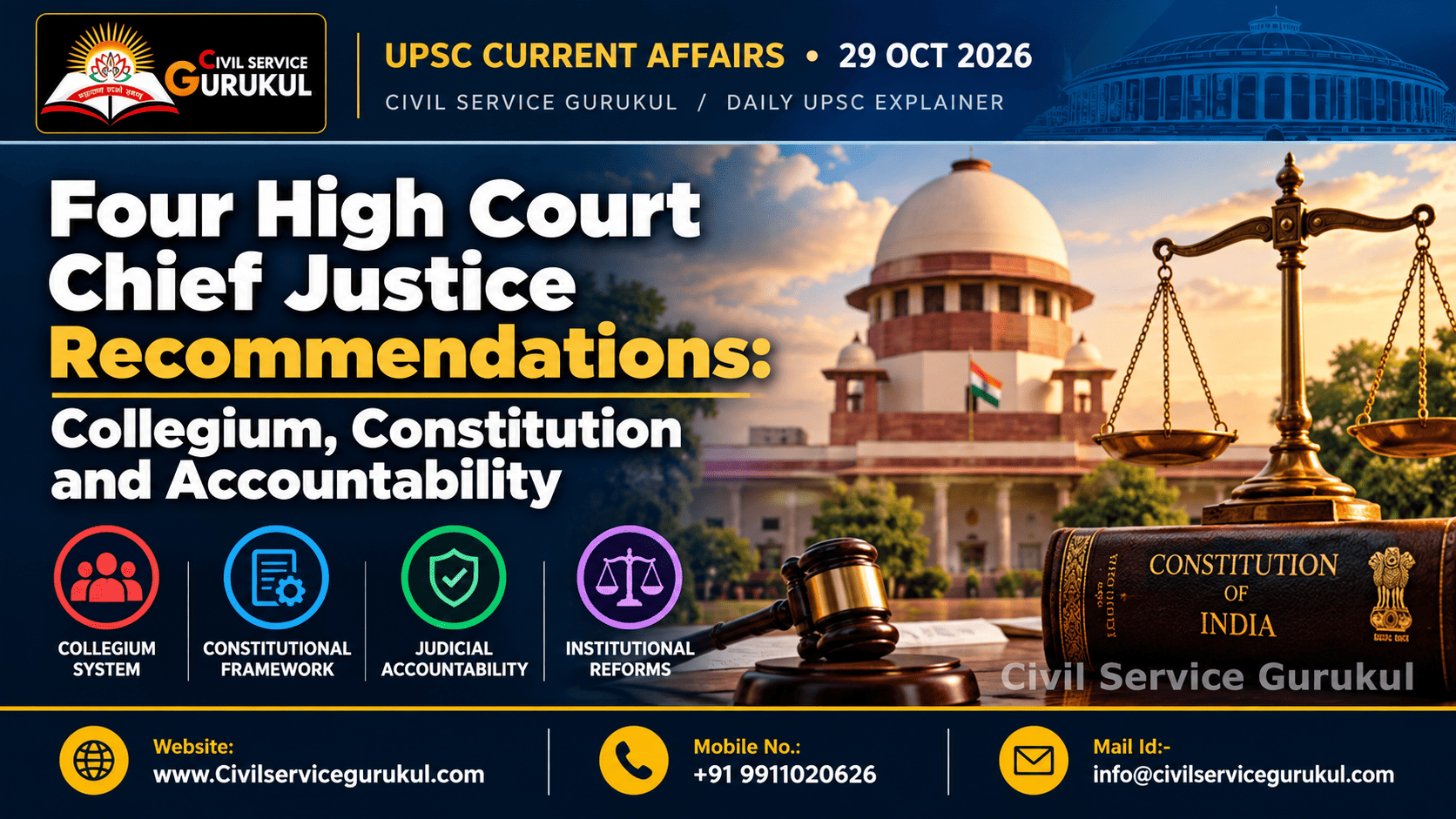
Collegium Recommendations 2026: High Court CJs Explained
The Supreme Court Collegium's resolution dated 26 October 2026 recommended four judges for appointment as Chief Justices of the Gujarat, Delhi, Telangana and Uttarakhand High Courts. The development offers an important opportunity to examine the constitutional appointment process, judicial independence, transparency, institutional accountability and the difference between a recommendation and a final appointment.
Medicine Prices in India 2026: Supreme Court, NPPA & UPSC
During proceedings reported in October 2026, the Supreme Court questioned large differences between medicine purchase prices and retail MRPs, raising concerns about affordability, transparency and the right to health. A separately reported regulatory intervention concerned 137 non-scheduled anti-cancer medicines, with revised prices due from 9 November 2026. This UPSC-focused analysis examines the role of the National Pharmaceutical Pricing Authority (NPPA), the Drugs (Prices Control) Order, 2013, Article 21, pharmaceutical trade margins, market regulation and the challenge of balancing affordable treatment with medicine availability and innovation. The Court's reported observations should not be mistaken for a final judgment.

Kuno Cheetah Death 2026: Project Cheetah UPSC Notes
The reported death of a 19-month-old male cheetah, KNG22, following firearm pellet injuries outside Kuno's protected area has raised important questions about wildlife security and conservation governance. According to the supplied October 2026 account, the animal was found injured on 25 October and died on 27 October, prompting investigations. The incident highlights the need for landscape-level conservation, coordinated wildlife protection, community participation and transparent assessment of Project Cheetah. This article examines the ecological, administrative and ethical dimensions relevant to UPSC Prelims and Mains.
India Banking NPA Outlook FY27: ICRA Report & UPSC Notes
ICRA's banking sector outlook reported on 28 October 2026 projects a moderate increase in fresh non-performing asset (NPA) generation during FY27. Public-sector banks could witness fresh slippages of approximately ₹1 lakh crore, compared with about ₹90,000 crore in FY26, while private-sector banks could record around ₹1.3 lakh crore, compared with ₹1.2 lakh crore. These are forecasts, not realised FY27 outcomes. The outlook highlights the importance of monitoring unsecured retail lending, MSME exposures, provisioning and banking-sector resilience.
DNA and Personality Genetics 2026: UPSC Notes
A large-scale genetic study published in Nature in September 2026 analysed genome-wide association data from cohorts including up to approximately 1.14 million participants and identified 1,260 genetic variants associated with the Big Five personality dimensions. However, the findings do not establish that DNA can reliably predict an individual's personality. This UPSC-focused analysis explains GWAS, polygenic traits, the limits of genetic prediction, and ethical concerns involving privacy, consent, discrimination and genetic determinism.
Himalayan Glacier Ice Loss 2026: UPSC Current Affairs
A global glacier study published in October 2026 highlights how glaciers terminating in lakes, oceans and ice-shelf settings account for a disproportionately large share of global glacier area and ice loss despite representing only 3.2% of glaciers by number. The findings have important implications for Himalayan glacier monitoring, glacial lake outburst flood (GLOF) preparedness, water security and climate-resilient infrastructure. This Civil Service Gurukul analysis covers key scientific findings, Indian policy implications, UPSC Prelims facts and GS Mains answer-writing practice.
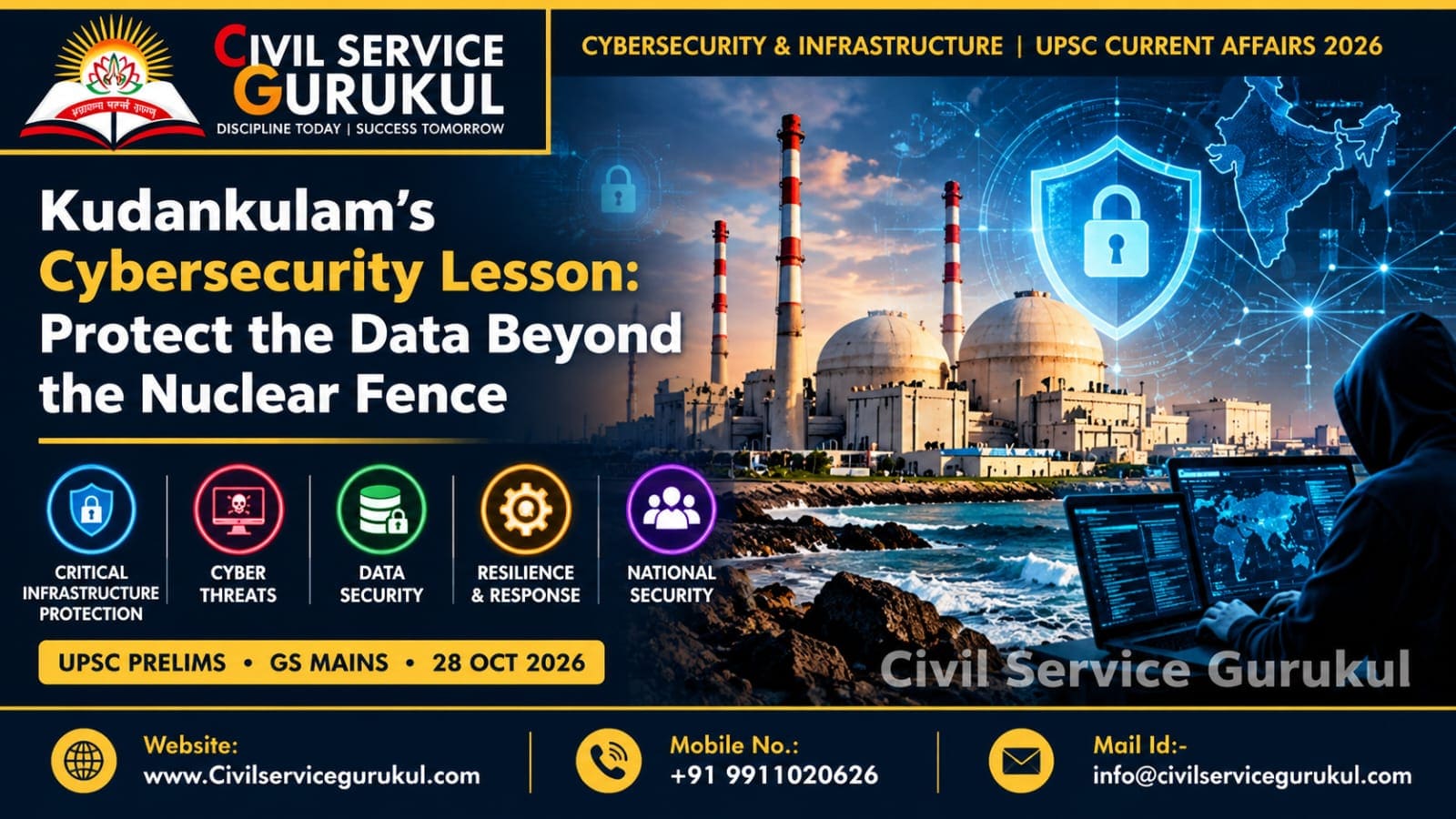
Kudankulam Cybersecurity Case 2026: UPSC Analysis
A reported July 2026 exposure of files associated with a contractor linked to the Kudankulam Nuclear Power Project has highlighted the importance of cybersecurity beyond the physical boundaries of critical infrastructure. According to the uploaded account, NPCIL clarified that the material related to conventional Balance of Plant facilities and did not concern nuclear safety or security systems. The episode illustrates the risks arising when sensitive project information is stored or processed by vendors, subcontractors and cloud-service providers. It also highlights the need for data classification, access controls, contractual security requirements, vendor audits, incident reporting and coordination among CERT-In, NCIIPC, operators and regulators. For UPSC, the case connects critical information infrastructure, cyber resilience, national security, technology governance and administrative accountability.

Right to Education 2026: Inclusive Education for UPSC
India's Right to Education framework guarantees free and compulsory elementary education for children aged 6–14 under Article 21A and the RTE Act, 2009. However, school admission alone does not guarantee meaningful education. Children with disabilities, migrant children, linguistic minorities, first-generation learners and children from disadvantaged communities may continue to face physical, instructional and social barriers. Truly inclusive education requires accessible classrooms, trained teachers, reasonable accommodation, assistive learning materials, protection against discrimination and effective grievance redressal. For UPSC aspirants, this issue connects fundamental rights, social justice, educational governance, disability inclusion, equality of opportunity and administrative ethics.

BNSS Section 15: Special Executive Magistrates UPSC 2026
Section 15 of the Bharatiya Nagarik Suraksha Sanhita, 2023 (BNSS), provides for the appointment of Special Executive Magistrates by State Governments for specified areas or functions. Eligible appointees may include Executive Magistrates and police officers not below the rank of Superintendent of Police or equivalent. Such appointments are governed by the relevant statutory provisions and appointment orders. Special Executive Magistrates exercise specified executive-magisterial functions; they do not automatically acquire the powers of District Magistrates or the general criminal trial jurisdiction of Judicial Magistrates. The provision raises important questions about preventive public-order administration, separation of powers, proportionality, fundamental rights and judicial oversight. The topic is especially relevant for UPSC GS Paper II, GS Paper IV and Prelims.
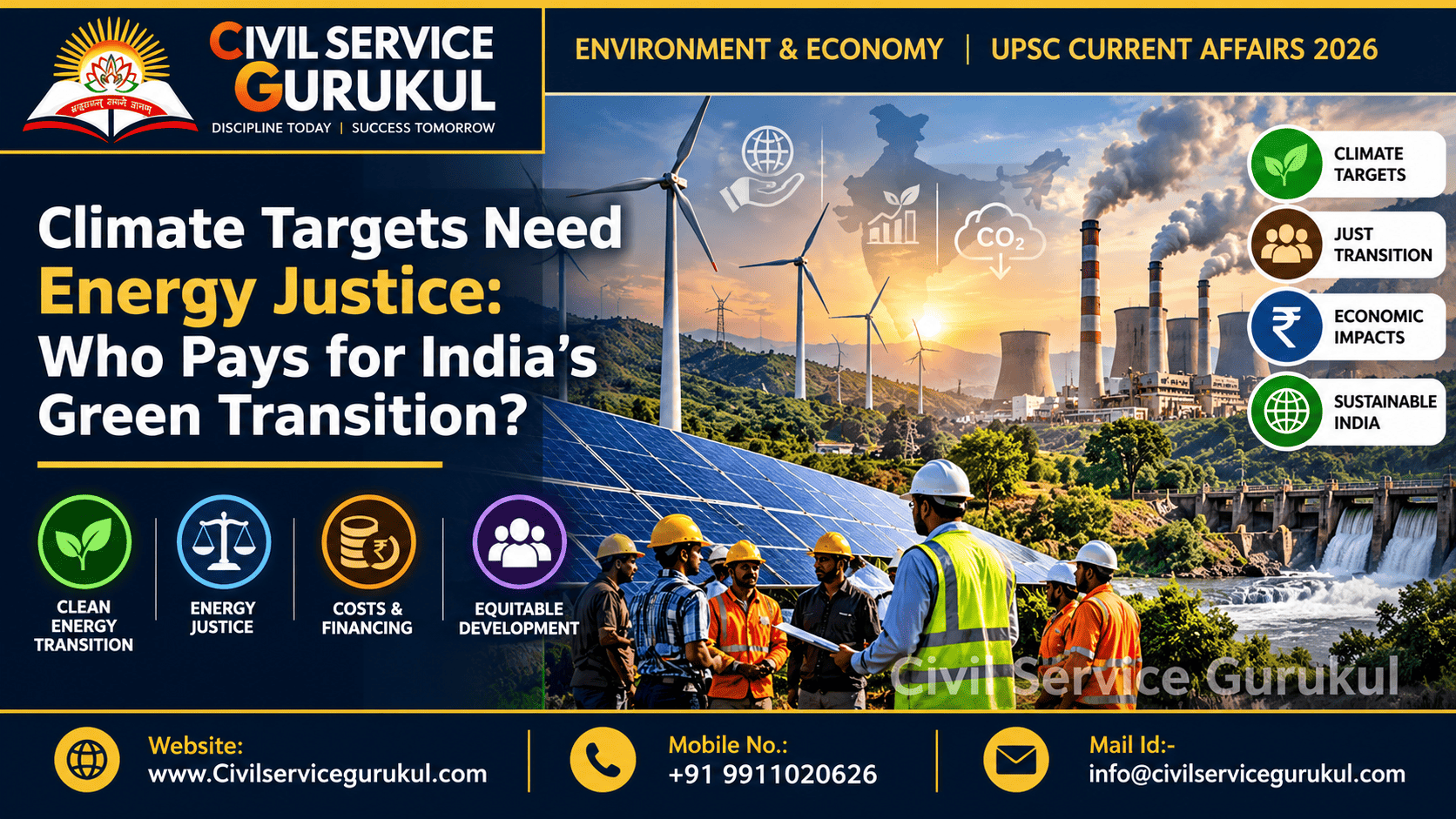
Just Energy Transition in India 2026: UPSC Analysis
India's transition towards cleaner energy must balance climate commitments with affordable electricity, economic development, worker livelihoods and social equity. The concept of a just energy transition emphasises that emissions reductions should not disproportionately burden low-income households, coal-dependent communities or informal workers. It also calls for public participation in decisions involving renewable-energy projects, transmission infrastructure, land acquisition and industrial restructuring. India's federal structure makes state and local institutions crucial to implementation. For UPSC aspirants, this issue connects the Paris Agreement, nationally determined contributions, climate mitigation and adaptation, energy security, distributive justice, climate finance and intergenerational responsibility.

DAC ₹2.12 Lakh Crore Approval 2026: UPSC Analysis
The Defence Acquisition Council (DAC), chaired by India's Defence Minister, reportedly granted Acceptance of Necessity (AoN) for capital acquisition proposals valued at approximately ₹2.12 lakh crore on 26 October 2026. The proposals span Indian Army mobility and surveillance, drones and counter-drone systems, very short-range air defence, naval decoy systems, helicopters and other Air Force requirements. Around 82% of the reported proposal value is intended for Indian industry. However, AoN is an in-principle procurement approval, not a signed contract or confirmation of delivery. The development highlights India's priorities in military modernisation, defence indigenisation, technological preparedness, fiscal accountability and strategic autonomy. It is relevant to UPSC GS Paper III, GS Paper II and Prelims. Verification note: The October 2026 amount, date, proposal categories and 82% figure follow your uploaded article and have not been independently verified against an official Ministry of Defence release.

DPDP Act vs Press Freedom 2026: UPSC Analysis
India's Digital Personal Data Protection Act, 2023 aims to protect personal data, but its interaction with investigative journalism has raised significant constitutional questions. According to the supplied October 2026 reporting, a news publishers' association challenged aspects of the DPDP framework before the Supreme Court, arguing that the absence of a specific journalistic exemption could affect public-interest reporting. The petition raises issues involving Articles 14, 19 and 21, as well as the DPDP Act's amendment to the RTI Act's personal-information exemption. At the reported hearing on 27 October 2026, the Supreme Court issued notice concerning the interim-stay request without immediately suspending the challenged provisions. The debate is highly relevant to UPSC GS Paper II, GS Paper IV and Indian Polity. Verification note: The October 2026 court developments below are based on the uploaded article and have not been independently checked against the Supreme Court's order.
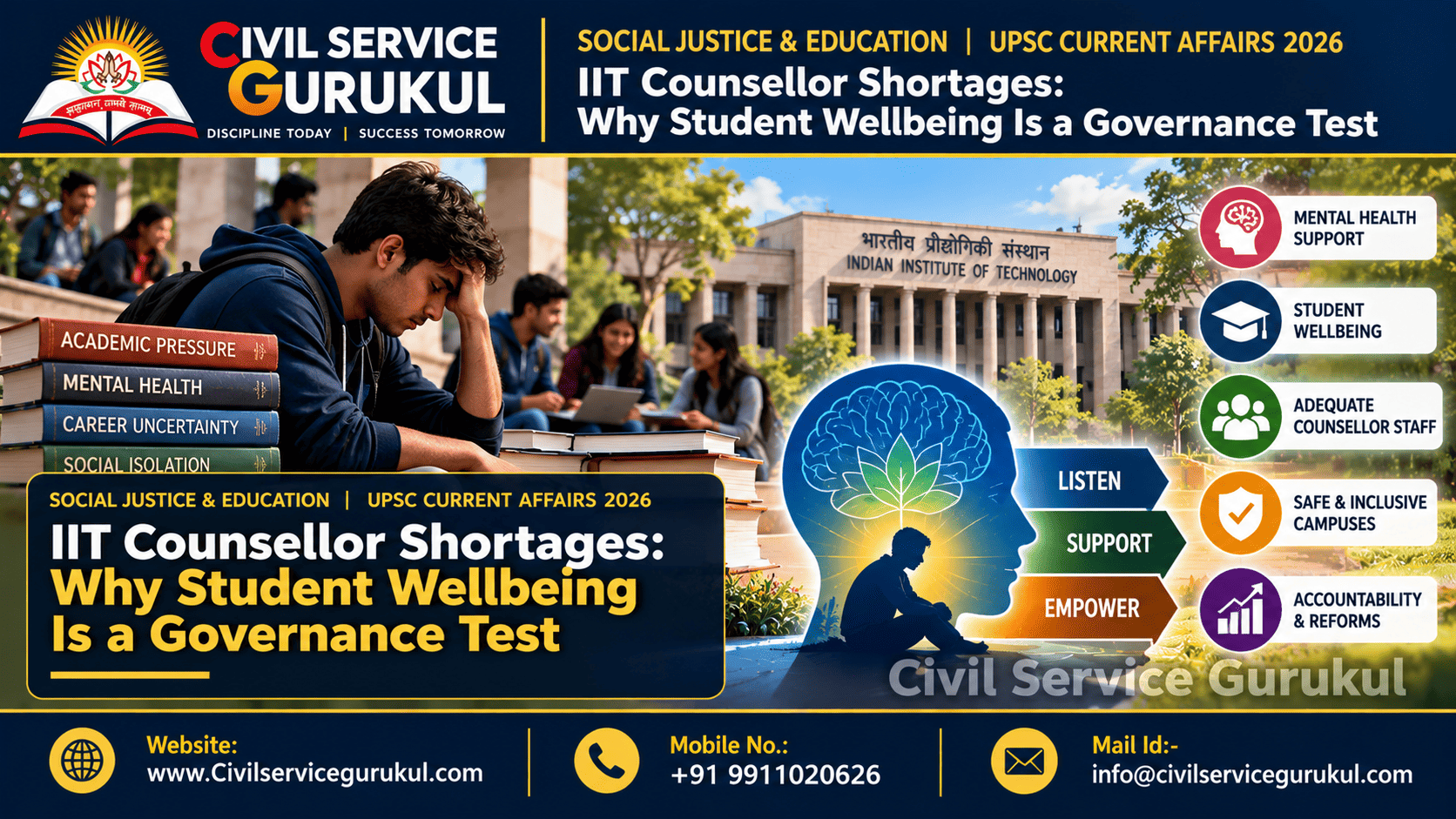
IIT Student Mental Health 2026: UPSC Analysis
Right to Information-based reporting in October 2026 has raised concerns about the availability of mental-health counsellors at several Indian Institutes of Technology (IITs). Although coverage refers to a benchmark of one mental-health professional per 500 students, the precise legal status and application of this benchmark require verification. The issue extends beyond staffing numbers to include confidentiality, counselling accessibility, discrimination, academic pressure, student grievance systems and institutional responsiveness. Government-supported services such as Tele-MANAS, accessible at 14416, can supplement campus-level care. For UPSC aspirants, the topic connects education governance, social justice, public health, constitutional dignity and ethical public administration.

E100 Ethanol Fuel Rules 2026: UPSC Analysis
India's October 2026 motor-vehicle regulatory amendment, identified in the supplied article as G.S.R. 911(E), dated 23 October 2026, introduces recognition of E100 ethanol fuel alongside E85 in specified vehicle emission and testing provisions. The change enables a regulatory pathway for vehicles specifically designed by original equipment manufacturers (OEMs) to operate on high-ethanol blends. It does not mean that ordinary petrol or E20-compatible vehicles can safely use E100. The development is important for India's energy diversification, potential petroleum import substitution, agricultural value chains and biofuel policy. However, lifecycle greenhouse gas emissions, water consumption, food security, fuel infrastructure and consumer protection remain critical policy considerations. The topic is relevant to UPSC GS Paper III, GS Paper II and Prelims.
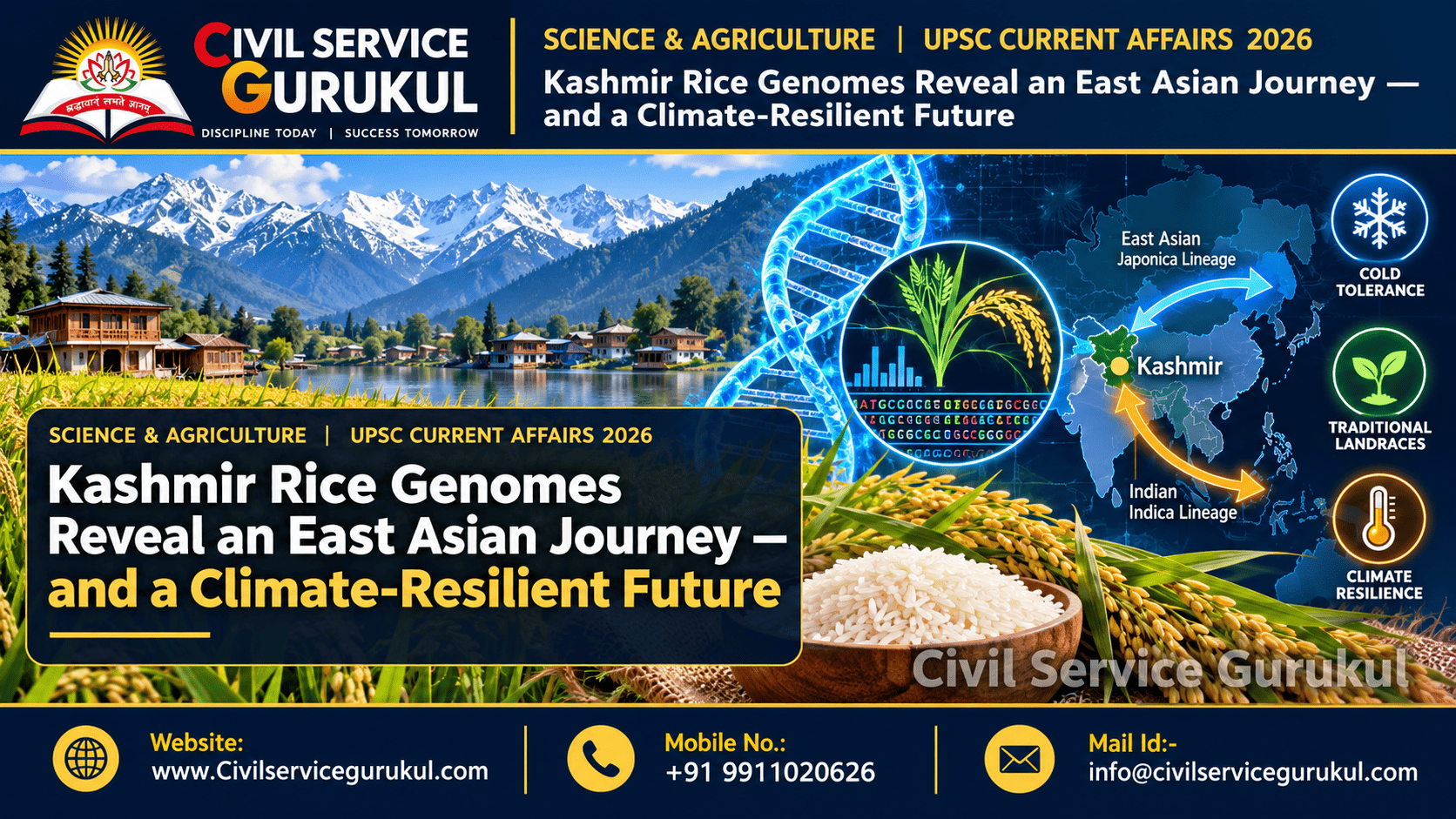
Kashmir Rice Genome Study 2026: UPSC Analysis
A 2026 genomic study of 142 rice accessions from Kashmir has revealed that several traditional rice landraces show genetic affinity with temperate japonica rice populations associated with Northeast Asia. Researchers compared the Kashmir samples with the 3,000 Rice Genomes Project and identified approximately 3.94 million high-confidence single-nucleotide polymorphisms (SNPs), along with cold-adaptation-related genetic signatures involving genes such as CTB4a and HAN1. The findings offer insights into historical crop movement, agricultural biodiversity and the potential use of traditional rice varieties in climate-resilient breeding. For UPSC, the topic connects GS Paper I and GS Paper III with biotechnology, biodiversity conservation, food security and sustainable agriculture.

AI Ethics and Religious Traditions: UPSC 2026
As artificial intelligence increasingly influences education, healthcare, employment and public decision-making, technology developers are exploring ethical insights from religious and philosophical traditions. These traditions can contribute perspectives on compassion, dignity, justice, truthfulness and responsible use of power. However, democratic AI governance cannot depend on a single religious or philosophical authority. The 2021 UNESCO Recommendation on the Ethics of Artificial Intelligence, constitutional morality, inclusive consultation and independent algorithmic audits provide important frameworks for accountable AI development. For UPSC aspirants, the debate is particularly relevant to GS Paper IV (Ethics), GS Paper III (Science and Technology) and GS Paper II (Governance).