Daily Current Affairs & News Analysis
Our daily news analysis consists of two integral parts — Daily News Analysis and Important Editorials curated rigorously from The Hindu, The Indian Express, LiveMint, PIB, and Sansad TV debates. Content is mapped directly to UPSC CSE and State PCS syllabi.
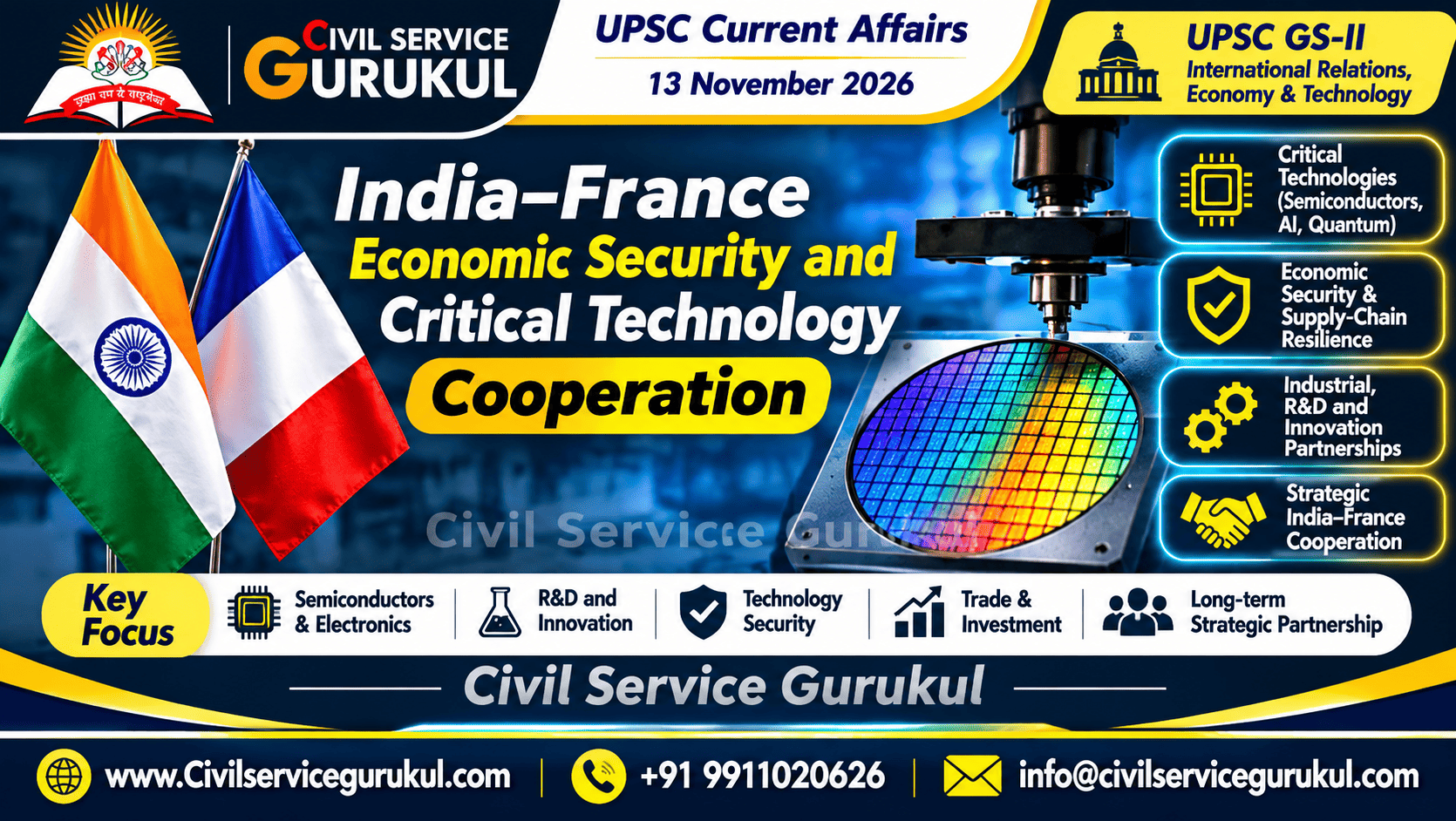
India–France Relations 2026: Economic Security, Critical Technology & Strategic Autonomy | UPSC
India–France strategic cooperation is expanding beyond traditional defence engagement into economic security, critical and emerging technologies, supply-chain resilience, clean energy, space and advanced manufacturing. Against the backdrop of November 2026 reporting on bilateral economic-security and technology discussions, this Civil Service Gurukul article explains the historical foundations of the partnership, the Horizon 2047 roadmap, strategic autonomy, defence industrial cooperation, semiconductor and AI ecosystems, civil nuclear energy, Indo-Pacific interests, technology-transfer challenges and policy priorities. Designed for UPSC Prelims and Mains 2027, it includes factual distinctions, original statement-based MCQs, a GS-II/GS-III model answer, revision notes and analytical frameworks.
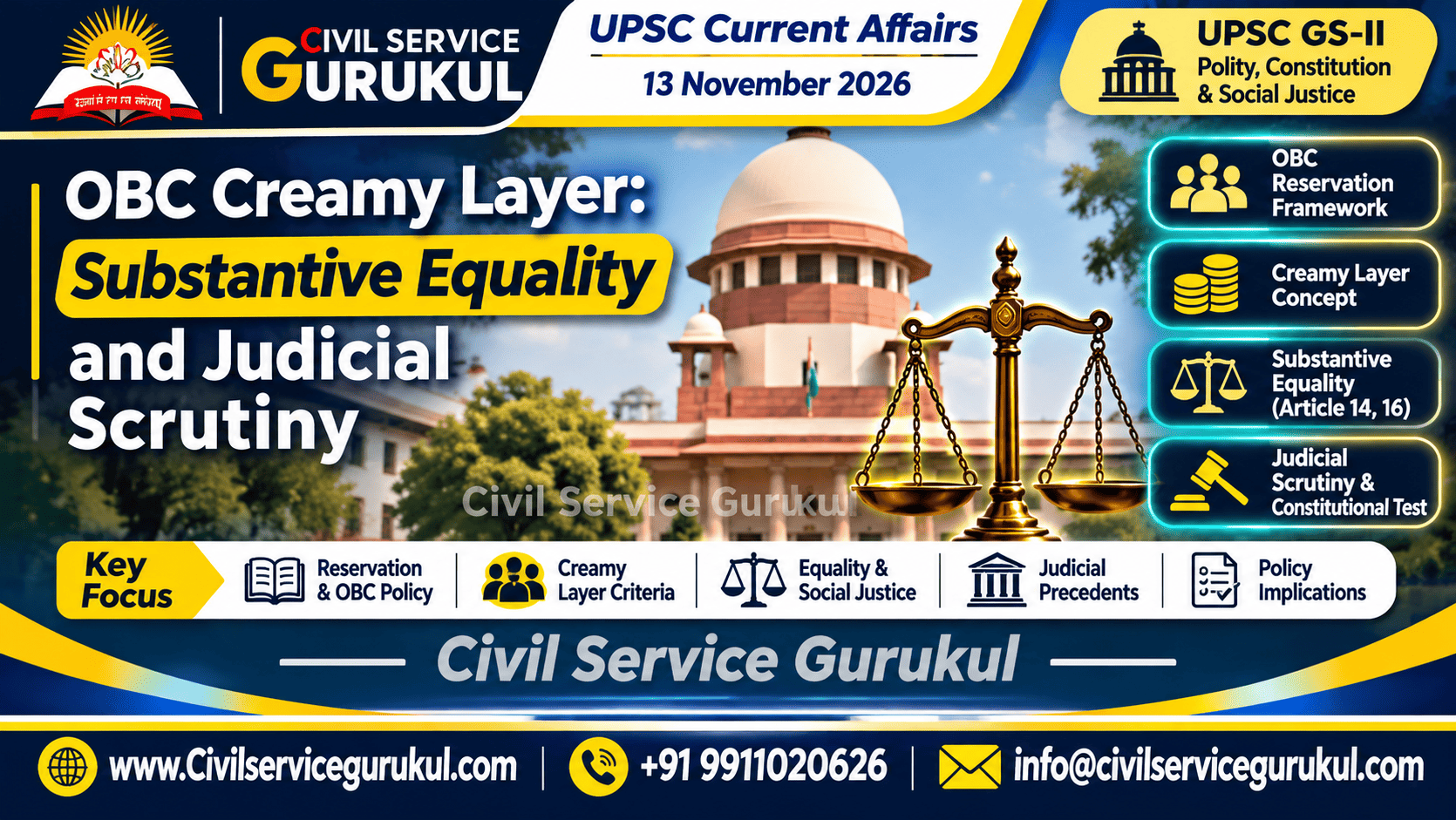
OBC Creamy Layer 2026: Supreme Court Principles, ₹8 Lakh Rule & Substantive Equality | UPSC
The creamy-layer principle is a central feature of India's OBC reservation framework, designed to ensure that affirmative-action benefits reach socially and educationally disadvantaged sections rather than becoming concentrated among relatively advanced families. Rooted in the Supreme Court's landmark Indra Sawhney judgment of 1992, the principle raises important questions about substantive equality, the relationship between economic advancement and social disadvantage, and the fairness of administrative eligibility tests. This Civil Service Gurukul article examines Articles 14, 15 and 16, the central OBC creamy-layer framework, the ₹8 lakh income ceiling and its limitations, judicial scrutiny, distinctions involving SC/ST reservation, and policy reforms. It includes original UPSC Prelims questions, a GS-II Mains model answer and a rapid revision card.
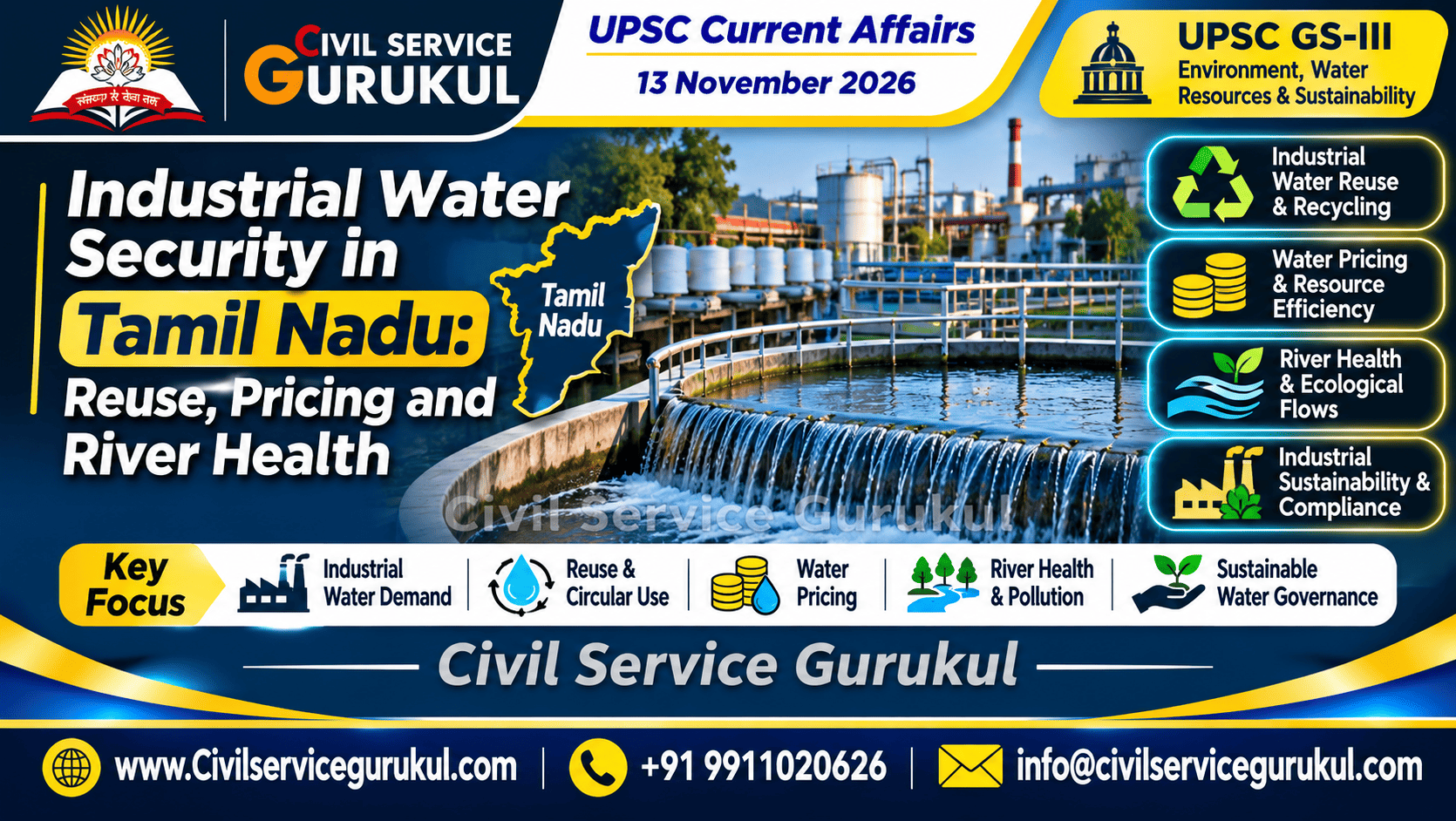
Tamil Nadu Industrial Water Crisis 2026: Wastewater Reuse, Water Pricing & River Health | UPSC
Tamil Nadu's industrial growth creates an urgent need to balance manufacturing competitiveness with freshwater availability, groundwater sustainability and healthy river ecosystems. Seasonal rainfall, urban demand, agricultural irrigation and industrial withdrawals place competing pressures on limited water resources. This Civil Service Gurukul analysis examines the role of treated wastewater reuse, closed-loop industrial recycling, realistic water pricing, effluent regulation, basin-level governance and transparent water accounting. It explains key concepts such as water withdrawal versus consumption, Zero Liquid Discharge, Common Effluent Treatment Plants, environmental flows and the polluter-pays principle, with UPSC Prelims MCQs, a GS-III Mains model answer and a rapid revision framework.
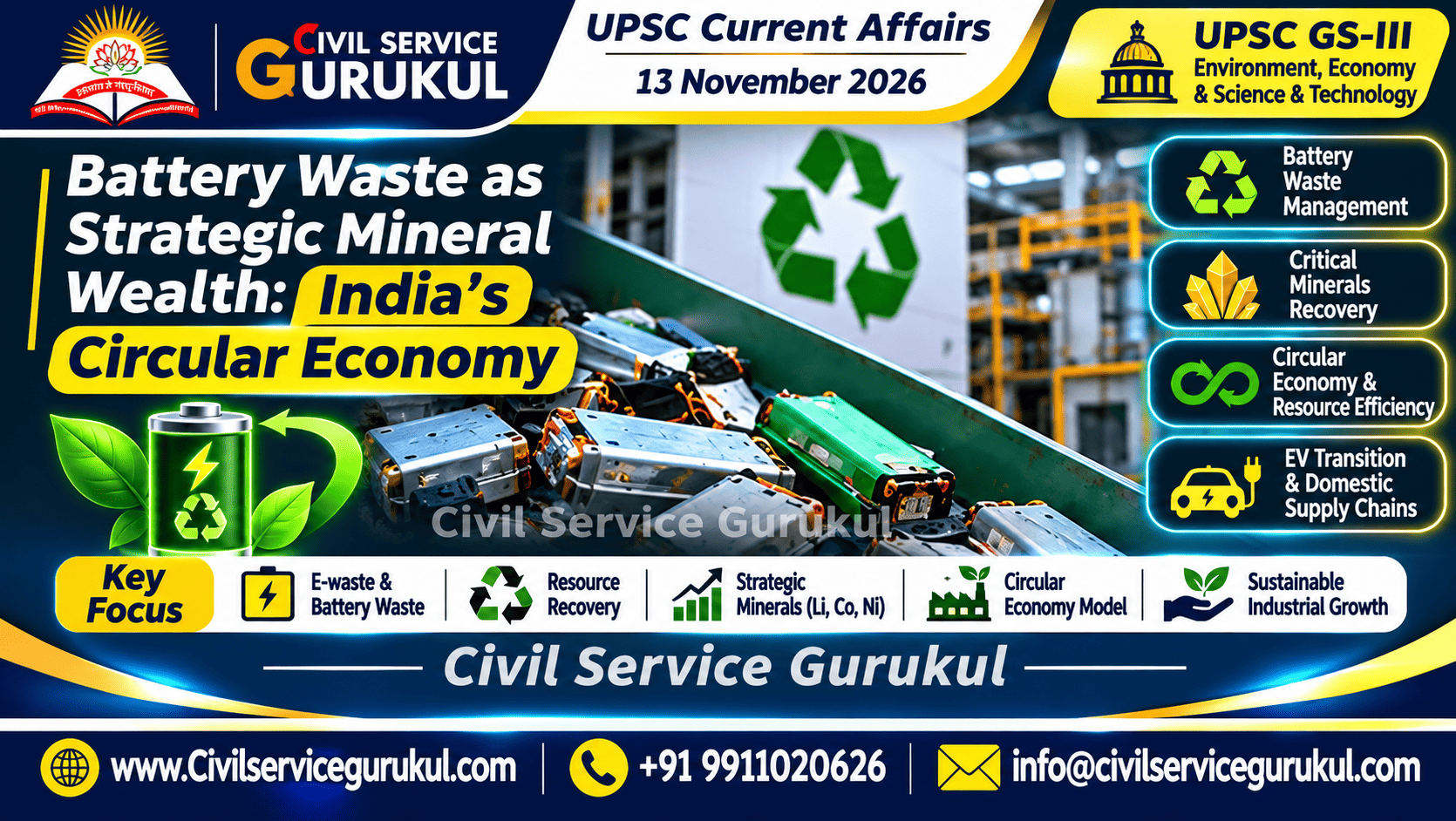
India Battery Recycling 2026: Black Mass Export Ban, Critical Minerals & Circular Economy | UPSC
India's battery waste is emerging as a strategic source of critical minerals essential for electric vehicles, renewable energy storage, electronics and advanced manufacturing. In November 2026, the government prohibited exports of specified lithium-ion battery black mass to strengthen domestic recycling and mineral recovery. The move complements the ₹1,500 crore critical mineral recycling incentive scheme under the National Critical Mineral Mission and the Battery Waste Management Rules, 2022. This Civil Service Gurukul UPSC 2027 article examines lithium-ion battery chemistry, urban mining, Extended Producer Responsibility, black mass, recycling technologies, environmental risks, India's mineral security and circular-economy policies. It includes original Prelims MCQs, a GS-III Mains model answer and an exam-oriented revision card.
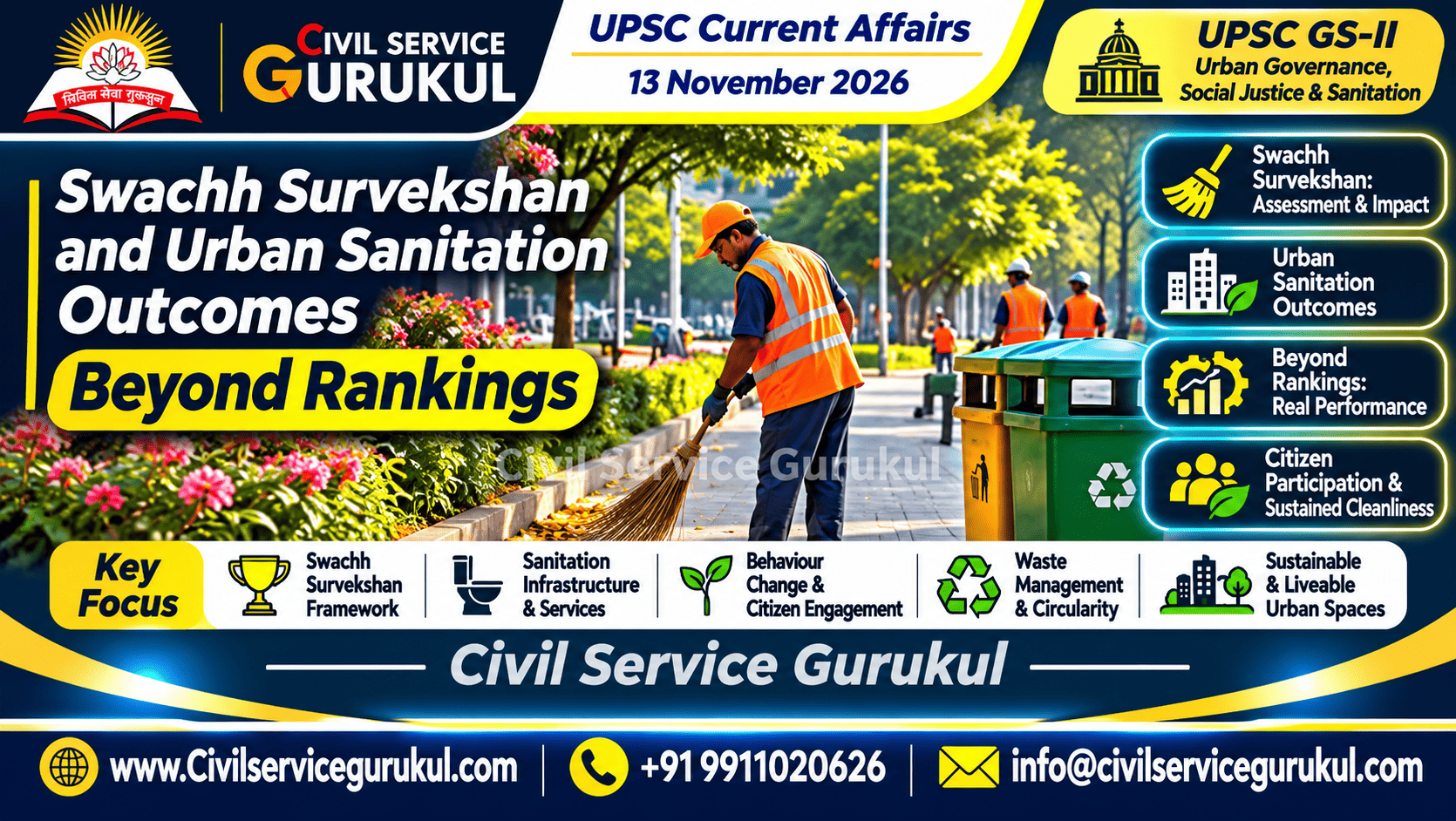
Swachh Survekshan 2026: India's Cleanest Cities, Urban Sanitation & Beyond Rankings | UPSC
Swachh Survekshan has become a prominent mechanism for assessing cleanliness and sanitation performance in Indian cities. Yet a high rank alone cannot establish whether waste is scientifically processed, sanitation workers are protected or underserved neighbourhoods receive equitable services. This Civil Service Gurukul UPSC 2027 analysis explores the Swachh Bharat Mission–Urban, urban local bodies, source segregation, material recovery facilities, decentralised waste processing, wastewater management and the limitations of competitive city rankings. It also examines the importance of independent audits, transparent waste-flow data, citizen feedback, inclusion and long-term environmental outcomes, with original Prelims MCQs, a GS-II Mains model answer and rapid revision notes.
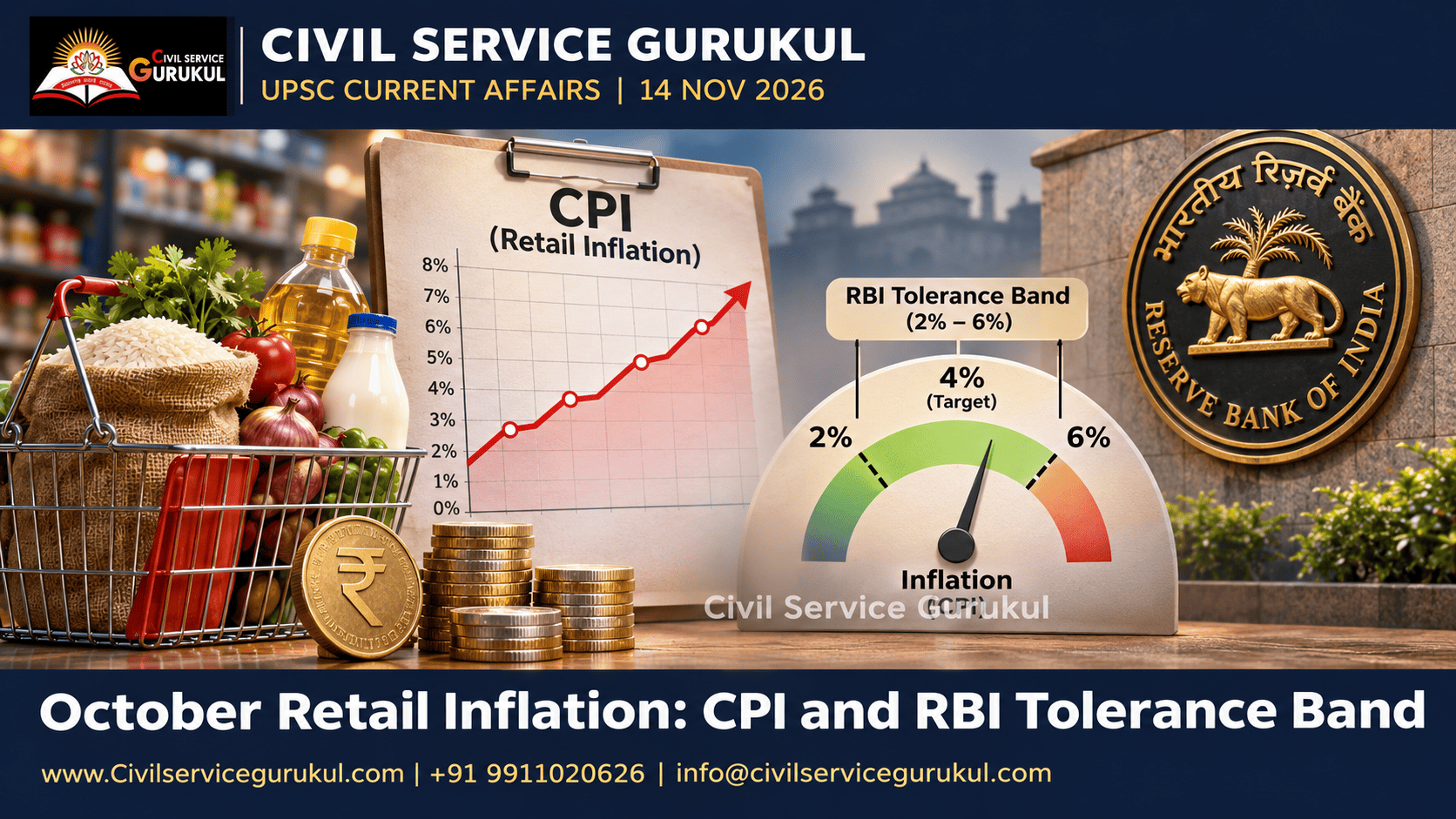
October 2026 Retail Inflation at 6.09%: CPI, RBI Tolerance Band and UPSC Analysis
India's retail inflation rose to 6.09% in October 2026 from 5.54% in September, breaching the Reserve Bank of India's 6% upper tolerance threshold. Food inflation accelerated to 8.94%, with rural inflation at 6.63% and urban inflation at 5.41%. This UPSC-oriented analysis explains the Consumer Price Index (CPI), the RBI's 4% inflation target and 2–6% tolerance band, causes of inflation, monetary policy implications, CPI base year 2024, and the distinction between a monthly breach and a formal failure to meet the inflation target.
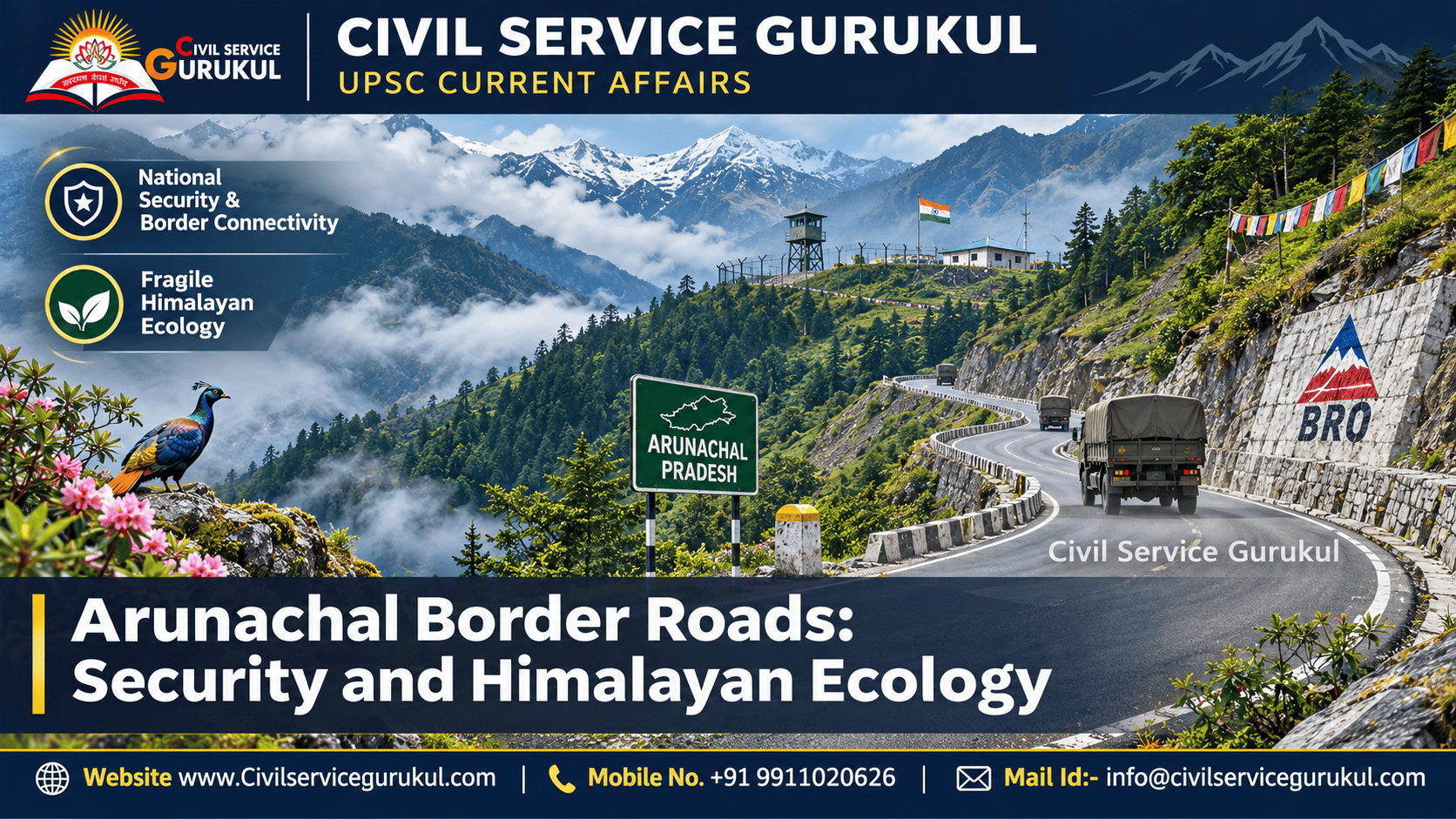
Arunachal Pradesh Border Roads: Strategic Security, India–China LAC and Himalayan Ecological Challenges
Arunachal Pradesh's strategic border roads are vital to India's defence preparedness, military logistics, connectivity and development of remote Himalayan villages. Projects undertaken by the Border Roads Organisation (BRO), including Project Arunank, help improve access to sensitive frontier regions. However, road construction in the eastern Himalayas also creates challenges involving landslides, deforestation, soil erosion, biodiversity and climate resilience. This UPSC-oriented article examines the strategic importance of border infrastructure, ecological risks, sustainable engineering, government initiatives and the need to balance national security with environmental protection.
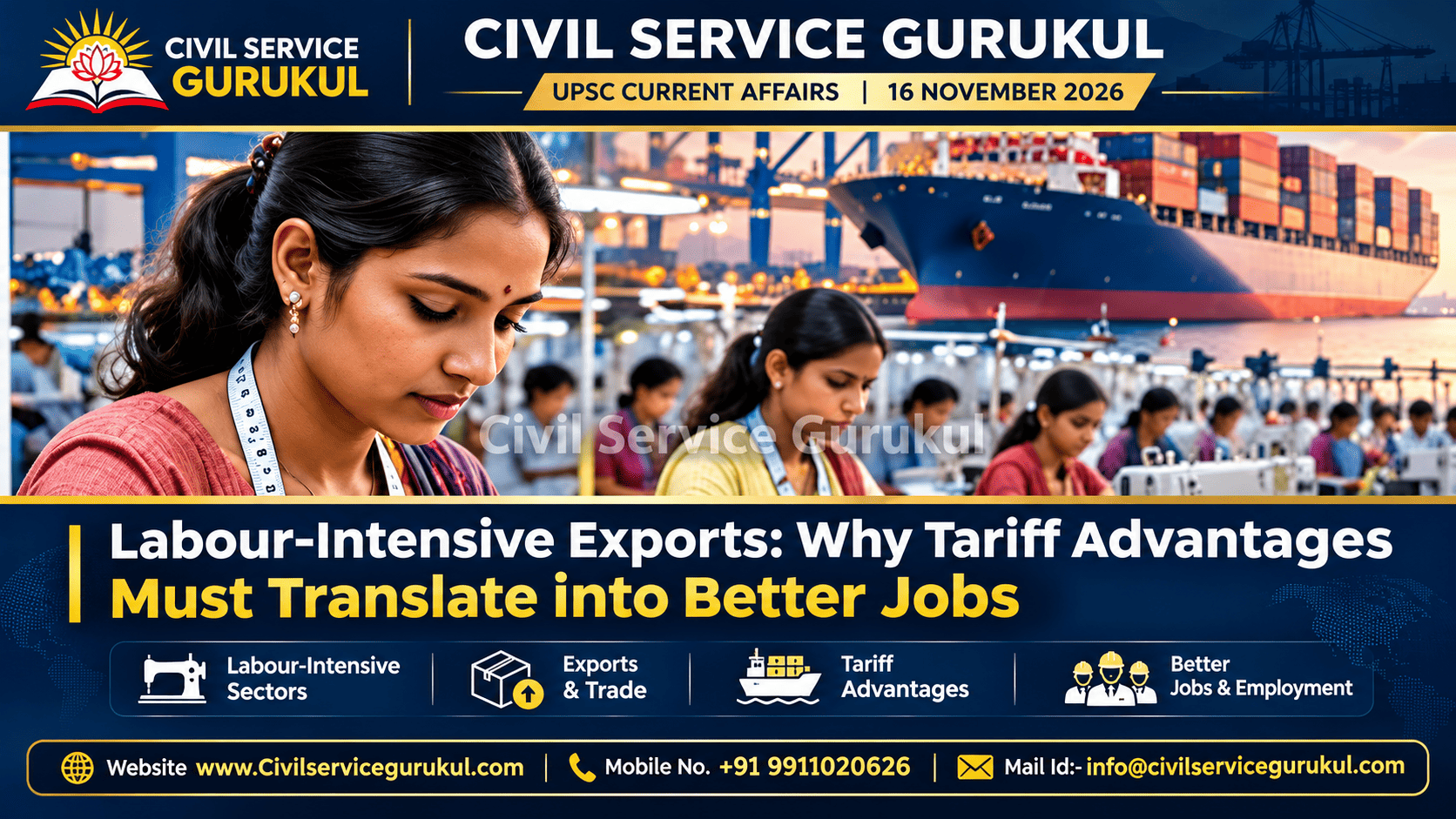
Labour-Intensive Exports in India: Tariffs, Jobs & UPSC
Can preferential tariffs help India create more and better jobs? Labour-intensive sectors such as textiles, garments, leather and footwear can benefit from improved access to international markets. However, tariff advantages alone cannot guarantee export growth, formal employment or higher wages. Logistics costs, electricity reliability, product standards, rules of origin, MSME competitiveness and global demand also influence outcomes. This Civil Service Gurukul UPSC analysis examines export-led growth, employment quality, women's participation, domestic value addition and policy reforms, with Prelims MCQs and Mains answer-writing guidance.
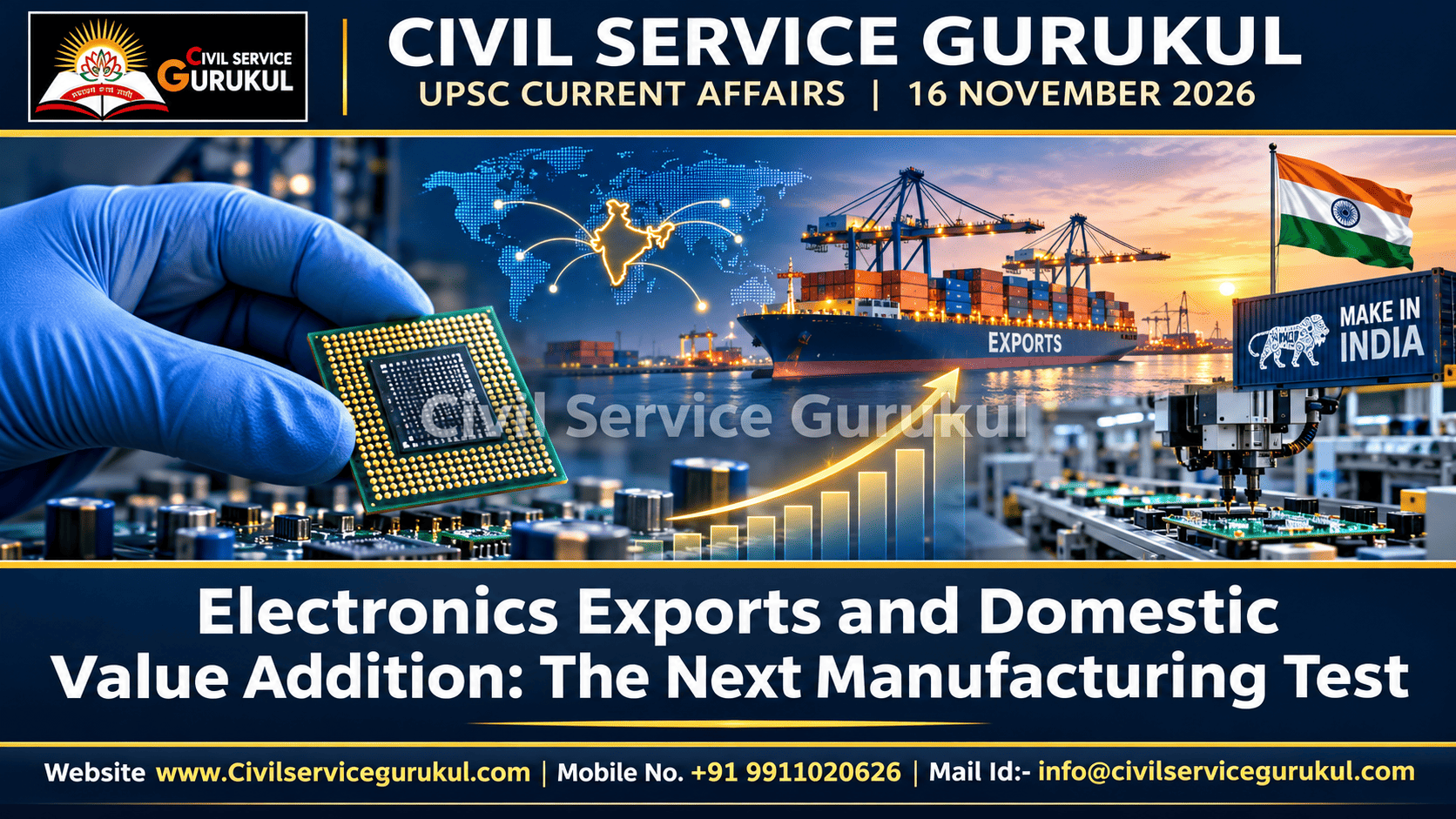
Electronics Exports in India: Value Addition & UPSC
India's expanding electronics exports represent an important manufacturing opportunity, but rising gross export values do not automatically indicate an equivalent increase in domestic value addition. Imported components, assembly operations, supplier networks, research capabilities and intellectual property ownership influence how much economic value remains within India. This Civil Service Gurukul analysis explains the distinction between gross exports and domestic value addition, examines the role of Production Linked Incentive (PLI) schemes, and discusses strategies to strengthen component manufacturing, skilled employment and India's position in global value chains.
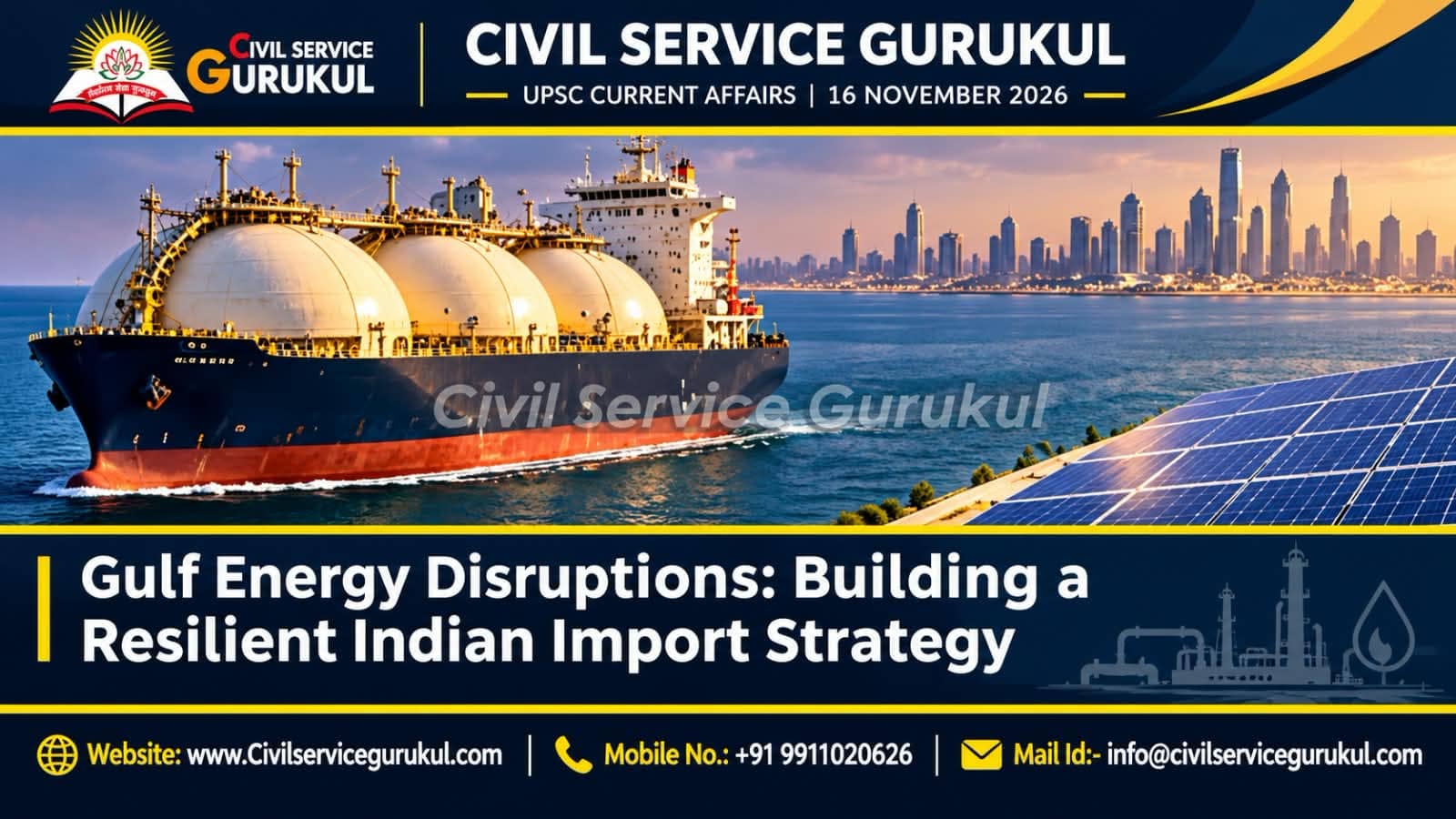
Gulf Energy Crisis & India's Energy Security — UPSC 2026
Rising geopolitical tensions in the Gulf region highlight India's vulnerability to disruptions in crude oil and liquefied natural gas supplies. Shipping delays, tanker insurance costs, volatile energy prices and the safety of Indian expatriates create interconnected economic and diplomatic challenges. The Strait of Hormuz, connecting the Persian Gulf with the Gulf of Oman, is a strategically important maritime passage. This Civil Service Gurukul UPSC analysis examines India's energy security challenges and explores how strategic petroleum reserves, diversified suppliers, maritime coordination, energy efficiency and diplomatic engagement can strengthen national resilience.
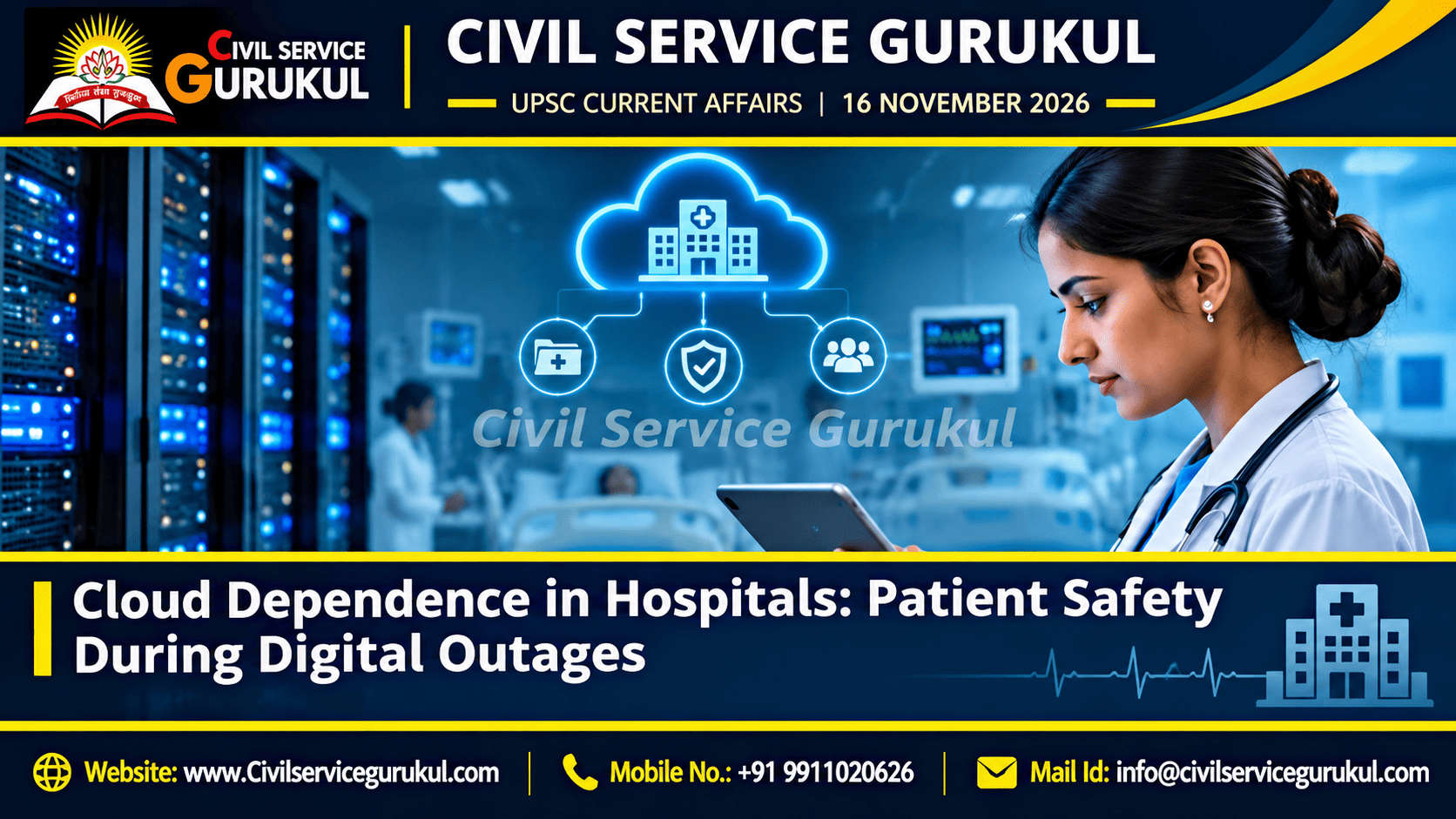
Hospital Cloud Outages: Patient Safety & UPSC 2026
Hospitals increasingly depend on electronic health records, cloud-hosted applications, remote diagnostics and digital appointment systems. While digitalisation can improve healthcare delivery, a cloud outage may disrupt patient records, medication workflows and essential clinical services—even without a cyberattack. This Civil Service Gurukul analysis examines hospital digital resilience, recovery time objectives (RTO), recovery point objectives (RPO), offline clinical workflows, secure backups, patient privacy and governance responsibilities. It also provides UPSC Prelims MCQs and Mains answer-writing guidance.
Maritime Insurance & Indo-Pacific Trade Risks — UPSC
Geopolitical tensions in the Indo-Pacific can increase global shipping costs even when maritime routes remain open. Higher insurance premiums, vessel diversions, container delays and trade financing expenses can transmit regional security risks to businesses and consumers. The Taiwan Strait is particularly important because of its strategic location and East Asia's concentrated semiconductor supply chains. This Civil Service Gurukul analysis examines maritime trade insurance, the Indo-Pacific risk premium, India's import-export vulnerabilities, economic consequences and policy options for strengthening trade resilience.
Satellite Internet in the Himalayas: Can Space Technology Transform India's Disaster Response?
Himalayan communities face serious communication challenges during landslides, floods, earthquakes and other natural disasters. When terrestrial networks fail, satellite broadband can provide an alternative means of communication for emergency warnings, rescue coordination and telemedicine. However, satellite connectivity also depends on functioning ground terminals, electricity, trained personnel and reliable network management. This Civil Service Gurukul analysis examines low-Earth-orbit and geostationary satellites, disaster communication resilience, digital inclusion, cybersecurity, sovereign controls and the need for accountable emergency connectivity governance.
India's Electric Mobility Revolution: Why EV Sales Alone Cannot Solve Urban Transport Challenges
India's transition to electric mobility presents opportunities to reduce transport-related pollution and dependence on petroleum fuels. However, increasing electric car sales alone cannot guarantee sustainable urban transport. Congestion, weak public transport, inadequate pedestrian infrastructure, unequal charging access and electricity generation patterns remain important challenges. This Civil Service Gurukul analysis examines electric vehicles, public transport reform, EV charging equity, lifecycle emissions, vehicle sales statistics and policy priorities for building cleaner, accessible and inclusive Indian cities.
India's Fight Against Tuberculosis: Why Nutrition, Poverty and Social Protection Matter Beyond Medicines
India's fight against tuberculosis requires more than timely diagnosis and effective medicines. Malnutrition, poverty, inadequate housing, income insecurity, social stigma and fragmented healthcare can undermine treatment adherence and recovery. Nutritional assistance and patient-centred follow-up are therefore essential components of a comprehensive TB response. This Civil Service Gurukul analysis examines the social determinants of tuberculosis, drug resistance, healthcare financing, nutrition support, public health governance and policy measures needed to strengthen India's TB elimination efforts.
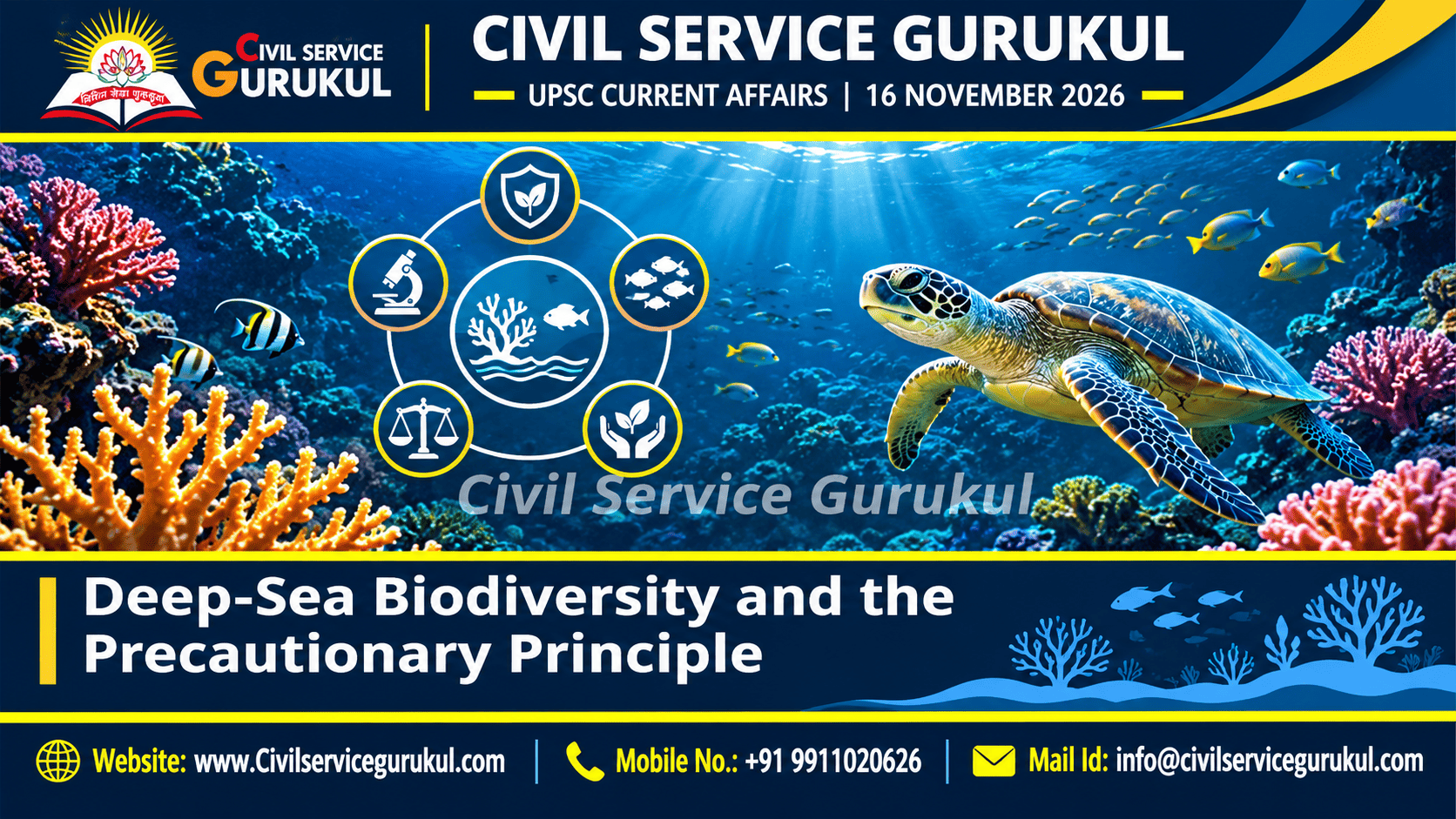
India's Deep Ocean Mission: Can We Explore the Seabed Without Destroying Marine Biodiversity?
India's deep-ocean ambitions present opportunities for marine scientific discovery, seabed mapping, advanced engineering and the exploration of ocean resources. However, deep-sea ecosystems remain poorly understood, and environmental disturbances may have long-lasting consequences. The precautionary principle calls for careful assessment before potentially harmful activities proceed. This Civil Service Gurukul analysis examines India's Deep Ocean Mission, human-occupied submersibles, marine biodiversity, seabed mineral extraction, environmental uncertainty, scientific safeguards and sustainable ocean governance.

Women's Cash Transfers in India: Empowerment & UPSC
Women-focused cash transfers have emerged as an important welfare policy instrument in India. Regular financial assistance may improve household consumption, reduce immediate economic insecurity and expand women's choices. However, receiving money in a bank account does not automatically ensure financial independence or economic empowerment. True financial agency depends on women's control over resources, reliable payments, access to banking services, mobility, childcare, employment opportunities and freedom from coercion. This Civil Service Gurukul analysis examines the opportunities, limitations, governance challenges and fiscal implications of women-focused cash transfers, with UPSC Prelims and Mains preparation.
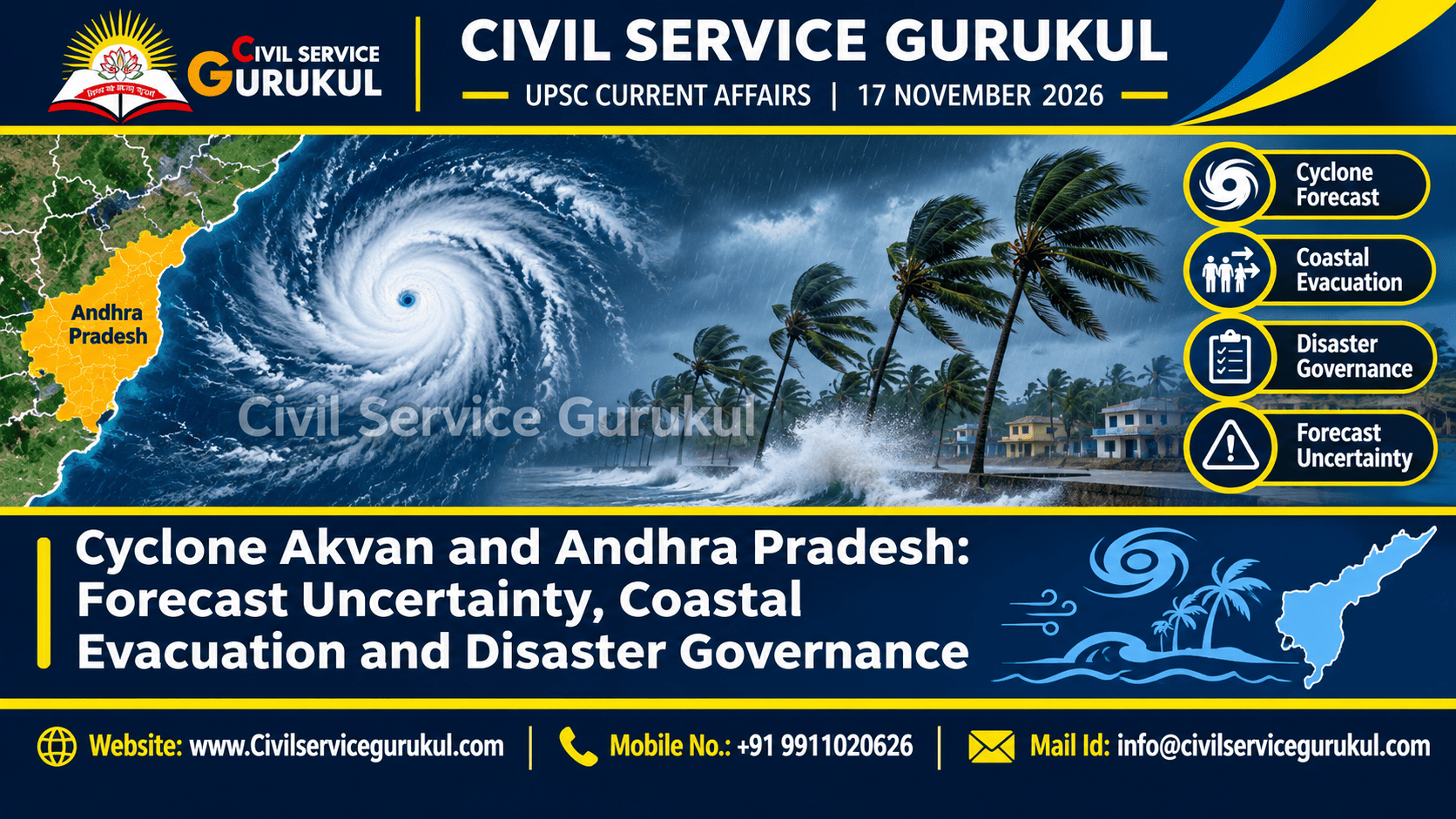
Cyclone Akvan in the Bay of Bengal: Why Andhra Pradesh's Coastal Preparedness Matters More Than Forecast Accuracy
Cyclone Akvan has brought renewed attention to cyclone forecasting, coastal evacuation and disaster preparedness along India's eastern coastline. The supplied editorial reports that IMD bulletins dated 16–17 November 2026 tracked a developing Bay of Bengal system and subsequently identified Cyclonic Storm Akvan. The key governance challenge is not merely predicting a cyclone's track but converting uncertain forecasts into timely, inclusive and actionable public warnings. This Civil Service Gurukul analysis explains cyclone formation, storm surge risks, forecast uncertainty, Andhra Pradesh's coastal vulnerabilities, institutional responsibilities and strategies for equitable disaster preparedness.
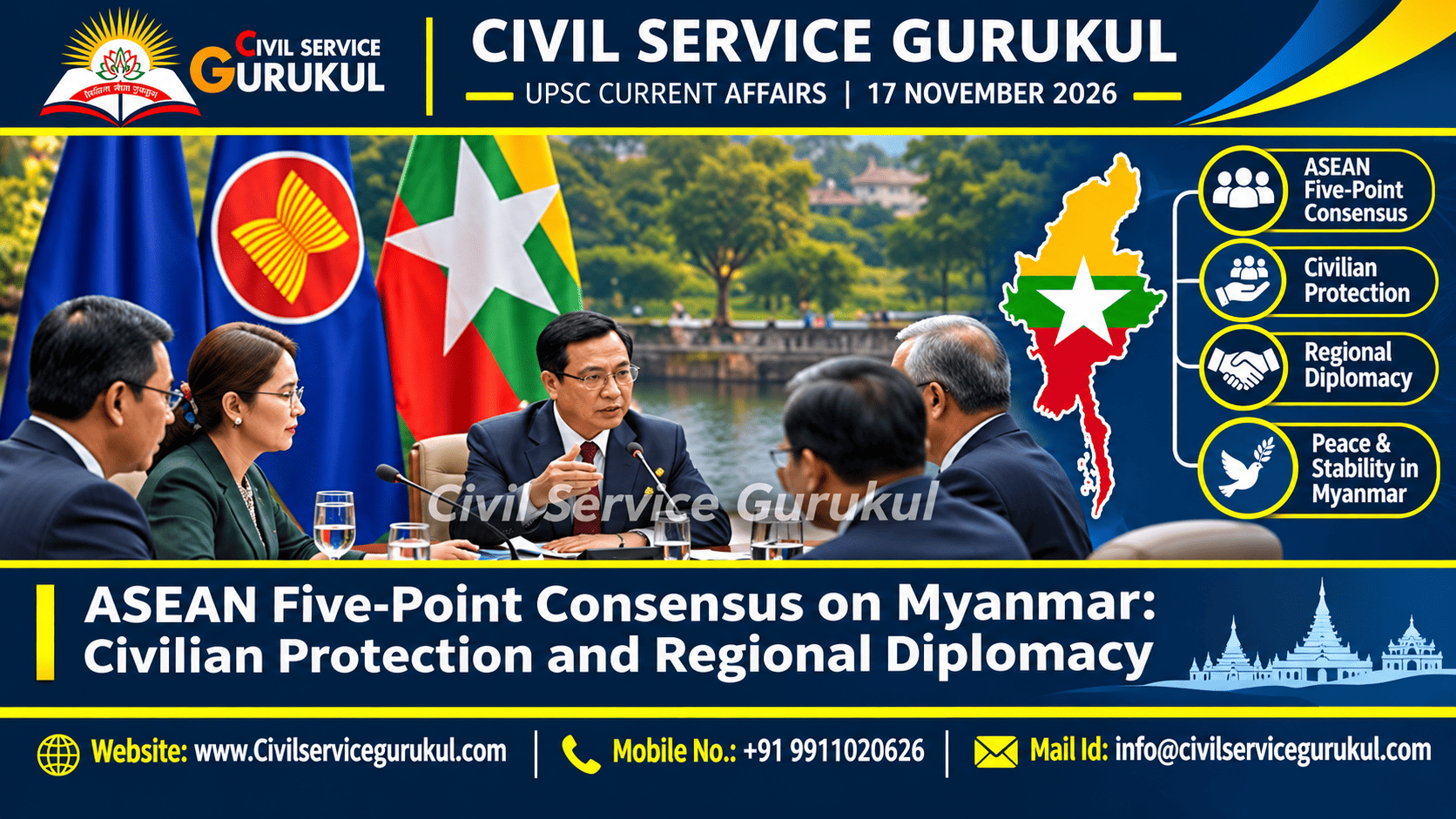
ASEAN Five-Point Consensus & Myanmar Crisis — UPSC 2026
The Myanmar crisis continues to test ASEAN's ability to promote peace, protect civilians and coordinate humanitarian assistance through regional diplomacy. The supplied editorial reports that an ASEAN review dated 15 November 2026 reaffirmed the Five-Point Consensus, condemned violence against civilians and civilian infrastructure, and called for improved humanitarian access. The crisis also has implications for India through its northeastern border, displacement concerns, trafficking risks and regional connectivity. This Civil Service Gurukul analysis examines ASEAN's Five-Point Consensus, the AHA Centre, diplomatic limitations, humanitarian neutrality and the strategic choices facing India.
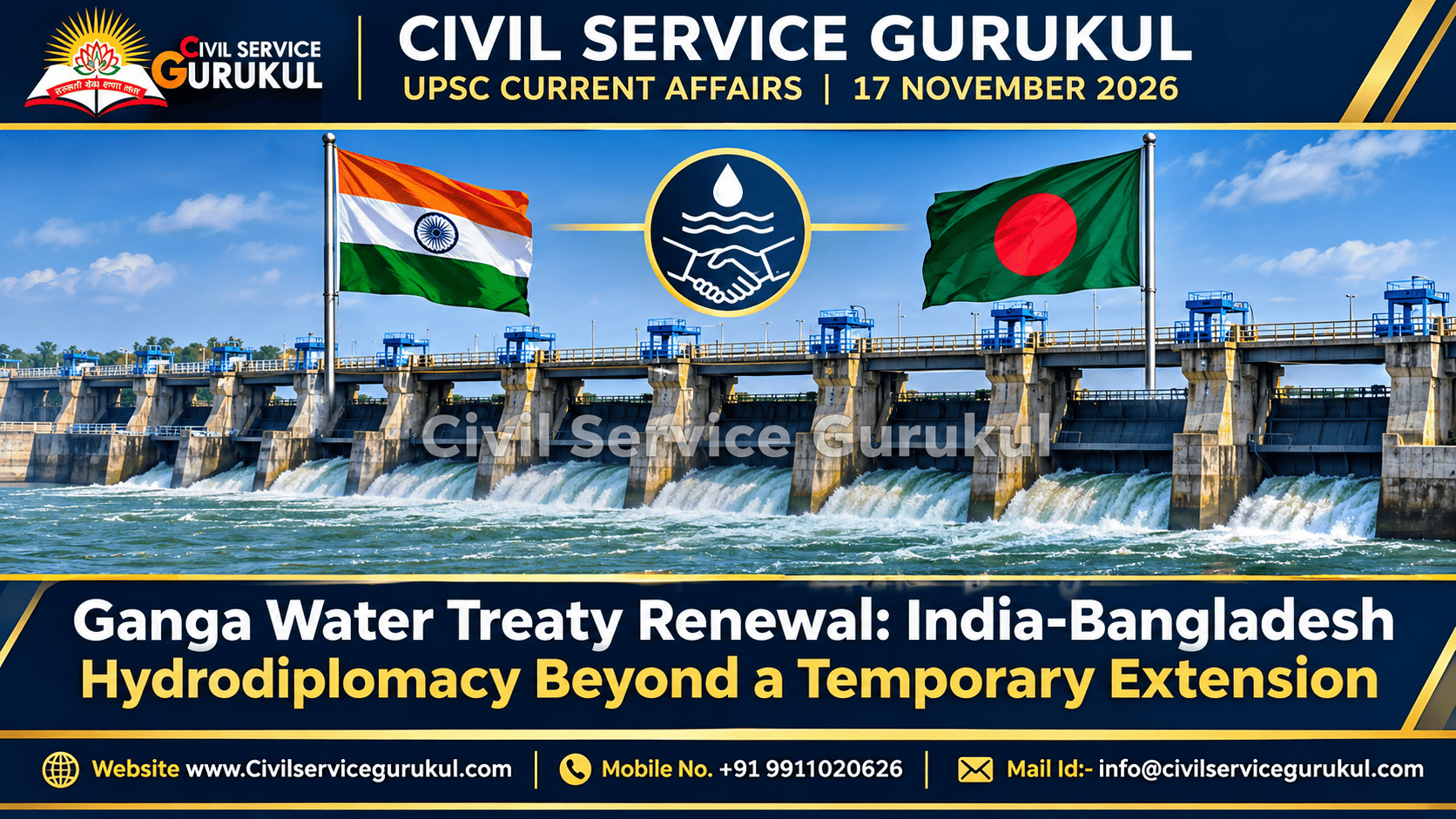
Ganga Water Treaty 2026: India–Bangladesh & UPSC
The 1996 Ganga Water Sharing Treaty between India and Bangladesh has entered a crucial phase in 2026 as its original 30-year term approaches completion. The supplied editorial refers to an expert proposal for a temporary renewal, but this should not be confused with a concluded bilateral agreement. The treaty governs dry-season water sharing at Farakka, while changing rainfall patterns, upstream water demand, sedimentation and ecological requirements create new challenges. This Civil Service Gurukul analysis examines the treaty's historical background, the importance of hydrodiplomacy, the advantages and limitations of a temporary extension, and the need for a transparent, adaptive and climate-resilient water-sharing framework.