Powering India’s Green Grid: PM-DHARA Scheme and the Next Leap in Renewable Energy Transmission
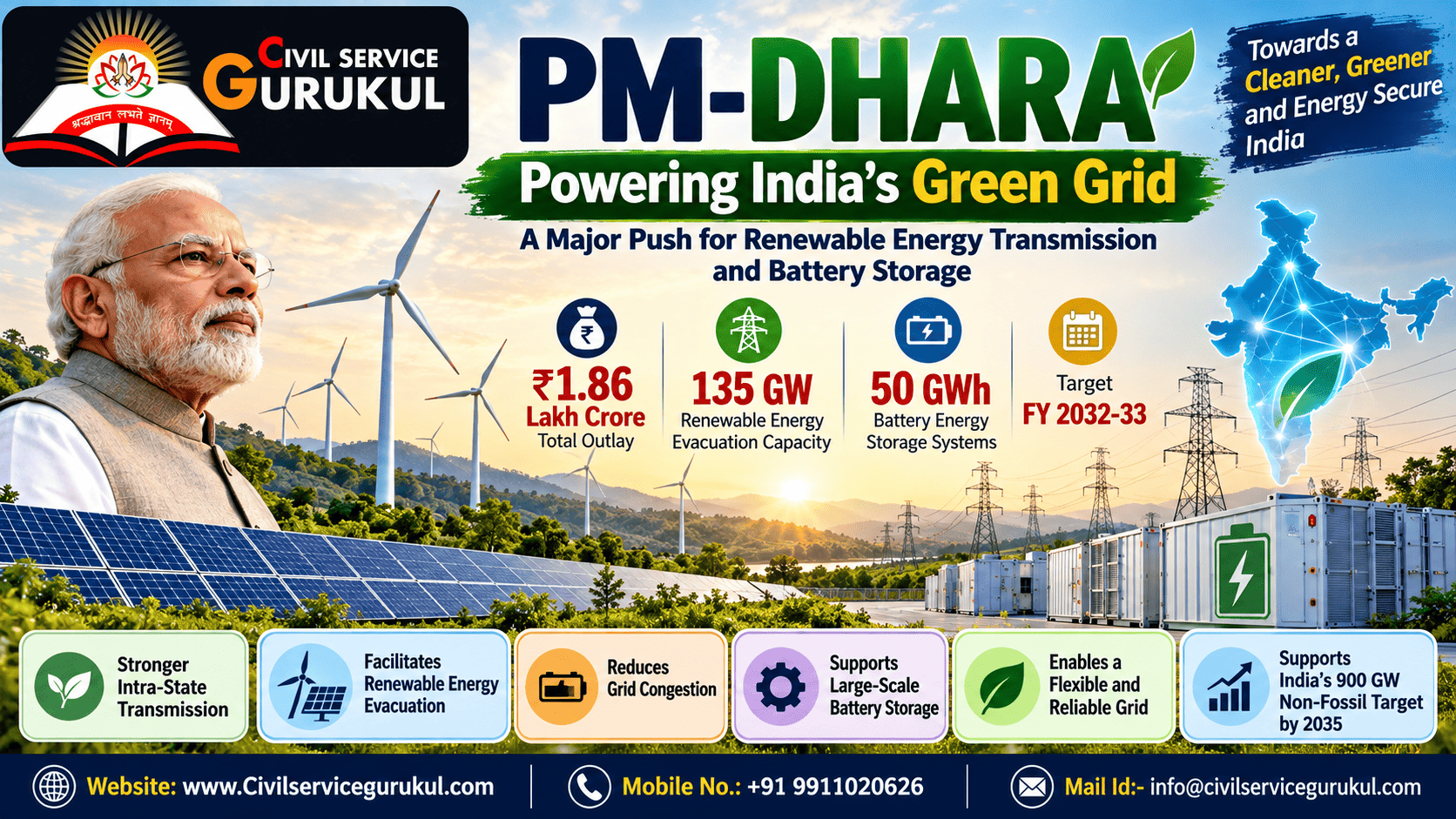
Powering India’s Green Grid: How PM-DHARA Can Transform Renewable Energy Transmission
A comprehensive UPSC analysis of PM-DHARA, Green Energy Corridor Phase III, renewable-energy evacuation, Battery Energy Storage Systems and India's emerging green-grid architecture.
PM-DHARA is a ₹1.86 lakh crore green-energy infrastructure programme aimed at strengthening intra-state transmission, enabling evacuation of up to 135 GW of renewable power and deploying 50 GWh of battery storage.
For UPSC, the scheme links renewable-energy integration with energy security, infrastructure, battery technology, climate action and green growth.
What is the PM-DHARA Scheme?
PM-DHARA — PM-Developing Harmonized and Accelerated Renewable-energy Access is a major green-energy transmission and storage programme.
It aims to strengthen electricity networks within States and Union Territories while improving India's ability to integrate large quantities of renewable electricity into the grid.
PM-DHARA: Key Numbers for UPSC Prelims
| Component | Provision |
|---|---|
| Total Project Outlay | ₹1,86,405 crore |
| Intra-State Transmission / Green Energy Corridor Phase III | ₹1,36,378 crore |
| Battery Energy Storage Systems | ₹50,000 crore |
| BESS Capacity | 50 GWh |
| Renewable Energy Evacuation Capacity | Up to 135 GW |
| Central Financial Support | ₹54,082 crore |
| Target Completion | FY 2032-33 |
Why Does India Need Green Energy Transmission?
Renewable-energy generation is often concentrated far from major centres of electricity demand.
Solar potential may be high in Rajasthan and Gujarat, while wind generation can be concentrated in coastal and southern States. Electricity demand, however, is distributed across cities, industries and agricultural regions.
A stronger green grid changes the equation:
What is Renewable Energy Evacuation?
Electricity evacuation refers to transporting generated electricity from the power-generation facility into the wider electricity grid so that it can ultimately reach consumers.
Without adequate evacuation infrastructure, renewable-energy projects may generate electricity that the grid cannot efficiently absorb or transmit.
Green Energy Corridor Phase III
A major component of PM-DHARA is the development of Intra-State Transmission Systems under Green Energy Corridor Phase III.
50 GWh Battery Energy Storage: Why It Matters
PM-DHARA provides ₹50,000 crore for 50 GWh of Battery Energy Storage Systems (BESS).
What is BESS?
A Battery Energy Storage System stores electricity in batteries and releases it when electricity is required.
=
More Reliable Renewable Power
The Problem of Renewable Intermittency
Solar and wind generation are inherently variable. Solar generation falls after sunset, while wind generation changes according to weather conditions.
Electricity demand, however, continues throughout the day. This creates a mismatch between when renewable electricity is generated and when consumers need electricity.
How BESS Can Help the Grid
Central Financial Support
The financial assistance is intended to reduce the burden of intra-state transmission costs and help contain electricity costs for consumers.
How Will PM-DHARA Projects Be Implemented?
Greenfield Projects
New transmission projects will use a competitive project-allocation framework.
Tariff Based Competitive Bidding — TBCBBrownfield Projects
Existing transmission-network strengthening and augmentation will follow the applicable cost-based framework.
Cost Plus Basis — CPBRole of State Transmission Utilities
State Transmission Utilities (STUs) are envisaged as the overall implementing agencies.
Transmission Service Providers selected through competitive bidding can develop projects using the Build-Own-Operate-Maintain (BOOM) model.
PM-DHARA and India’s 2035 Energy Target
The scheme highlights an important reality of India's energy transition:
Why PM-DHARA Matters for Energy Security
Expansion of domestic renewable-energy infrastructure can strengthen India's energy security by supporting:
PM-DHARA and Climate Action
A stronger renewable grid can create wider benefits across India's climate and development strategy.
Electric Mobility
Cleaner electricity can strengthen the environmental benefits of EV adoption.Green Hydrogen
Reliable renewable electricity can support green-hydrogen production.Industrial Decarbonisation
Clean electricity can reduce industrial carbon intensity.Urban Energy
Greater renewable integration can support cleaner city electricity.Green Manufacturing
Reliable low-carbon electricity can support cleaner manufacturing.Climate Commitments
Transmission and storage can improve the usability of non-fossil electricity.Economic and Employment Impact
Expansion of transmission and storage infrastructure can generate direct and indirect opportunities across:
Major Challenges
Way Forward
India's green-grid strategy should combine transmission expansion with a wider ecosystem of storage, manufacturing, digital-grid management and resource security.
UPSC Prelims Quick Revision
PM-Developing Harmonized and Accelerated Renewable-energy Access
₹1,86,405 crore
Up to 135 GW
50 GWh
Phase III
₹54,082 crore
FY 2032-33
State Transmission Utilities
Tariff Based Competitive Bidding
GS Paper III Relevance
UPSC Mains Answer Enrichment
Possible UPSC Mains Questions
- Why is expansion of transmission infrastructure essential for India's renewable-energy transition? Explain with reference to PM-DHARA.
- Examine the role of Battery Energy Storage Systems in addressing renewable-energy intermittency.
- India's energy transition requires coordinated investments in generation, transmission and storage. Discuss.
- How can green-energy corridors strengthen India's energy security and climate commitments?
Conclusion: From Renewable Capacity to a Reliable Green Grid
PM-DHARA represents an important shift in India's renewable-energy strategy—from merely adding generation capacity toward building the infrastructure required to make that capacity reliable and usable.
With a project outlay of ₹1.86 lakh crore, renewable-energy evacuation capacity of up to 135 GW and 50 GWh of battery storage, the programme seeks to build a stronger, more flexible and future-ready electricity grid.
For UPSC aspirants, PM-DHARA provides an excellent contemporary case study connecting renewable energy, infrastructure, energy security, battery technology, climate action and green growth.
Prepare Current Affairs the UPSC Way
Civil Service Gurukul connects current developments with Prelims facts, Mains analysis, GS syllabus mapping and answer-writing value addition.
Explore Civil Service GurukulFrequently Asked Questions
What is the PM-DHARA Scheme?
PM-DHARA stands for PM-Developing Harmonized and Accelerated Renewable-energy Access. It focuses on strengthening intra-state transmission, renewable-energy evacuation and battery storage infrastructure.
What is the total outlay of PM-DHARA?
The total project outlay stated for PM-DHARA is ₹1,86,405 crore.
How much renewable energy can PM-DHARA help evacuate?
The scheme is designed to facilitate evacuation of up to 135 GW of renewable-energy capacity.
How much battery storage is proposed under PM-DHARA?
The programme provides for 50 GWh of Battery Energy Storage Systems, with ₹50,000 crore allocated to the BESS component.
Why is PM-DHARA important for UPSC?
PM-DHARA connects several GS Paper III themes, including renewable energy, electricity infrastructure, battery storage, energy security, climate action, infrastructure investment and green growth.
Prepare with Mentors Who Cleared the Exam
Get personalized study plans, evaluated answer models, and test series access.