Daily Current Affairs & News Analysis
Our daily news analysis consists of two integral parts — Daily News Analysis and Important Editorials curated rigorously from The Hindu, The Indian Express, LiveMint, PIB, and Sansad TV debates. Content is mapped directly to UPSC CSE and State PCS syllabi.
Cancer Drug Prices in India: UPSC 2027 Analysis
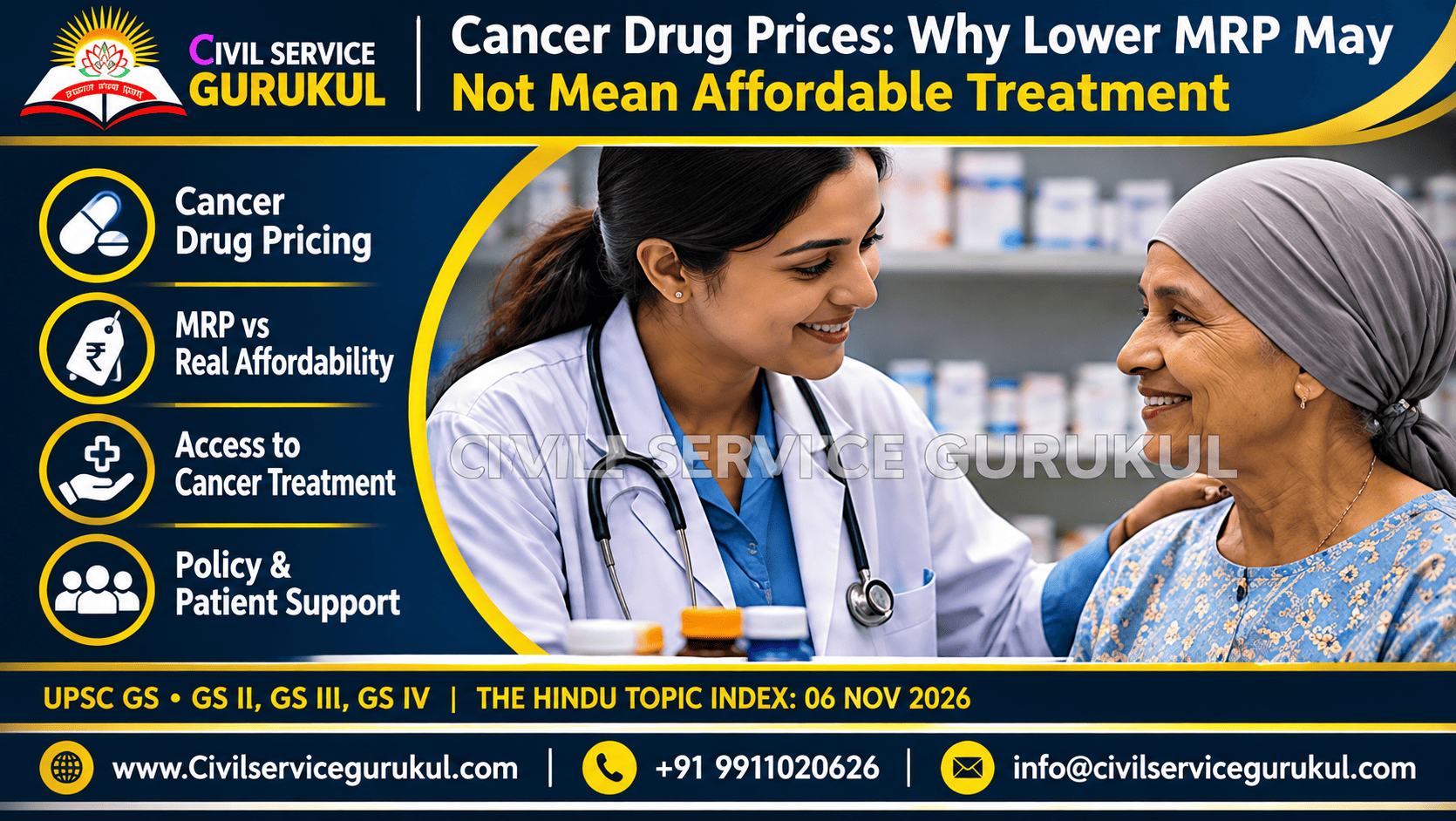
Reducing the maximum retail price (MRP) of cancer medicines can help patients, but it does not automatically make cancer treatment affordable. Patients may still face substantial expenses for diagnostics, hospital visits, multiple medicines, travel and lost wages. The 6 November 2026 current-affairs discussion highlights the distinction between a medicine's labelled price and the total cost of effective cancer care. It also examines the role of India's National Pharmaceutical Pricing Authority (NPPA), drug-price regulation, insurance coverage, medicine availability and quality-assured generic competition. This article analyses why price ceilings alone cannot guarantee equitable access to cancer treatment and explains how better procurement, stronger public oncology services, financial protection and patient-centred affordability indicators can improve outcomes. Designed for UPSC Prelims and Mains 2027, the article includes GS Paper II, III and IV analysis, practice MCQs, Mains questions, an answer-writing framework and FAQs.
Gaza Environmental Damage: UPSC 2027 Analysis
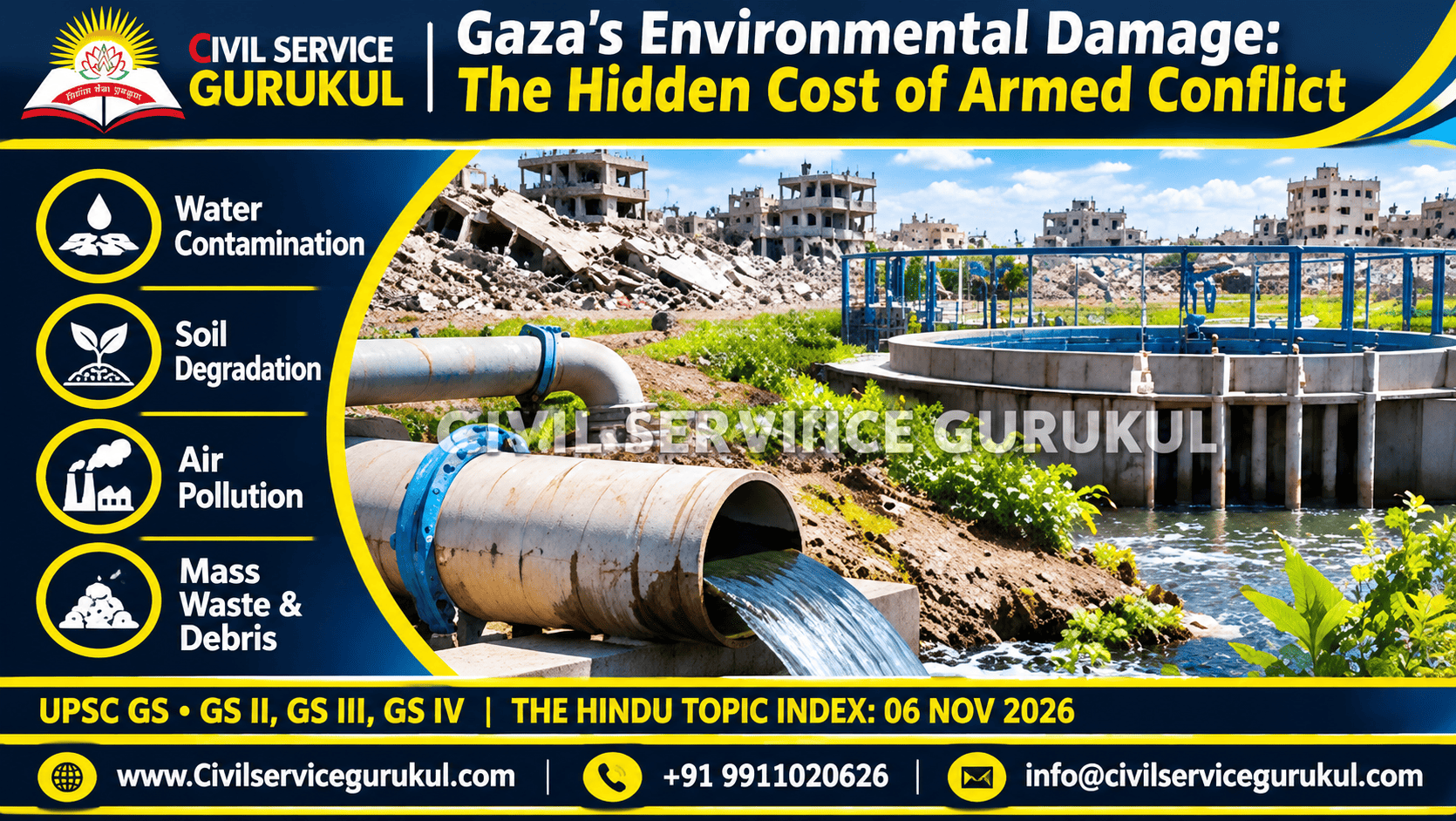
The environmental consequences of armed conflict can persist long after fighting ends. The 6 November 2026 current-affairs editorial examines ecological damage in Gaza, including the destruction of water and wastewater infrastructure, soil contamination, hazardous debris and losses of vegetation. The source highlights UNEP's September 2025 assessment and the relationship between environmental degradation, public health risks, food insecurity and displacement. Contaminated water, damaged sanitation systems and unsafe debris can complicate humanitarian relief and long-term reconstruction. The article also examines international humanitarian law, the use and limitations of satellite-based environmental monitoring, the importance of ground-level verification and the distinction between documenting environmental harm and establishing legal responsibility. For UPSC Prelims and Mains 2027, the topic connects international relations, environmental governance, disaster management, public health and ethics. This article includes conceptual explanations, comparative tables, practice MCQs, Mains questions, an answer-writing framework and FAQs.
UPI Merchant Charges 2026: MDR & UPSC 2027 Notes
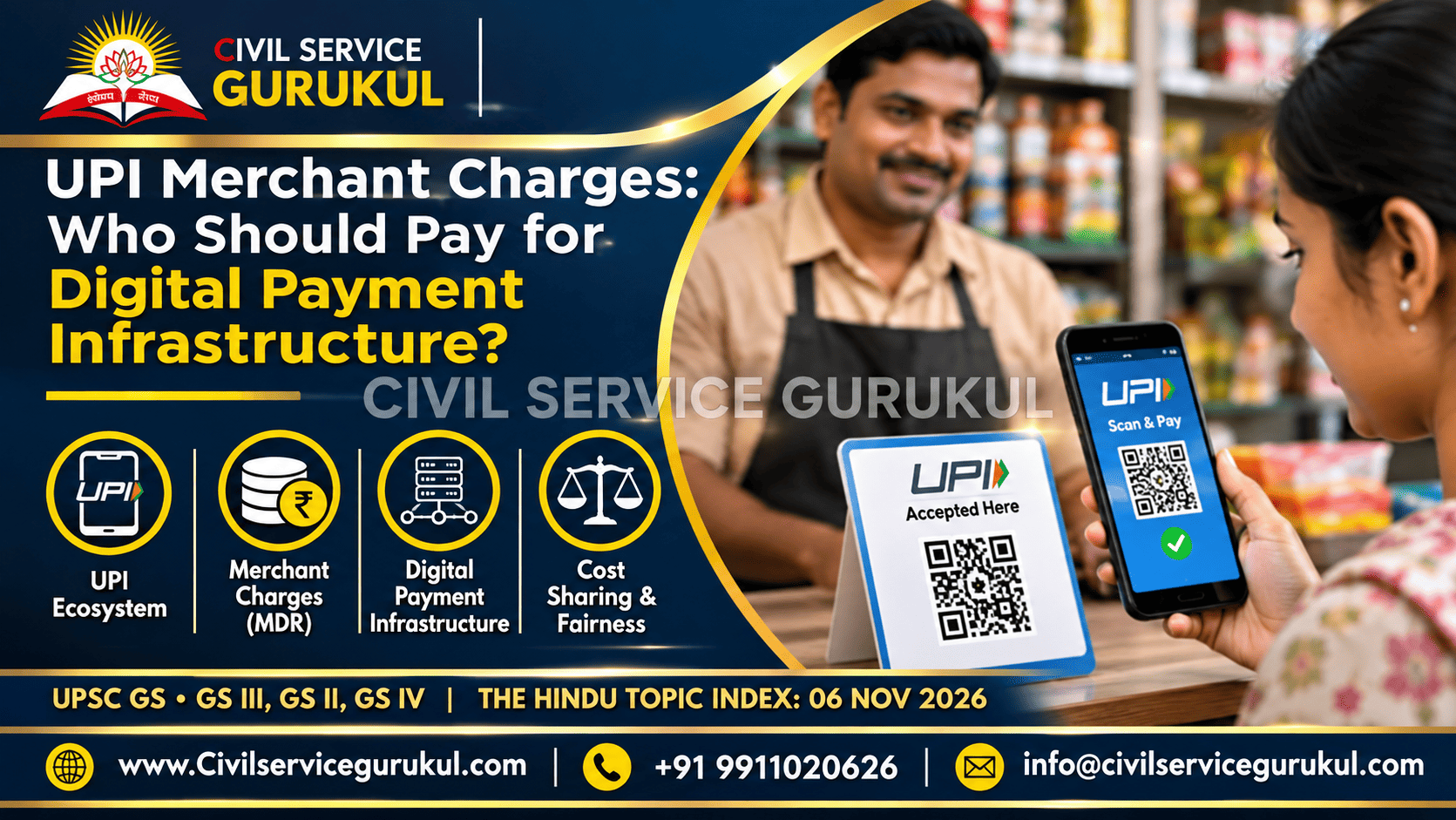
India's Unified Payments Interface (UPI) has transformed digital transactions by making payments convenient and widely accessible. However, maintaining this infrastructure requires investment in banking systems, cybersecurity, fraud prevention, dispute resolution and payment technology. A court-linked debate highlighted in the 6 November 2026 current-affairs index has renewed attention to who should bear the costs of UPI transactions. Should merchants pay transaction fees, should the government provide financial support, or should payment service providers develop alternative sustainable revenue models? This UPSC-focused article examines Merchant Discount Rate (MDR), NPCI, RBI, financial inclusion, the economics of digital public infrastructure and policy trade-offs. It includes GS Paper II, III and IV analysis, Prelims MCQs, Mains questions, model answer frameworks and FAQs.
When Does Arrest Begin? Article 21 & 22 UPSC 2027
When does an arrest legally begin—when a person is physically restrained or when the police formally record the arrest? A Supreme Court observation reported in the 6 November 2026 newspaper index has brought renewed attention to this important constitutional question. This article examines the distinction between arrest, detention, custody, questioning and voluntary appearance under Indian law. It explains the significance of Article 21 and Article 22, the requirement to communicate grounds of arrest, the 24-hour magistrate-production safeguard and the risks associated with undocumented detention. Designed for UPSC Civil Services Examination 2027, the article provides balanced constitutional analysis, GS Paper II and GS Paper IV relevance, police accountability reforms, Prelims MCQs, Mains practice questions and answer-writing guidance.
Electoral Roll Revision & Form 7: UPSC 2027 Notes
Electoral roll revision is a vital democratic exercise that aims to maintain accurate voter lists while protecting eligible citizens from wrongful exclusion. Recent reporting concerning electoral roll revisions and allegations of forged Form 7 objections has renewed attention to procedural fairness and electoral integrity. This UPSC 2027 article explains Article 324, the Representation of the People Act, 1950, the Registration of Electors Rules, 1960, and the roles of Forms 6 and 7. It also examines voter deletion safeguards, institutional accountability, the challenges faced by migrants and vulnerable voters, and the balance between electoral accuracy and inclusion. Includes Prelims revision notes, practice MCQs, GS-II and GS-IV analysis, Mains answer-writing guidance and FAQs.