Daily Current Affairs & News Analysis
Our daily news analysis consists of two integral parts — Daily News Analysis and Important Editorials curated rigorously from The Hindu, The Indian Express, LiveMint, PIB, and Sansad TV debates. Content is mapped directly to UPSC CSE and State PCS syllabi.
BRICS Carbon Markets 2026: UPSC Notes & Analysis
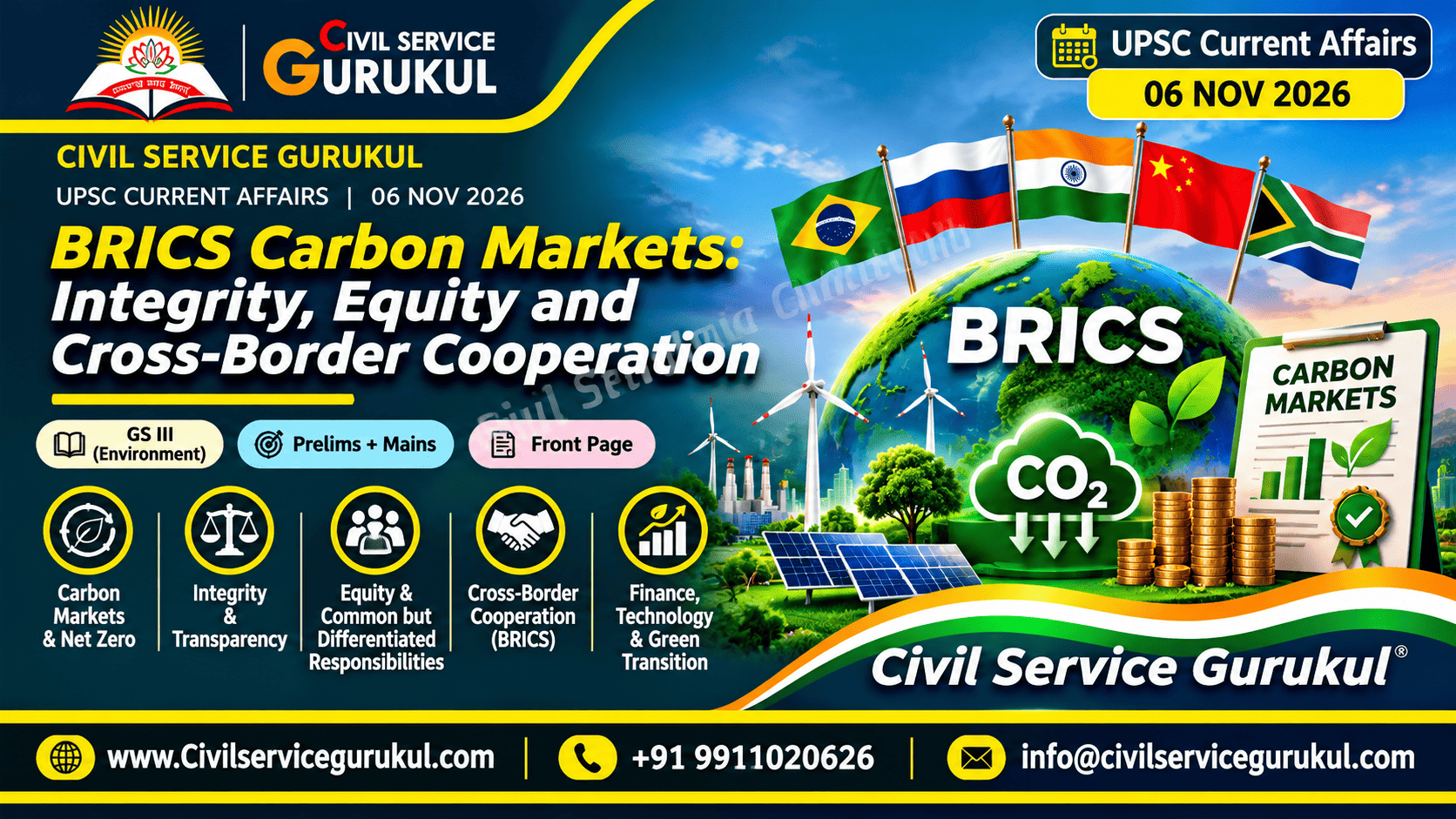
The growing discussion around BRICS carbon-market cooperation highlights the potential role of emerging economies in shaping international climate finance and emissions-reduction mechanisms. Carbon markets can encourage investment in mitigation projects and help lower the cost of achieving climate goals. However, their credibility depends on robust accounting, additionality, transparent registries, independent verification and safeguards against double counting. A November 2026 current-affairs editorial examines the opportunities and risks of a possible BRICS carbon-market partnership. While cooperation may support technology exchange, common methodologies and South-South climate finance, it should not be confused with an already operational unified BRICS carbon market. This Civil Service Gurukul UPSC analysis explains the fundamentals of carbon trading, Article 6 of the Paris Agreement, climate justice, India's carbon market framework, environmental integrity and the governance reforms required for credible international cooperation.
Anaemia in India: Causes, Solutions & UPSC Notes 2026
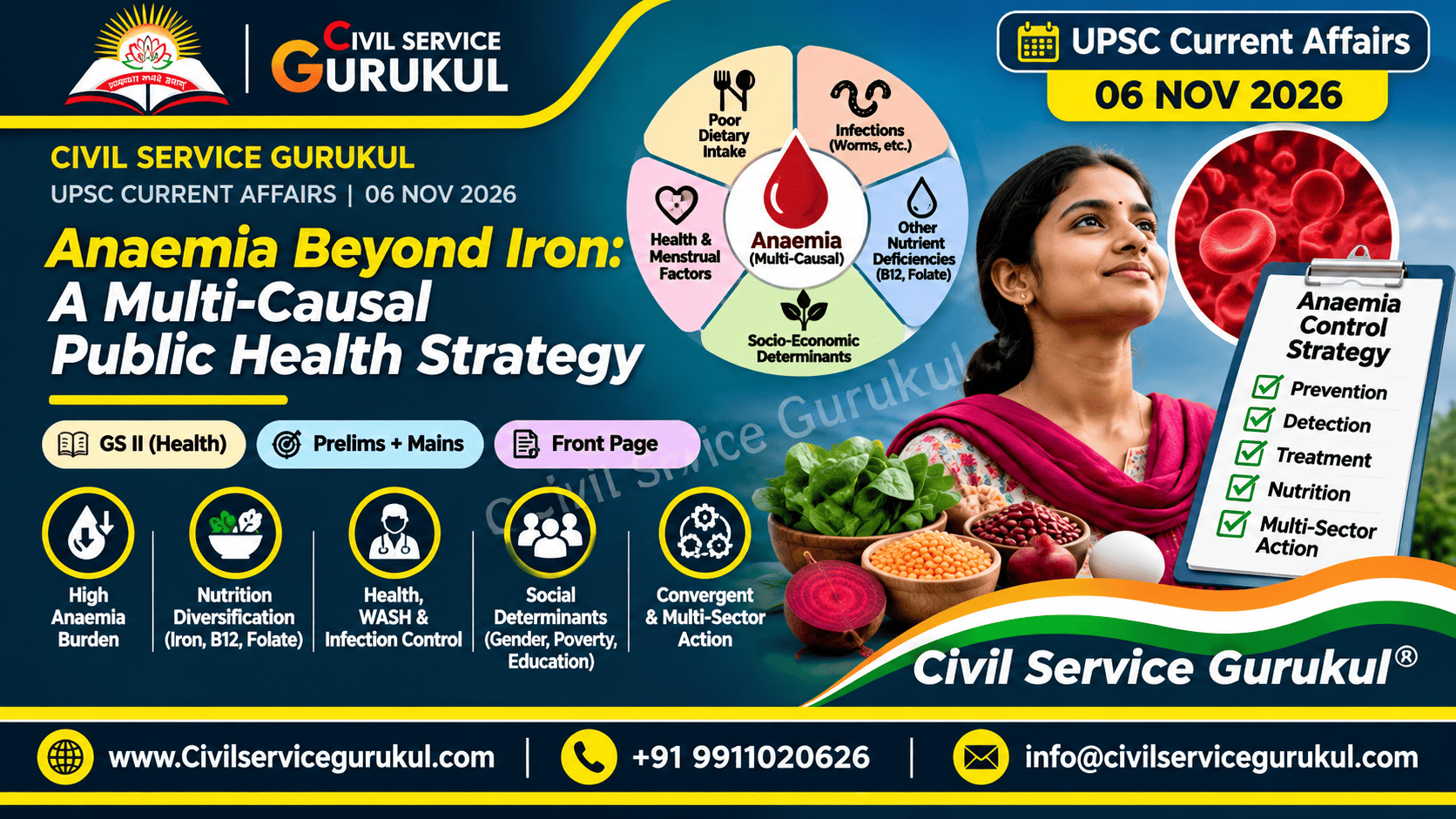
Anaemia remains a major public health concern in India, particularly for women, children and adolescents. Although iron deficiency is an important cause, anaemia can also result from vitamin B12 and folate deficiencies, infections, inflammation, chronic diseases, blood loss and inherited blood disorders. A November 2026 current-affairs editorial emphasizes that iron supplementation alone cannot address every form of anaemia. Effective prevention and treatment require nutritional diversity, appropriate screening and diagnosis, maternal healthcare, infection control, sanitation, reliable health services and community follow-up. This Civil Service Gurukul UPSC analysis examines the multi-causal nature of anaemia, its public health implications, limitations of one-size-fits-all interventions, and the need for an integrated strategy. It includes Prelims MCQs, Mains practice questions, a model answer and revision notes.
State Tax Cesses & Fiscal Federalism: UPSC 2026
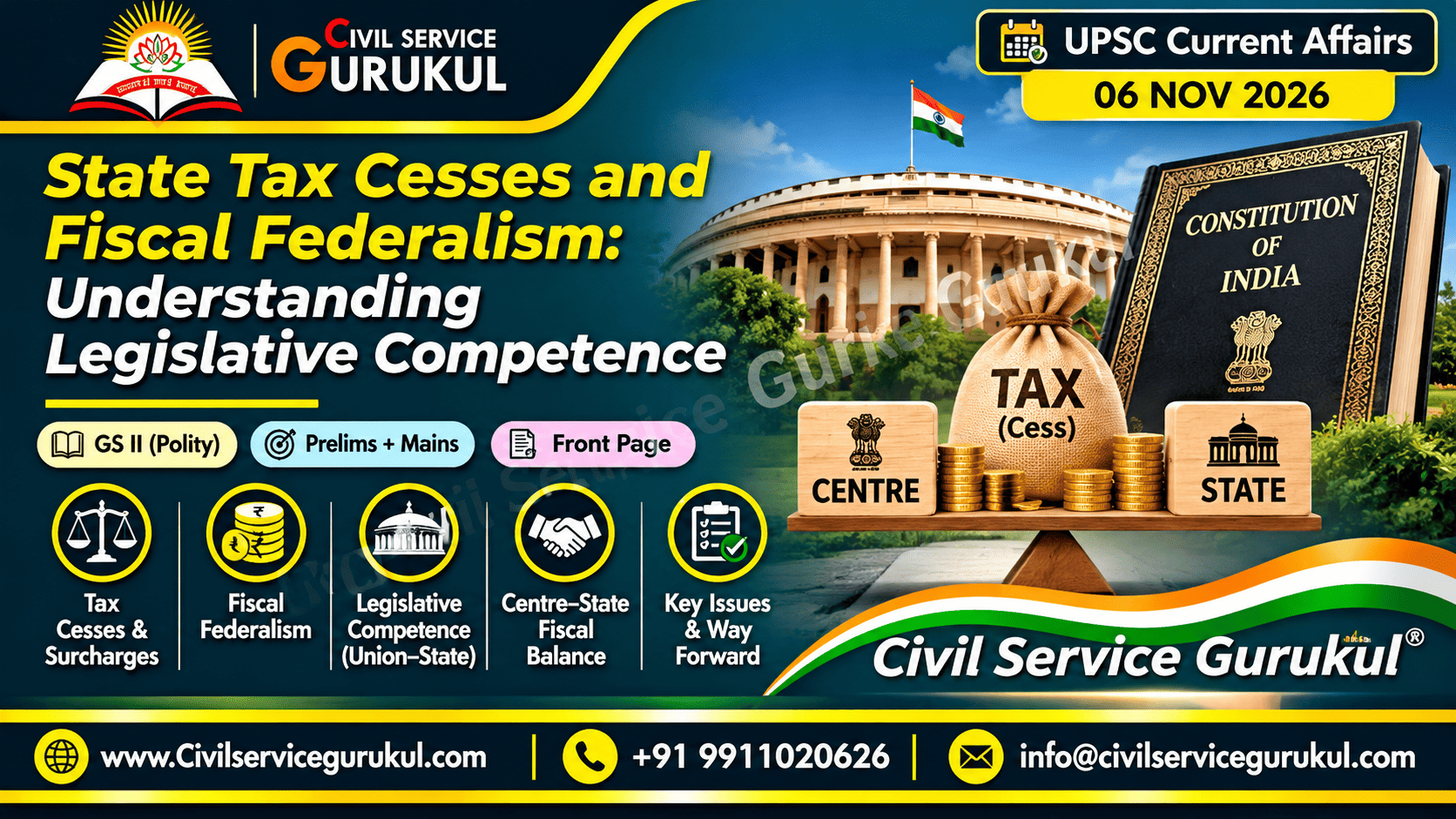
The constitutional validity of state tax cesses has emerged as an important issue in India's fiscal federalism debate. A current-affairs report dated 5 November 2026 highlights a Supreme Court ruling concerning a cess associated with sales tax and the scope of state legislative competence. However, the complete judgment, precise taxable event and statutory provisions have not been provided in the source. Under India's constitutional framework, taxation powers are distributed through legislative entries and specific constitutional provisions. The introduction of GST transformed indirect taxation, but the division of revenue powers between the Union and States remains a central feature of Indian federalism. This Civil Service Gurukul article examines the constitutional framework governing state taxes and cesses, the distinction between a tax and a cess, the doctrine of pith and substance, GST-related limitations, state revenue autonomy, compliance concerns and cooperative fiscal federalism. It also includes UPSC Prelims questions, Mains practice questions and a model answer.
Public Accounts Committee & CAG Audit: UPSC 2026
which Parliament examines government expenditure and holds the executive accountable for the use of public funds. A November 2026 current-affairs report highlights calls for closer scrutiny of public spending and faster implementation of audit findings. The Comptroller and Auditor General (CAG) conducts audits under India's constitutional and statutory framework, while the PAC examines relevant accounts and audit reports. However, parliamentary financial oversight becomes effective only when audit observations lead to timely departmental responses, corrective action and verifiable improvements. This Civil Service Gurukul UPSC analysis explores the constitutional foundations of public audit, the relationship between the CAG and PAC, implementation challenges, action-taken reports, audit backlogs, transparency and outcome-oriented governance. It also includes UPSC Prelims MCQs, Mains answer-writing guidance and a model answer.

Fast-Track Special Courts 2031: UPSC Notes
Fast-Track Special Courts are intended to improve the timely handling of specified categories of criminal cases. A November 2026 current-affairs source reports a proposal or decision to extend the FTSC scheme to 2031, although the precise official notification and financial provisions require verification. The central governance question is whether faster case disposal alone can ensure meaningful justice. Dedicated courts may reduce delays, but effective criminal justice also depends on investigation quality, forensic capacity, witness participation, legal aid, survivor assistance and protection of the accused's procedural rights. This Civil Service Gurukul UPSC analysis examines the relationship between speedy trials and fair procedure under Article 21, the limitations of conviction-rate-based performance assessment, institutional bottlenecks, survivor-centred reforms and judicial accountability. It includes Prelims practice questions, Mains answer-writing guidance and a model answer.
Renewable Energy Investment India 2026: UPSC Notes
India's clean energy transition depends not only on ambitious renewable energy targets but also on converting investment announcements into completed and operational projects. Reported renewable investment commitments worth approximately $400 billion highlight potential investor interest, yet commitments alone do not establish that capital has been disbursed or that new generation capacity has been commissioned. The key challenge lies in project execution. Land availability, transmission connectivity, financially stable electricity distribution companies, payment security, competitive financing and predictable regulations determine whether renewable projects can move from announcement to commercial operation. This Civil Service Gurukul UPSC analysis examines renewable energy investment commitments, project financing, implementation bottlenecks, climate-finance transparency, federal coordination and public accountability. It also includes Prelims MCQs, Mains answer-writing guidance and a model answer.
Battery Energy Storage VGF 2026: UPSC Notes
India's renewable energy transition requires more than expanding solar and wind capacity. Because renewable generation varies with weather and time of day, the electricity grid needs flexible resources capable of balancing supply and demand. Battery Energy Storage Systems (BESS) can store electricity during periods of surplus generation and release it during periods of high demand. Viability Gap Funding (VGF) can help make strategically important storage projects financially feasible by reducing their initial cost burden. This Civil Service Gurukul UPSC analysis explains how BESS supports renewable integration, grid reliability, peak-load management and energy security. It examines project economics, transparent procurement, battery recycling, environmental safeguards and the role of alternative flexibility solutions, followed by Prelims MCQs and Mains answer-writing guidance.
CEC Legal Immunity 2026: UPSC Polity Notes
The legal immunity of India's Chief Election Commissioner (CEC) has become a subject of constitutional debate following reported petitions questioning the scope and duration of statutory protection. The central issue is whether safeguards designed to protect the Election Commission from politically motivated legal proceedings can coexist with judicial scrutiny, equality before the law and accountability for alleged misconduct. Article 324 establishes the Election Commission's constitutional role, while the legal framework provides institutional and service-related safeguards. This Civil Service Gurukul analysis explores the distinction between functional immunity and impunity, constitutional independence, judicial review, transparency, proportionality and possible institutional reforms. It also includes UPSC Prelims questions, Mains answer-writing guidance and an examination-oriented model answer.
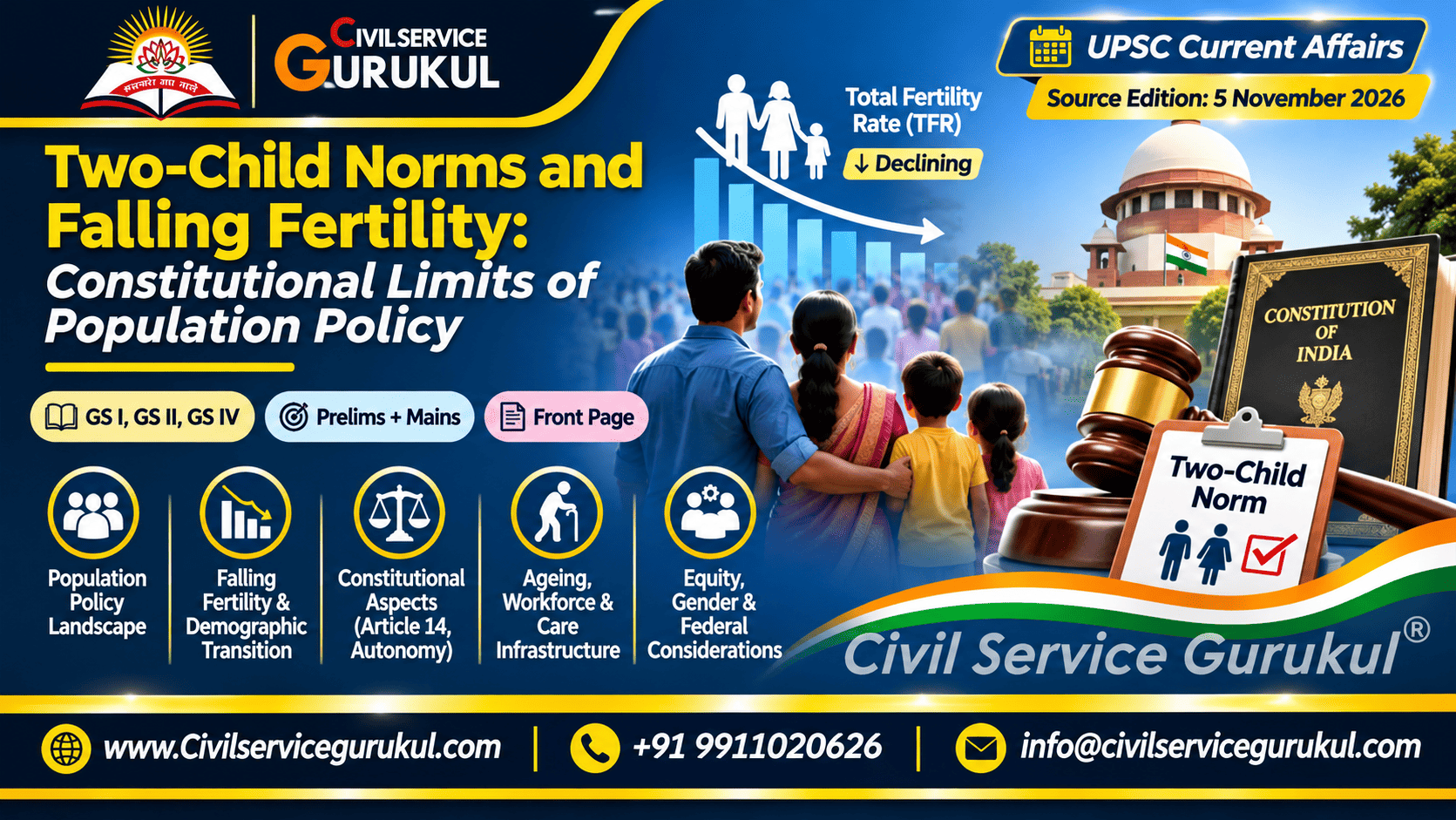
Two-Child Norm in India 2026: UPSC Notes
The debate over two-child eligibility norms in India has gained renewed attention amid falling fertility and reported judicial observations questioning the continuing rationale of restrictive population policies. India's demographic transition is uneven, with substantial differences across states in fertility, ageing, migration and access to reproductive healthcare. This Civil Service Gurukul UPSC analysis examines the constitutional implications of two-child norms, the meaning of total fertility rate, equality under Article 14, reproductive autonomy, gender justice, demographic diversity and alternatives to coercive population-control measures. It also provides examination-focused Prelims questions, a Mains model answer and policy recommendations.
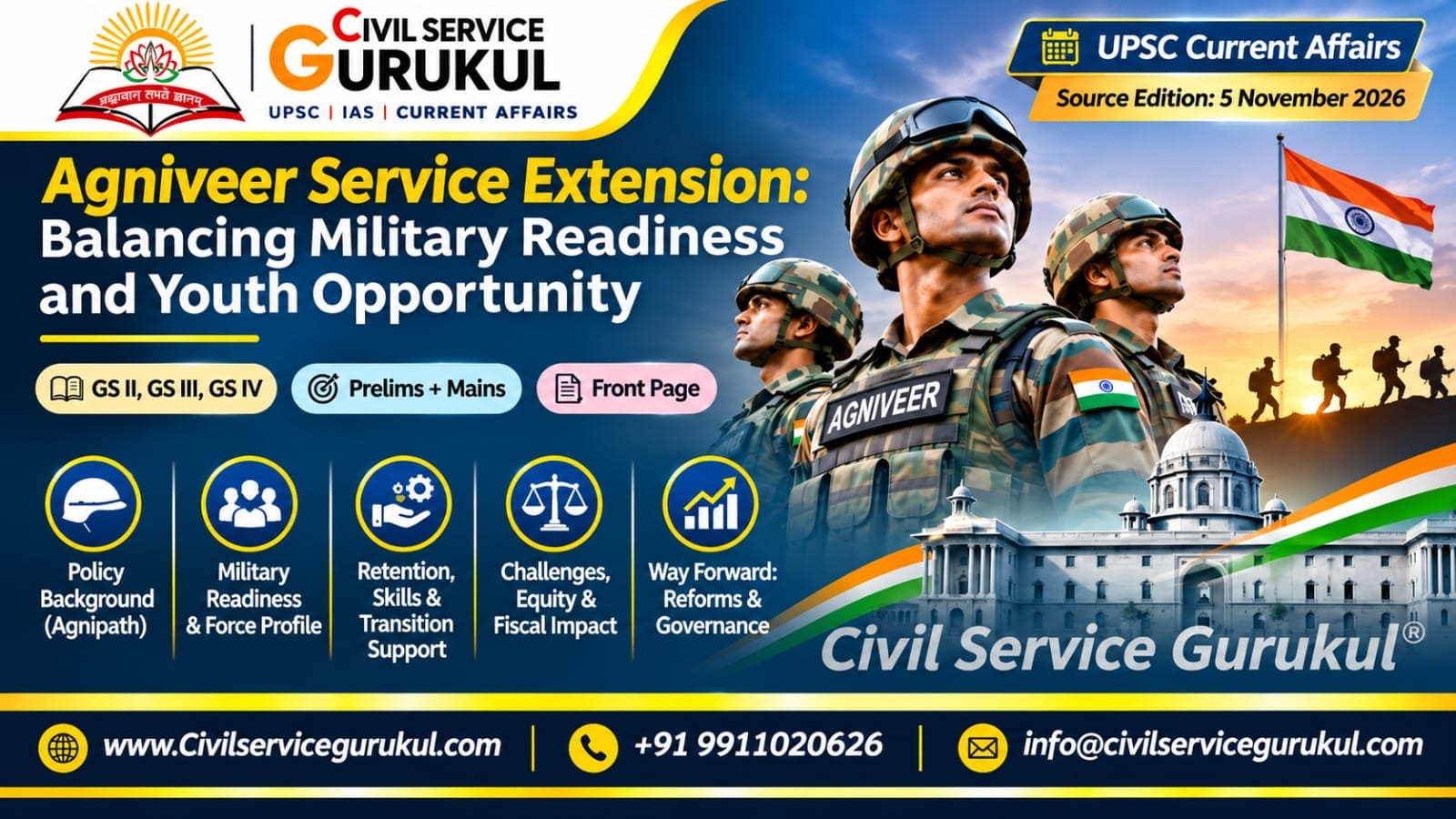
Agniveer Service Extension 2026 | UPSC Notes
The reported discussion surrounding Agniveer service extension has renewed attention on India's military recruitment system, defence preparedness and youth employment opportunities. The Agnipath framework seeks to balance a younger military workforce with operational effectiveness and personnel-management requirements. However, changes in service duration or retention rules raise important questions about training costs, institutional experience, fiscal sustainability, fairness and post-service rehabilitation. This Civil Service Gurukul UPSC analysis examines the Agnipath framework, reported service-extension developments, benefits and challenges, constitutional and administrative considerations, youth aspirations, policy recommendations and examination-oriented questions. The exact terms of any newly reported extension require confirmation from an official government notification.
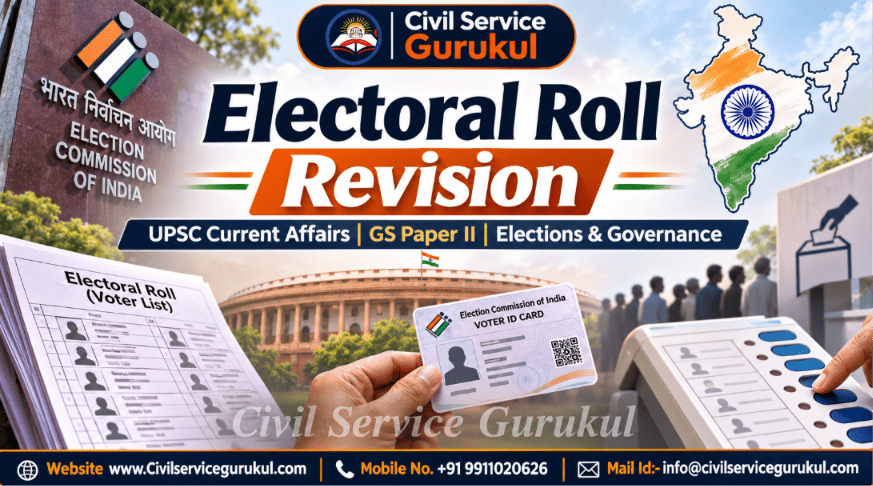
Electoral Roll Revision in India 2026: Special Summary Revision (SSR) vs Special Intensive Revision (SIR)
Electoral Roll Revision UPSC 2026: Learn SSR vs SIR, Article 324, Election Commission updates, voter registration, GS-II notes, Prelims facts and MCQs.
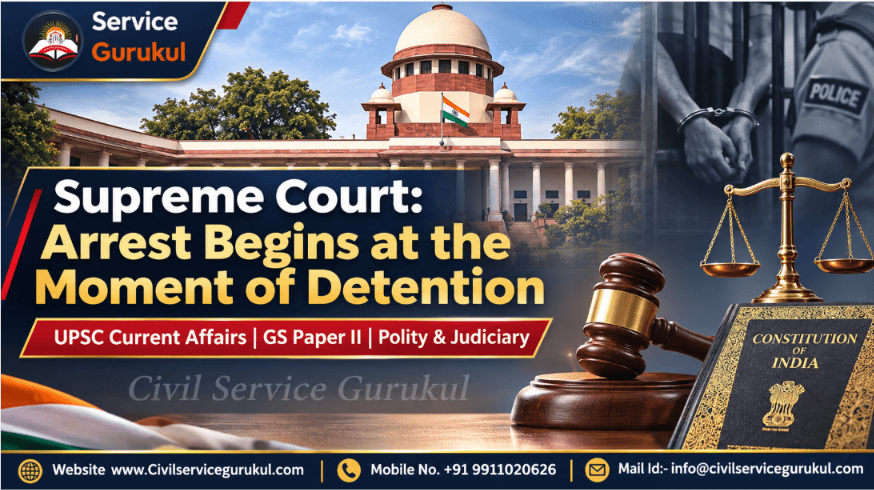
Supreme Court: Arrest Begins at the Moment of Detention
Supreme Court Arrest Begins at the Moment of Detention UPSC 2026: Explore Article 22, the 24-hour rule, landmark judgments, GS-II notes, PYQs and MCQs.