
Ramappa Temple: Kakatiya Engineering Marvel, UNESCO Heritage & Conservation Challenges
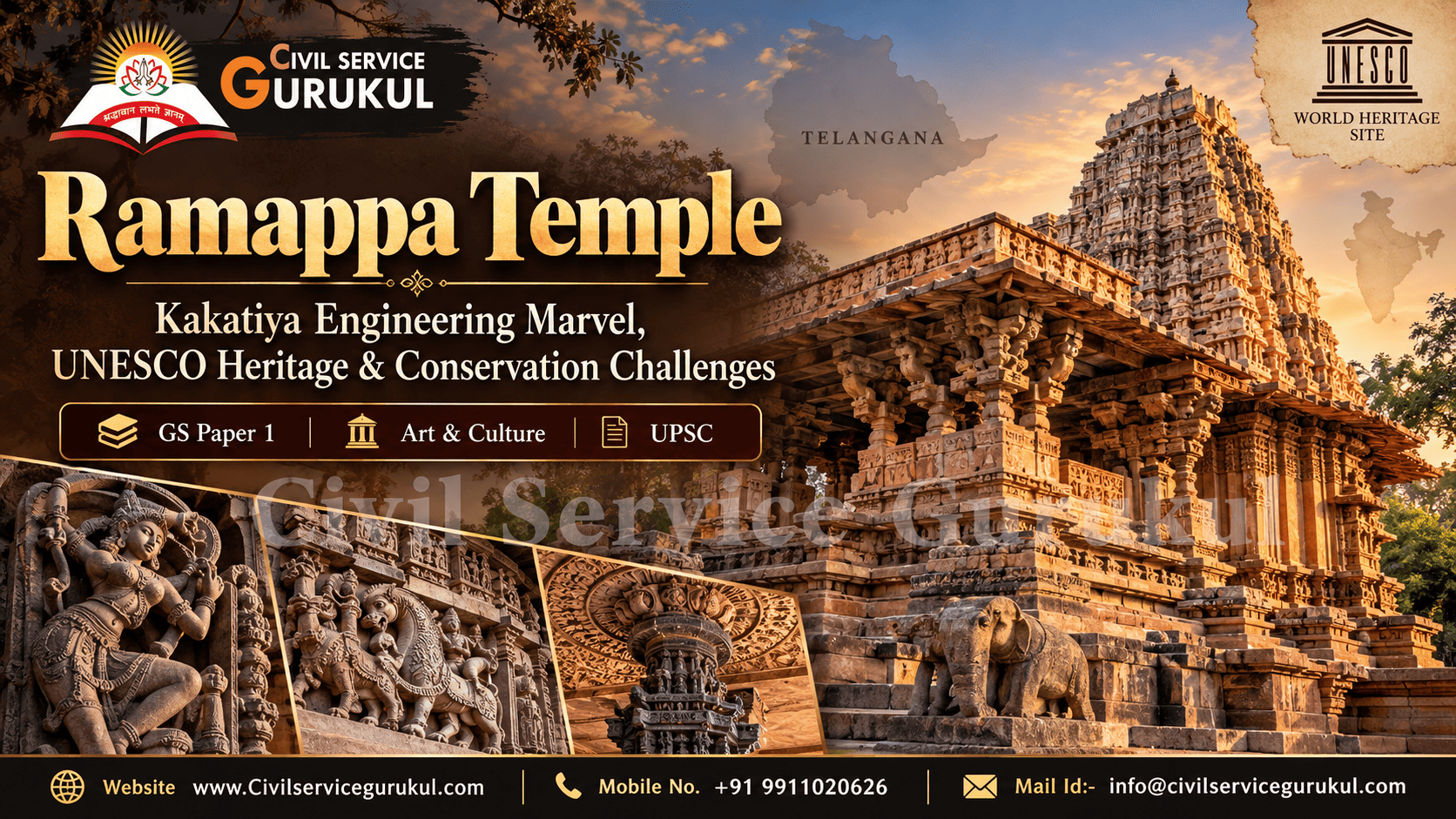
Ramappa Temple: Kakatiya Engineering Marvel, UNESCO Heritage & Conservation Challenges
A Prelims-focused Civil Service Gurukul guide to one of India's most remarkable medieval temples—its history, engineering, sculptures, UNESCO status, cultural landscape and contemporary heritage-conservation concerns.
Ramappa Temple, officially known as the Kakatiya Rudreshwara Temple, is a 13th-century Shiva temple in Telangana and a UNESCO World Heritage Site. Famous for its earthquake-resistant sandbox foundation, lightweight floating bricks, intricate Madanika sculptures and integration with Ramappa Lake, the temple is highly relevant for UPSC Prelims and Art & Culture. Recent concerns over nearby opencast mining have also brought heritage conservation and environmental protection into focus.
The Ramappa Temple is one of the finest surviving examples of Kakatiya architecture and an important topic for UPSC Art & Culture.
Its significance lies not only in sculptural beauty, but also in advanced engineering techniques, including an earthquake-resistant foundation and unusually lightweight bricks.
What Is Ramappa Temple?
Ramappa Temple is a medieval Hindu temple dedicated to Lord Shiva, worshipped here as Ramalingeswara or Rudreshwara.
It is officially recognised by UNESCO as the Kakatiya Rudreshwara (Ramappa) Temple, Telangana.
Period
13th century CE
Dynasty
Kakatiya Dynasty
Deity
Lord Shiva
Location of Ramappa Temple
The temple is situated at Palampet village in Mulugu district, Telangana.
Remember the sequence: Telangana → Mulugu District → Palampet Village → Ramappa Temple.
History and Patronage
The temple was constructed in 1213 CE during the reign of Kakatiya ruler Ganapati Deva.
The construction is associated with his military commander Recharla Rudra.
The temple is believed to have taken roughly four decades to complete.
UNESCO World Heritage Status
Ramappa Temple was inscribed on the UNESCO World Heritage List in July 2021.
It became an important international recognition of the artistic, technological and architectural achievements of the Kakatiya period.
Architectural Features That Make Ramappa Temple Unique
1. Earthquake-Resistant Sandbox Foundation
One of the most remarkable engineering features is the sandbox foundation technique.
The foundation uses a cushioning layer containing sand and other materials, helping absorb vibrations and reduce structural stress.
2. Lightweight “Floating Bricks”
The temple's vimana uses porous, low-density bricks that are significantly lighter than ordinary construction material.
These are popularly described as floating bricks because of their very low density.
3. Intricate Madanika Sculptures
Ramappa Temple is famous for graceful sculptural figures commonly referred to as Madanikas.
These sculptures depict:
- Dancers
- Musicians
- Female figures in elaborate jewellery
- Dynamic poses associated with regional dance traditions
4. Yalis and Black-Stone Sculpture
The temple includes detailed carvings of mythical creatures such as Yalis and finely polished stone sculptures.
These display the high craftsmanship and artistic sophistication of the Kakatiya period.
5. Musical and Decorated Pillars
The rangamandapa contains intricately carved pillars and elaborate ceiling panels depicting religious, celestial and mythological themes.
Ramappa Temple and Hydraulic Landscape Planning
The temple is located close to Ramappa Lake, reflecting the Kakatiya tradition of integrating temples, reservoirs, forests and settlements into a wider cultural landscape.
Why Is Ramappa Temple in the News?
Heritage groups have raised concerns over a proposed opencast coal-mining project in the wider region around Ramappa Temple and Ramappa Lake.
The concerns relate to possible effects on:
- Groundwater flows
- Ramappa Lake ecology
- Temple foundation stability
- Masonry and sculptures
- Heritage landscape
- Nearby communities
How Mining Could Affect Heritage
Groundwater Changes
Deep mining could potentially alter local groundwater movement around the lake and temple area.
Blasting Vibrations
Repeated vibrations could pose risks to delicate stonework and an already sensitive historic structure.
Landscape Impact
Large-scale mining could affect the cultural setting and ecological character surrounding the monument.
Protecting a heritage monument requires protection not only of the structure itself, but also of its surrounding ecological and cultural landscape.
Ramappa Temple: Quick Revision Table
| Feature | Key Fact |
|---|---|
| Official Name | Kakatiya Rudreshwara (Ramappa) Temple |
| Location | Palampet, Mulugu district, Telangana |
| Dynasty | Kakatiya |
| Period | 13th century CE |
| Ruler | Ganapati Deva |
| Patron / Commander | Recharla Rudra |
| Presiding Deity | Lord Shiva |
| UNESCO Status | World Heritage Site since 2021 |
| Famous Engineering Feature | Sandbox foundation |
| Special Construction Material | Lightweight porous “floating” bricks |
UPSC Prelims Focus
- Ramappa Temple is in Telangana, not Andhra Pradesh.
- It belongs to the Kakatiya architectural tradition.
- It is dedicated to Lord Shiva.
- It is known for the sandbox foundation technique.
- Lightweight porous bricks are associated with its vimana.
- It became a UNESCO World Heritage Site in 2021.
- Ramappa Lake is part of its wider cultural landscape.
With reference to Ramappa Temple, consider the following statements:
1. It belongs to the Kakatiya period.
2. It is known for the use of lightweight porous bricks.
3. It is located in Telangana.
Which of the statements given above are correct?
How to Use Ramappa Temple in UPSC Mains
Although highly important for Prelims, Ramappa Temple can also enrich GS Paper 1 answers on:
- Temple architecture
- Kakatiya cultural achievements
- Indigenous engineering techniques
- Indian sculpture traditions
- Water-management heritage
- UNESCO World Heritage Sites
- Heritage conservation
- Development vs conservation debates
Why Ramappa Temple Matters Beyond Art & Culture
Ramappa Temple demonstrates that medieval Indian architecture combined artistic expression with engineering innovation and ecological understanding.
Its sandbox foundation, lightweight materials and integration with Ramappa Lake reveal a sophisticated relationship between architecture, geology, water systems and landscape planning.
Conclusion
Ramappa Temple is one of India's most distinctive medieval monuments and an excellent example of Kakatiya architectural excellence.
Its UNESCO recognition, advanced engineering, intricate sculptures and landscape setting make it highly significant for UPSC preparation.
At the same time, contemporary concerns over nearby development highlight a larger lesson: heritage conservation must protect both historic structures and the environmental setting that sustains them.
Frequently Asked Questions
Where is Ramappa Temple located?
It is located at Palampet village in Mulugu district of Telangana.
Which dynasty built Ramappa Temple?
Ramappa Temple belongs to the Kakatiya period.
What is special about its foundation?
The temple is associated with an earthquake-resistant sandbox foundation technique designed to absorb vibrations and improve stability.
Why are Ramappa Temple bricks famous?
Its superstructure uses lightweight porous bricks, popularly called floating bricks, which help reduce structural load.
When did Ramappa Temple become a UNESCO World Heritage Site?
It was inscribed on the UNESCO World Heritage List in July 2021.
Master Art & Culture for UPSC
Civil Service Gurukul converts current affairs into Prelims-ready facts, static linkages and Mains enrichment.
Visit Civil Service GurukulSEO Details
Ramappa Temple: Kakatiya Engineering Marvel, UNESCO Heritage & Conservation Challenges
Ramappa Temple for UPSC: Kakatiya Architecture, UNESCO & Floating Bricks
Ramappa Temple Explained for UPSC | Civil Service Gurukul
Understand Ramappa Temple for UPSC: Kakatiya architecture, UNESCO status, sandbox foundation, floating bricks, Madanika sculptures, Ramappa Lake and conservation challenges.
ramappa-temple-kakatiya-architecture-upsc
Ramappa Temple UPSC
Kakatiya architecture UPSC, Rudreshwara Temple UPSC, UNESCO World Heritage Telangana, floating bricks Ramappa Temple, sandbox foundation temple, Palampet Temple, Telangana art and culture UPSC
Ramappa Temple, Kakatiya Dynasty, Kakatiya Architecture, UPSC Current Affairs, UPSC Prelims, Art and Culture, UNESCO World Heritage Site, Rudreshwara Temple, Telangana, Floating Bricks, Sandbox Foundation, Indian Temple Architecture, Heritage Conservation, Civil Service Gurukul
UPSC Current Affairs / Prelims / Art & Culture
Ramappa Temple, officially known as the Kakatiya Rudreshwara Temple, is a 13th-century Shiva temple in Telangana and a UNESCO World Heritage Site. Known for its earthquake-resistant sandbox foundation, lightweight floating bricks, intricate Madanika sculptures and association with Ramappa Lake, it is an important topic for UPSC Prelims and Indian Art & Culture.
Ramappa Temple: Kakatiya Engineering Marvel
UNESCO Heritage | Floating Bricks | Sandbox Foundation | UPSC Prelims
Ramappa Temple Kakatiya architecture and UNESCO World Heritage Site explained for UPSC by Civil Service Gurukul
Prepare with Mentors Who Cleared the Exam
Get personalized study plans, evaluated answer models, and test series access.