Daily Current Affairs & News Analysis
Our daily news analysis consists of two integral parts — Daily News Analysis and Important Editorials curated rigorously from The Hindu, The Indian Express, LiveMint, PIB, and Sansad TV debates. Content is mapped directly to UPSC CSE and State PCS syllabi.
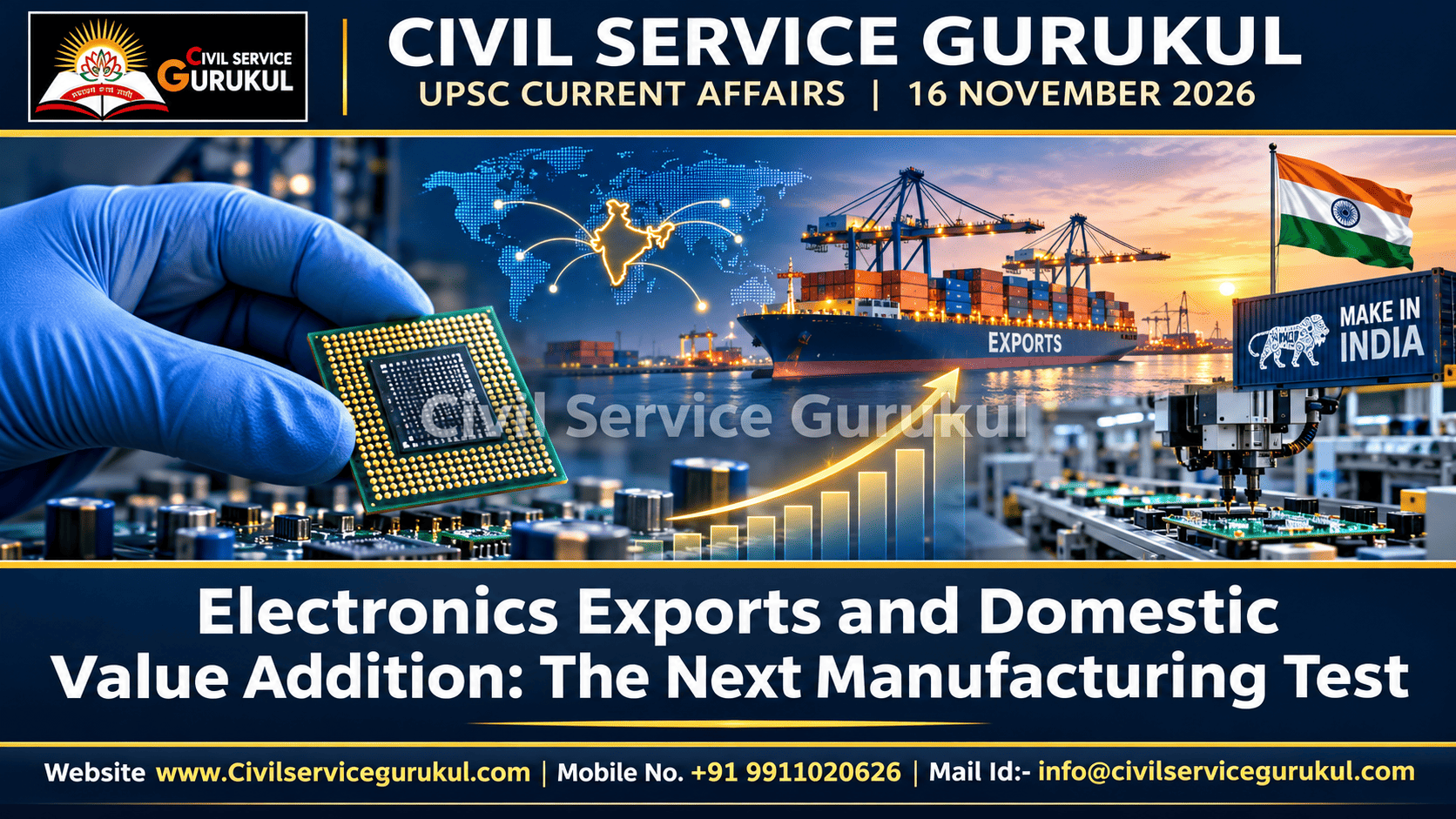
Electronics Exports in India: Value Addition & UPSC
India's expanding electronics exports represent an important manufacturing opportunity, but rising gross export values do not automatically indicate an equivalent increase in domestic value addition. Imported components, assembly operations, supplier networks, research capabilities and intellectual property ownership influence how much economic value remains within India. This Civil Service Gurukul analysis explains the distinction between gross exports and domestic value addition, examines the role of Production Linked Incentive (PLI) schemes, and discusses strategies to strengthen component manufacturing, skilled employment and India's position in global value chains.
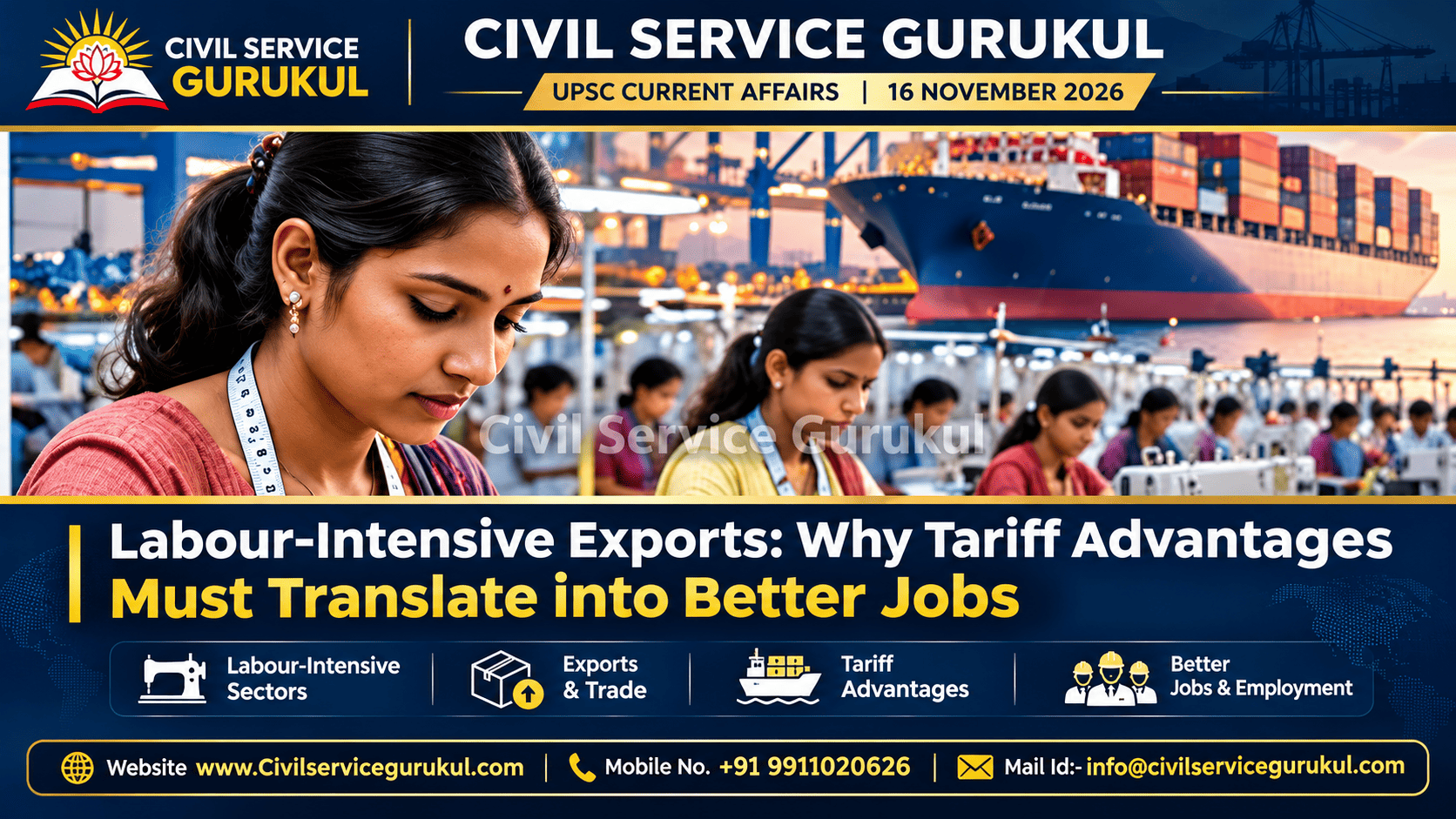
Labour-Intensive Exports in India: Tariffs, Jobs & UPSC
Can preferential tariffs help India create more and better jobs? Labour-intensive sectors such as textiles, garments, leather and footwear can benefit from improved access to international markets. However, tariff advantages alone cannot guarantee export growth, formal employment or higher wages. Logistics costs, electricity reliability, product standards, rules of origin, MSME competitiveness and global demand also influence outcomes. This Civil Service Gurukul UPSC analysis examines export-led growth, employment quality, women's participation, domestic value addition and policy reforms, with Prelims MCQs and Mains answer-writing guidance.
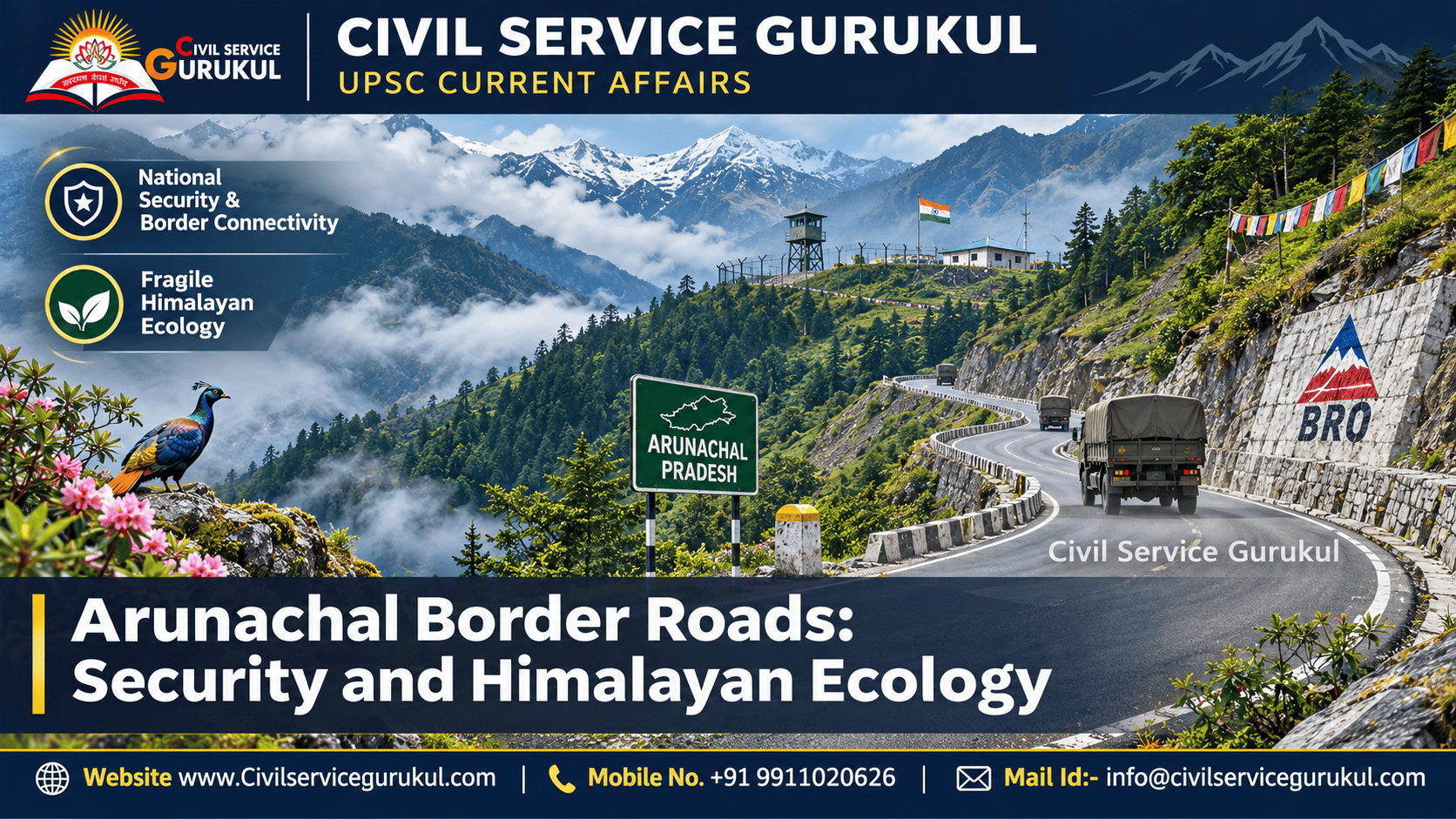
Arunachal Pradesh Border Roads: Strategic Security, India–China LAC and Himalayan Ecological Challenges
Arunachal Pradesh's strategic border roads are vital to India's defence preparedness, military logistics, connectivity and development of remote Himalayan villages. Projects undertaken by the Border Roads Organisation (BRO), including Project Arunank, help improve access to sensitive frontier regions. However, road construction in the eastern Himalayas also creates challenges involving landslides, deforestation, soil erosion, biodiversity and climate resilience. This UPSC-oriented article examines the strategic importance of border infrastructure, ecological risks, sustainable engineering, government initiatives and the need to balance national security with environmental protection.
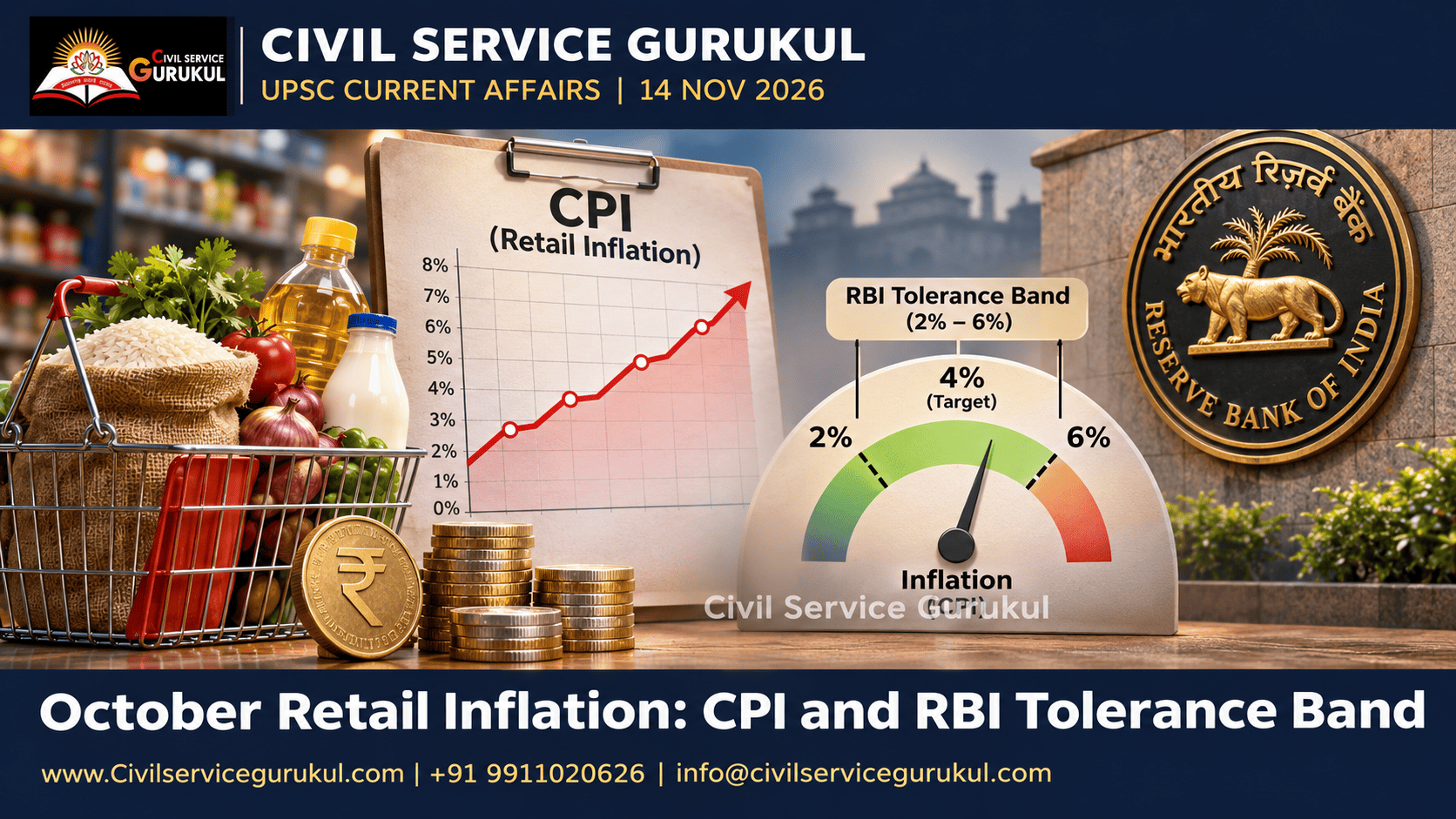
October 2026 Retail Inflation at 6.09%: CPI, RBI Tolerance Band and UPSC Analysis
India's retail inflation rose to 6.09% in October 2026 from 5.54% in September, breaching the Reserve Bank of India's 6% upper tolerance threshold. Food inflation accelerated to 8.94%, with rural inflation at 6.63% and urban inflation at 5.41%. This UPSC-oriented analysis explains the Consumer Price Index (CPI), the RBI's 4% inflation target and 2–6% tolerance band, causes of inflation, monetary policy implications, CPI base year 2024, and the distinction between a monthly breach and a formal failure to meet the inflation target.
Swachh Survekshan 2026: India's Cleanest Cities, Urban Sanitation & Beyond Rankings | UPSC
Swachh Survekshan has become a prominent mechanism for assessing cleanliness and sanitation performance in Indian cities. Yet a high rank alone cannot establish whether waste is scientifically processed, sanitation workers are protected or underserved neighbourhoods receive equitable services. This Civil Service Gurukul UPSC 2027 analysis explores the Swachh Bharat Mission–Urban, urban local bodies, source segregation, material recovery facilities, decentralised waste processing, wastewater management and the limitations of competitive city rankings. It also examines the importance of independent audits, transparent waste-flow data, citizen feedback, inclusion and long-term environmental outcomes, with original Prelims MCQs, a GS-II Mains model answer and rapid revision notes.
India Battery Recycling 2026: Black Mass Export Ban, Critical Minerals & Circular Economy | UPSC
India's battery waste is emerging as a strategic source of critical minerals essential for electric vehicles, renewable energy storage, electronics and advanced manufacturing. In November 2026, the government prohibited exports of specified lithium-ion battery black mass to strengthen domestic recycling and mineral recovery. The move complements the ₹1,500 crore critical mineral recycling incentive scheme under the National Critical Mineral Mission and the Battery Waste Management Rules, 2022. This Civil Service Gurukul UPSC 2027 article examines lithium-ion battery chemistry, urban mining, Extended Producer Responsibility, black mass, recycling technologies, environmental risks, India's mineral security and circular-economy policies. It includes original Prelims MCQs, a GS-III Mains model answer and an exam-oriented revision card.
Tamil Nadu Industrial Water Crisis 2026: Wastewater Reuse, Water Pricing & River Health | UPSC
Tamil Nadu's industrial growth creates an urgent need to balance manufacturing competitiveness with freshwater availability, groundwater sustainability and healthy river ecosystems. Seasonal rainfall, urban demand, agricultural irrigation and industrial withdrawals place competing pressures on limited water resources. This Civil Service Gurukul analysis examines the role of treated wastewater reuse, closed-loop industrial recycling, realistic water pricing, effluent regulation, basin-level governance and transparent water accounting. It explains key concepts such as water withdrawal versus consumption, Zero Liquid Discharge, Common Effluent Treatment Plants, environmental flows and the polluter-pays principle, with UPSC Prelims MCQs, a GS-III Mains model answer and a rapid revision framework.
OBC Creamy Layer 2026: Supreme Court Principles, ₹8 Lakh Rule & Substantive Equality | UPSC
The creamy-layer principle is a central feature of India's OBC reservation framework, designed to ensure that affirmative-action benefits reach socially and educationally disadvantaged sections rather than becoming concentrated among relatively advanced families. Rooted in the Supreme Court's landmark Indra Sawhney judgment of 1992, the principle raises important questions about substantive equality, the relationship between economic advancement and social disadvantage, and the fairness of administrative eligibility tests. This Civil Service Gurukul article examines Articles 14, 15 and 16, the central OBC creamy-layer framework, the ₹8 lakh income ceiling and its limitations, judicial scrutiny, distinctions involving SC/ST reservation, and policy reforms. It includes original UPSC Prelims questions, a GS-II Mains model answer and a rapid revision card.
India–France Relations 2026: Economic Security, Critical Technology & Strategic Autonomy | UPSC
India–France strategic cooperation is expanding beyond traditional defence engagement into economic security, critical and emerging technologies, supply-chain resilience, clean energy, space and advanced manufacturing. Against the backdrop of November 2026 reporting on bilateral economic-security and technology discussions, this Civil Service Gurukul article explains the historical foundations of the partnership, the Horizon 2047 roadmap, strategic autonomy, defence industrial cooperation, semiconductor and AI ecosystems, civil nuclear energy, Indo-Pacific interests, technology-transfer challenges and policy priorities. Designed for UPSC Prelims and Mains 2027, it includes factual distinctions, original statement-based MCQs, a GS-II/GS-III model answer, revision notes and analytical frameworks.
India Visa Reform 2026: 9 Categories, 70% Shorter Forms, e-Visa & UPSC GS-II Analysis
India has undertaken a major rationalisation of its visa regime, reducing the number of main categories from 13 to nine and sub-categories from 49 to 23, while cutting application-form fields by 65–70%. The reform includes renaming the Tourist Visa as the Visitor Visa, introducing differentiated provisions for business, medical treatment, AYUSH, education and research, and updating digital immigration systems. With e-Visa facilities available to nationals of 172 countries, the policy aims to improve tourism, investment, medical-value travel, international education and administrative efficiency. Civil Service Gurukul examines the Ministry of Home Affairs' November 2026 announcement, the nine-category structure, V-1 and V-2 visas, e-Visa versus regular visa, immigration governance, security and privacy concerns, implementation challenges, UPSC Prelims MCQs and a GS-II Mains model answer.
Birsa Munda & Janjatiya Gaurav Divas 2026: Ulgulan, PESA, FRA and Tribal Rights | UPSC 2027
Janjatiya Gaurav Divas is observed across India on 15 November to commemorate the birth anniversary of Birsa Munda, the tribal freedom fighter who led the Ulgulan movement against colonial authority and exploitative agrarian relations in Chotanagpur. The 2026 Janjatiya Gaurav Pakhwada runs from 1 to 15 November, with government-announced initiatives related to tribal education, culture, healthcare, forest rights and rural development. This Civil Service Gurukul UPSC 2027 article examines Birsa Munda's historical contributions, the Munda land system, colonial exploitation, the Ulgulan movement, the Chota Nagpur Tenancy Act, Fifth and Sixth Schedules, PESA 1996, Forest Rights Act 2006 and contemporary questions of community self-governance. It also provides original UPSC Prelims MCQs, GS-I and GS-II Mains analysis and a concise revision framework.
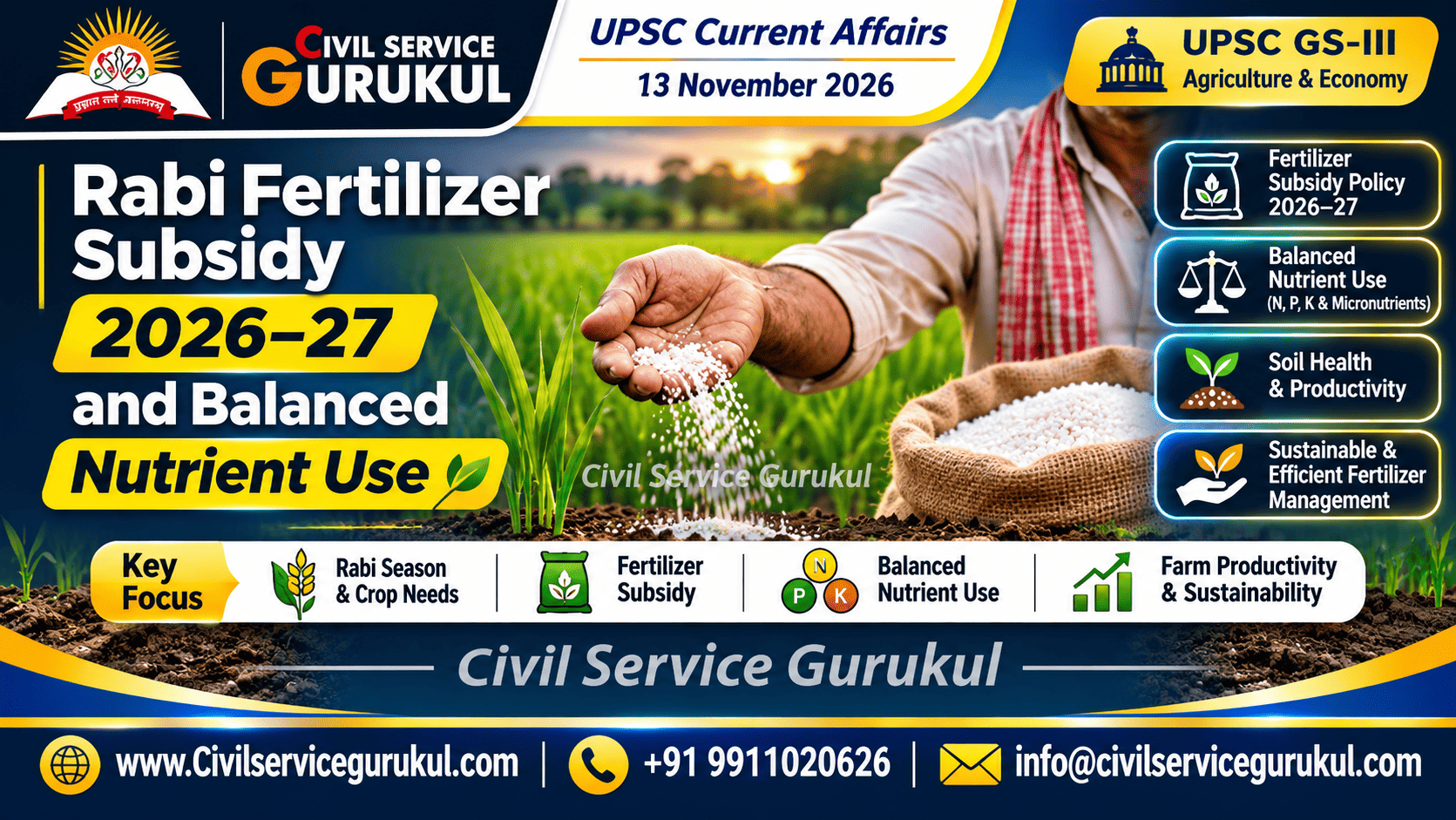
Rabi Fertiliser Subsidy 2026–27: 64% Increase, NBS Rates, Budget Impact & UPSC Analysis
India's Union Cabinet approved a tentative ₹62,370.02 crore subsidy requirement for phosphatic and potassic fertilisers during Rabi 2026–27, representing an approximately 64% increase over the previous Rabi season. The revised Nutrient Based Subsidy rates apply from 1 October 2026 to 31 March 2027 and cover nitrogen, phosphorus, potassium and sulphur content in 28 grades of P&K fertilisers. Along with the Kharif 2026 provision, the combined seasonal P&K requirement reaches approximately ₹1.04 lakh crore against the FY 2026–27 Budget Estimate of ₹54,000 crore. Civil Service Gurukul examines the NBS framework, DAP price protection, differences between urea and P&K subsidies, global price pressures, fiscal implications, soil nutrient imbalance, sustainable agriculture reforms, UPSC Prelims MCQs and a GS-III Mains model answer.
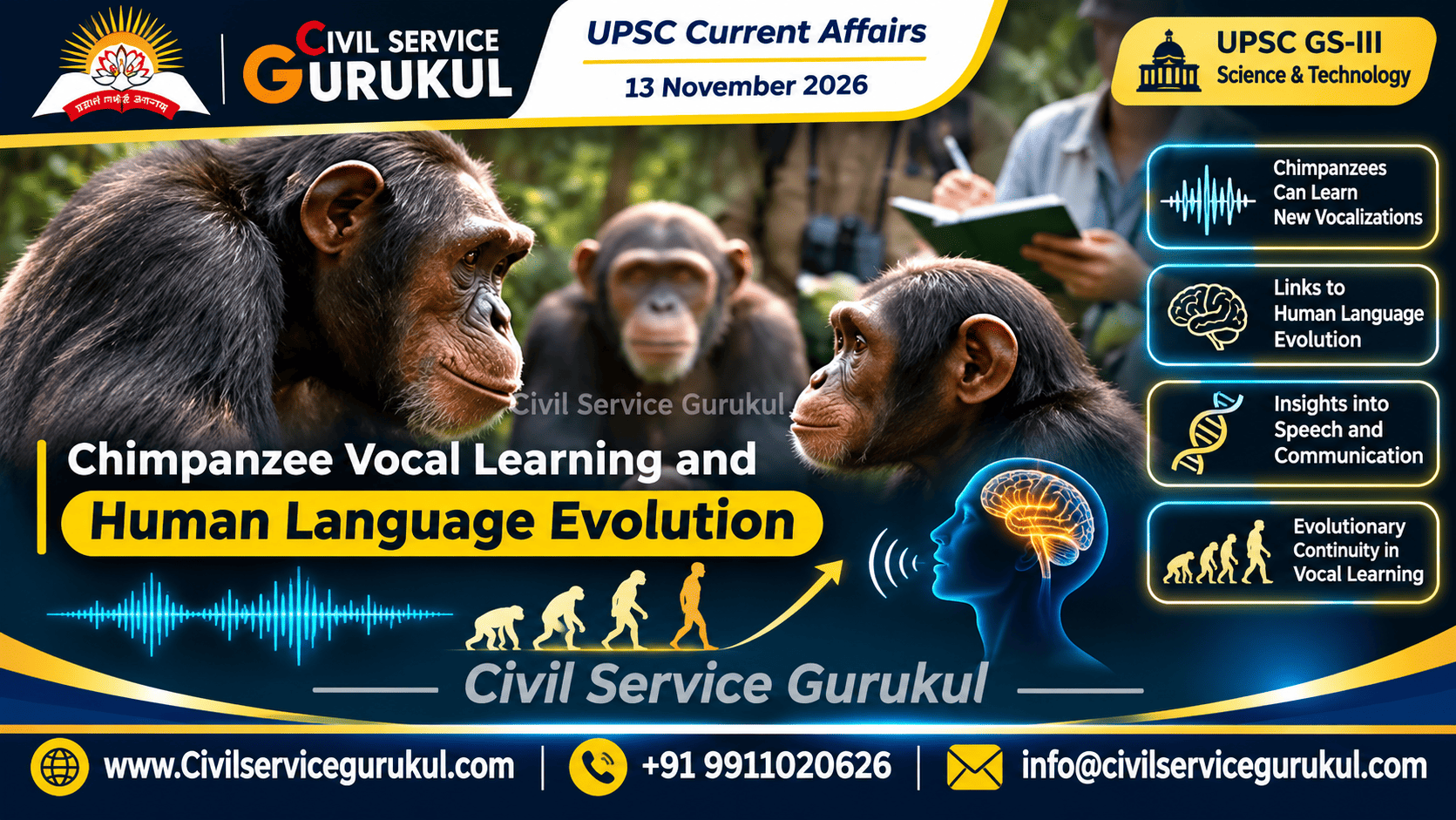
Chimpanzees Learn Vocal Calls from Adults: PNAS 2026 Study, Human Language Evolution and UPSC Analysis
A November 2026 PNAS study has found evidence that chimpanzees learn the social use of certain calls from adult role models, offering new insights into the evolutionary origins of human language. Researchers studied 91 chimpanzees across four wild communities in Taï National Park, Côte d’Ivoire, and four sanctuary groups at Tacugama in Sierra Leone. Wild chimpanzees used a raspberry-like sound predominantly during grooming, while orphaned groups without adult models used the call across varied social contexts. After an adult joined one sanctuary group, the juveniles' call use became more consistent. Civil Service Gurukul explains vocal usage learning, production learning, arbitrary conventions, social transmission, human language evolution, research limitations, species facts, UPSC Prelims MCQs and GS Mains analytical perspectives.
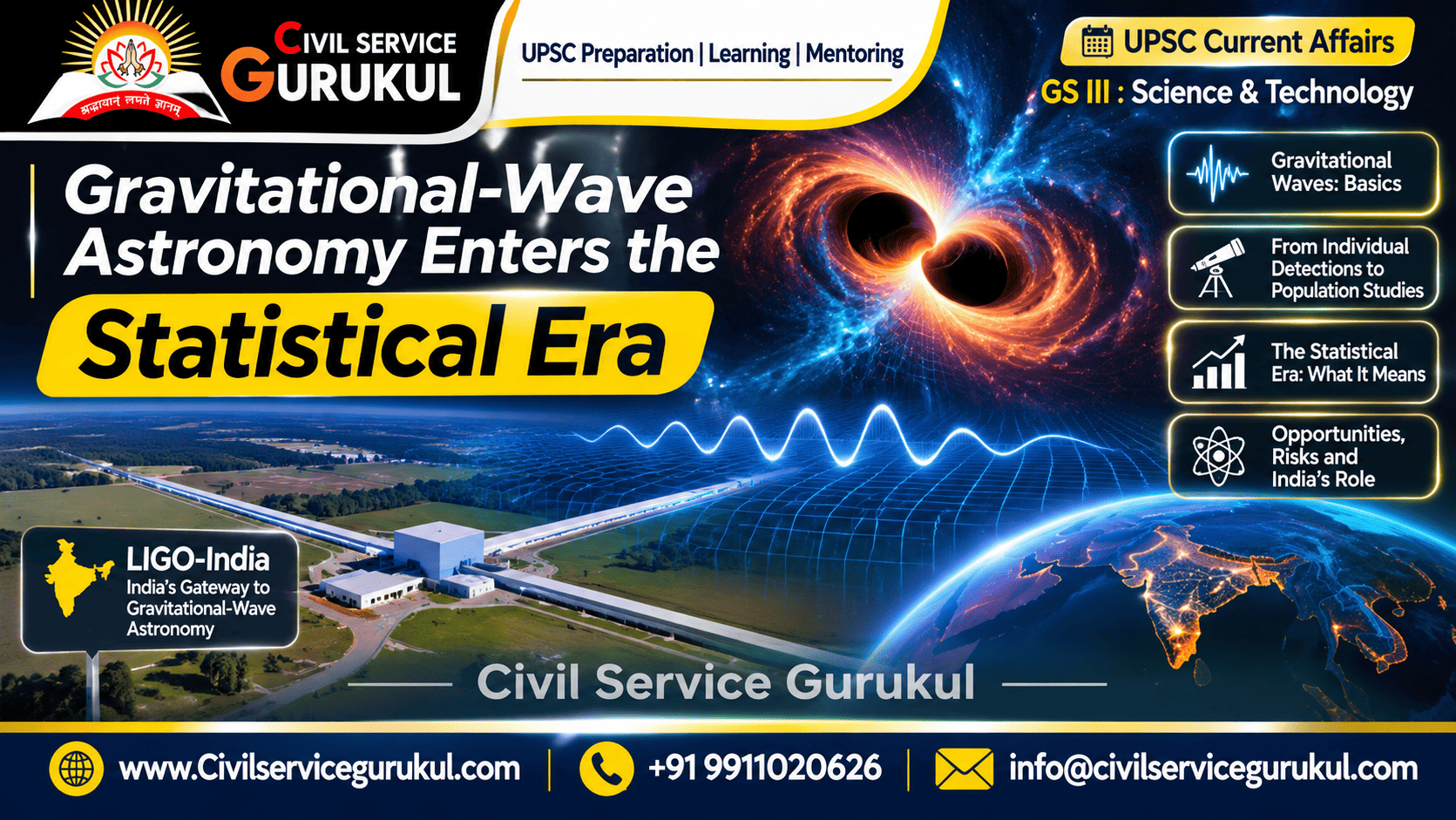
Gravitational-Wave Astronomy Enters Statistical Era: GWTC-5.0, 390 Detections and LIGO-India | UPSC 2027
Gravitational-wave astronomy has entered a statistical era as the international LIGO–Virgo–KAGRA collaboration expands its catalogue of cosmic events. The GWTC-5.0 release of May 2026 includes 390 cumulative significant detections, including 161 newly identified signals from the O4b observing period. Larger datasets allow researchers to examine black-hole populations, merger rates, cosmic evolution and general relativity with greater statistical confidence. For India, the development is especially important because of LIGO-India, the gravitational-wave observatory project being developed in Maharashtra. This Civil Service Gurukul UPSC 2027 analysis explains the science, key discoveries, detector network, statistical inference, India's contribution, limitations, Prelims concepts, original practice MCQs and Mains answer-writing strategy.
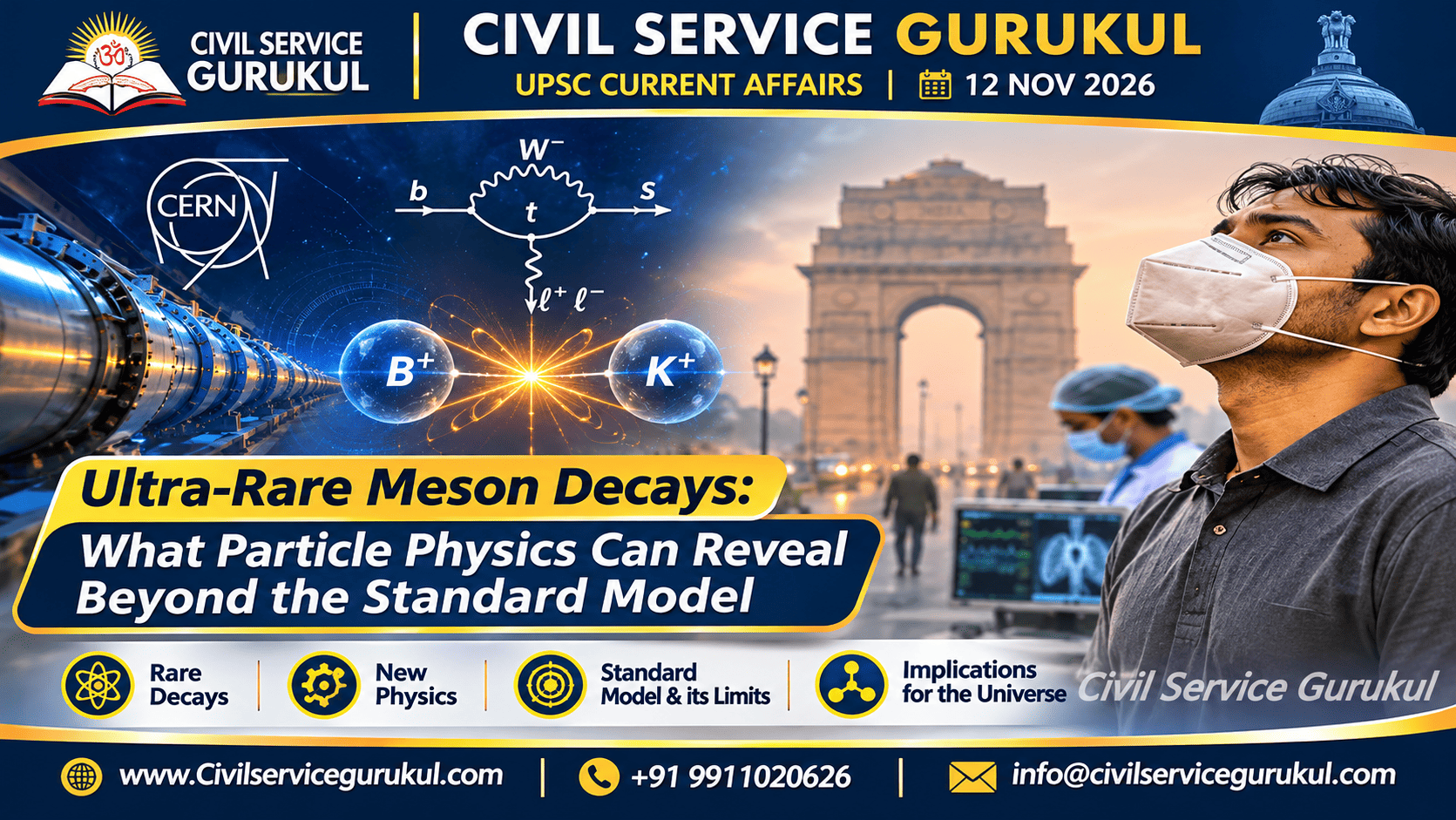
CERN Detects Evidence of Ultra-Rare B-Meson Decay: Standard Model, Muons and New Physics Explained for UPSC 2026
CERN's LHCb experiment announced evidence of the extremely rare decay of a neutral B meson into a muon–antimuon pair on 3 November 2026. The phenomenon occurs at roughly one in ten billion decays, and the combined analysis reached a significance of 3.2 sigma, below the 5-sigma benchmark used for a discovery. The result agrees with Standard Model predictions and places tighter constraints on possible new physics. This Civil Service Gurukul article explains mesons, quarks, leptons, muons, weak interactions, branching fractions, the Large Hadron Collider, statistical significance and the difference between evidence and discovery. It also examines India's particle-physics research ecosystem and includes UPSC Prelims MCQs and a GS-III Mains model answer.
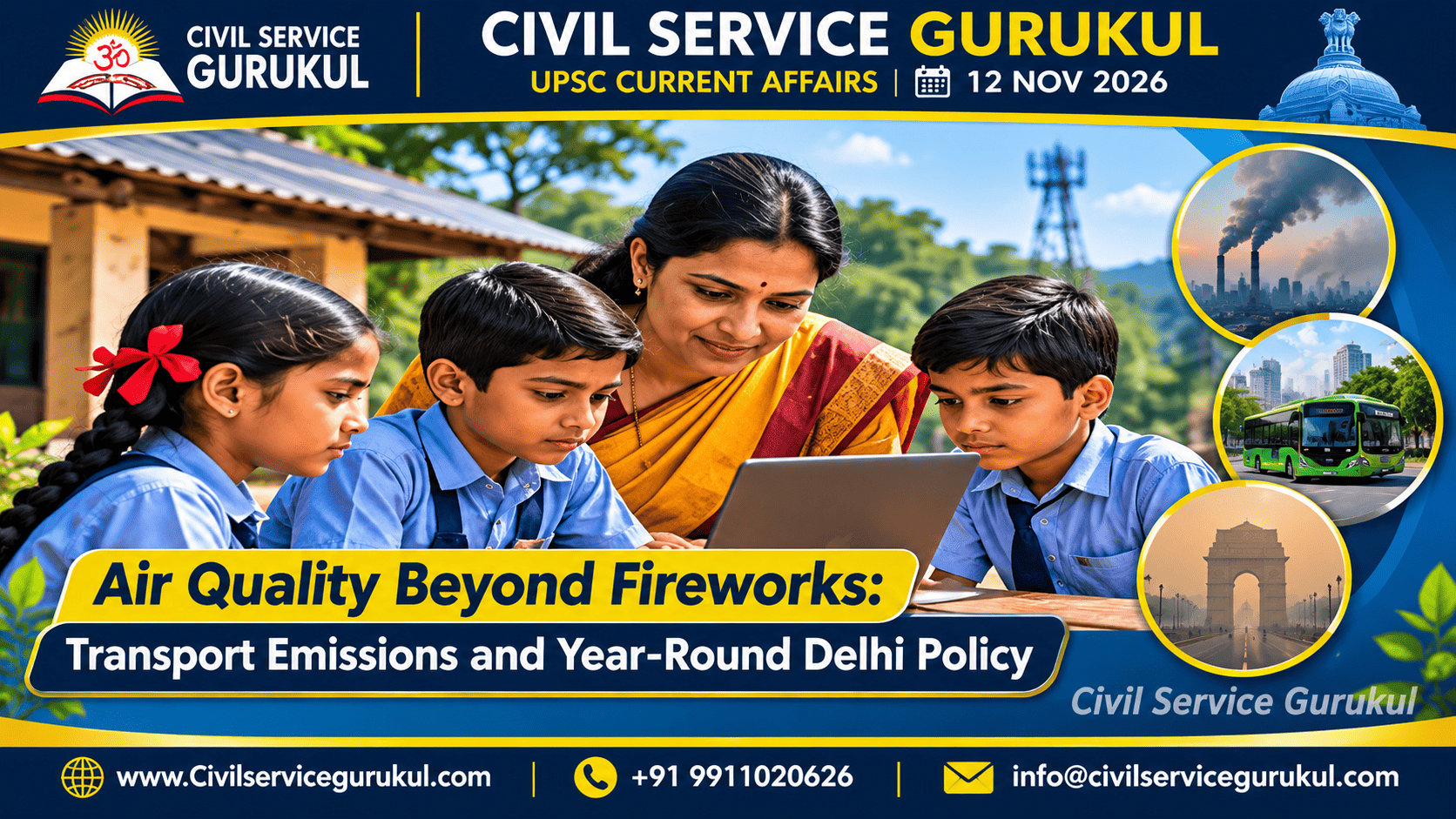
Delhi Air Pollution 2026: Why the Supreme Court Wants Action Beyond Firecrackers | UPSC GS-III
The Supreme Court's 6 November 2026 order placed renewed emphasis on vehicular emissions as a major concern in Delhi-NCR's air-pollution crisis. While fireworks and crop-residue burning can worsen seasonal pollution, the problem also involves road dust, construction, industry, waste burning, transport emissions and unfavourable winter meteorology. The Court sought enforcement details and time-bound action plans from Delhi and neighbouring states. This Civil Service Gurukul analysis explains the National Air Quality Index, PM2.5 and PM10, the Commission for Air Quality Management (CAQM), the Graded Response Action Plan (GRAP), the National Clean Air Programme (NCAP), constitutional environmental principles and year-round strategies. Includes UPSC Prelims revision, original MCQs and a GS-III Mains model answer.

Russia–Ukraine Peace Talks 2026: Abu Dhabi Negotiations, Prisoner Exchange, Ceasefire and Security Guarantees
Russia and Ukraine resumed US-mediated peace negotiations in Abu Dhabi on 10–11 November 2026, leading to an agreement in principle on a major prisoner exchange but no comprehensive ceasefire. Fundamental differences remain over territorial control, security guarantees, Europe's participation and the conditions for lasting peace. This Civil Service Gurukul article examines the diplomatic developments, distinction between a ceasefire and a peace treaty, principles of the UN Charter, Geneva Conventions, international humanitarian law and India's strategic interests. It also discusses civilian protection, humanitarian corridors, energy security, global economic consequences and the requirements of a sustainable peace settlement. The article includes UPSC Prelims revision, original MCQs and a GS-II Mains model answer.
Ladakh Hill Council Elections 2026: December 4 Polls, Sixth Schedule Demands and Democratic Autonomy Explained for UPSC
The Ladakh administration has scheduled elections to eight Ladakh Autonomous Hill Development Councils for 4 December 2026, expanding local representative institutions across 100 constituencies. The elections follow the reorganisation of Ladakh into eight districts and coincide with continuing demands for statehood, Sixth Schedule safeguards, protection of land and employment rights, and greater democratic autonomy. Civil-society organisations have raised concerns about winter polling, delimitation and the adequacy of statutory local governance arrangements. This Civil Service Gurukul analysis examines the legal status of hill councils, the Sixth Schedule of the Indian Constitution, Ladakh's administration as a Union Territory without a legislature, democratic decentralisation, environmental challenges and the way forward. Includes Prelims revision facts, original practice MCQs and a GS-II Mains model answer.
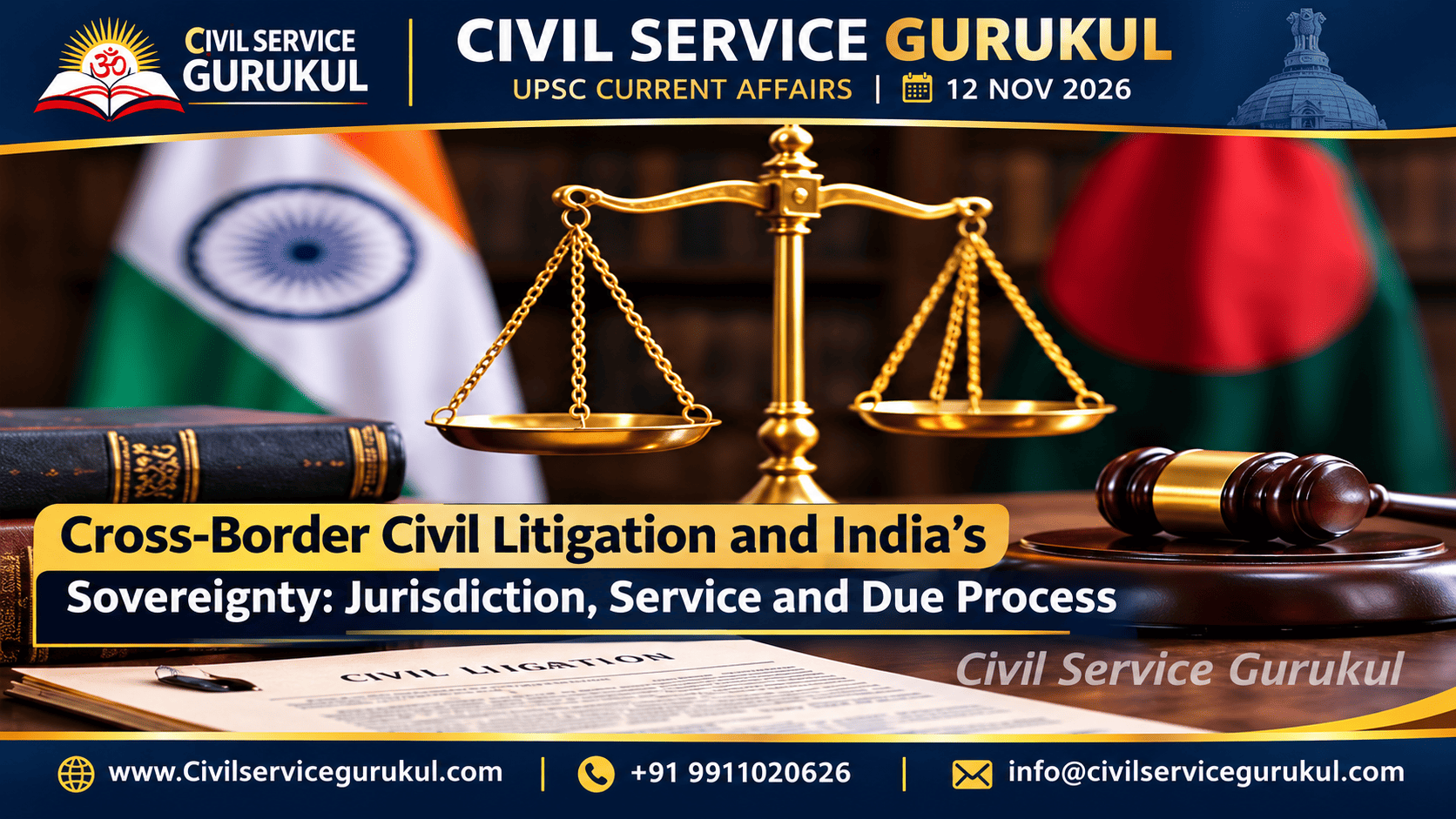
US Court Order and India's Sovereignty: Hague Service Convention, Jurisdiction and Due Process Explained for UPSC
A US federal court's November 2026 order permitting alternative service of civil court documents on two Indian officials through Indian judicial channels has raised important questions about sovereignty, cross-border litigation, jurisdiction and due process. The case provides a valuable UPSC GS Paper II example of how international conventions interact with domestic procedural law. This Civil Service Gurukul analysis explains the 1965 Hague Service Convention, the role of India's Ministry of Law and Justice, relevant provisions of the Code of Civil Procedure, sovereign immunity and the distinction between procedural service and legal liability. It includes verified legal context, balanced India–US relations analysis, Prelims facts, practice MCQs and a model Mains answer.
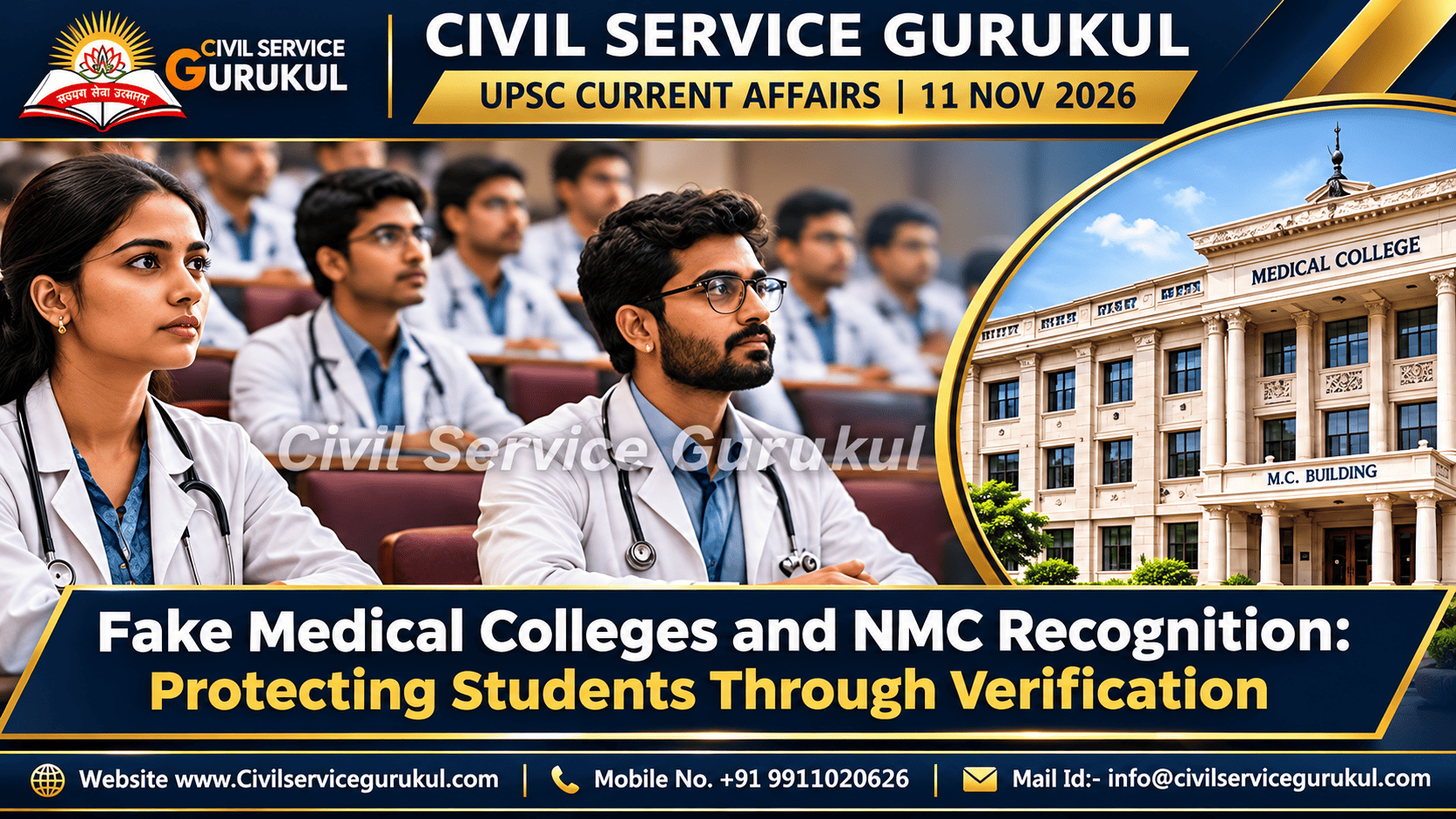
Fake Medical Colleges in India 2026: NMC Recognition, MBBS Admission Verification & Student Protection | UPSC 2027
The National Medical Commission issued an advisory on 6 November 2026 urging students and parents to verify medical colleges' regulatory approval before admission or payment. The warning highlights the risks associated with unauthorised medical institutions, misleading recognition claims, unapproved MBBS seats and fraudulent admission promises. This Civil Service Gurukul UPSC 2027 analysis explains the National Medical Commission Act, 2019, the role of NMC and its autonomous boards, medical college recognition, counselling verification, information asymmetry, student protection and regulatory accountability. Includes GS Paper II analysis, a Mains model answer, five Prelims MCQs and quick revision notes.