Daily Current Affairs & News Analysis
Our daily news analysis consists of two integral parts — Daily News Analysis and Important Editorials curated rigorously from The Hindu, The Indian Express, LiveMint, PIB, and Sansad TV debates. Content is mapped directly to UPSC CSE and State PCS syllabi.
India Semiconductor Mission 2026: UPSC Analysis
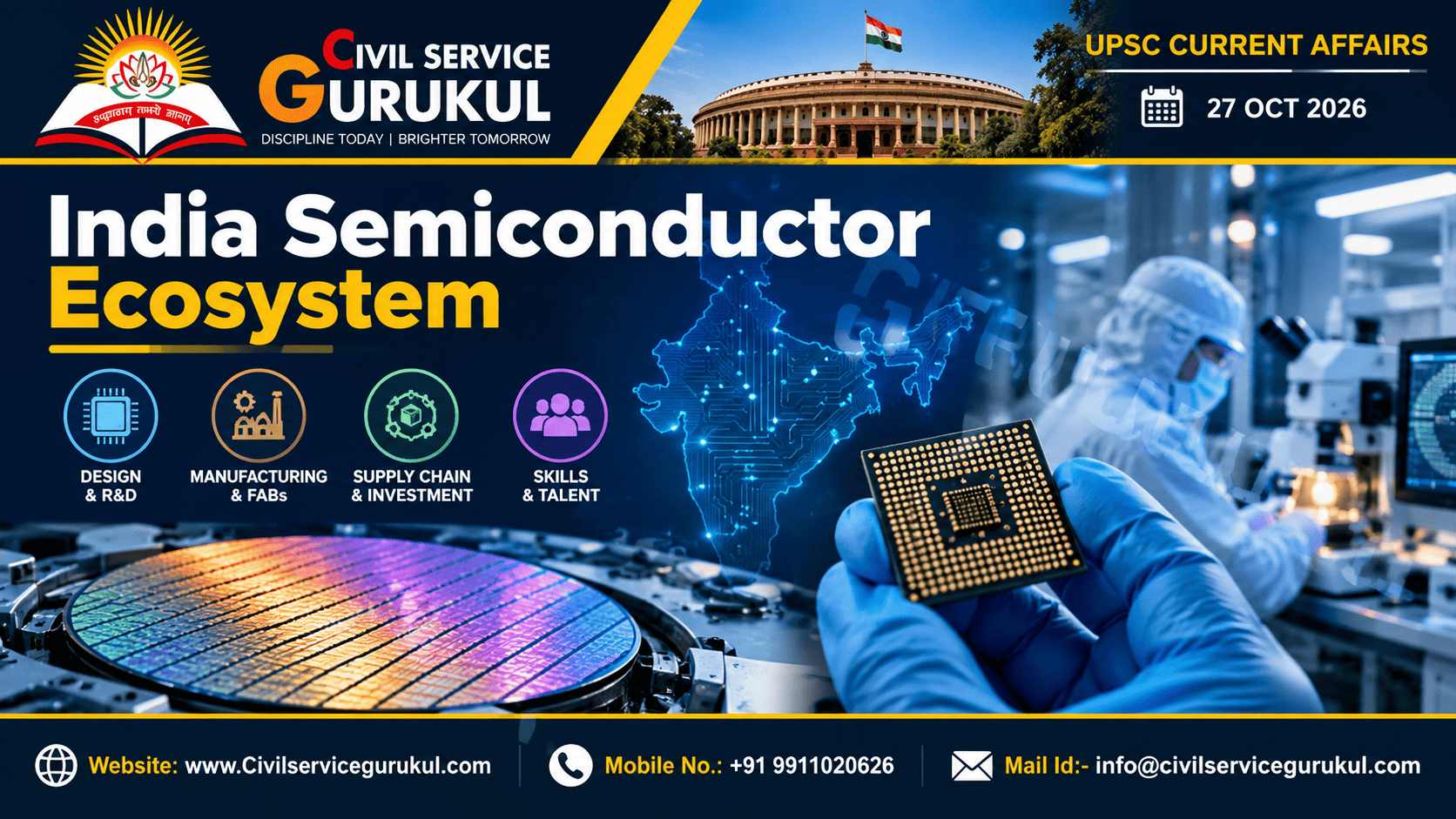
India's semiconductor ambitions extend far beyond constructing chip fabrication plants. An October 2026 industry discussion highlighted the importance of developing an integrated semiconductor ecosystem covering chip design, wafer fabrication, assembly, testing, packaging, skilled employment and resilient supply chains. The India Semiconductor Mission supports investment in semiconductor manufacturing and design capabilities, while the country's engineering talent and expanding electronics market offer significant opportunities. However, high capital costs, specialised equipment, reliable electricity, ultrapure water, technical skills and global interdependence remain major challenges. This Civil Service Gurukul article examines India's semiconductor strategy, policy incentives, economic security, industrial development and the way forward for UPSC Prelims and Mains.
Patient Data Privacy in India 2026: DPDP & ABDM
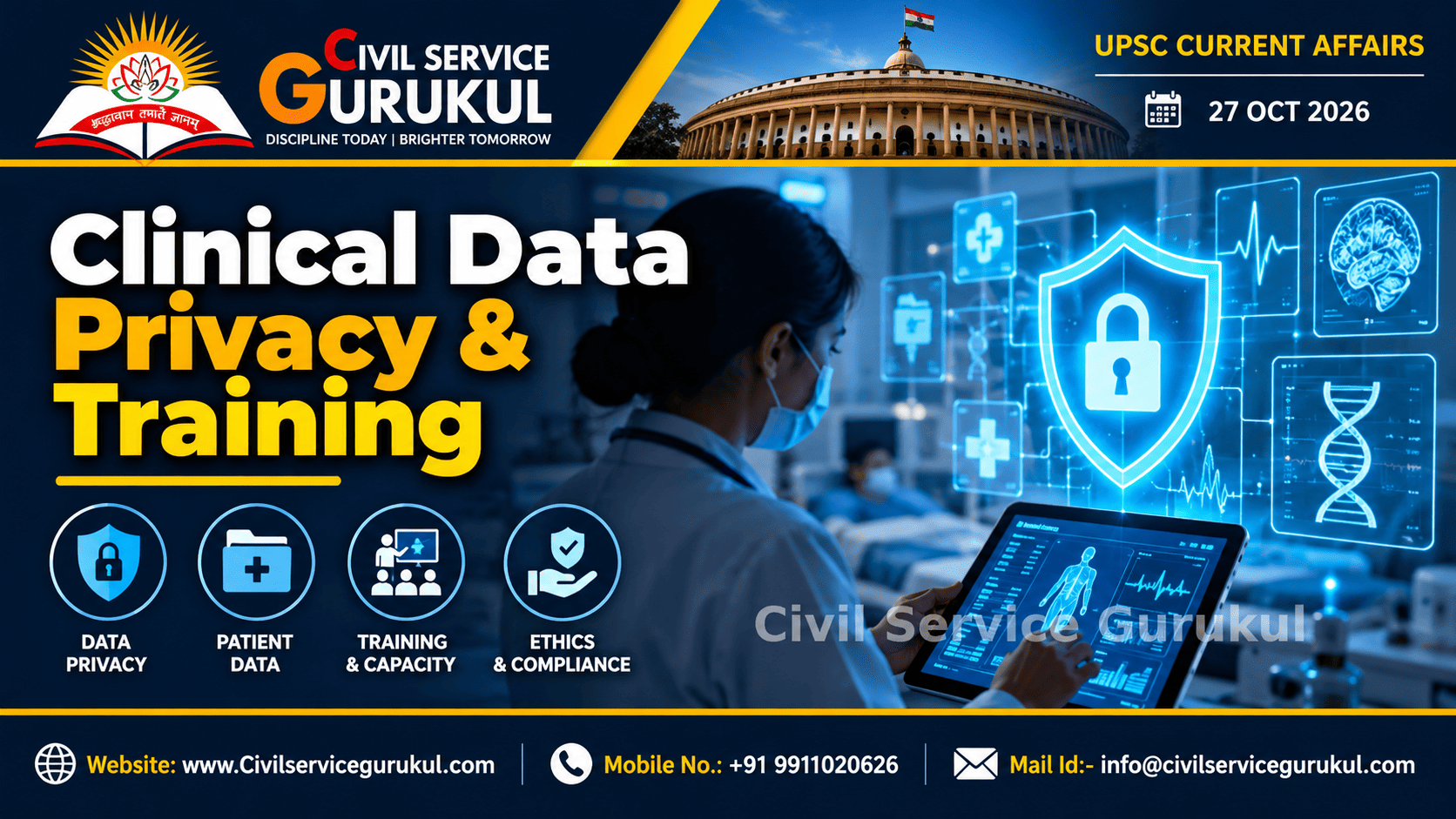
India's digital healthcare transformation brings new opportunities for efficient medical services, interoperable records and improved patient care. However, protecting sensitive patient information requires more than encryption and sophisticated software. An October 2026 discussion highlighted the importance of training nurses, receptionists, laboratory staff and healthcare professionals to prevent accidental disclosures, unauthorised access and data breaches. The Digital Personal Data Protection Act, 2023 and the Ayushman Bharat Digital Mission provide important legal and policy frameworks, but effective implementation depends on secure workflows, meaningful consent, affordable infrastructure and institutional accountability. This Civil Service Gurukul analysis examines patient privacy, cybersecurity, healthcare governance and practical reforms for UPSC Prelims and Mains.
Right to Peaceful Protest in India | Article 19 UPSC
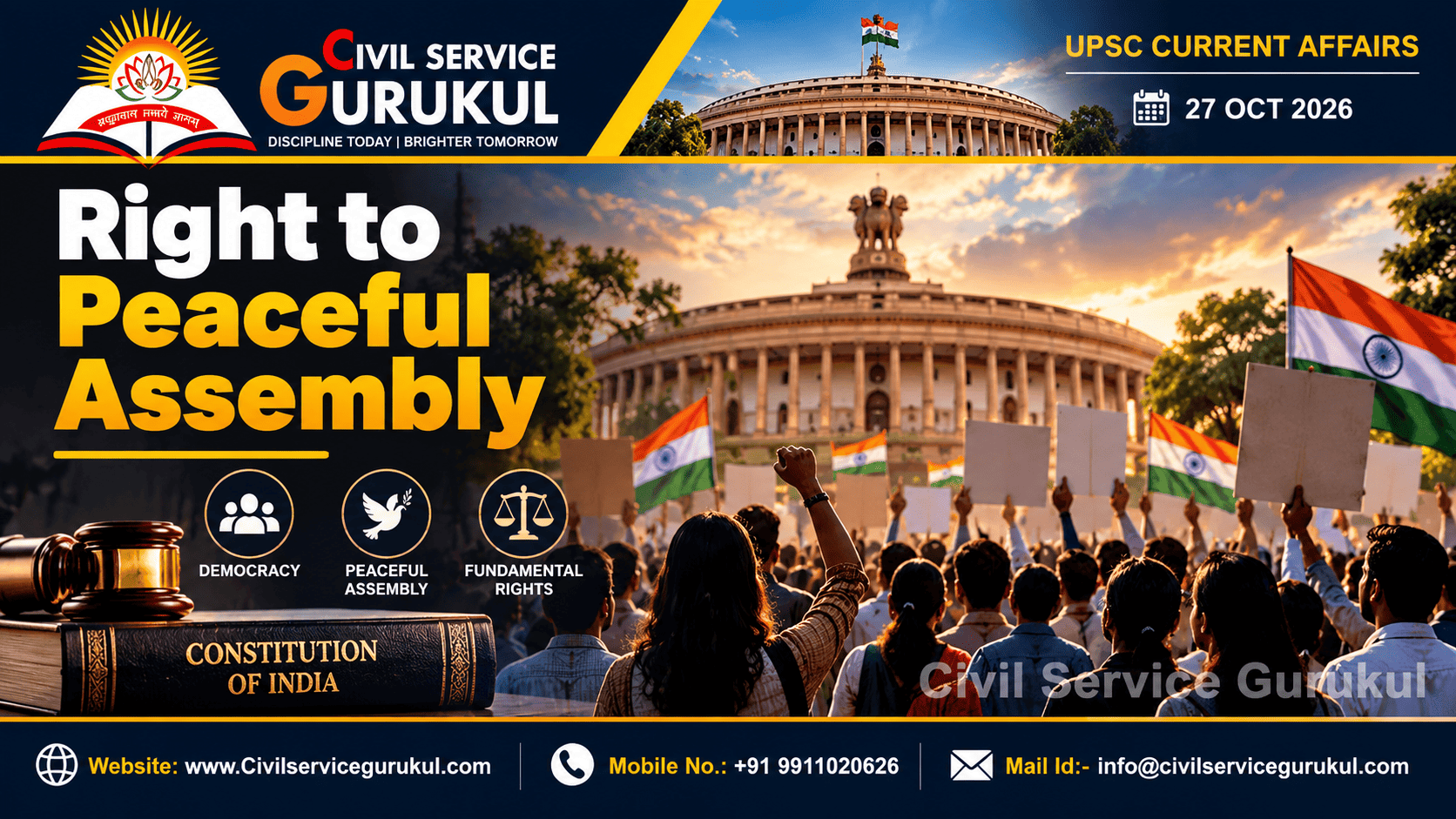
The right to peaceful protest is an essential part of India's constitutional democracy. Article 19(1)(b) guarantees citizens the freedom to assemble peaceably and without arms, while Article 19(3) permits reasonable restrictions in the interests of sovereignty and integrity of India and public order. A policy debate discussed on 26 October 2026 highlighted the challenge of protecting democratic dissent while managing traffic, safety and competing rights in public spaces. This Civil Service Gurukul article examines the constitutional framework, Section 163 of the Bharatiya Nagarik Suraksha Sanhita, proportionality, accessible protest spaces, neutral policing and the responsibilities of the State, with UPSC Prelims MCQs and Mains answer-writing practice.
Judicial Restraint in India 2026: UPSC GS II & Ethics
Can a sitting judge publicly discuss a constitutional issue when a related case is pending before a court? A debate reported on 26 October 2026 concerning judicial remarks on voting rights and electoral-roll exclusions has renewed attention on judicial restraint, independence and impartiality. While judges can contribute to constitutional education, comments that appear to prejudge disputed questions may undermine confidence in fair adjudication. This Civil Service Gurukul analysis explains the 1997 Restatement of Values of Judicial Life, the Bangalore Principles of Judicial Conduct, sub judice matters, judicial recusal and the balance between accountability and independence, with UPSC Prelims and Mains preparation.
Free Bus Travel for Women 2026: Shakti Scheme & UPSC
Free bus travel schemes for women have emerged as important instruments of economic empowerment and social inclusion in India. Programmes such as Karnataka's Shakti Scheme and Tamil Nadu's Vidiyal Payanam seek to reduce transportation expenses and improve women's access to employment, education, healthcare and public services. Research discussed in October 2026 suggests that affordable mobility can support women's participation in paid work, although the outcomes depend on route availability, safety, job opportunities and public transport quality. This UPSC analysis examines the economic benefits, fiscal challenges, gender-responsive budgeting, sustainable transport policy and practical reforms, along with Prelims MCQs and Mains answer-writing questions.
US H-1B Visa Restrictions 2026: Impact on India | UPSC
The U.S. H-1B immigration restrictions discussed in October 2026 have renewed concerns about international skilled-worker mobility, Indian technology professionals and the future of India–U.S. economic cooperation. The uploaded article describes a September 2026 U.S. proclamation involving a $100,000 payment condition for certain affected H-1B petitions. Importantly, this should not be interpreted as a universal fee for every visa holder, renewal or worker already present in the United States. The development highlights how immigration policy can affect employment, technology services, higher education, research, diaspora welfare and bilateral diplomacy. This Civil Service Gurukul explainer examines the policy trade-offs, India's possible responses and UPSC Prelims and Mains relevance.

India–Maldives Relations 2026: UPSC Current Affairs
India–Maldives relations returned to the spotlight in October 2026 following reports of Maldivian President Mohamed Muizzu's visit to Pakistan and renewed domestic political debate over relations with India. The developments highlight the strategic importance of the Maldives in the Indian Ocean, where maritime security, sovereignty, tourism, development cooperation and regional competition intersect. For India, the challenge is to maintain a stable partnership while respecting the Maldives' independent foreign policy choices. This Civil Service Gurukul analysis examines Neighbourhood First, maritime cooperation, external partnerships, strategic challenges and the way forward, with UPSC Prelims and Mains practice.
Karnataka Form 7 Voter Deletion Row 2026 | UPSC
The Karnataka Form 7 controversy reported in October 2026 has raised concerns about bulk objections to electoral-roll entries and the risk of wrongful voter deletion. Form 7 enables objections to proposed inclusion or requests to delete existing entries, but filing the form does not automatically remove a voter. Electoral Registration Officers must examine applications and follow applicable legal procedures, including notice and an opportunity to respond where required. For UPSC aspirants, the controversy highlights electoral integrity, adult franchise, administrative fairness, digital safeguards and the Election Commission's role in maintaining accurate voter lists. This analysis includes important distinctions between Forms 6, 7 and 8, GS Paper II discussion, Prelims MCQs and Mains questions.
Kerala PSC Removal Row 2026: Article 317 for UPSC
The Kerala Public Service Commission removal controversy reported in October 2026 has renewed attention on the constitutional safeguards governing State Public Service Commissions. The uploaded report describes a recommendation attributed to the Kerala Governor concerning the commission's chairperson and members amid allegations of recruitment irregularities. Under Article 316, State PSC members are appointed by the Governor, while Article 317 reserves removal powers to the President, subject to specific constitutional procedures. This Civil Service Gurukul explainer examines Articles 315–320, the Supreme Court's inquiry role, institutional independence, accountability and important UPSC Prelims and GS Paper II questions. The reported allegations are not treated as established findings.
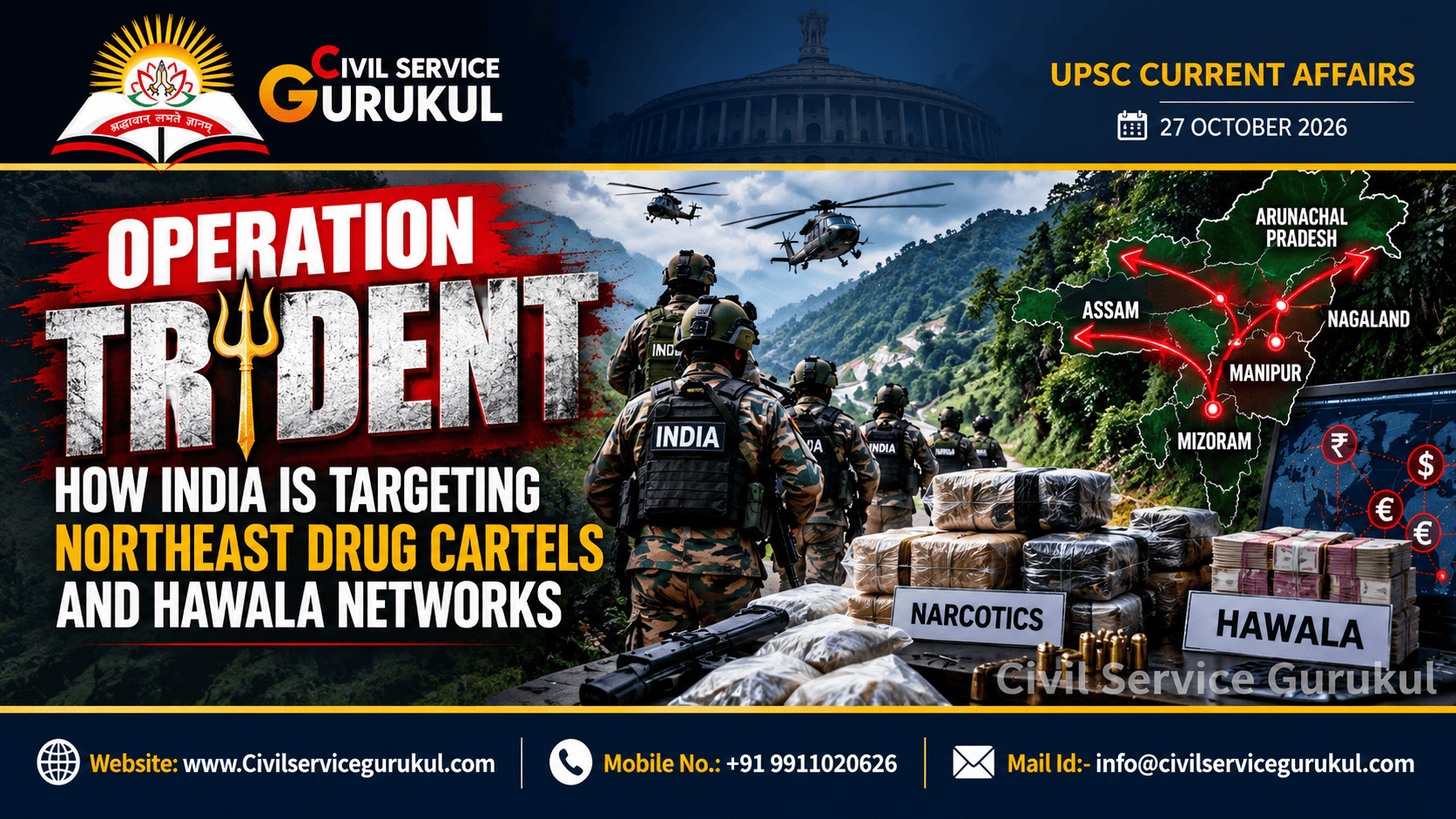
Operation Trident 2026: Northeast Drug Cartels, Hawala Networks and India's Internal Security Challenges
Operation Trident, reported in October 2026, highlights India's efforts to combat organised narcotics trafficking and suspected hawala financing in Northeast India. The supplied report describes coordinated searches across Assam, Mizoram and Manipur, resulting in reported arrests, bank-account freezes and property attachments. For UPSC aspirants, the operation provides an important case study of intelligence-led policing, the NDPS Act, financial investigations, inter-agency coordination, border security and constitutional safeguards. This Civil Service Gurukul analysis includes Prelims facts, GS Paper III discussion, policy challenges, Mains answer-writing guidance and practice questions.